
E. B. White

As many of my generation, I first encountered Elwyn Brooks White as the author of Charlotte’s Web. In college, The Elements of Style was an often-recommended guide to prose composition, written by William Strunk in 1918 and by White revised in the 1950s. With these associations, E. B. White would for years be summed up in my mind.

Some time ago I found a collection of his “Notes and Comment” writings for The New Yorker. It now rests on my bedside table, and most nights I dip in at day’s end. In our age of the rant, it’s pleasurable to read prose of a decent, civilized, and ironic character: prose which recalls a time when irony was not mere sarcastic contempt. His work suggests a man of principle and conviction, but of some reservation also. One imagines him too kind to engage in polemic, though the firmness of his convictions seems clear. John Updike, in Due Considerations: Essays and Criticism, states that White’s writing career began with an essay describing his reaction to a waitress who had spilled a glass of buttermilk on him:

with composure and dignity, he comforted the waitress, paid for the soup and even left her a tip, while the entire restaurant gaped in awe. The readers loved it. Andy [i.e. White] discovered that “the world would pay a man for setting down a simple, legible account of his own misfortunes.” For most of the rest of his career, Andy published steady accounts of his own misfortunes, to popular acclaim.

Having read a good deal of White’s published works, I find the story credible. The words “simple” and “legible” well describe the sort of prose you will get from an E. B. White essay. He writes in defence of humanist values, principally of freedom of thought, critical expression, and the dignity of the individual. Much of his work concerns compassion and solidarity, themes which are prominent in his writings for children.

In recent years he has been blamed for having introduced “hyper-correctness” into the teaching of English prose composition. Some of his grammatical dicta, for instance the prohibition against splitting of infinitives, are seen as nit-picking. To some readers, his style will seem antique and stilted — a perception doubtless compounded by The New Yorker’s insistence that he write in the third person. Against these charges, I’ll say only that in times of war and inquisition, when much was at stake, E. B. White took a clear and thoughtful stand against tyranny, and even when confronting his opponents he was generous and thoughtful. Never having allowed himself to lose grip on his wit, nor his wits, he has left us a useful legacy.
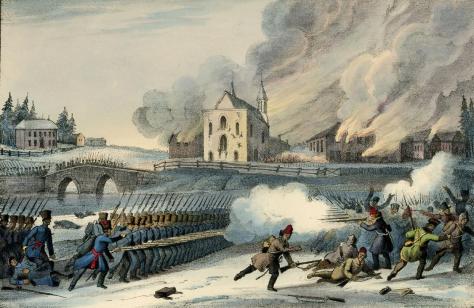
What The Media Won’t Tell You About The Oka Crisis

I assume you are familiar with the background and chronology of what is today known as “The Oka Crisis.” My purpose in this short piece is not to rehearse the already amply-stated; it is instead to provide you some remarks concerning the events of 1990 which I am confident you have not encountered in Canada’s media.

In August 1990 I moved from Niagara to Kingston. Four days earlier, the Canadian Army had occupied the community. I contemplated a show of support for Kanesatake — now a half-day’s drive away — but quickly came to the conclusion there was nothing I could do that wasn’t useless and indeed reckless. The main problem, it seemed to me, was that there were too many outsiders in Kanesatake and Kahnawake already.

Most Canadians misapprehend the Kanesatake conflict. The media coverage is to a degree responsible, but it should also be allowed that historical conflicts are by their nature highly complex. Consider the bloody dissolution of Yugoslavia, which was near unintelligible to most Westerners. Slobodan Milošević instigated Serbian nationalist attacks of Albanians in the 1990s by invoking the 1389 Battle of Kosovo with the Ottomans. In this one sentence there is a lot of history (some of it arguably bogus) and a lot of ethnic division at work. In similar fashion, the proposed 1990 expansion of an Oka golf course invoked a land dispute going back to the early eighteenth century, unresolved to this day. Those who see the Oka Crisis as a dispute over a golf course see a flat rendering of a three-dimensional world.

Here is what most Canadians don’t know about the Oka Crisis, and likely never will. Very few community members in Kanesatake or Kahnawake wanted the barricades. By “community members” I mean just that: the Kanien’keha:ka [Mohawk] men, women, and children who live in these two communities, and in nearby Oka. The people were caught between, on the one side, Canadian politicians such as the Mayor of Oka, Jean Ouellette, and on the other hand, the so-called “Mohawk Warriors.” Municipal and provincial politicians immediately resorted to force, deploying first the Sûreté du Québec and thereafter the army. (Federal politicians, for instance the spineless Minister of Indian Affairs, Tom Siddon, mostly just twiddled thumbs and waited for the mess to go away.) This militancy suited the Warriors just fine, since their interest is not in land settlements or Mohawk sovereignty or even in the well-being of the community itself, but in the operation of a petty third-world crime empire. The Warriors had come to Oka from across the United States and Canada to pursue a plan, and the Canadian politicians — whose collective failure at Oka has yet to receive an adequate accounting — were playing right into it.

The plan of these Warrior outsiders was to provoke Canada to armed battle at Oka, on the assumption Canada would be surprised by the fierceness of the Warriors. First a fight, then negotiations cloaked in the Haudenosaunee, the Kaswentha (Two Row Wampum — the Nation-to-Nation treaty with Canada) and the ongoing land claims. The Warriors since the 70s have been adept at co-opting both the good name and legitimacy of the Haudenosaunee, or “Iroquois Confederacy,” but have no real interest in the struggles. The goal has always been to place Mohawk territories outside of Canada’s legal jurisdiction, thereby giving the Warriors a law-free zone to do what they do best: make money from drugs, cigarettes, weapons, and gambling. To this end the people of Kanesatake were put before Canada’s army, by thugs who play the game of Haudenosaunee dress-up.

The disgusting and sad fact of the Oka Crisis is that this strategy worked. The Warriors are much stronger today as a result of what happened in Oka. Their crime empire thrives. Canada treads more lightly, a fact evident in the Caledonia occupation. Many indigenous people in Canada, as well as Canadians, regard the Warriors as a legitimate voice of the Haudenosaunee. I have often seen, to my sorrow, Warrior flags flown by Aboriginal people at gatherings. If only they knew. (Some do, and still approve, but that’s another matter.) Meanwhile none of the community’s land claims has been addressed. The mess persists, and the people tossed unwillingly into the Warriors’ filthy little 1990 gambit today suffer post-traumatic stress disorder. The Warriors are a cancer, as threatening to the aspirations of the Haudenosaunee as any Canadian soldier or Indian-hating politician.

Those who say nothing has changed are wrong. Matters have gotten worse. The Oka Crisis has further divided and wounded the Haudenosaunee. The Warriors attract our angry and hopeless youth, and submit the communities to further harms. Their hypocrisies turn the public against us. They misrepresent themselves as spokespersons of the Confederacy, which they are not, and make a mockery of our struggles and aspirations. And always — always — the needs and concerns of the people are pushed aside so the bullies can better work the camera. On a silly CBC Radio program called ReVision Quest, broadcast last night, comedian and host Darrell Dennis at least got one thing right: “it’s kind of ironic,” he said, “twenty years later, the lasting impact of the biggest armed confrontation between Aboriginals and Canada in recent history has been to push Aboriginals to buy into the Canadian system.” This too is a legacy of the bogus, corrosive, and repellent work of the Warriors.

Follow me on Twitter

Making Love

1. The first thing we need to clarify is the terminology.

Making love is not to be confused with having sex. To make love is, as the phrase suggests, to make. To have sex is, conversely, to have. To have is to possess, and everyone knows that possession and love are nowhere to be found together.

Intercourse, fornication, and copulation are too clinical and pretentious; they lack emotional content and make one feel that you are just showing off your vocabulary. There’s nothing romantic about snobbery.

Sex sounds too Anglo-Saxon, even if it has a Romance etymology. We ought not to confuse the matter by getting obsessed with the facts. The truth is, sex doesn’t sound very nice, no matter how delicately you try to articulate it.

Humping and screwing are demeaning. It grieves us that we have to even mention them. Some people think these terms are cute and funny, but general consensus dictates otherwise. The former term might be appropriate for the sexual activities of dromedaries, but certainly not of homo sapiens, while the latter term is best reserved for specific acts of carpentry.

For brevity’s sake, we will dispense with a thorough technical discussion of: porking, poking, the horizontal bop, bonking, doing the wild thing, makin’ bacon, fooling around, going down and tumbling in the hay. These terms should be avoided. This is not a moral judgement, however – merely a recommendation.

2. When to make love.

The best time to make love is Saturday night between 9:30 and 10:00 p.m. The weekdays are problematic because of busy work schedules. No one has time nor energy. Friday night is worst of all because of the cumulative exhaustion of the work-week. Your best plan is to get as much sleep on Friday night as possible. Therefore: go straight to bed. Do not make love.

Saturday morning would be good, except that there are so many things to do. Think of all the bills that have to be paid, the errands that have to be run, the myriad of chores that have been neglected because you were too busy throughout the week to get around to them. When the alarm clock rings, you had best get right out of bed and get to it. Have your partner help. Tell him to think of dusting as fore-play. This will encourage him to be efficient and enthusiastic.

Note: make sure the bills are paid! Nothing causes coitus interruptus and similar sexual disfunction like the stress of financial debt. One gas bill alone could wreck everything.

If you are efficient and organized, you will have enough energy Saturday night for making love. Here are five questions you can ask yourself and your partner to be sure:

-Am I craving sleep continually?
-Am I listening to my inner child?
-Does my partner respect my needs no matter what, or am I being pressured somehow to do something I do not want to do?
-Do I typically fall asleep during lovemaking?
-Am I getting pleasure out of lovemaking, or am I merely fooling myself?

If you have determined that it is prudent to make love, we recommend the following: First, wait until your favorite television program is finished. If you make love during a half-hour block in which a program you do not like is being broadcasted, your mind will not be divided between love making and television watching. A one-half hour block ensures that you will have time to make love and also to finish any chores (such as dish-washing) that have accumulated throughout the day. Second, ensure that the answering machine is on so that you won’t need to answer calls. Resist the impulse to rush to the phone, even if you are experiencing a lull in the activities. Most calls are not urgent and can be followed up immediately after orgasm, if such an event occurs.

3. Let us proceed to the act itself.

We have established the following norms of lovemaking:

-the missionary position, man on top. Creativity leads to perversity, and besides, you work hard all week. Don’t complicate your life needlessly.

-the bedroom. We are told that the French make love throughout the house, and even prefer the bathroom. This seems unhygienic, and not entirely in good taste. We feel the bedroom was made for making love, and making love for the bedroom.

-since foreplay has more or less been merged with Saturday chores, you might as well get right down to business. It’s a busy world, and besides, you’ve been waiting all day. And no one waits all day for anything anymore.

-congratulate yourself and your partner when appropriate. Nothing is more important in today’s atmosphere of global competitiveness than to reward and to encourage excellence.

Canadian History if Necessary, But Not Necessarily Canadian History

canada-history

THE CHIEF THING that I remember of high school Canadian history is that it was boring. I suspect the same is true in your case. Here is my summary of high school Canadian history, roughly as I recall it: Canada was a pristine land inhabited by some Indians, and discovered by John Cabot in 1497. Jacques Cartier later explored the interior. It’s thought Vikings were in Canada before Europeans, but in any case Samuel de Champlain first colonized the land adjacent to the St. Lawrence (Upper Canada). The French settlers took to fighting the English over control of the resources. A number of alliances with the Indians were made by each side, and trade networks were established. This was the era of the courier de bois, or ‘woods-runner,’ usually a “half-breed” who moved goods from indigenous supplier to white trader. The English gained the upper hand over the French at the Plains of Abraham, in the 1750s or so. The Treaty of Paris ceded North America to Britain. The Yankees then took to fighting the British. In the War of 1812 the Yankees were finally driven back for good. Isaac Brock fought heroically and died beside Chief Tecumseh at Queenston. Troops from Halifax invaded Washington and burnt down buildings, most famously a building which was afterward painted white and called the White House.

Read More

A Faggot On The Alexandra Bridge

I’m not one given to the media fetish of the Ten (or One or Twenty or …) Years Ago Today. We knew, for instance, there would be a gush at the moment Michael Jackson had been dead for precisely three hundred and sixty-five days. It’s an arbitrary and meaningless trope, a cheap hook on which to hang a cheap rag.

However, there are some anniversaries that are with me throughout the year — one of them being the 1989 murder of Alain Brosseau. This then thirty-three year-old man worked in downtown Ottawa and lived in Hull, which necessitated a crossing after each shift of the Alexandra Bridge. On August 21 he was attacked by a group of men, who dropped him head-first from the bridge onto the rocks below, resulting in his death. The piece of information considered essential in this senseless incident is that Mr Brosseau’s attackers killed him because they assumed — wrongly — he was gay.

On the twentieth anniversary of this vile act, civilians and the Ottawa and Gatineau Chiefs of Police met at the middle of the Alexandra bridge at dusk in a symbolic “lighting” of the bridge with flashlights. The idea was to represent a commitment to ensuring “gay-bashing” does not go unreported or unnoticed.

It’s an important commitment, and worth renewing. But of course it won’t and cannot prevent future attacks. Only a three-hundred and sixty-five effort toward discrediting and finally extirpating homophobia will do that. The lesson taken away by many from the murder of Alain Brosseau is that “it can happen to anyone.” I’ve always felt this both hit and missed the target. What if it could only happen to one in ten? Would that make it okay, or less urgent, if your name weren’t on the list of those Not Wanted On The Voyage? In that case you are complicit in the crime — another bystander who allowed it to happen.

I’d prefer to stand in solidarity; and as it happened on my way to work today, crossing the Alexandra Bridge (as I do each day), I was called a faggot by three drunken and menacing-looking men. Apparently it can happen to anyone. But even if it couldn’t happen to “just anyone,” it should never happen. We still have a lot of work to do.

CSIS: Getting It Right, Through Accident

Some days ago, Director of the Canadian Security Intelligence Service, Richard Fadden, said in what he presumed to be a sealed audience that “There are several municipal politicians in British Columbia and in at least two provinces there are ministers of the Crown who we think are under at least the general influence of a foreign government.” For this remark he has been called before a Parliamentary committee established just for this purpose, and has further been widely condemned by media for his supposed crimes of “casting traitorous aspersions” and McCarthyism.

It is doubtless apparent to all that Fadden referred covertly to the influence of China. (The closest he came to saying so was his use of the word “Asia.”) His failed use of code suggests that either he believed an effective veil was unnecessary or that he simply isn’t very good at it. It is also curious that he reposed in the assumption his words would never drift on the open air. What sort of “Spymaster,” as he has been frequently called, fumbles in such a manner? Only the sort of spymaster one finds across the bloated, complacent, self-serving, and incompetent bureaucracies of the “intelligence community” as constituted both here and in the United States.

In case we need the reminder, the mess in which things now are has been further detailed by John C. Major’s Final Report, “Air India Flight 182: A Canadian Tragedy.” Among Major’s findings are the following:

  • CSIS surveillance was ineffective. Surveillants were unable to distinguish one traditionally attired Sikh from another. When a CSIS surveillance team observed experiments involving a test explosion conducted by Sikh extremists in the woods in Duncan B.C. in June 1985 (the Duncan Blast), the loud sound heard was misinterpreted as a gunshot. No photograph was taken of the unknown third person present (Mr. X.) because surveillants had not brought a camera.
  • CSIS failed to include important information, such as the Duncan Blast, in the threat assessments it provided to the RCMP and Transport Canada.
  • The RCMP wasted resources creating a threat assessment structure parallel to CSIS’. The RCMP structure was itself ineffective – it failed to identify, report, and share threat information.
  • CSIS often failed to disclose promptly to the RCMP information relevant to the criminal investigation, particularly information from human sources, or it disclosed information without sufficient detail or in a manner that prevented the RCMP from using the information.
  • CSIS was mesmerized by the mantra that “CSIS doesn’t collect evidence,” and used it to justify the destruction of raw material and information. CSIS erased the tapes that caught coded conversations possibly related to the planning of the bombing, and CSIS investigators destroyed their notes that recorded the information CSIS sources provided in relation to the Air India bombing. Both of these actions compromised the prosecution’s evidentiary position at trial.
  • CSIS delayed disclosure of necessary information for the prosecution of Interjit Singh Reyat by adopting a legalistic and technical approach in responding to requests from prosecutor James Jardine.
  • The RCMP never made a written request that the Parmar tapes be preserved, though it was aware of their existence, and also never made a verbal request specific to the Parmar tapes until months into the investigation, when the early tapes were already erased. CSIS only ceased ongoing erasure in 1986, following a request by the Department of Justice in connection with the civil litigation.
  • The families were not kept informed about the investigation by the Government, and often learned about new developments through the media. The RCMP only began to liaise with the families directly after 1995. CSIS refused to participate.

… and on and on. It’s perhaps far worse in the United States, where the security establishment eats money and defecates requests for more, but no one is quite able to say. Such is the badness. In the meanwhile, the security industry conducts a farcical public relations campaign which has everything to do with managing public perception and little to do with security.

Even before anyone had come around to the word China, the Chinese were protesting a bit too much. The irony here is that all informed persons know China indeed aggressively promotes its interests internationally. What else would you expect of the world’s next global empire? The Confucius Institutes, the espionage, the busloads and busloads of planted Chinese patriots in my neighbourhood — during the recent visit to Ottawa of President Hu Jintao — the all-expenses-paid trips and the endless visits of VIPs: it’s all part of business for the world’s Communist behemoth.

But if you choose to be so naïve as to suppose the world isn’t roughly as Fadden says it is, at least fire the arrows into the proper targets. For this is one of the very few occasions on which a legitimate concern has been brought (even if by accident) to timely attention, by an agency more often having drawn attention for its appalling failures. To the degree that these recent statements are being ridiculed, dismissed, and savaged, the failure to see the worth of these statements is a public failure. You’ve been warned, in other words.

Learning How

You can learn how:

– to lose twenty pounds
– to have more confidence
– to get a man
– to hold on to him
– to be a beauty queen
– to get into shape
– to be more desirable
– to make better love
– to love him more
– to love him less
– to reduce your stress
– to balance home and children and work
– to be the person you’ve always wanted to be.

It’s easy. Here’s how:

1 1 Sit down with a piece of paper and itemize your priorities; or better yet, use a computer–you’ll find that technology is a powerful tool. 2 Read this thoroughly and practice the helpful advice, using your computer to record your progress.

2 1 Learn the proper uses of medication. There are pills that will help you to lose weight, and pills that will reduce your stress and give you confidence. It is up to you to educate yourself regarding their uses–in consultation with an expert, naturally. 2 Watch television carefully. There will be advertisements directing you to the purchase of technologically-advanced equipment. Be comforted by the knowledge that there is a scientifically advanced product for your particular defect. 3  See your doctor. You may be surprised (and relieved) to find that your womb is the source of the problem. Medical specialists have a great deal of experience with such cases. The treatment is usually quite simple and takes little time to perform. 4 Learn the basic concepts. Co-dependency, dysfunction and hysteria are terms that will apply to you, for all have dysfunctions and fall short of the models of authorities. With the correct terminology at your disposal, you will be more able to seek the appropriate product or procedure as dictated by an expert.

3 1 Use your computer to aid you in the organization of your treatment schedule. Begin a file on your software; you may assign it any name up to eight letters in length, such as “HOLINESS,” “PURITY,” or “BODY.” Be organized: submit yourself to a ritual of daily entries, or you will not find yourself improving. 2 When you are cleansed of an offence such as a weight problem or a personal insufficiency of a sexual nature, count off seven days, after which you must visit an expert, taking an appropriate form of offering such as VISA® or MasterCard®. Keep careful track of your transactions by entering the data on your computer file. 3 Continue to purchase self-help guides such as magazines, books and computer software. The field is always changing as new discoveries alter the quest for female perfectibility. As always, seek an expert for guidance when purchasing a product or service.

4 1 Find a private place in which to work. You ought not to disturb others with your problems. Entries should be made in silence, far away from the important business that is being conducted by others.