Holding Out for the Bloodless Revolution

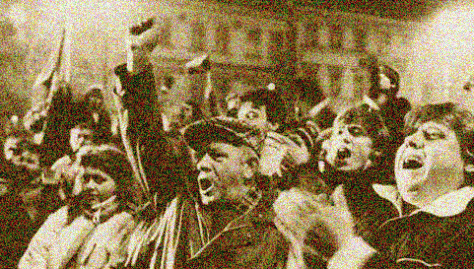
WITHIN THE space of days a bottomless media appetite will undertake the task of digesting 2011. A year of surprises, rebellion, and upheaval, its closing weeks now deliver the news that Václac Havel and Kim Jong Il have died. It is an offense against taste to fadge these two men in a final recollection, but it happens that mere chance has given us an occasion to ruminate on the just-maybes of 2012.

Read More

Remembering Christopher Hitchens

I FIRST CAME across the writer Christopher Hitchens when he was a young Socialist contributing his “Minority Report” to the Nation. Very much yet in his soixante-huitard, Trotskyist phase, if not in possession any longer of his Socialist International card, he reminded me of my favourite writer, George Orwell.

Read More

Of Christmas and the Parker 51

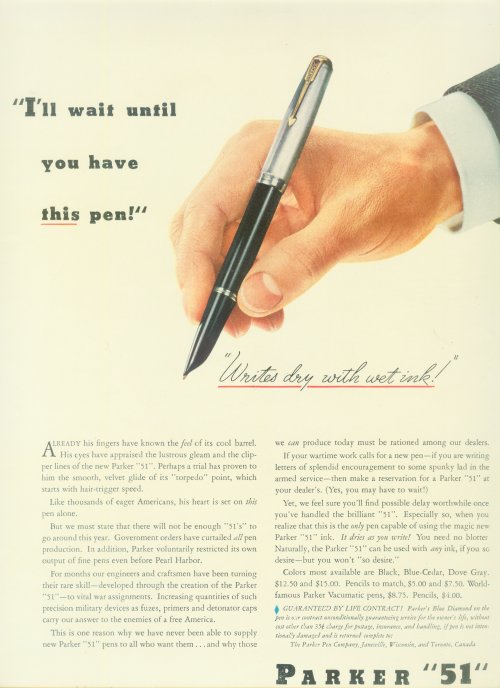
A LOVER OF languages and of literature — the name of this website is Owenna’shon:a, or words — as well as of all related matters, I’ve put together over the years a decent collection of the various tools of the trade. A recent move and downsizing compelled me to get rid of my 1952 Corona Silent typewriter, but I have kept (among other things) my writing papers and blank books and cards and my lap-desk. As I’ve noted elsewhere, I have a stationery fetish with an emphasis on the fountain pen. I don’t expect anyone not afflicted likewise to understand, and so what follows is less an attempt to bring you around to my view of things than a mere indulgence.

Read More

The Niqab in Living Colour

IN AZAR NAFISI’S book, “Reading Lolita in Tehran,” the act of removing the veil is a metaphor for transitioning from the world of black-and-white into colour, and of shedding the state-imposed self to be liberated into one’s authentic, willed identity. “Black and white” is itself a good description of the cruel and stupid absolutism imposed upon Iran by the Velayat-e faqih, its antithesis colour indicating the actual and liveable world of vibrant diversity: irony, dialectic, humour, uncertainty, skepticism and multiplicity — whether in literary, moral, or political matters. In the “clash of civilizations,” the West is on the polychromatic side of the ledger against the monochrome despotisms.

Read More

In Defence of Complexity

THE CASE of “N.S. v. Her Majesty the Queen, et al” heard in Ottawa on December 8 concerns a woman who has charged an uncle and cousin of “historical sexual assaults” (I take that to mean it happened long ago), and who in the course of hearings has requested permission to testify while wearing her niqab, or face veil. The Supreme Court of Canada is now reviewing this request and its judicial deliberations at lower levels of jurisprudence.

Read More

Looking Back at Pearl Harbour

THE DECEMBER 7, 1941 Japanese attack upon Pearl Harbour swiftly entered the realm of national mythology and for many years subsequently abetted the work of war propaganda and, after 1945, the projection of American power abroad — on the conviction that American interests were at stake. Only September 11, 2001 rivals this date as a rude interruption of American exceptionalism, the idea that America is somehow exempt from the European  business of invasion and attack.

Read More

Onkwehonwe-Neha: A Guide to Integrating into Turtle Island

Editor’s Note: We have noticed a great deal of controversy following the release of “Énoncé de valeurs: Des clés pour mon intégration à Gatineau.” This strikes us as curious, since documents of this sort have existed for centuries, without causing similar uproar. To cite one well-known example, we present the following English-language translation of the pamphlet, “Onkwehonwe-Neha [Our Ways]: A Guide to Integrating into Turtle Island,” published in 1557 by the Haudenosaunee and given to each new immigrant on arrival to Haudenosaunee territory.

Read More

Doing the Math in Attawapiskat

EARLY IN THE week, during an interview whose topic was the relationship in Canada between aboriginal and non-aboriginal people, I was asked what I would hope for “in an ideal world.” My answer was an alteration of political will, and more specific a beyond-mere-rhetoric commitment to a renewal of the relationship on the principle of mutual respect. I then felt it necessary to argue, along the lines of Theodor Herzl’s “If you will …” , that the only impediment to progress in Canada is the absence of political will.

Read More