
Tag Archives: Aboriginal people

Native in Niagara

I have been asked by the editor of a local magazine to prepare an essay “that deals with the issues of being Native in Niagara, or of growing up Native in this region.” It took me a good deal of time to arrive at a response to these topics, and even in retrospect I’m unsure whether or not the response is a good one. By good I mean only worth the time and trouble of the reader. I do not mean ‘a good representation of Being Native,’ whatever that is. What follows is a candid attempt to respond to a direct request.

Experience has taught me that to be Native is to be asked a good deal about being Native. I’ve noticed the same is true of other human curiosities; civilians want to know what it’s like to fight in a war, and the non-autistic are fascinated by autism. I’ve wondered how my life would have differed so far had I lived it as a woman, though I don’t recall ever seeking out women for comment. I suspect the question would baffle them. Where does one begin her answer to the question, What is it like to be a woman? Doubtless with the observation People ask the darndest questions.

And yet surely it matters whether one is a woman, a soldier, or a Native. There are answers even to the darndest questions. If you’ve heard of sexism, violence, and racism you won’t be surprised by the replies. Or perhaps you will, because women are not exclusively defined by the category Woman, soldiers are not merely soldiers, and Native people are not reducible to the term Native. Although this observation may sound like so much nit-picking, it isn’t. Native people are always asked to account for themselves as Natives, despite the fact that their lives are not lived necessarily and only under that rubric. You may ask, What is it like to be poor, or rich? What is it like to be a single mother, or an adopted son? What is it like to grow up middle-class in Niagara? Native people do these things and others every day. It matters that they are Native, but it matters too that they occupy other identities. Native people are subject to the same intersecting conditions of class, geography, history, gender, etc. as everyone else. Native women, for example, have more in common with non-Native women than with Native men when it comes to their experiences in the workplace. This is but one example of the nuanced character of human identity, and there are many more. Native people contend with the same social and cultural conditions with which non-Natives contend. Such is Native life, in Niagara and elsewhere.

There is a paradox at the heart of the fascination with Native life, of which I suspect every Native person is well aware. Native people grow up in a media culture obsessed with Otherness yet stubbornly ethnocentric. When Native actors appear on TV, for instance, they usually do so as The Indian. ‘Ordinary’ Native lives are ordinarily invisible around Niagara, but The Indians are all over the place. Natives are studied to death by Royal Commissions and assiduously kept (as much as possible) beyond public consciousness. Every minute detail about reserve life is unearthed and catalogued, and few non-Aboriginal people ever step foot on a reserve. Why should they? Everything is known about Indians, isn’t it. By age 5, a child can draw a picture or tell a story about them. The reports and studies and autobiographies of Native people abound, and yet so do the crude assumptions of the 5-year-old. Complex information about Native people which doesn’t accord to the simple stereotypes tends not to stick. As a result, Native people themselves cast an ironic glance upon the media hunger for ‘Native issues.’

It may be that what I’ve described so far is the stuff of which Native issues are made. But as I see the matter, the local Native concerns are as follows: education, employment, and social programs. Those who live on the reserve (putting aside the fact that the Six Nations reserve isn’t quite in Niagara) may concern themselves also with local economic development. They would like to have, and most do have, a reasonable measure of control over their circumstances. As for the many Native people who do not and perhaps have never lived on a reserve, their concerns are again familiar ones: jobs, money, health, quality of life. Concerns over the preservation of indigenous traditions pose an especial, but by no means insurmountable, challenge. Furthermore, it’s a fact of Native lives that some Native people are less interested in traditional ways than are others. Some are uninterested altogether. Beyond these statements, generalization about Native life in Niagara is a difficult affair. Nor does a consideration of the issues help much, for reasons I shall now consider.

Think about the phrase ‘Native issues’ for a moment. What does it convey to you? For many Canadians, it means above all else militarism and road blocks. A road block of course is an obstacle; it serves no active purpose and merely hinders progress. As such it is the perfect symbol of futile and obstinate resistance, which is how the Indian has historically been regarded by officialdom. The Oka occupation fascinated the media because it conformed so well to their conventions. It is doubtful whether much attention would have been given to the Mohawks’ concerns otherwise.

Furthermore, the political context for any future discussion of Native issues will likely be hostile. Constrained by a manufactured scarcity of public resources, public discourse has become a nasty affair. Its principal theme appears to be Who Should Get What, or rather, more to the point, Who Shouldn’t. I imagine that soon we’ll hear a good deal about Native people as a special interest group. Perhaps you regard them this way already. And yet if I am correct in what I’ve said thus far, it is not the ‘interests’ of Native people which are special but rather their legal-historical relation to the Canadian state. The current orthodoxy, articulated by Mr Harris and others in the Calgary Declaration, has got matters backward. The result is that citizens have been pitted one against another over their ‘special interests.’ In the case of Native peoples how could it be otherwise? They are still portrayed as a species apart, as a people defined by a peculiar set of ‘issues.’

I believe that a complex, difficultly-digested statement about Native life in Niagara is the only kind worth writing or worth reading. I am not saying that the issues ought to be disregarded, but only that they should come with thoughtful qualifications. And so I have tried to complicate things as much as possible in 1,200 words rather than simplify. I do not know which is the more difficult challenge, but I believe complexity is healthier so far as Canada, Niagara, and the representation of Native lives are concerned. [August 1998.]
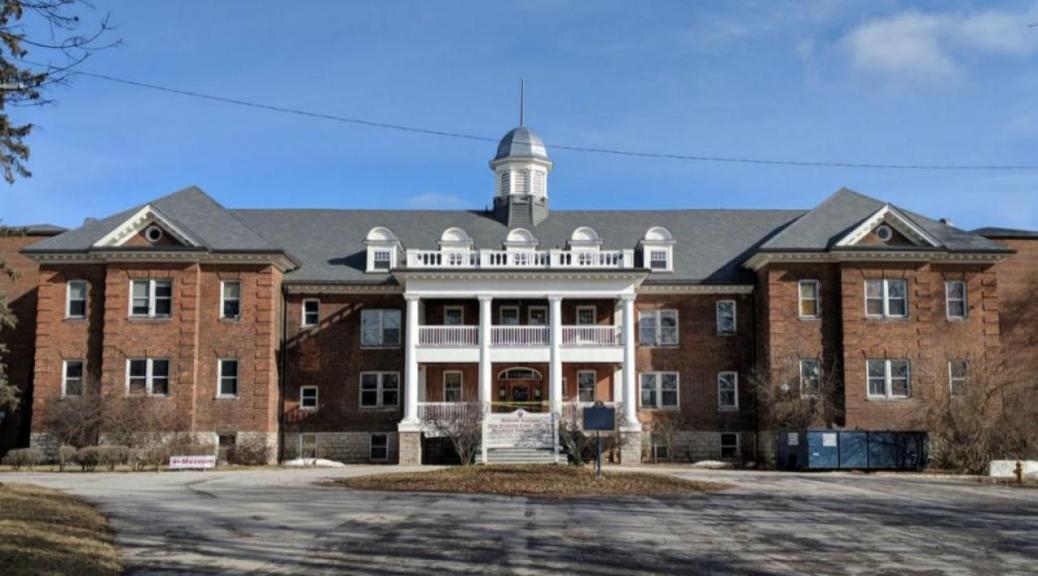
Indian Residential Schools: a brief history of the Mush Hole

Today I received news that my mother’s application for the Common Experience Payment, or CEP, (under Canada’s 2007 Indian Residential School Settlement Agreement) has run its course to a conclusion. This after two and one-half years of collecting documents, filling forms, phoning and re-phoning Government employees across the country, collecting further documents, and, having arrived at a procedural cul-de-sac, shutting things down to invoke an appeal. And, most of all, waiting.

This reference to procedural cul-de-sac concerns one of many stumbling blocks faced by former students of Indian residential schools who apply for the CEP. Often there are records in the Government’s possession showing some of the years of residence but not others. Researchers charged with assessing applications (the Government is careful to stress, by the way, the CEP is not “compensation,” but rather an acknowledgement of the common experience of being forcibly removed from family and community and placed in institutions) can not issue a payment for a year under consideration without proof of residence. If there is documentation concerning, say, 1950 and 1955 only, the intervening years can not be calculated for the purpose of the CEP. Unless the documents can be found, somehow, at some point down the road. And what a long road it can be! What is not widely known is that an applicant in this bind may request and be granted termination of the search — in effect to be deemed ineligible for a CEP in the undocumented years. This may seem like madness after a two or three year investment in a process. However, having in effect “asked” to be declined, one may proceed to an appeal process, which places the matter under the authority of persons authorized to make a judgement in the absence of records. In the hypothetical case above, the authorities may decide to issue a payment for the years 1950 to 1955, inclusive. This was the case in my mother’s appeal.

My mother is a highly confident, tenacious, assertive, and capable person — but the Sisyphean task of pushing this matter to a conclusion brought her on more than one occasion to tears. I can only guess at the number of applicants in the same situation who gave up and were, once again, humiliated and gutted by a “process” which, despite some well-meaning employees, quite shafted them. Some things really do never change.

The gaping colonial maw at the centre of this was the Mohawk Institute, an Indian residential school known more commonly as the Mush Hole. The Mush Hole had the distinction of being both the first and longest-operated Indian residential school in Canada, its construction having been begun in 1829, and its time as a federally-managed institution ending in 1969. In 1930, a one-hundred-year-later retrospective was penned by a bureaucrat at the Department of Indian and Northern Affairs Canada. (You can find it here.) I’ve often wondered what Joseph Brant, who in 1822 asked the British to construct a school and church at Six Nations, would have made of the Mush Hole. Or the negotiators of the numbered treaties, who made education in exchange for territory a strategic bargaining issue in the 1870s. Perhaps it’s a pointless exercise, but it at least suggests the enormous gap between what is agreed to in principle, and what is delivered by the political machinery. We negotiated an education agreement and got residential schools. Beginning from the Haldimand Tract, we end in Ohsweken (five percent of the land in that settlement, the rest having been sold off by Canada, which then used the money for its own infrastructure). Canada’s “interpretation” of the Kaswentha (Two Row Wampum) led to an invasion of our territories and a deposing of our government, in the 1920s.

It was roughly the time my grandfather was in the Mush Hole when protests against attempts by Canada to subvert the independence of the Haudenosaunee culminated in a 1923 trip to Geneva to petition the League of Nations. Deskaheh, or Levi General as he was known in English, was a man so eloquent and forceful in articulating the multiple crimes of Canada against the Six Nations that he was forced out of the country and died on Tuscarora land, near Niagara Falls, New York. Partly I suspect as a retaliation for having been shamed in Switzerland, and partly out of a “pre-emptive” desire to make certain it never happen again, Canada sent the RCMP into Grand River Territory in October 1924, and a puppet government (the Chief and band council system, which we have to this day) was forcibly imposed. Here’s an official characterization of these events, as recorded in the 1924 Annual Report of the Department of Indian Affairs:

Until the present year the Six Nations Indians, who are located at Ohsweken, Brant county, Ontario, had from time immemorial selected their chiefs and councillors by an ancient hereditary system in which the voting power lay with the Women of the different tribes and clans. It had been for some years obvious that this obsolete system was wholly unsuited to modern conditions of life and detrimental to progress and advancement. There has unfortunately developed, moreover, during the past few years a retrogressive and obstructive agitation on the reserve which has so impeded progressive administration that it was felt that an improvement in their political system must be effected without delay. In March, 1923, the Government appointed a Royal Commission in the person of Lt.-Col. Andrew T. Thompson to investigate the affairs of the Six Nations. The commissioner in his report, among other important recommendations, strongly urged the abolition of the old tribal system of choosing the councillors. This recommendation was promptly put into effect by the department. An Order in Council, dated September 17, 1924, was passed applying the election provision of Part Two of the Indian Act to the Six Nations. The election was held on October 21, 1924. Under the new method, the Six Nations will have a measure of local autonomy largely corresponding to that of a rural municipality but subject to the supervision of the department and the Governor in Council. It is felt that the change that has been made will assuredly further the development of these Indians and hasten the time when they will become a fully responsible and self-supporting community.

Deskaheh’s final speech, which rehearses this criminal undertaking, is one of the finest pieces of oratory I’ve ever read. On the other end of that spectrum is the above quotation, in particular the robotic falderal of the closing line.

My grandfather rarely referred to his years at the Mush Hole, though he did allude to times when hunger was so acute he and other children would dig by moonlight in the school’s adjacent field to find a raw potato to eat. In later years, he could be rather difficult to be around, and never far off when in his presence was the uneasy feeling that he carried within him some sort of unresolved quarrel better left unprovoked. Bitterness doesn’t quite cover it, but there was certainly that. He would attack his family, as well as the folks he’d chance upon at Six Nations, for not knowing how to speak the Haudenosaunee languages. I heard from him many stories of Deskaheh and learned of, quite without wanting to, the sufferings and grievances of our people. It was always unpleasant as a teenager to cross the US/Canada border with him, and to sit mortified in the passenger’s seat as he spoke Mohawk to the Customs Officer (“I’m speaking American to you. If you don’t understand it’s because you are an immigrant”) and lectured them on the Jay Treaty. Ask yourself: have you ever witnessed an armed American security official rendered speechless by someone he was duty-bound to question? Well I have. My grandfather was a Mohawk nationalist and a Seventh-Day Adventist, and I can tell you that the grass on either side of his improbable fence was sharp under the feet. But we all make our point in our own manner. My grandmother resolved without fanfare to live a dignified life, thereby rebuking those who would claim we were dirty and stupid. From her I learned the importance of developing one’s mind, and from my grandfather I doubtless inherited fire.

I’m glad that, so far as the CEP is concerned, there is a conclusion at hand for my family. But I feel sad also. No money can ever change the fact that this was yet another arrangement conceived and carried out by the Canadian Government to rub everything Indian, once and for all, from the face and memory of Earth. Many children were disfigured, in many cases irreversibly, by it. These are the sort of unpleasant facts I would prefer to forget, if it weren’t also the case that I know I must never allow myself to do so.

Follow me on Twitter