
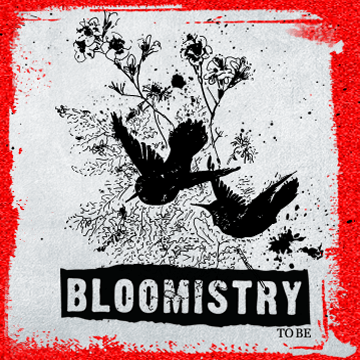
For the 6th Bloomistry album I turned, as so often before and after, to the poets to get my ideas. To be or not to be, that was the question. And the answer was “Let’s be, and let’s make another album.”
But I didn’t want to make just another Bloomistry record. So I indulged every crazy idea, the crazier the better. I recorded twenty-minute songs, atonal compositions, and tunes with invented time signatures. I filled the studio with things that I banged together, in an attempt to make music without conventional instruments. Some of it was pretty interesting, at least to me, but other than Arrow of Time (which was my attempt to sound like the band Califone) the weirder stuff didn’t make it to the record.
Some of the songs, like Feet On the Mountain and Medley, were in fact ground-breaking for me. I don’t think there’s anything like it on the earlier records. And Never Gonna Nadia was the first Bloomistry song I could imagine hearing on the radio—and then one day, in Montreal, I did hear it on the radio. That and High Beam, a clearly Lennon-esque song—though I didn’t consciously intend that—were in college radio rotation for a time.
The 2008 recession was digging in, and To Be was a record about the rot of politics and rogue capitalism. The song Roses was dedicated to Anne Rogovin and its lyrics alluded to Rose Schneiderman as well as to the poem “Bread and Roses.” I was not very happy at this time, for a lot of reasons, most of them having to do with living in a staid bureaucratic city (as I saw it) where it seemed to be winter ten months a year. Maybe that’s why this record bogged down.
I’ve never been able to decide whether or not these songs are any good, or whether they work as a whole. The middle section—Wine and Women, On Top of the World, and To The Bottom—were taken from another project, Laketown. I call this section of the record the Tape Hiss Trio (listen and you’ll know what I mean) and it bothers me to this day that it’s there. Still, this is the most polished of my records, and I did a lot of interesting trickery in the studio to pull it off.
Simon Meilleur overdubbed the drums on Never Gonna Nadia and The Wars. I was never a strong drummer (I learned to play drums as I made these records!) so there was always timing issues. His contribution took things to a new level. And Edith Boucher’s artwork for this record was the first time I actually thought about such things in a serious way. So this is also my best-looking album.
On February 16, 2009, I started recording The Gutter and the Gut, as it was called. Phil Bova mixed the album on August 12–13 and we mastered on September 22, two weeks after I had mixed Laketown with Dave Draves. I took three songs off that record and substituted them on To Be. The rest is history.
Tracks.
1. High Beam
2. A Crack in my Cup
3. Four Leaf Clover
4. Wine and Women
5. On Top of the World
6. To the Bottom
7. Never Gonna Nadia
8. Feet on the Mountain
9. Broken (Medley)
10. Arrow of Time
11. Roses
12. The Wars

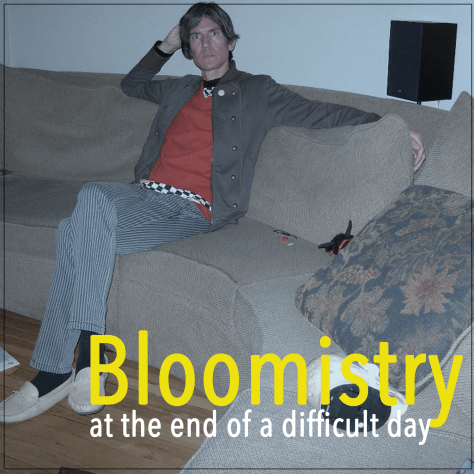
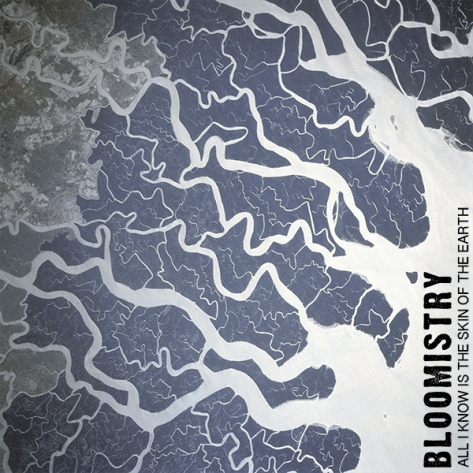 2007–2008 was an incredibly productive musical year for me. Recorded over three days (August 17–19, 2007), All I Know Is the Skin of the Earth was the 4th full-length Bloomistry album, following Late Bloom by only a few months. By the fall of 2008, a fifth album—At the End of a Difficult Day—would be finished.
Late Bloom was an album about returning to recording and live performance at age 40, after a long hiatus. All I Know Is the Skin of the Earth is a line from a Pablo Neruda poem. The working title, A City Like Me, reflected a growing desire to find a new place to call home. I was getting sick of Ottawa. Also, most of the songs for this album were written in hotel rooms, as was the case with Ca Marche and Late Bloom, adding to the album’s overall feel of restlessness.
All I Know Is the Skin of the Earth was made in a weekend marathon session and recorded to eight-track tape. That’s the best way to do it, in my opinion. The most focused and ambitious of my first four Bloomistry albums, it was self-consciously retro, featuring 60s instruments including most notably the combo organ. I imagined myself playing the soundtrack to a hip movie in 1962, kind of like Breakfast at Tiffany’s. Phil Bova mixed and mastered the record at Bova Sound, in Ottawa, on March 24–25, 2008. This remaster builds on this earlier version.
The album began as a series of stories told by characters (the pirate of “Sand and Sea,” the Casanova of “Bitter Sense of Melody” and the eponymous Undertaker) and in some cases real people that I knew. “On the Western Trail” tells the true story of an acquaintance of mine who was taken to Spain—kidnapped I would say—by the country’s poet laureate. “Higher Cloud” rehearses the sad story of Harold Funk, an attorney who suffered from mental illness and became a local legend by putting conspiratorial leaflets on the car windshields of Ottawa. There is an actual recording of Funk shouting at the US Embassy that I made on my walk to work one day and mixed into the song’s bridge.
All I Know Is the Skin of the Earth came closest to perfecting the post-punk, 60s-pop blend that was my aspiration. The next album would explore Americana, turning to lap steel guitars, banjo, Les Pauls and 50s amps and instruments. I regard this album as my best work. It was massive fun to make, and when it was done I had the best sushi dinner ever, at Wasabi in Ottawa.
Tracks.
1. The Found Cause
2. Via Maria
3. Another Other Life
4. The All About A Girl
5. Winter’s Summer Song
6. On The Western Trail
7. Sand And Sea
8. Mosquito
9. Bitter Sense of Melody
10. A City Like Me
11. Higher Cloud
12. Beatrice
13. With The Violins
14. The Undertaker
2007–2008 was an incredibly productive musical year for me. Recorded over three days (August 17–19, 2007), All I Know Is the Skin of the Earth was the 4th full-length Bloomistry album, following Late Bloom by only a few months. By the fall of 2008, a fifth album—At the End of a Difficult Day—would be finished.
Late Bloom was an album about returning to recording and live performance at age 40, after a long hiatus. All I Know Is the Skin of the Earth is a line from a Pablo Neruda poem. The working title, A City Like Me, reflected a growing desire to find a new place to call home. I was getting sick of Ottawa. Also, most of the songs for this album were written in hotel rooms, as was the case with Ca Marche and Late Bloom, adding to the album’s overall feel of restlessness.
All I Know Is the Skin of the Earth was made in a weekend marathon session and recorded to eight-track tape. That’s the best way to do it, in my opinion. The most focused and ambitious of my first four Bloomistry albums, it was self-consciously retro, featuring 60s instruments including most notably the combo organ. I imagined myself playing the soundtrack to a hip movie in 1962, kind of like Breakfast at Tiffany’s. Phil Bova mixed and mastered the record at Bova Sound, in Ottawa, on March 24–25, 2008. This remaster builds on this earlier version.
The album began as a series of stories told by characters (the pirate of “Sand and Sea,” the Casanova of “Bitter Sense of Melody” and the eponymous Undertaker) and in some cases real people that I knew. “On the Western Trail” tells the true story of an acquaintance of mine who was taken to Spain—kidnapped I would say—by the country’s poet laureate. “Higher Cloud” rehearses the sad story of Harold Funk, an attorney who suffered from mental illness and became a local legend by putting conspiratorial leaflets on the car windshields of Ottawa. There is an actual recording of Funk shouting at the US Embassy that I made on my walk to work one day and mixed into the song’s bridge.
All I Know Is the Skin of the Earth came closest to perfecting the post-punk, 60s-pop blend that was my aspiration. The next album would explore Americana, turning to lap steel guitars, banjo, Les Pauls and 50s amps and instruments. I regard this album as my best work. It was massive fun to make, and when it was done I had the best sushi dinner ever, at Wasabi in Ottawa.
Tracks.
1. The Found Cause
2. Via Maria
3. Another Other Life
4. The All About A Girl
5. Winter’s Summer Song
6. On The Western Trail
7. Sand And Sea
8. Mosquito
9. Bitter Sense of Melody
10. A City Like Me
11. Higher Cloud
12. Beatrice
13. With The Violins
14. The Undertaker

 Journalism, Essays, Broadcasting, Books