All posts by Wayne K. Spear

waynekspear.com

Lotteries and lattices

Lattice
Photo “Lattice” courtesy of Sam Cox on Flickr

I’ve never won a lottery. Maybe that’s because I’ve never bought a ticket, ever.

The lottery is a state of mind. Many of us try to win the lottery of the mind. I have lost this kind of lottery many times.

The lottery of the mind says it all depends on the lucky break. Get it, and you’re home-free. Don’t get it, and you’re a failure.

Your book, your pitch, your project, your investment.  You look for the big lucky break. But guess what. Big lucky breaks seldom happen in life, so chances are you’re a loser. If you’re playing the lottery of the mind, you know what I’m talking about it.

Sure, some of us will win the lottery, maybe even on the first ticket. And the rest of us? We’ll need lattices.

In the absence of one life-changing event, our lives will be built of many small events.

Not one huge best-seller, or one giant breakthrough, but ten or twenty moderate successes intersecting our many other efforts.

You can build a reliable structure of lattices, but it takes time. No one, individual lathe will suffice. The truth is most people won’t even notice that you’re putting the pieces together. Not until you’ve created the total effect out of a combination and coordination of units.

Play the lottery, and you’ll likely lose every time. You’ll feel your time and energy was wasted. All you’ll see is the prize you never got, and that you’ll probably never get.

Make something of lattices, and every effort—no matter how small—will contribute to the greater end. No work will ever be wasted, and every step will be meaningful.

Are you in a hole or a foundation?

Hole
Photo “Huge Hole revisit” courtesy of Sam on Flickr.

Down the street, there is an enormous hole. It was a hole one month ago, and it is a hole today. The day is coming when the hole will be a building in which thousands of people are living.

Somewhere there is a drawing of the building. The hole is part of that plan. When the workers look at the hole, they see a foundation.

Everything in life starts as a hole.

I was traveling to a job for a new client. I had $75 in my business account, and nothing in my personal account. I had debts. I wasn’t sure if there was even enough room left on my credit card to pay for my expenses. It was one of the happiest days of my life, because I was building a business of my own. Yes I was in a hole, but I had a plan. The hole was my foundation.

You don’t ever see a building being made. You see workers standing around, smoking. You see men carrying things. You see materials being piled up. You see a lot of apparently random activity. A sky-scraper is made in slow motion. It’s a long-run proposition. It only happens because there’s a plan, and they stick with it.

In the long-run, we’re all dead. In the long-run you find out what you’re really made of. In the long-run, all the facts see the light of day. So whatever you’re doing, get in it for the long-run.

In the day-to-day we have a lot of surprises, failures, tough lessons, and set-backs. Some days are smoking men. Some days feel like nothing but the seemingly pointless activity of a shirking work-crew. You can do anything, but right now the bank account is empty and more bills are on the way.

A hole is just a hole if you don’t have a long-term plan.

Money and wealth

Capitalism, entrepreneurship, industry. These terms are often used inter-changeably, but they are not the same.

Capitalism is a system of social, political, and economic governance. It is the rule of capital, of property, of surplus value. In a capitalist society, the rules of the game are determined by capital for the benefit of capital.

To some degree, the interests of the great mass of people—the public—must also be accommodated, or perhaps managed from above. Capitalism and democracy exist in tension, because the interests of the demos do not always align with the interests of capital.

Entrepreneurs create businesses. They deliver goods and services. They build, invest, and produce. You can be a capitalist without ever being an entrepreneur. Capitalism, especially finance capitalism, need never invent a product, start a business, or create a job.

Entrepreneurs make things, capitalists leverage capital in a restless effort to convert nature into capital. Surplus value begets more surplus value, which begets more surplus.

An entrepreneur becomes a capitalist when his chief and overwhelming purpose is to invest capital in order to accumulate greater capital. Eventually he will understand that making things is a poor wealth strategy.

Those who make things earn money. Those who leverage capital to convert the world into capital generate personal wealth. Indeed, those who own productive property are wealth.

Industry can exist without capitalism. Entrepreneurs can, and do, create jobs and factories and goods. From a capitalist perspective, shutting down factories, or substituting capital for labor, can be as lucrative as opening a factory and hiring workers.

Entrepreneurs, capitalism, and industrialism co-exist. They are related. But they are not the same.

Conclusions:

A job is not property. Industry is not capitalism. A capitalist is not necessarily an entrepreneur. Money is not wealth. America is not a democracy.

Motivation versus inspiration

A work-out for the soul. ✎ By Wayne K. Spear

We can be inspired by many things: a sunset, a song, an idea, the powerful stories of others.

Inspiration is a breath. A spirit. An infusion that quickens the mind. We take it in, and we are exalted.

Inspiration is the suggestion of grand possibility.

TV crime investigators seek motives. Every criminal is assumed to have a purpose, a reason for his actions which makes logical sense of them.

Motivation, like inspiration, stimulates the mind—but the stimulation points to a definite goal. Motivation is motion.

The difference between inspiration and motivation is perspiration.

Inspiration says, “It is possible.” Motivation says, “Here is the purpose and the path: Go!”

Infinity

Three chords and the truth. ✎ By Wayne K. Spear

There are tens of thousands of pop songs, going back dozens of centuries. We will never run out of pop songs, because human creativity is infinite.

The ingredients of a pop song are melody, beat, and (in most cases) lyrics.

The major and minor scales contain seven notes. The English alphabet contains twenty-six letters. The alphabets of other languages are even smaller.

Most pop songs are built on a few chords and a motif (or hook) of less than six notes.

From a few simple ingredients, infinite possibilities. This is the case not only in music but in the arts generally.

If you have a little bit, you have more than what you will ever need, because the world of the human imagination is infinite.

Change (and why your vote will never cause it)

No Coke, Pepsi. ✎ By Wayne K. Spear

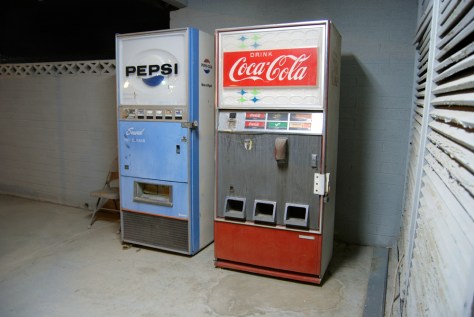
Coke or Pepsi

Photo Pepsi or Coca-Cola courtesy of Roadsidepictures on Flickr

The United States is dominated by two political parties. The major soft drink makers are Coke and Pepsi. Most of us own a Mac or a PC. In theory, free markets provide a range of choices, but this range of choice is constrained by the suppliers themselves.

Have you ever noticed that most restaurants serve Coke products or Pepsi products, rarely both? This is the outcome of corporate interests and policies that intentionally limit consumer choice. Adam Smith wrote about this phenomenon in 1776. It is well-known and uncontroversial.

Canada has three main federal political parties, all trying to capture enough of the political centre to form a government. The differences of their brands are small. Democratic political elections are fought over matters of style: personalities, like-ability, popularity. The candidate that “seems like” will win. The three parties tacitly agree on the acceptable range of debate: the middle class, taxes, growth, the economy.

Markets change only as a result of revolutionary upheaval. A revolution in a market occurs when an upstart/outsider introduces a game-changing idea. The giants are incapable of changing the market: they are too thoroughly invested in maintaining it to their advantage.

In a democracy, voting for one of the two or three political parties on offer is like ordering a Pepsi in a restaurant that has chosen to only serve Pepsi.

In a democracy, the upstart/outsider is an activist and agitator. Her business model is civil disobedience, resistance, and radical critique. She eats away at the market share of the giants. The IBMs of the world try to adapt.

But they are not the agents of change, they are interested only in a world that forever stays the same, and that forever serves their market interests.

One good idea

How to do anything with ideas. ✎ By Wayne K. Spear

What do Henry Ford, Steve Jobs, Albert Einstein, and Charles Darwin have in common?

All of them had one great idea.

What do you want? What do you need? Where do you want to go? All it takes is one good idea.

A software installation file is a self-contained package with step-by-step instructions. An idea is a self-contained package of step-by-step actions.

Doing begins with conceiving. Ideas beget actions.

Here is the simple, fool-proof formula for a great idea:

bad idea –> bad idea –> bad idea –> bad idea –> bad idea –> [etc.] –> great idea

What do Henry Ford, Steve Jobs, Albert Einstein, and Charles Darwin have in common?

All of them had bad ideas.

Having a great idea is the outcome of a banal and tedious process. That’s why so few of us bother.

In the land of the blind, the one-eyed man is king. In the land of people who have no idea, your one idea will make you a champion.

Every day, write your ideas: big ideas, small ideas, practical ideas, fantastical ideas, money-making ideas, life and love ideas, gratitude ideas, household ideas, book ideas, change ideas, self-improvement ideas, decorating ideas, organization ideas, planning ideas.

In one year, fill a 365-page book with (mostly bad) ideas.

If a million-dollar idea is also a one-in-a-million idea, you’ll need 1,000,000 ideas. Or you may get lucky. Your million-dollar idea could be your first idea, or your tenth, or your 129th. The point is to keep going. Don’t stop at 128.

One good idea can make your day. One great idea can change your life.

As soon as possible, have one good idea.

Strivers, voyagers, connectors, dreamers

Goals, diversions, relationships, ideas. ✎ By Wayne K. Spear

Some lives are lived with purpose. The people who live these lives are all about results. Inventors, entrepreneurs, artists, and politicians often fall into this category. When these people succeed, they make the history books.

Some lives are lived for the journey. The people who live for the voyage are not interested in results. They care about motion. Curiosity, a sense of wonder, the joy of discovery, and aesthetic beauty launch them into the world.

Some lives are lived for people. These lives are seen through the lens of relationships. Relationship people want to make deep connections. When they have a bonding experience, the experience is positive.

Some lives are lived for ideas and the play of mind. These lives can seem lonely and isolated to others, but the people who live for ideas have a rich and vibrant inner life. They will never be in the movies or on the news, but in their imaginations an extraordinary drama, much more compelling to them than the mundane world of pop culture, unfolds.

Be a Change Leader

Loss and leaders. ✎ By Wayne K. Spear

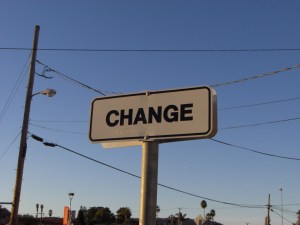
Change
Photo courtesy of m.a.r.c. on Flickr

All change is loss.

Change is commitment to giving something up in order to get something better.

I will lose 20 pounds. I will quit smoking. I will spend less time procrastinating.

It is the same in an organization or community. As a change leader, you are asking people to give up something known, familiar, and predictable—in exchange for something uncertain, unknown, and unpredictable.

Uncertainty breeds fear and mistrust. Address these emotions head-on by focusing first on positives.

Ask: “What do we value? What is good? What works for us?”

Identify the present positives. Build on the foundation of positive, shared values. Demonstrate your commitment to the good. This will reduce fear and mistrust and build consensus.

Now that you have focused everyone’s mind on the present positives, transition to the future positives.

A commitment to losing 20 pounds is not a future positive: it is the action that attains the future positive. It is a negative that focuses our minds on loss. A commitment to quit smoking is likewise not a future positive.

Negatives drain, positives energize. Find, and focus on, the future positives.

Ask “Why?” The answer to Why? will address the unspoken question “What’s in it for me?”

Why should I give up doing things the way I have always done them?

Your organization or community will champion change more readily if you show them the future positives, in a clear and concrete way.

Example: Don’t commit to “losing 20 pounds.” Commit instead to feeling and looking great at your new weight of X pounds.

Energize change by visualizing the Why? There are many reasons to lose 20 pounds, and if you identify the fundamental Why, you will have a powerful motivator.

Tell others what the future looks like and on what date it will be realized. Be as specific as possible.

Show how future positives are linked to present positives. Change, properly managed, supports and enriches our present positives. It does not displace, or replace, our values and our good.

Change requires you to ask good questions and to listen. Don’t dictate: facilitate.

Move from positive to positive.

Find the bedrock of shared values. Build upon strengths. Have a clear vision of the future.

When your great company isn’t actually that great a company

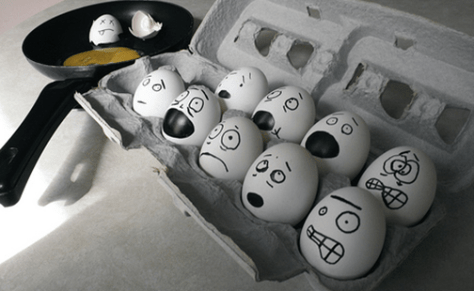
Stress
Photo “Stress” courtesy of Bernard Goldbach on Flickr

Lately, my friend has been telling me a lot about the “great company” he works for. At least that’s what he says: “It’s a great company; the problems are just in our department.” Yet there’s no evidence of the company’s greatness I’ve ever seen. In fact, everything my friend tells me suggests he works for a terrible company.

Under constant pressures, he is permanently stressed, and so are his coworkers. Many of the most talented and ambitious of the workers have left, or are thinking about leaving. The managers are in over their heads, and they are stressed to the breaking point. Morale is low. Worse yet, it’s well known throughout the company that things are terrible. And yet no one at the senior level ever addresses what’s really going on.

So how does this all add up to “a great company”?

Here’s how.

“Great companies” make great products. They go out into the world with an inspiring message that talks about treating the Earth kindly, loving nature, and making organic and cruelty-free products that everyone loves.

Their message is that they are progressive, thoughtful, conscientious, and all about loving people and the planet. And we tend to buy these kinds of messages, along with the products they are intended to sell. In fact, if I told you the name of my friend’s company, you would probably reply, “Oh, yeah—they’re a great company.”

We’ve all heard about the “great company” that buys pizza for its staff and even has dormitories attached to the office, so you never have to go home.

And you almost never do go home when you work in a “great company.” You eat the free pizza at your desk, and you work through dinner to midnight. Then you come back early in the morning, and do it all again, six days a week. Seven, when launch time is near.

The “great company” throws huge parties where everyone gets “free” beer. Forget that nothing is ever truly free if your time and labor paid for it. The company that gives you beer is always a great company.

The workforce of the “great company” is mostly young, impressionable people. They have no families and no life outside work. They don’t understand the fine line between working hard and being abused. They will give up their lives to work for a cool company that makes fairly-traded, Earth-friendly, biodegradable, organic, free-range, super-cool widgets that get featured in hipster magazines. Their employers count on it.

The people who work for the “great company,” and who have families, are filled with toxins that they take home with them each night. Some of them become alcoholics, some others spend their time at home depressed, exhausted, and miserable, dreading their return to the office or factory. They are never truly with their families and away from work. The toxins spread. Marriages and relationships suffer. The “great company” poisons everything.

In my experience these great companies are almost always paternalistic in nature. They hire young people and treat them like children—but in a cheer-leading way that, at least in the beginning, feels good. They say great-sounding things about how much they value you. Once in a while a door opens from above and the workers are showered with popsicles or ice cream or “staff appreciation day” stickers. The paternalistic “great company” only wants to talk about positive, happy things. There are no problems in the workplace, only the constant need to work harder. Everything in the “great company” is great. That’s because the paternalistic bosses carefully control the upbeat message, so that information only goes one way: from the top to the bottom. The real conditions, stresses, needs, and hazards of the workplace never filter upward, because the bosses are not that interested.

The paternalism seems less paternalistic when the official message is that everything is all great, all the time.

Great companies ask people to do unreasonable things, like give up their family life by working ever-lengthening shifts and work-weeks. When the stress fractures start to show, the manager orders pizza and gives a little speech about how great the company is, and what a great job everyone is doing.

What the manager doesn’t do is support the staff in a way that ensures they can meet their targets without burning out. The manager isn’t properly supported, either. You see, the rot—just like the propaganda—comes from the very top of the “great company.” The leaders of the “great company” tend to believe their own hype, when in fact they are running an operation that devours people and throws away their bones.

The company President is charming, charismatic, and fun. He’s so “cool,” people don’t notice he’s in charge of a highly dysfunctional workplace. For a while, the “great company” thrives on its hip image and high-energy, youth-oriented culture. Eventually however things gets so bad that even he sees the truth. By then it’s usually too late.

The source of interpersonal conflict, and what you can do about it

Understand. Be Understood. ✎ By Wayne K. Spear

15% of an iceberg is above the water, where we can see it. We know there’s much more ice below the surface, but it’s pure guesswork as to the size, shape, and nature of the submerged 85%.

Unless we dive down, which we’re now going to do.

Iceberg

Only, I’m not talking about icebergs today. I’m talking about you, your co-workers, your friends, and the next person you’re going to meet.

Our subject is nothing less than humanity itself. Let’s call it Introduction to People, or “People 101.”

You see, the universe gives us a magical thing called balance. I know this sounds weird, but it’s actually a practical, down-to earth matter.

Think of Newton’s Third Law:

For every action, there is an equal and opposite reaction

When we look at nature, we see action-reaction force pairs in everything. You push down on the earth, and the earth pushes up on you. If this were not so, car tires would have no traction. You’d float aimlessly in the air, rather than propel forward toward the office. (Maybe that’s a good thing!)

Human beings come in a variety of shapes, sizes, and personalities. At bottom, however, we all lean toward either a thinking / feeling orientation or relationship / task orientation. We are either introverted or extroverted, skeptical or optimistic, active or reflective.

We can be a blend of both, but most of us lean more toward one than we do the other.

Carl Jung observed that opposites attract. Look at your life and ask “Isn’t it so?”

A virtual Odd Couple, (almost) every marriage has a personality contrast. Maybe it’s a touchy-feely type and a hard-headed intellectual. Or maybe the outgoing, people-oriented person settles down with someone who’d rather stay home and read a book. One cares what everything thinks and wants to take on the world’s problems and make everything better. The other says “you’re crazy, and anyways who cares what people think.”

The universe gives us balance because without it we would not survive. Every human relationship is an action-reaction force pair. Someone in the company has to be good at balancing the books, and someone has to be good at selling.

For goodness sake, never ask your cautious, task-oriented accountant to go out and win people over. Don’t let the sales people keep your books. Learn to understand and leverage human differences.

The people around you fill in your gaps. Your strengths are their weaknesses, and vice versa. You pick your opposite because that’s a good life strategy. Alone, we’re all two-legged stools. Together we stand.

This brings us to a mystery: why is there so much interpersonal conflict in the world if the universe gives us balance?

The answer is that the balance is all happening under the water. Above the surface we see only the 15%—the behavior of others that drives us nuts, because we don’t understand what’s really going on. We don’t appreciate, or even understand, the true nature and value of human differences.

We find ourselves in a business or personal relationship with someone who is, in some important ways, very much unlike us, and we say to ourselves: “What is wrong with this person? Why can’t he be more like me!”

And by “more like me,” we mean “right.”

Conflict begins when we see others as impeding rather than as balancing us.

We human beings take the natural balance built into the action-reaction force pairs of relationships and we turn it into imbalance by wanting others to see as we see, to feel as we feel, to think as we think, and to value as we value.

If, in contrast, you can see what others see and feel what others feel, you can achieve the same end: harmony and understanding. You can restore the balance.

I’m not suggesting that we can all, or even should, fall in love with one another. Some people are going to drive you crazy, no matter what, but you still have to work with them in a productive, drama-free manner.

In my work I use empirical, data-driven workplace assessment tools to take my clients to the submerged dynamics of their interpersonal workplace relationships. I dive down with them to explore the talents, values, and personality of every individual—in a safe, positive, inspiring, and insightful way.

I focus on what’s right with people, not what’s wrong: their talents, strengths, assets, values.

When you take the world’s (fortunately rare) psychopaths and sociopaths out of the picture, all of us are just trying to do the best with what we have.

Because we live in a world of icebergs, and because most of us don’t know how to deep-sea dive, we make assumptions about our environment and the people in it that are incorrect, simply because we don’t have all the information we need.

The tagline of my business is “Understand, Be Understood.” That’s my guiding principle, and I use it to make workplaces happier, stronger, and more effective.

And it works, not only in your organization but also in your life.

Are you curious to know more? Send me an email, and we’ll talk.

The wisdom of balance

5766453552_621667909d_b
Photo courtesy of Sepehr Ehsani on Flickr

I used to work for a company whose motto was “Work Hard, Play Hard.” I sure remember the working hard bit. Maybe what they meant was “Work Hard, Play Hardly.”

Most days need to be about meeting deadlines, advancing goals, and taking care of business. There should also be days of idleness, but our busyness tends to nix that idea.

We struggle for balance. Or we don’t, because we’ve given up on dreams.

Our jobs are demanding and relentless. Life is complicated. It’s not our fault.

Balance, we decide, is a luxury. It’s for the rich and powerful, not for us working slobs.

Balance, however, is not really about work-life ratios.

Sure, that’s how we experience it—as a hellish time-management crush.

I’m super fortunate, because I’m my own boss. But don’t think for a moment this exempts me from the Struggle for Balance. My boss is a tyrant.

I love what I do as a consultant. It’s interesting and challenging work, and people tell me how much they appreciate it. I’d happily do it nine days a week.

The problem is that introverts, like me, come home exhausted. Tell me if this sounds familiar.

Every day we give our energy, focus, enthusiasm, concentration, and big smiles to the people we meet in the world. We want to help our customers any way we can. We work hard because we feel responsible. We work like we’re saving the world.

Then we come home and spend the evening on the couch. We have nothing left for our family, except maybe our moans about how tired we are and how hard our days was.

Does this sound like work-life balance?

Like I said before, stop thinking about balance as a work-life issue. There’s something deeper going on. Let me explain.

Growing up, I was exposed to two very different types of family dynamic. One was very British: reserved, demure, polite, private.

The other was Mohawk: loud, headstrong, opinionated, brash, combative.

Both styles had their virtues. Both definitely had their dangers.

My Mohawk relatives said exactly what they thought, without sugar-coating it. I admired this. I thought of my Mohawk aunts and uncles as ass-kickers. But as I got older, I saw the fruits of a lived lived by the principle “my way or the highway.”

My reserved English relatives were polite and conciliatory. I loved how easy it was to be with them. There were never fights or opinion contests. But again, as I got older I saw a dark side. The reserved side of my family also had strong wills. They just chose to rely on other methods, like passive-aggressiveness, to get their way.

I realized a long time ago I was capable of either extreme. The question was “Is there a good balance?”—between being candid and diplomatic, and between letting people know exactly what you think, need, and want, but without steamrolling over their needs and feelings.

Balance is not about how much you work. It’s about how you ensure that your needs are met in a way that respects and accommodates the needs of the people around you.

The people at work, the people at home, the people you meet in the world.

The company that says “work hard, play hard” when what they really mean is work until you drop is not balancing the needs of the company with the needs of employees.

A workplace out-of-balance is going to face low morale, low worker retention, hostility, and rebellion. The out-of-balance family will have conflict.

Either you work to achieve balance, or you wait for the storm. There’s no third way.

Balance is a negotiation. Your needs, the needs of your boss, the needs of your colleagues, the needs of your family, the needs of your organization and stakeholders.

When your needs are being met, you live in balance with others. When they are not being met, raw emotion takes over. You feel you’re on rough waters. The boat rocks. It’s as if you’re about to capsize.

You are the boss of your needs. Only you can open the Needs Negotiations in a way that restores balance.

What needs of yours are being met? What needs could be met better? What can you do to bring your needs, and the needs of those around you, into balance? What is the next step?

Big Negatives, small positives

The small picture. ✎ By Wayne K. Spear

Notepad

Human history is rich with stories of paradise: Heaven, Nirvana, Utopia, The Sweet Hereafter.

Each of us has imagined a personal world of perfect bliss. One day we’ll go there.

In fact, that’s what it’s called. One Day.

One Day when we’ve lost 20 pounds. One Day when we make more money. One Day when we pay off our debts. One Day when we’ve solved our big problems.

One Day, we’ll start living for real.

One Day lies beyond the realm of the Big Negatives. We humans tend to focus on negatives. It’s biological. We’d never have survived as a species if we weren’t forever attuned to risk, danger, and enemies.

The Big Negative is a mental check-list. It’s not only our problems, it’s the things we want but don’t have.

Drawing up a list of negatives and turning them into positives is not a bad thing. In fact, it can bring great satisfaction. We all need to face the problems in our lives that are within our power, and responsibility, to change.

But obsessing over the Big Negatives is a huge energy drain. Maybe in a few years, you’ll have crossed a couple Big Negatives off the list. Maybe not. We need a strategy that helps us fulfill long-term goals while also living our lives today.

Today is the realm of small positives. They’re all around us, right now. That’s why we take them for granted. It’s hard to see the small positive right in front of you when you’re dreaming about the day, twenty years from now, when you won’t have to deal with your idiot boss.

The cruel irony is that when you’re old, and your idiot boss is a distant memory, so too the small positives. That’s when we’ll look back to the good old days, regretting the things we took for granted.

Human nature. It takes some discipline to be otherwise. The good news is that we are also habit-forming creatures. Good habits, bad habits. We can do either.

Every week, make a list of a few small positives. Something you’re grateful for, something good you can easily do for a friend or colleague, something you always wanted to try or learn or see but have put off because you’re busy with the Big Negatives.

A little bit of knowledge

The world needs knowledge nutritionists. ✎ By Wayne K. Spear

A little bit of knowledge can be a dangerous thing. Ignorance is blissful—a clean slate, not blemished by troubling facts.

From uninformed to mis-informed to ill-informed: junk knowledge, like junk food, can fill you without nourishing you.

Here is an experiment:

Read five books on any subject. Discuss the subject with the people you meet. What do you notice?

Chances are that most of the people you meet will not have read even one book on your subject.

It only takes a few months, at most, to read five books. And yet, to most people you will be an expert in your topic, simply because you have read five books.

Who truly knows what went wrong in Syria, or if and how it could have been prevented? Many people blame Israel and “the Jews” for the miseries of war in the Middle East and the Levant. Others blame America and the CIA. Still others blame capitalism, the oil companies, and corporations.

Junk food, junk knowledge. Both are cheap and abundant. “Send the Muslim refugees to Muslim countries,” some say of the Kobani Kurds.

Who are the Kurds? Christians, Sunnis, atheists, secularists. Or none of the above. They are human beings, diverse and complex.

The Kurds are a persecuted, stateless people, over 30-million strong and spread across Turkey, Iran, Iraq, Syria, Armenia, and Azerbaijan. There are millions of Kurds, but (for a number of ugly political and historical reasons) no Kurdistan.

On whatever topic you pick, you can become an expert, relative to 90% of the world, by reading five books, perhaps even one.

Run your business like a nerd

Be the life of the corner of the room of the party. ✎ By Wayne K. Spear

Nerds
Photo courtesy of Nathan Rupert, Flickr

A business can attempt one of two things: to be all things to all people, or to find and serve a market niche.

The former requires scale. Big box stores, huge inventories, supply-chain management, constant growth and expansion, a franchise strategy.

To be all things to all people is necessarily to be aggressive. You must dominate multiple markets to survive, because your competition is legion.

Walmart is an example of this model. The stakes of an all-things-to-all-people strategy are extremely high, but so too are the potential rewards.

A niche strategy targets a small but focused market. The enthusiasm and loyalty of the customer, rather than a directive of constant growth and fierce competition, drives the business.

A niche business issues from an unusual or marginal interest. The box stores do not serve niches. The mantra of a mass-market business model is: Unless everyone wants it, we will not get it.

Often the niche business is started by a hobbyist, eccentric, specialist, or collector. He is driven by passion, and by a desire to serve and connect with the like-minded. Here, the mantra is: If you don’t fit in, don’t compete.

An all-things-to-all-people business strategy is capital intensive. It requires a marketing and advertising strategy, aggressive growth, and ruthless competition.

A niche strategy is passion intensive. It requires knowledge of the niche, and authenticity. You must love the niche, and you must care about the people who occupy it. You are not simply running a business, you are creating a community.

The big box store is the life of the party. She goes about the room, chatting up everyone in it. By the end of the night, she’s made a dozen new friends.

The niche business, meanwhile, spends the evening in the corner of the room, discussing Etruscan manuscripts.

In the niche, we form fewer bonds—but they are instant and powerful.

Your niche customers will find you. After all, it’s hard not to notice the one other person in the corner of the room

Let your passion, oddball and off-the-beaten-path as it is, guide you.

Find your people, and serve them.