All posts by Wayne K. Spear

waynekspear.com

If Mulcair can’t hold the NDP’s gains, the merger whispers will begin

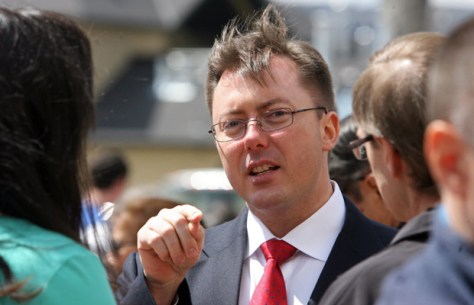
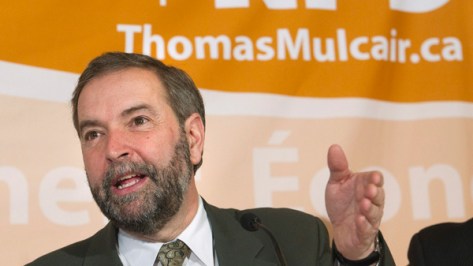
The rise of Thomas Mulcair brings Canada one step closer to a settling of its parliamentary landscape. This former Quebec Liberal, whose one-time boss was a former Progressive Conservative, will henceforth parry with the Liberal interim leader — a former NDPer — and the Conservative Prime Minister, previously of the Canadian Alliance, which not long ago went by the name of the Reform Party.

The preceding highlights the fluid, and in some cases opportunistic, character of recent Canadian politics. Mulcair’s candidacy invoked the familiar weighing of purity against pragmatism, a debate concerning whether one should advance the candidate who can win, rather than the candidate who is authentic. Given that the victor has among his assets deep-pocketed campaign contributors and experience in Quebec and a notoriously combative style, it appears pragmatism has won this time around. Refusing to cut a self-serving deal, Nathan Cullen has won the war of principle by foregoing what the author and politician Nicholas Flood Davin termed, in his 1876 satire The Fair Grit, the “buncombe struggle” — in which contestants “out-vie each other first in professions of purity, and then out-do each other, as far as it is possible, in acts of corruption.” Under Davin’s formulation, “In Opposition all is virtue; in power all the reverse.”

In a slightly modified form this principle, long familiar on the Social-Democrat left, demands of virtue and authenticity the rejection of compromise for the purpose of achieving political power. Considered from the perspective of expedience, however, Mulcair is impressive: a serial first-placer, he is chronologically second only to Phil Edmonston on the list of winning Quebec NDP candidates. (If one puts aside by-elections, Mulcair becomes the first NDP candidate to win a Quebec seat in a general federal election.) Regarding the second criterion, authenticity, there are skeptics and detractors. Judy Rebick asserts that “the NDP has elected an old-style patriarchal politician [who is] more of a liberal than a social democrat and who will move the party to the right, especially on international issues including free trade and Israel, two issues at the centre of Harper’s agenda.” As John Ivison notices, [“Thomas Mulcair’s challenge is to prove he is no political opportunist”] and Rebick discloses, Mulcair must now navigate a sea roughened not only by external challenges, but by internal rivalries and hostilities.

But let’s return to the theme of fluidity. I was in the East Block office of Senator Di Nino, and in the course of our conversation he produced a framed copy of the December 2003 voting card sealing the Progressive Conservative – Canadian Reform Conservative Alliance merger, signed by all involved. The Senator’s recollections made me mindful of how far, and in such short time, the Reform Party came from being an amateurish western grievance club (my wording, not his) to forming the Government of Canada. Along the way, the movement got a makeover — think Preston Manning — and learned to speak in a language comprehensible east of Winnipeg. In other words, another case of purity yielding somewhat to pragmatism, to the inevitable disappointment of some. Imagine where conservatives would be today, if their representation was parceled amongst two or three inter-warring parties.

Observers have been tempted to recommend a similar effort on the left, thereby forging a united opposition to the Conservatives. While there are no indications that a discussion along these lines has occurred, or even will occur, the NDP shall now be forced to divert precious resources into a fight with the Liberals for dominance. Bob Rae’s provincial record, brought fresh to the mind in recent attack ads, arguably makes him appear “more NDP” than the NDP. In any case, you must have noticed how similar is the diction of Mr. Rae to that of the Occupy movement, which is a tactical inconvenience if you are Mr. Mulcair. Should both remain long in leadership, there will hardly be an environmental niche sufficient to nourish them: something must give way. The New Democrats are well positioned to seize the Liberal party’s traditional ideological niche, just as they’ve occupied their traditional seats in Quebec. Mulcair’s chief problem is that the Liberal Party of Canada will soon sort out its internal affairs, and once it has done so it will be back to reclaim its lost territories. The party is too well-monied, too organized, and too much a feature of Canada’s political establishment to be kept down for long. In the short time he has, the NDP leader must apply his attention, not to defeating Harper, but to the long-term goal of holding recent and tenuous gains which the Grits are certain to contest.

If this turns out to be a draining and inconclusive battle, the topic of merger will arise. The ideologically pure will of course have none of it; nonetheless, there are reasons to suspect the years ahead will not be kind to these two parties. In his article, “A budget, a leadership race — and a nation split up the middle,” Andrew Coyne identifies the natural resource industry, demographics, and Quebec separatism as the three “fault lines” of current Canadian politics. Each of these three will doubtless present itself politically as a zero-sum prospect, posing winners against losers and fracturing the country more deeply along regional lines.

To get at the spoils, the parties have positioned themselves accordingly. An intriguing insight of Coyne’s piece is the unpredictable ways in which the politics of regionalism may intersect with the politics of resource extraction and demographics and fiscal federalism. As the loyal opposition, the NDP has an opportunity and a responsibility to take bold stands on these issues. Yet if Coyne is correct, the deepest fault lines are going to run straight through the NDP (and until recently, Liberal) territories. Quebec, for instance, has proven itself to be an especially fickle fair-weather friend. Looking ahead through Coyne’s lens, the political landscape is as fluid as it appears in the backward glance at the beginning of this essay. A sort of political climate change is underway. Interesting times are ahead, and one has to wonder if either the New Democrats or the Liberals are preparing.

Canada still lacks the political will to curb sexual abuse

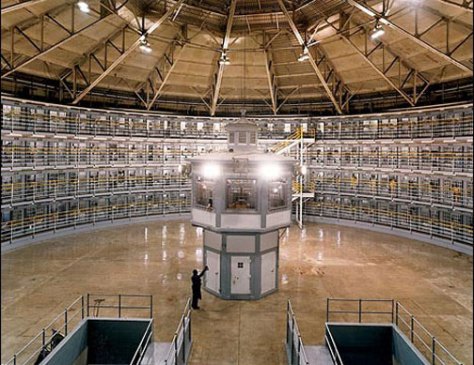
SHORTLY AFTER the much discussed, and rightly much derided Graham James two-year sentence for sexual assault, I had a conversation with a journalist who is ghost writing the memoir of a sexual abuse survivor. Why, she asked me, do these abusers get such light sentences?

Continue …

The objective economic case against Granny and Gramps

In the days and weeks following Prime Minister Harper’s Davos speech, there’s been ample commentary, provoked by the following:

“As I said earlier, one of the backdrops for my concerns is Canada’s aging population. If not addressed promptly this has the capacity to undermine Canada’s economic position and, for that matter that of all western nations, well beyond the current economic crises. Immigration does help us address that and will even more so in the future. Our demographics also constitute a threat to the social programs and services that Canadians cherish. For this reason, we will be taking measures in the coming months. Not just to return to a balanced budget in the medium term, but also to ensure the sustainability of our social programs and fiscal position over the next generation. We have already taken steps to limit the growth of our health care spending over that period. We must do the same for our retirement income system.”

To some ears this prefigured a budgetary assault on grandma and grandpa, the spiteful Harperites ready to press every layabout 65 to 67- year-old into forced labour, for the greater good. Kevin Page, the parliamentary budget officer, was sufficiently stirred to report that It’s All Good, People. According to his math, the cost of Canada’s pension system will indeed rise, from the present 2.2% of GDP to 3.2% in 2036-37. Even further down the road, about seventy years ahead, costs will return to current levels. The reason, as any fool could guess, is purely demographic: there are today proportionally more old people — the baby boomers — than there are going to be in the next couple generations. Any balancing of this will probably have to be made up through immigration levels, birth rates being unlikely soon to change.

If you read Harper’s Davos speech, you’ll see it’s all there: the changing demographics, immigration, the need for reform. Even the fiscal soundness of the pension system is affirmed. The fortunate thing about demographics is that you can make decent predictions decades ahead. A big whack of young people today is a big whack of retirees in future. The Prime Minister has only said what demographers well know. Yet for some reason folks are bracing for the pension sky to fall, even though the Prime Minister acknowledges the fiscal soundness of the system and polls show overwhelming public resistance to OAS reform. Curiouser and curiouser.

Reading about this issue I was reminded of the first Canadian universal welfare program, the so-called “baby bonus.” Introduced after the Second World War, this modest monthly stipend was designed to encourage and assist anxious young families in the years following war and economic depression. I well recall my mother’s occasional references to this state allowance, when the topic of the family budget would come up. To be sure, that was a different time — but the baby bonus and the OAS are I think connected in several respects. Both are inherently matters of demographics, and both derive from the egalitarian logic of a previous era, the universality of social programs and benefits partaking of an “all in the same boat” ethic which itself followed logically from the collective sacrifices and efforts of the war.

After a generation, the seams of that wartime and depression ethic were giving way. One of the most vigorous attacks on universality, specifically in relation to senior benefits, was penned in the U.S. by the British journalist Henry Fairlie. In a 1988 New Republic piece called “Talkin’ ‘Bout My Generation,” Fairlie attacked the powerful retiree lobby and outlined the case for means testing and needs-based benefits. He was probably right to do so, the American entitlement system having uncoupled itself from fiscal logic. A similar discussion has yet to occur in Canada, for both fiscal and political reasons. Fortunately for Canadians, pension policy appears so far to have been informed less by the American-styled politics of interest group pressure and vote-seeking and more by objective economic analysis. That’s how it should stay.

Where culture meets hypocrisy, you’ll find the Assads

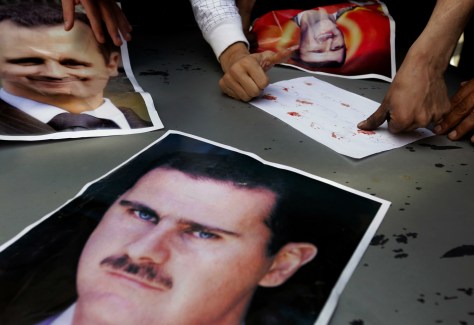
Bashar al-Assad

As far back as Geoffrey Chaucer the English satirical tradition has made ample use of hypocrisy’s cousin, the euphemism. Human nature being what it is, the medieval Catholic Church settled upon niece and nephew as the most expedient designations of those otherwise inexplicable attachments to the celibate parish priest, bishop, and so on. Chaucer’s fourteenth century, as narrated in the brilliant Canterbury Tales, is arguably more worldly and cynical than the present. In any case, the non-alignment of pretense and reality is taken as granted.

The Guardian has now set to the wind a selection of emails between the Assads and their circle, access to which was made possible by a Syrian bureaucrat who presumably had had quite enough of the presiding hateful turd and his vain and pointlessly photogenic wife. In this email collection the theme of hypocrisy is amply represented, and who shall pretend surprise at that?

Look wherever you want: the blowhards exploiting in public the hot-button sentiments of anti-Western and anti-American righteousness, as well as their subgenres of sexual immorality and tribal supremacy, will as a rule be found in private to have inclinations of a contrary sort. This principle applies as far away as Abbottabad and as near as Washington D.C., comprising Osama bin Laden’s recently discovered suburban pornography collection as well as the cheap motel quickies of American family values congressmen.

Those who study the world’s geopolitical diversity soon acquire the critical habit of making analytical distinctions. “Muslim,” for instance, won’t do — and neither will Sunni and Shi’a. Even the subdivisions of Pashtun, Hazara, Ismaili, Ahmadi, Alawite, and so on, will sometimes not quite suffice. But, looking in another direction, you can aggregate quite a number of people under a common heading when the focus is the walk rather than the talk. That’s where most of us, in our shared humanity, appear a little less pure, less grand, less authentic.

In a malnourished country, Kim Jong-Il made himself conspicuously corpulent on a steady public diet of anti-Americanism paired with extravagant private consumption of Hollywood films and other imported delicacies. The Pyongyang dynasty’s under-acknowledged early patron, Mao Zedong, shared with the Kims this indulgence in private of things denigrated in public. The non-alignment of pretense and reality is not a universal principle, but it’s a common one.

The tools yielding glimpses into the Assad family’s private life (which would be none of our business, if their business wasn’t a matter of such willful and violent public imposition) also provide snapshots of the Internet activities of Saudi Arabia and Pakistan and Iran and other epicentres of holiness. The little that we know suggests the broad appeal of decadent “Western” tastes. So it is across much of the culture war landscape. Who among us really doubts, to cite another timely example, that the American moral police and busy-bodies today agitating against access to contraception and abortion services will re-crunch the moral arithmetic when the calculations concern their own private rights and responsibilities?

The implicit point underscored by the Guardian is not that human beings are hypocritical (an ordinary, even tedious, observation), but that they have more in common than they have as differences. The differences are exaggerated and exploited by opportunistic bigots and chauvinists, like the governing Assad family of Syria. It may not encourage your inner humanist that Bashar al-Assad enjoys the same corporate pabulum which ten years ago you would have found on your teenager’s iPod. But at least you might draw some hope from the likelihood, made today more even more credible, that the culture war is a hollow confidence trick.

On the streets, people are fighting for the freedoms and dignities sometimes taken for granted in Western democracies. Meanwhile, in the palaces, the shortsighted overlords appeal to and indulge the most base of human impulses, denouncing “the West” in public as in private they shop and eat and otherwise enjoy the fruits of their enemies of convenience.

The ICC Works, But Only For Some

As if on cue, the International Criminal Court has delivered its first war crimes verdict before the #Kony2012 Twitter ink is dried and the template barbarism of a Ugandan fanatic has yielded its home above-the-fold.

I deploy the phrase ‘template barbarisms’ because the third-tier Congolese thug Thomas Lubanga, of whom I confidently assume you’ve heard little before today, resembles the now famous Joseph Kony, of which I’m equally confident you’ve heard a good deal. The tribal warlord trope is depressingly unoriginal, as are its signature crimes of rape, murder, and child abduction for the purpose of enforced military service. As the world considers this inaugural verdict of the International Criminal Court, some necessary criticisms will float to the surface. No one however can say that the ICC has no use: barbarism and fanaticism, like crime as a whole, never sleep.

The criticisms ought to get a good airing. In the late nineteenth century, the official and ancient boundary between civilian and soldier was erased. The parallel introduction of citizen-centered industrialized murder awoke the world to crimes so horrendous they could only be described as being “against humanity.” In both the first and second world wars, there were state organized campaigns of genocide. The Nuremberg trials established the principle of supranational — and even universal — justice, entrenching the ideas that there existed a civilized human community and that this community must stand vigilant against the work of racial cleansing and mass slaughter. But the world as a whole has not endorsed the practical measures which issue from these high-minded principles. And since the genocidaires tend to be the victors, they not only write the history, but they also have a role in determining the course of justice.

This deference to the good graces of sovereign nations is built into the Rome statute which established the ICC. Prior to the creation of this permanent international court, the tedious and drawn-out work of pursuing criminals and crimes against humanity had to be renewed with each fresh violation. Imagine beginning from scratch, with each outbreak of fanatical nationalism and tribal bloodlust from Yugoslavia to Rwanda to Iraq. Proceeding in this fashion, the pursuit of war criminals had become an inefficient and laborious exercise of reinventing the wheel. It’s therefore at least a matter of probable advantage that a standing court is ready for the inevitable business of entrepreneurial depravity.

It’s also encouraging, a decade into the ICC mandate, to see a known child predator brought to the courtroom. But that encouragement is watered down, for me at least, by the knowledge that other known abusers and exploiters of children continue to get a pass, for reasons which suggest a much deeper and cynical corruption. Rogue elements are brought to justice while certain respectable officials (see my comment above on the victorious genocidaires) evade their day in court. Who decides who is ripe for delivery to the Hague, and when? The answer is political leaders, who in some cases have their own ugly past, political agenda, and revisionist impulses.

This deference to national sovereignty was heavily lobbied by the permanent Security Council member of the United Nations, the United States of America. A non-signatory nation, the U.S. would only deliver its citizens voluntarily on charges of genocide and crimes against humanity. Non-signatory states may be pressured to oblige the court, but only by a directive of the Security Council members — who constitute the bulk of the non-signers. As a result, the court’s business is largely an inevitable matter of power politics, the list of those having a good and hard time of it having been drawn up by those self-guaranteed to go gently into the good night.

If you think this overly cynical, consider that the ICC’s investigations are currently limited to the world’s least politically-connected continent: Sudan’s Omar al-Bashir, former Ivory Coast president Laurent Gbagbo, the Democratic Republic of the Congo’s Jean-Pierre Bemba, Liberia’s Charles Taylor, Uganda’s Joseph Kony, and Libya’s Muammar Gaddafi. There’s no shortage of crime in Africa, but there’s no monopoly either. The Kony 2012 video was at least correct in one of its assumptions. The politics of public opinion matter, even in the presumably impartial business of justice. It’s too bad that as the world is so suddenly engrossed in a viral video, there’s so much less attention to, and awareness of, an imperfect but fledgling effort to take the civilized world’s fight against crime to the next logical, and necessary, level.

The Non-Solutions of Minister Raitt

I‘VE PUBLISHED academic articles and personal essays and poetry, but a genre into which some of my best effort has gone is the Air Canada Epistolary Vituperation. Last week, in an exercise of covering one’s bases, federal Minister of Labour Lisa Raitt asked the Canada Industrial Relations Board to deliberate the question, Does Air Canada provide an essential service? Anyone who has endured Canadian air travel in the past ten years knows the answer to that one: Air Canada barely provides any services at all, and provides them poorly at that. Hence my letters of complaint at their evident indifference and inattention to customers. (I once received a boilerplate response which proved my point in the first sentence — it began, “Dear Mrs. Spear … .” )

Read More

Lessons of the ‘Stop Kony’ video — let the giver beware

A commonplace of our time is that social media, Facebook and Twitter and so on, connect and humanize us. Technology has put powerful tools into the hands of the humble, and the mighty are trembling: so goes the argument. Each time I hear this encouraging notion, into my thoughts comes a passage from the 1930 treatise, Civilization and Its Discontents. Surveying the early-twentieth century’s technological advances, the author — most known as the pioneer of psycho-analysis — interjects a “critical, pessimistic voice,” which notes that:

“If there were no railway to make light of distances, my child would never have left home, and I should not need the telephone to hear his voice. If there were no vessels crossing the ocean, my friend would never have embarked on his voyage, and I should not need the telegraph to relieve my anxiety about him. What is the use of reducing the mortality of children, when it is precisely this reduction which imposes the greatest moderation on us in begetting them, so that taken all round we do not rear more children than in the days before the reign of hygiene, while at the same time we have created difficult conditions for sexual life in marriage and probably counteracted the beneficial effects of natural selection? And what do we gain by a long life when it is full of hardship and starved of joys and so wretched that we can only welcome death as our deliverer?”

When Sigmund Freud wrote of “difficult conditions for sexual life in marriage,” he drew from personal experience. Indeed, he had near-to-hand many of the woes he describes. Yet I suspect most readers would think him unduly pessimistic about the potential of technology to make human lives better. What then would people say about the sparkly attitudes, and platitudes, of Jason Russell’s viral video “Kony 2012”, which constitutes an upbeat experiment in “changing the world”?

One advantage of the Internet is that questions of this sort have been rendered easily answerable. A quick Google search, and you know for instance that skeptics have already begun the work of evaluating the finances of the not-for-profit group Invisible Children, producers of the Kony video, yielding some questions in need of answers. The writer Musa Okwonga touches upon the major points in a Telegraph article — for example, Kony 2012’s gross oversimplification of Ugandan politics and the paternalism of Western celebrity do-gooderism. “On the other hand,” he notes, “I am very happy — relieved, more than anything – that Invisible Children have raised worldwide awareness of this issue.”

So am I, with my own reservations. I began this piece citing Freud because he establishes the tone of skepticism and the balancing of opposites necessary to the study of complex human issues. Of course I would prefer that peace in Uganda were achievable by means of a publicity campaign focusing on the “bad guy” Joseph Kony. But the central paradox of technological gain alluded to by Freud — the giving with one hand and taking with another — applies also to social media. I’ll phrase it as follows: There’s more information out there than ever before, only most of it is of doubtful use and value. Some may even be harmful. Here are things to consider if you plan on supporting the Kony campaign. These are not criticisms of Invisible Children or of the Kony 2012 video; they are practical observations. May they add some ounces of value to the global conversation.

Earlier I used the phrase “Ugandan politics.” This is itself a simplification and a not-very-helpful way of approaching Uganda. African politics, from the Maghreb to the Horn, are shaped by historical tribal systems of social organization. As we see in Afghanistan, another society built upon tribal systems, conflicts pay no heed to come-lately national borders. The internal affairs of Uganda are incomprehensible if you leave out, for example, Sudan. Kony, like any military chief, has a tribe-based network of support as well as of competition. If you are a Westerner this means you may have to dismiss the nation-state and nationalism as the chief units of political currency.

Another thing of which to be mindful is that aid is often exploited by dictators. Uganda has a large army, many times larger than the several hundreds thought allied to Kony. One has to ask (along with Okwonga) “Why hasn’t the much more powerful Ugandan army put an end to Kony’s atrocities?” A couple years ago, Jane Bussmann offered some insight to this and related questions in a piece published by the Telegraph. In her assessment, “Kony has been a smokescreen for profit. While the crackpot’s kidnapping was at its peak, thousands of children snatched, tortured and raped each year, the Ugandan army was using equipment bought with aid money to run illegal mines in Congo – duty free shopping.” Skeptics have long known that African misery is banked upon by corrupt leaders. They know that so long as things are bad for their people, aid money will flow into their hands. This is not an argument against aid — only against aid given uncritically, to the first person with a viral video or a catchy song or a celebrity sponsor. Let the giver beware.

My final point is that anywhere you look — Iraq, Afghanistan, Iran, Uganda — there will be longstanding and local groups of citizens resisting and fighting against powerful thugs and murderers. On this International Women’s Day, I note that women are commonly on the world’s democratic and anti-corruption fronts. This is because women and their children always suffer the most under oppressive arrangements. Any campaign anywhere that does not put the great bulk of your money — and whatever else it may muster — into the advancement of women’s health and education and political emancipation is not worth your patronage. One inevitable day the cameras and the Western troops and the cash dry up, and the local people are left to their own resources. This is when we find just how well- or ill-conceived our charity was. Better to get it right from the beginning.

Tories insult veterans by defending Rob Anders, serial buffoon

Rob Anders

SURVEYING the decade and-a-half career of the Member of Parliament, Rob Anders, I become the zazillionth person to note this Member’s principled objection in 2001 to making Nelson Mandela (by his measure a terrorist and Communist) an honourary Canadian citizen. By all means, debate the tactics of the ANC amongst yourself. In more recent times the riding news section of his personal website has been rather thin, not much by way of accomplishment or effort having been reported since last June. Other than his work of defunding the CBC and rebuking the Communist regime of China — in this latter effort, he and I have something in common — Mr. Anders’s CV is notably light. In the past year he has earned headlines by falling asleep twice on the job, something he tells us is the result of a car accident.

In February, Rob Anders arrived late to a Halifax meeting with war veterans who had assembled to inform the government about homelessness and emotional unwellness among former Canadian soldiers. I’ve met and on several occasions corresponded with the one-time Canadian Lieutenant-General and present Canadian Senator, Romeo Dellaire, and from this extraordinary man I’ve learned about the reality of war and trauma and post-traumatic stress disorder as well as the many other sordid human outcomes of organized human slaughter. When people who have seen combat in Rwanda and Bosnia and Afghanistan and other such hellish places speak, it is as a general rule a time to pay attention. Mr. Anders, unfortunately, fell asleep. And when his audience and government colleagues confirmed that this was so, Mr. Anders tumbled into attack mode and tossed about paranoid and bigoted insults.

Rob Anders has been a back bencher embarrassment for over a decade now. The Conservative Party of Canada has been careful to keep him ensconced, a media-proof fence around him. Anders’s longevity appears to be principally the effect of Albertans’ sincere and bone-deep anti-Liberalism, and I suspect many conservative Calgarians would happily vote for less cockeyed and more effective representatives, if only Ottawa would allow them that option. For reasons unknown, however, the party has actively suppressed Conservative challenges to Anders, making of him a sure and comfortable candidate. A shame, that. The man is a mediocrity and, for many a Conservative voter, a hold-your-nose lesser evil. Now there’s an effort afoot to empty his Standing Committee on Veteran Affairs seat for occupation by someone who brings an active interest to the job. Amen.

By way of parting, I leave you with an observation. In February 2012, Rob Anders arrived quite late to a meeting and promptly fell asleep during a discussion of homeless veterans. In November 2011, he fell asleep in the House of Commons during a discussion of inadequate housing in Attawapiskat. In July 2011, compelled by his job to read a government announcement on funding for affordable housing, Anders registered his irritation at this federal initiative. He attached an “I’m Supportin’ Morton” button to his lapel (Morton was a Calgary politician running in a local race), and informed his audience that he would utter a catchphrase each time his speech contained something with which he was “uncomfortable.” You’d have to admire this sticking it to the boss, if it weren’t so pitiful and childish and passive-aggressive. He lacks even the courage of his convictions. After this week’s antics, Mr. Anders’s credibility is paper thin. Perhaps he should yield his committee seat to someone with demonstrated interest in, and appreciation of, the needs of Canada’s war veterans. They deserve it.

Russia’s War with the West is Not Over

Vladimir Putin

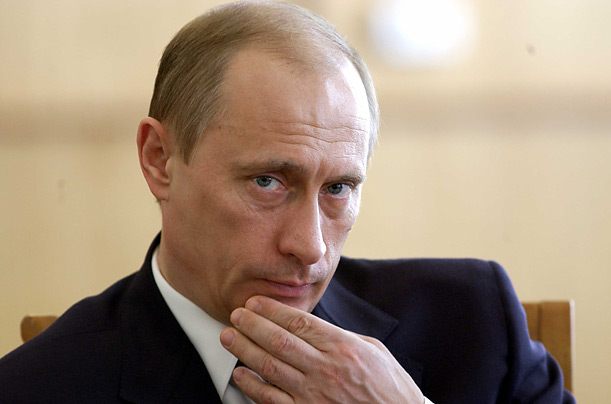
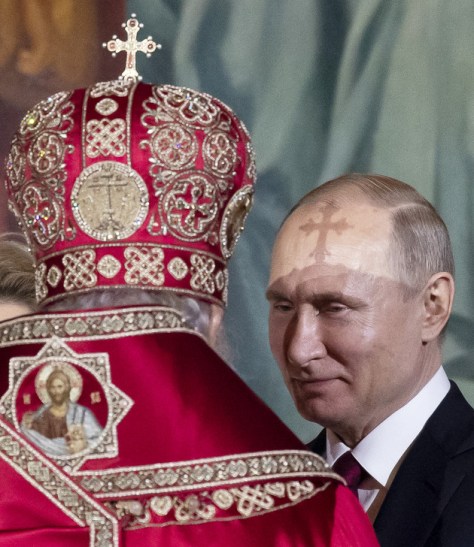
WHEN IN THE final days of his anti-climactic election campaign Vladimir Putin sought the blessing of the Theotokos of Tikhvin, he confirmed symbolically an attachment both to the Russian Orthodox Church and the czarist tradition. Add to the pious optics of this gesture the state dominated, and eastern Europe dominating, megacorporation Gazprom as well as the country’s informal ‘silovik’ network of former security operatives—embedded into the country’s banking, commercial, media, and energy sectors—and one would have in a single photo-op a complete representation of the current Russian state.

Continued …

The Triumph of America’s Booboisie

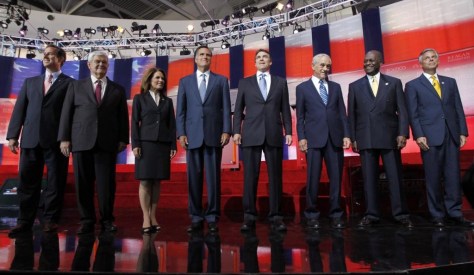
WELL BEFORE THE lapsed acronym RINO (Republican In Name Only) was re-popularized by California Reaganite Celeste Greig, Barry Goldwater had taken on the Rockefeller Republican, energizing a contemporary political trajectory whose crowning achievement was announced on July 27, 1980, by journalist Henry Fairlie:

Read More

Why Michael Sona will go down alone for the robocall scandal

LAST WEEK, Liberal leader Bob Rae warned that the federal political culture of Canada is ‘entering into a kind of Nixonian moment.’ This all-thumbs assertion lacks definite substance and grip — we’re in a kind of like, you know, moment thing — but has its use. For almost a year we’ve known of the Robocall mess, media reports having been issued since election day. Now the plot, and the rot, thicken. Here I refer to the top-shelf work of Stephen Maher and Glen McGregor of Postmedia News, under our present analogy the Bob Woodward and Carl Bernstein of this vote suppression scandal. Reviewing the evidence they’ve patiently assembled, can you now doubt a wide and active campaign of fraud in the 2011 election?

Read More

Teach Canadians the history of residential schools

CANADA’S TRUTH and Reconciliation Commission has received a dab of media attention, much of it for regrettable reasons. In October 2008, the TRC Chair Justice Harry LaForme resigned, citing the political interference of the Assembly of First Nations and the insubordination of his (AFN-appointed) co-commissioners, Claudette Dumont-Smith and Jane Brewin Morley. This inauspicious beginning yielded to inauspicious mid-points, the Canadian franchise of the TRC brand-name drawing attention for delays and the bureaucratic impediments which hindered its progress. The messenger aside, what about the message? On the final day of a three-day AFN National Justice Forum, in Vancouver, the Commission has been scheduled to release an Interim Report.

Read More

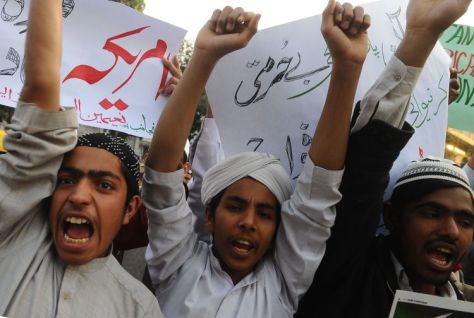
The flame of intolerance rises from Koran burnings

NEWS OF THE Bagram Air Base Quran burnings, and the riots which have followed, reproduced the usual concern that perhaps no amount of evident contrition would prevent a violent response. Here is an illustration of the root of this anxiety, from a Reuters article of February 22: “Critics say Western troops often fail to grasp the country’s religious and cultural sensitivities. Muslims consider the Koran the literal word of God and treat each book with deep reverence.”

Read More

Looking Back At 500 Episodes of The Simpsons

AMONG MY earliest encounters of The Simpsons was an animation festival in Philadelphia, in the Spring of 1989. I was doing some work with Habitat for Humanity and decided one night to take in a movie. The first episode of The Simpsons proper was months in the future: in early 1989, the rough and amateurish output of Matt Groening which I saw that night (and which didn’t much impress me) was recognizable only as the interludes of the Tracey Ullman Show. Ullman then was known as an accomplished impersonator and a sharp witted Brit, but within a couple years she was eclipsed by this inauspicious cartoon team constituted of Homer, Marge, Bart, Lisa, and Maggie. Who knew? From such humble beginnings came what is arguably the most successful animated series of television history.

Read More