Category Archives: Wayne’s Picks

These are in my opinion the best of the crop here at waynekspear.com

The King’s Speech and The Revenge of Metaphor

King George VI

it is difficult to go on believing in the essentially conservative idea of nobility when you have regarded the dripping underpants of the Prince hanging upon the line

✎  WAYNE K. SPEAR | DECEMBER 29, 2010 • Film

T

HERE WAS A remarkable showing of blue in the theatre this week when I saw The King’s Speech, which is why I begin with remarking it. It indicates that most of this audience would have been alive in 1936, when Albert Frederick Arthur George Windsor assumed the throne of the United Kingdom, just abdicated by his brother, thereby becoming King George VI. Continue reading The King’s Speech and The Revenge of Metaphor

The Compulsion to Write (pt. 3)

Writing

ALTHOUGH I KNEW at a young age that I should be a writer, little else would be sorted out until many years later, and then often by accident. When I was a child, say, ten to thirteen years old, I had only vague ideas about what a writer even was. I suppose I imagined a cold and dark room and a gaunt person at a desk, producing poems and novels, posting them to publishers who would promptly send back letters which read Thank-you, but no thank-you. In time I would have a more informed picture of a writer’s existence, having learned that publishers in fact do not send these letters, or any other, promptly.

Read More

The Compulsion to Write (pt. 2)

In his essay, “Why I Write,” George Orwell identifies the following: 1. Sheer Egoism (“desire to seem clever, to be talked about, to be remembered after death, to get your own back on grown-ups who snubbed you in childhood, etc”), 2. Aesthetic enthusiasm (“perception of beauty in the external world, or, on the other hand, in words and their arrangement”) 3. Historical impulse (“desire to see things as they are, to find out true facts and store them up for the use of posterity”), and 4. Political purpose (“desire to push the world in a certain direction, to alter other people’s idea of the kind of society that they should strive after”). Knowing that I would be writing this essay, I tried to improve upon this list, but to no success. There is only one conceivable addition, approaching the matter as a male heterosexual writer: 5. To bed women. Continue reading The Compulsion to Write (pt. 2)

The Compulsion to Write (pt. 1)

Illustration by Anthony Russo

I was eight years old and urinating in the bathroom of my parents’ Central Avenue house when the precise words manifesting a desire to fill my life with writing first came into my conscious mind. Why this thought occurred to me at so late a date, I am unable to say. Continue reading The Compulsion to Write (pt. 1)

My Grandmother

Among the unwritten and as I understood them incontrovertible laws of life was the cardinal indication never to disregard the wishes of my grandmother.

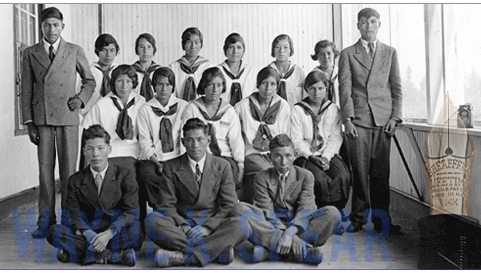
When I was a teenager my grandmother told me: stay in school and don’t get married until you are thirty. It would be some years before I could appreciate how dearly she’d paid for this wisdom. Seeing my Latin homework, she took the occasion to say, as a matter of fact, she had always been interested in languages and that her generation of Native people had been unable to have an education. She was married at tender age to a man who had befriended her mother, and from that source derived a courtship with my grandmother to-be.

Rhoda Rhodes, whose mother had been a Six Nations Garlow, bore children across four decades — the 20s, 30s, 40s, and 50s. During the Depression and the war the first six came into the world, and following the 1945 surrenders of Japan and Germany, three more would follow, my mother (b. November 1945) being the first. My grandmother was so long at it that she was pregnant concurrently with one of her daughters. I had always assumed that in those days this was just “how it was.” Indeed, but what I did not know were the common reasons. It was only after her death in 1991 that I learned my grandfather, William Johns, “did not like birth control.” In the days before “the pill” a woman had very little power in the matters of sex and sexual reproduction, which went a distance toward ensuring that a man would get his way. This detail said so much, falling as it did into the puzzle, along with other pieces that would emerge in the years after my grandmother was gone.

She had never forgotten from where she had come. “I hate John Wayne,” she once told me. She was proud to be Mohawk, and would not suffer the bellicose ignorance of others. She marshaled all that she had, which was considerable, in furtherance of the family’s dignity and self-respect. She understood that we would be derided as dirty and stupid, but she never gave the haters ground upon which to stand. My mother once came home to recount the slurs. “Look around,” said my grandmother. “Are we dirty? Is our house dirty?” The very fact of her being who she was powerfully repudiated the charge. In this way she lifted us out of depths into which we could have been cast only by ourselves, by surrender to self-doubt, self-hate, and self-disgrace.

One of the last conversations I had with her, in late 1990, took place as they often did at her kitchen table. I don’t know where my grandfather was, but we were alone — an unusual thing in a vast family that considered her kitchen its emotional and gravitational centre. The door was always open, and thirty-five grandchildren (and eventually as many great-grandchildren) could and did come by unexpectedly. That night may have been the only in my life I was alone with my grandmother, and in any case it is the only I can recall.

It was an extraordinary night for another reason. She brought the conversation around to the topic of “what I want to do with my life.” I want to write, I said. Then she told me something I had never known, that in her youth she had been interested in writing and had composed a number of stories. To appreciate the significance of this you need to know that I was a quiet, introverted, and highly imaginative child, which is to say an oddity. For many years I imagined I must have arrived into the world by some sort of magic, surely not by means of descent through the family tree. At eight years old I knew I wanted to be a writer. Clearly my wit and ironic outlook had come from my father. He however had been a high-school athlete of some promise, and it was to sports he had set himself early in life. Nor did my mother show any artistic inclination. Even among the extended family, most of whom were handy at a trade, there was no evidence I’d come by my constitution honestly. In my vocation, I was a singularity.

I suspect this feeling of being the odd one out, which was reinforced in other ways when I entered school, explains my tendency to side with the minority, the opposition, and the underdog. Bookish and uninterested in sport, I grew up in a dying steel town where the hockey rink was the centre of all things and where boys dreamed only of the League. (If you want a sense of how it felt to me growing up there, I can recommend nothing better than Peter Bogdanovich’s portrayal of Anarene in “The Last Picture Show.”) Occupied in the late 1700s by Pennsylvania Dutch, Fort Erie has to this day a Spear Road named for ancestors on my father’s side, which should have meant that I at least half-belonged but never quite did. I was a southpaw in the remnant of an era when people still knew enough Latin to know that sinister means “left” and when conformity was in all things an overriding imperative. A good deal of effort went into the failed attempt of a few teachers to reform me in this and other areas, and it is with some pride that I report their failure. I don’t wish to overstate any of this and leave an impression that my education was harsh. It was only typical of the time, but was nevertheless a good environment to form an oppositional personality.

At the end of her life, my grandmother had disclosed to me a detail which altered everything. In fact, I was not a singularity nor an oddball, at least not in the way I had always imagined. I had indeed come from somewhere, and my grandmother was the living proof. Shortly after she died I wrote a play called The Name Is A Vestige, which was about the many feelings and insights engendered by this revelation. I should also say that I had always felt a connection, and that if you were to look at any photograph of a Johns family gathering, you would see that I am sitting next to my grandmother. But now I had a more definite sense of this connection’s meaning.

Soon she would be gone, but from then on a part of me would feel an obligation to write, and to write well, “for” her. She doubtless had seen who I was and who I might become, with a little luck, and had given me precisely the advice which had perhaps been the obstacles to her own creative fulfillment.

It is rather harsh putting this thought into print. I don’t at all doubt that my grandmother loved her children, grandchildren, and great-grandchildren. I never once heard her complain of her lot. When she told me about her desire to be a writer, there was no bitterness or self-indulgence. Yet everything I learned once she was gone contributed to my growing sense that her life could only have been one of great frustration. She had married young and would discover, certain to her horror and disgust, that her husband was a drunk and a lay-about. In his thirties, my grandfather would find the Lord, going from one extreme to another. He was a harsh and obsessive proselytizer. You could not go to his house without getting the sermon, always over the decades the same sermon, focused ever on the vengeance of God and the torments of hell. His God was of the undiluted, high-proof variety, jealous and uncompromising. No one was spared his gospel. My grandmother would tell him to “stop it,” and he would, but not before citing as self-justification Ezekiel 3:18.

When I say unto the wicked, Thou shalt surely die; and thou givest him not warning, nor speakest to warn the wicked from his wicked way, to save his life; the same wicked man shall die in his iniquity; but his blood will I require at thine hand.

Now that I am older, I have come to see this as child abuse. I think my grandmother, who always stood up for us, would have agreed. Her actions suggested as much. I can’t recall his sermonizing without feeling rather ill at the thought of how vicious, ugly, and deforming it all was. She however met him blow for blow, and he was in the end no match. His brand of religion belied the fact that he was deep down self-loathing and self-defeating, no doubt a carry-over from his days of being bullied by priests in an Indian residential school. My understanding of this, gained as has so often been the case too late, prevents me from judging him too harshly and lends a certain compassion to my reflections. I’ll never know what the world looked like through his eyes.

To the end of his life, which arrived in 1996 after a period of dementia, William Johns was attached to the idea of returning to his thirty-three acre Six Nations farm. It was my grandmother who insisted they leave the desperation, poverty, and self-defeat of the reserve in those days. I often wonder how life would have been different for all of us had she not taken that stand and, as she often did, prevailed. I also wonder what she would have made of her life had she been granted the opportunities of my, let’s admit it, pampered generation. She lived at a time when a woman was expected to give up everything as a matter of duty. The idea that a woman had a right to an independent life and to her human fulfillment, to a Room Of Her Own, was only beginning to advance. The way was doubly, even quadruply difficult, for an Indian woman. For this reason I could never be casual about my education or my opportunities. I worked very hard and, as quaint as it may sound, I resolved to hold myself to a certain standard.

My grandparents had little money, and with over seventy descendants, they were not in the habit of acknowledging birthdays and such. I only ever received one card. My grandmother gave it to me after my graduation from university, and inside she has written “I am so proud of you.” She had lived to see me fulfill one of the two guarantors of my betterment, and if she had lived another five years, that is to say beyond my thirtieth birthday, I would have had the joy of introducing her to my partner and best friend. To have had that day I would give, I think, anything.

Roma and the Debts of History

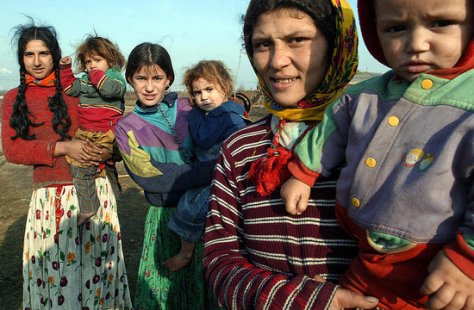
I HAD JUST been to France when les émeutes de banlieues, in the Fall of 2005, rendered it impossible to ignore what some would characterize a failure of integration, and others a failure to keep out the undesirables. The May 2007 assumption of President Nicolas Sarkozy, whose father had for decades been a “stateless person,” having left Hungary under the advisement of his mother to escape military service, formalized the ascendance of the “keep out the undesirables” side of the argument and prepared the way for fresh campaigns against the Travellers, Gypsies, and Romani.

The “riots in the suburbs,” as the phrase above may be translated, were a shock and a difficult-to-absorb contrast to the pre-rentrée Paris still vivid in my memory. Characterized as an uprising of Muslim youth, which is not entirely accurate, the violence was an indication of longstanding (which is to say pre-9/11) issues. In the case of the Romani, recent sweeps and deportations recall the time of Louis XII and events of one-half a millennium ago.

The 2010 expulsions, unconvincingly claimed by the French Government to be voluntary (“if you please” being for the Romani a quite unprecedented way of putting these things), are the endgame of twenty-two year-old Luigi Duquenet’s death by police bullet. French officials claim the Roma man impacted a gendarme while driving through a checkpoint, adding that he was suspected also of committing burglary. President Sarkozy’s reaction to this incident has been, in the words of Amnesty International’s David Diaz-Joeix, “to target the Roma and Travellers in general and to perpetuate the negative stereotypes of which they are victim.” Some words, concerning both the Roma and the substance of this matter of the victim, are in order.

Almost immediately following their fifteenth-century arrival to Europe and the Iberian peninsula, the Romani —  inferred by the English to be of Egyptian derivation, hence the Gypsy misnomer — were regarded sinister outsiders and subjected to slavery, forced labour, and ethnic cleansing. Perhaps the most succinct way to make the point is to recall England’s 1530 Egyptians Act, crafted (unsuccessfully as it happens) to expel the “outlandish people calling themselves Egyptians” and to counteract their “devlish and naughty practices and devices” by subjecting them to a death penalty added in a 1554 amendment. The term for these anti-Roma attitudes is “antiziganism,” which in Nazi Germany took the literal form of a Zigeunerfrage, or “Gypsy Question,” settled in 1936 along the unambiguous lines of the Final Solution.

The result was a wartime Romani and Sinti genocide today generally known by the term Porajmos (or baro xaimos, Great Devouring). The killing of Romani though widespread was especially vicious in Germany, Romania, and the Baltics. Worst of all however was the hateful bloodthirst of Nazi Germany’s proxy regime, the Croatian Ustasha. With the support and cheering of the Vatican, Croatian fascists murdered at Jasenovac an estimated 20,000-50,000 Roma and Sinti, the gold stolen from their teeth eventually being used to fund Nazi post-war flights from justice and the remainder to this day sitting in the Vatican Bank. (For this reason one gags on the rich pontification directed by Rome at the Sarkozy government.)

If this sounds familiar, it will then come as no surprise to you that long before the Second World War the Romani had been blamed for the plague, and that more recently they had been formally denied entry into several of the world’s nations (among them the United States) and into the remainder admitted only to be consigned to the margins and called upon as scapegoats in times of crisis. In 2008, the Italian government declared an Emergenza Nomadi following a murder in Rome, establishing a segregated camp at Castel di Decima, south of the city. The same old same old, and certain to do nothing beyond perhaps scratch a scabby itch at an opportune moment in the election cycle.

In 2007 the controversial and much-beleagured Romanian President Traian Basescu apologized for his country’s role in the Porajmos, having apologized only five months earlier for calling journalist Andreea Pana a stinking Gypsy during an encounter in a Bucharest supermarket, recorded by Pana and broadcast on Romanian television. I’m not able to characterize the relationship of these two events, but it does seem to me that Romania has at least taken some steps in the right direction. Anywhere one today finds the Romani, the words below (from an April 2010 Amnesty International publication “Stop Forced Evictions of Roma in Europe”) will apply:

EU leaders must adopt a concrete plan of action to address the human rights abuses faced by Romani communities. They must speak up against racist attacks and hate speech and provide concrete measures to end discrimination in access to housing, education, health and employment.

In 2009 Turkey’s Prime Minister Rejeb Erdogan acknowledged, in a non-specific manner, that “many things were done in this country for years. People from different ethnic backgrounds were expelled. This was the result of a fascist approach.” There is at present no reason to conclude this sort of thing will not continue for another half-millenium. France is only one of many countries today employing history’s discredited policies in service of history’s ugliest features. The Roma, Sinti, Kale, Romanichal, and other related peoples are very well overdue for formal recognition of their suffering, practical acknowledgement of their human rights, and forward-looking government initiatives which depart from the bankrupt conventions of scapegoating and race hatred.

Follow me on Twitter

Canadian History if Necessary, But Not Necessarily Canadian History

canada-history

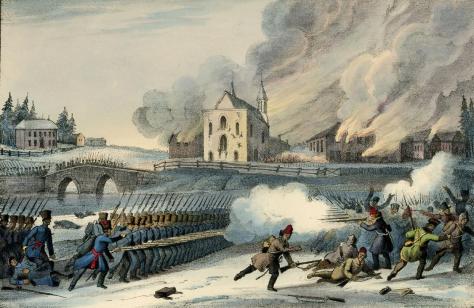
THE CHIEF THING that I remember of high school Canadian history is that it was boring. I suspect the same is true in your case. Here is my summary of high school Canadian history, roughly as I recall it: Canada was a pristine land inhabited by some Indians, and discovered by John Cabot in 1497. Jacques Cartier later explored the interior. It’s thought Vikings were in Canada before Europeans, but in any case Samuel de Champlain first colonized the land adjacent to the St. Lawrence (Upper Canada). The French settlers took to fighting the English over control of the resources. A number of alliances with the Indians were made by each side, and trade networks were established. This was the era of the courier de bois, or ‘woods-runner,’ usually a “half-breed” who moved goods from indigenous supplier to white trader. The English gained the upper hand over the French at the Plains of Abraham, in the 1750s or so. The Treaty of Paris ceded North America to Britain. The Yankees then took to fighting the British. In the War of 1812 the Yankees were finally driven back for good. Isaac Brock fought heroically and died beside Chief Tecumseh at Queenston. Troops from Halifax invaded Washington and burnt down buildings, most famously a building which was afterward painted white and called the White House.

Read More

Indian Residential Schools

Residential School

Indian residential schools were “really detrimental to the development of the human being”

CANADA’S INDIAN RESIDENTIAL School System began officially in 1892 with an Order-in- Council, yet many features of the system are older than Canada itself. Indeed, the residential school’s origins reach as far back as the 1600s – to the early days of Christian missionary infiltrations into North America.

For over 300 years, Europeans and Aboriginal peoples regarded one another as distinct nations. In war, colonists and Indians formed alliances, and in trade each enjoyed the economic benefits of co-operation. By the mid-nineteenth century, however, European hunger for land had expanded dramatically, and the economic base of the colonies shifted from fur to agriculture. Alliances of the early colonial era gave way, during the period of settlement expansion and nation-building, to direct competition for land and resources. Settlers began to view Aboriginal people as a “problem.”

The so-called “Indian problem” was the mere fact that Indians existed. They were seen as an obstacle to the spread of “civilization” – that is to say, the spread of European, and later Canadian, economic, social, and political interests. Duncan Campbell Scott, Deputy Superintendent of Indian Affairs from 1913 to 1932, summed up the Government’s position when he said, in 1920, “I want to get rid of the Indian problem. […] Our objective is to continue until there is not a single Indian in Canada that has not been absorbed into the body politic and there is no Indian Question and no Indian Department.”

In 1842, the Bagot Commission produced one of the earliest official documents to recommend education as a means of ridding the Dominion of Indians. In this instance, the proposal concerned farm-based boarding schools placed far from parental influence. The document was followed, in immediate successive decades, by others of similar substance: the Gradual Civilization Act (1857), an Act for the Gradual Enfranchisement of the Indian (1869), and the Nicholas Flood Davin Report of 1879, which noted that “the industrial school is the principal feature of the policy known as that of ‘aggressive civilization.’” This policy dictated that

the Indians should, as far as practicable, be consolidated on few reservations, and provided with “permanent individual homes” ; that the tribal relation should be abolished ; that lands should be allotted in severalty and not in common ; that the Indian should speedily become a citizen […] enjoy the protection of the law, and be made amenable thereto ; that, finally, it was the duty of the Government to afford the Indians all reasonable aid in their preparation for citizenship by educating them in the industry and in the arts of civilization.

A product of the times, Davin disclosed in this report the assumptions of his era – that “Indian culture” was a contradiction in terms, Indians were uncivilized, and the aim of education must be to destroy the Indian. In 1879 he returned from his study of the United States’ handling of the Indian Problem with a recommendation to Canada’s Minister of the Interior – John A. Macdonald – of industrial boarding schools.

The assumptions, and their complementary policies, were convenient. Policy writers such as Davin believed that the Indian must soon vanish, for the Government had Industrial Age plans they could not advantageously resolve with Aboriginal cultures. The economic communism of Indians – that is to say, the Indians’ ignorance (from a European perspective) of individual property rights – was met with hostility by settlers eager for ownership of the land. Colonization required the conversion of Indians into individualistic economic agents who would submit themselves to British, and later, Canadian institutions and laws.

The federal government and the churches – Anglican, Roman Catholic, Methodist and Presbyterian – therefore applied to their “Indian Problem” the instrument of education, also known as the policy of aggressive civilization. The initial education model was the industrial school, which focused on the labour skills of an agriculture-based household economy.

From the beginning, the schools exhibited systemic problems. Per capita Government grants to Indian residential schools – an arrangement which prevailed from 1892 to 1957 and which represented only a fraction of the expenditures dedicated to non- Aboriginal education – were inadequate to the needs of the children. Broad occurrences of disease, hunger, and overcrowding were noted by Government officials as early as 1897. In 1907 Indian Affairs’ chief medical officer, P.H. Bryce, reported a death toll among the schools’ children ranging from 15-24% – and rising to 42% in Aboriginal homes, where sick children were sometimes sent to die. In some individual institutions, for example Old Sun’s school on the Blackfoot reserve, Bryce found death rates which were even higher.

F.H. Paget, an Indian Affairs accountant, reported that the school buildings themselves were often in disrepair, having been constructed and maintained (as Davin himself had recommended) in the cheapest fashion possible. Indian Affairs Superintendent Duncan Campbell Scott told Arthur Meighen in 1918 that the buildings were “undoubtedly chargeable with a very high death rate among the pupils.” But nothing was done, for reasons Scott himself had made clear eight years earlier, in a letter to British Columbia Indian Agent General-Major D. MacKay:

It is readily acknowledged that Indian children lose their natural resistance to illness by habituating so closely in the residential schools, and that they die at a much higher rate than in their villages. But this alone does not justify a change in the policy of this Department, which is geared towards a final solution of our Indian Problem.

As a consequence of under-funding, residential schools were typically places of physical, emotional and intellectual deprivation. The quality of education was quite low, when compared to non-Aboriginal schools. In 1930, for instance, only 3 of 100 Aboriginal students managed to advance past grade 6, and few found themselves prepared for life after school – either on the reserve or off. The effect of the schools for many students was to prevent the transmission of Aboriginal skills and cultures without putting in their place, as educators had proposed to do, a socially useful, Canadian alternative.

No matter how one regarded it – as a place for child-rearing or as an educational institution – the Indian residential school system fell well short even of contemporary standards, a fact recorded by successive inspectors. A letter to the Medical Director of Indian Affairs noted in 1953 that “children … are not being fed properly to the extent that they are garbaging around in the barns for food that should only be fed to the Barn occupants.” S.H. Blake, Q.C., argued in 1907 that the Department’s neglect of the schools’ problems brought it “within unpleasant nearness to the charge of manslaughter.” P.H. Bryce, whose efforts earned him the enmity of the Department (and an eventual dismissal), was so appalled – not only by the abuses themselves but by subsequent Government indifference as well – that he published his 1907 findings in a 1922 pamphlet entitled “A National Crime.” In the pamphlet, Bryce noted that

Recommendations made in this report followed the examinations of hundreds of children; but owing to the active opposition of Mr. D.C. Scott, and his advice to the then Deputy Minister, no action was taken by the Department to give effect to the recommendations made.

Bryce’s 1907 report received the attention of The Montreal Star and Saturday Night Magazine, the latter of which characterized residential schools “a situation disgraceful to the country.” These publications, and others like them, make it clear that the conditions of the schools were generally knowable and known, by officials of the church and government, and by the public-at-large.

Because contempt for Aboriginal languages and cultures, and for the children themselves, shaped Canada’s policies toward Indians, matters continued as before despite internal reports and published accounts of abuse. In 1883, General Milroy was quoted in a British Columbia petition for industrial boarding schools as saying that “Indian children can learn and absorb nothing from their ignorant parents but barbarism.” The residential school system, designed to produce in the Aboriginal child “a horror of Savages and their filth” (in the words of Jesuit missionary Fr. Paul LeJeune), was rationalized by this contemptuous belief.

Individual beliefs about Indians, which in any case varied, did not determine the character of the individual schools. Nor were the conditions identical in each institution: students today recall diverse memories of both good and bad experiences, as well as good and bad teachers. Nonetheless, the widespread occurrence of certain residential school features suggests that structural elements were in effect. The Royal Commission on Aboriginal Peoples (RCAP) concluded in 1996 that the schools themselves were, for readily identifiable and known reasons, “opportunistic sites of abuse”:

Isolated in distant establishments, divorced from opportunities for social intercourse, and placed in closed communities of co-workers with the potential for strained interpersonal relations heightened by inadequate privacy, the staff not only taught but supervised the children’s work, play and personal care. Their hours were long, the remuneration below that of other educational institutions, and the working conditions irksome.

In short, the schools constituted a closed institutional culture that made scrutiny difficult, if not impossible. For staff the result was, in the words of RCAP, a “struggle against children and their culture […] conducted in an atmosphere of considerable stress, fatigue and anxiety.” In such conditions, abuses were not unlikely – a fact to which the experts of the day attested.

Then there are the testimonies of hundreds of former students, whose list of abuses suffered includes kidnapping, sexual abuse, beatings, needles pushed through tongues as punishment for speaking Aboriginal languages, forced wearing of soiled underwear on the head or wet bedsheets on the body, faces rubbed in human excrement, forced eating of rotten and/or maggot infested food, being stripped naked and ridiculed in front of other students, forced to stand upright for several hours – on two feet and sometimes one – until collapsing, immersion in ice water, hair ripped from heads, use of students in eugenics and medical experiments, bondage and confinement in closets without food or water, application of electric shocks, forced to sleep outside – or to walk barefoot – in winter, forced labour, and on and on. Former students concluded in a 1965 Government consultation that the experiences of the residential school were “really detrimental to the development of the human being.”

This system of forced assimilation has had consequences which are with Aboriginal people today. Many of those who went through the schools were denied an opportunity to develop parenting skills. They struggled with the destruction of their identities as Aboriginal people, and with the destruction of their cultures and languages. Generations of Aboriginal people today recall memories of trauma, neglect, shame, and poverty. Thousands of former students have come forward to reveal that physical, emotional and sexual abuse were rampant in the system and that little was done to stop it, to punish the abusers, or to improve conditions. The residential school system is not alone responsible for the current conditions of Aboriginal lives, but it did play a role. Following the demise of the Indian residential school, the systemic policy known as “aggressive civilization” has continued in other forms.

Many of the abuses of the residential school system were, we should keep in mind, exercised in deliberate promotion of a “final solution of the Indian Problem,” in the words of Deputy Superintendent of Indian Affairs, Duncan Campbell Scott. If development of the healthy Aboriginal human being meant respect of Aboriginal cultures, then indeed the regimented culture of the schools was designed precisely to be detrimental. As noted in the 1991 Manitoba Justice Inquiry, the residential school “is where the alienation began” – alienation of Aboriginal children from family, community, and from themselves. Or to put the matter another way, the purpose of the schools was, like all forced assimilationist schemes, to kill the Indian in the Indian – an effort many survivors today describe as cultural genocide. [-May 2002.]
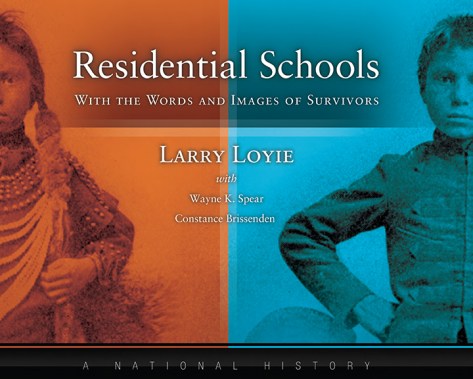
RES-SCHOOL-DJ-lr-(2)

My Fall 2014 book “Residential Schools, With the Words and Images of Survivors, A National History,” is available from Goodminds. Order by phone, toll-free 1-877-862-8483.

Sources

Duncan Campbell Scott quotation from secondary source in the Royal Commission on Aboriginal Peoples. Final Report, Volume One, Chapter 13, “Conclusions” section 1. Primary source: DCS 1920 HC Special Committee.

Quotations from primary source in Nicholas Flood Davin, “Report on Industrial Schools For Indians and Half-Breeds” (March 14, 1879).

Bryce on his tour of inspection of Indian Schools in Manitoba, Saskatchewan, and Alberta. RG 10, Indian Affairs, Volume 4037, Reel C-10177, File: 317021.

Duncan Campbell Scott to Arthur Meighen quoted from secondary source in the Royal Commission on Aboriginal Peoples Final Report, Chapter 10. Primary source: NAC RG 10 VOL 6001 file 1-1-1- (1) MRC 8134. Memo for A. Meighen from DCS, Jan. 1918.

Duncan Campbell Scott to D. MacKay: DCS to BC Indian Agent Gen. Major D. MacKay. 12 Apr. 1910. DIA Archives RG 10 series.

Education attainment (“3 of 100 Aboriginal students”) quoted from the Royal Commission on Aboriginal Peoples Final Report, Chapter 10.

Quotation from National Archives photo. See also David Napier, “Sins of the Fathers” in the Anglican Journal (May 2000).

S. Q. Blake quotation from secondary source in the Royal Commission on Aboriginal Peoples Final Report, Chapter 10 note 168. Primary source: Anglican Church of Canada General Synod Archives. SH Blake File G. S. 75-103. “To the Honourable Frank Oliver, Minister of the Interior,” 27 Jan. 1907, quoted in “To the Members of the Board of Management of the Missionary of the Church of England,” 19 Feb 1907.

P. H. Bryce quotation from P.H. Bryce, “Report by Dr. P.H. Bryce on his tour of inspection of Indian Schools in Manitoba, Saskatchewan, and Alberta.” RG 10, Indian Affairs, Volume 4037, Reel C-10177, File: 317021.

Saturday Night quotation from secondary source in Royal Commission on Aboriginal Peoples Final Report, Chapter 10. See note 161 for primary source: NAC RG 10 Vol. 4037 file 317021 MRC 10177. Articles appeared in Montreal Star on 15 Nov. 1907 and in Saturday Night on 23 Nov. 1907.

General Milroy quotation from Tolmie, William Fraser, “On Utilization of the Indians of British Columbia,” (Victoria: Munroe Miller, 1885).

Fr. Paul LeJeune quotation from secondary source in McGillivray, Anne, “Therapies of Freedom: The Colonization of Aboriginal Childhood” in McGillivray, Anne, ed., Governing Childhood. (Aldershot: Dartmouth, 1997). See note 55 for primary source.

Quotation from Royal Commission on Aboriginal Peoples Final Report, Chapter 10.

Personal testimonies taken from the Royal Commission on Aboriginal Peoples Final Report, and from Breaking the Silence: An Interpretive Study of Residential School Impact and Healing, as Illustrated by the Stories of First Nation Individuals. (Ottawa: Assembly of First Nations, 1994).

Government consultation quoted from secondary source in the Royal Commission on Aboriginal Peoples Final Report, Chapter 10. See note 291 for primary source: INAC File 1/25-20-1 Volume 1. “To Miss …. From L. Jampolsky.” 16 Feb. 1966 and attached correspondence.

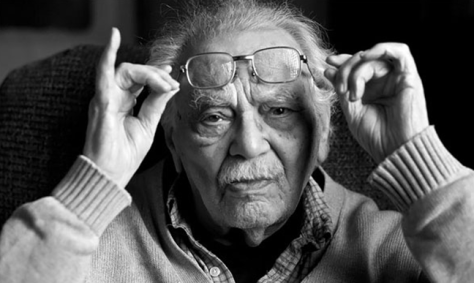
Milton Rogovin

milton

The great photographer immersed himself in the poetry of simplicity and came to the surface with the net full of clear fish and flowers of profundity —Pablo Neruda, “The Islands and Rogovin,” Windows That Open Inward.

People all over are beautiful if given half a chance. I feel that people should have an opportunity to work and live decently …. — Cheryl Brutvan, “An Interview with Milton Rogovin,” The Forgotten Ones.

Milton Rogovin was born the 30th of December 1909 in New York. His parents owned a small store and sold draperies and yardgoods. Like many, they lost everything in the Depression. Rogovin saw devastating poverty, and as a result became politically active. Another decade would pass however before he’d discover photography. In the meantime, he attended Columbia University, where he studied Optometry, as his brother had done before him. In 1938 he moved to Buffalo and opened an optometry clinic on Chippewa street. He had come to Buffalo to be near the trade union people, but he would eventually discover much more.

I visit Rogovin at his house. It is simple and dignified, like the man himself. Daumier prints cover the dining room walls; more prints are spread across the table, waiting to be framed. A Navaho rug lies across the livingroom floor. The shelves are well-stocked with books: Picasso, Goya, Van Gogh. At one point, he reads to me from the memoirs of Käthe Kollwitz (1867-1945), the artist for whom he has the greatest respect. “If you want to know what I think about something,” he remarks as he draws aside the cover, “just look in the back of my books.” I can see he’s made copious notes. Finding the passage which he has enclosed in a bold ink rectangle, he reads words that could well describe his own feelings about his photography:

I should like to say something about my reputation for being a “socialist” artist, which clung to me from then on. Unquestionably my work at this time, as a result of the attitudes of my father and brother and of the whole literature of the period, was in the direction of socialism. But my real motive for choosing my subjects almost exclusively from the life of the workers was that only such subjects gave me in a simple and unqualified way what I felt to be beautiful. For me the Königsberg longshoremen had beauty; the Polish jimkes on their grain ships had beauty; the broad freedom of movement in the gestures of the common people had beauty. Middle-class people held no appeal for me at all. Bourgeois life as a whole seemed to me pedantic. The proletariat, on the other hand, had a grandness of manner, a breadth to their lives. Much later on, when I became acquainted with the difficulties and tragedies underlying proletarian life, when I met the women who came to my husband for help and so, incidentally, came to me, I was gripped by the full force of the proletarian’s fate. Unsolved problems such as prostitution and unemployment grieved and tormented me, and contributed to my feeling that I must keep on with my studies of the lower classes. And portraying them again and again opened a safety-valve for me; it made life bearable.

Rogovin once told Cheryl Brutvan in an interview, “I never could warm up to the middle class in photography.” Among the working classes, among the poor, among those who live on the street, he finds not only suffering but also dignity and beauty. And as the title of his book, The Forgotten Ones, suggests, he finds potential that is never acknowledged, never given an opportunity to flourish. His task is to document this forgotten potential, dignity and beauty. Accordingly, he considers himself a “social documentary photographer” and not an “artist,” though he’d rather dispense with labels altogether and concentrate on his mission—to tell the truth about the human condition. This concern with documenting human lives guides everything he does. He is not institutionally trained; he does things an academically-minded photographer would consider incorrect. His techniques have been developed ad hoc, to accommodate the challenges of photographing in a mine, in a factory, in a living room, in a foreign country. Even his choice of equipment often has a mundane rationale. Years ago he changed his camera after a number of people had asked what it was worth. How could he function, worrying his camera might be stolen?

Rogovin purchased his first camera in 1942, the year he was drafted, the year he married his wife, Anne. But even then he wasn’t a serious photographer. He took snapshots of family vacations and the like. Then in 1958 he was asked by a friend, a professor of music at Buffalo’s state college, to collaborate on a project. The professor would record music at store front churches; Rogovin would take pictures. After three months the music recordings were finished, and the professor moved on. But Rogovin had found his place, and so he continued to photograph at the churches a further three years. He had embarked on a path that would cross the Earth.

In the late 1950s he was still practicing optometry and could photograph only weekends. Besides the responsibilities of his work, he had three children to consider. In addition, Rogovin was politically active in the Black community, as he had been since the 1940s. His efforts caught the attention of the House Committee on Un-American activities, which targeted Rogovin in 1957. His name appeared in the papers. He was shunned by neighbours; his children were no longer visited by their friends; his income dropped immediately by one-half. The wounds have never healed, though in recent years he has been awarded an honorary doctorate by the local university. The recognition, he adds, is encouraging. “It helps,” he says.

As early as the 1960s Rogovin began to receive critical recognition. A number of the store front church photographs (accompanied with an introduction by W. E. B. Du Bois, an educator, writer and founder of the NAACP) was published in a 1962 issue of Aperture by an impressed editor, Minor White. In this same year, Rogovin travelled to Appalachia to photograph coal miners. He had been reading about the problems that they faced, and he wanted to document the hardships, to show outsiders what was happening. This would be the beginning of a world-wide trek. Milton and his wife Anne eventually lived among miners in France (1981), Scotland (1982) and Spain (1983); they would also travel many times to Mexico, and once to China (1986). A selection of the photographs which Rogovin took in these places was published in book form with the title The Forgotten Ones.

Rogovin says he is normally a shy person. But that changes when it comes to his photography. He is not afraid of being aggressive. Perhaps his most remarkable act was to write to the world-famous Chilean poet Pablo Neruda in 1967, asking if he were interested in collaborating on a book. I asked Rogovin what motivated him to do this. The poems, of course: he mentions “The United Fruit Company,” and then asks rhetorically, “Neruda had worked with other photographers and artists—why couldn’t he work with me?” Rogovin laughs when he tells this story; even he seems a bit surprised by his boldness—but there is no doubt that the letter paid off. Neruda replied on 13 November 1966 with a letter that begins, “your work is wonderful and I will be greatly honoured if we collaborate in any venture.” Collaborate they did, and the result was Windows That Open Inward: Images of Chile.

After leaving Chile Rogovin returned to Buffalo. He began in 1969 to photograph the people of the Lower West Side. At first some were suspicious (was he with the police? —the F.B.I.?). He photographed prostitutes, pimps, drug dealers. He met intelligent people whose lives had gone terribly wrong. He tells me a few stories about people he has met. He tells me of a man who lived in the shadow of an abandoned apartment building. “Why,” the man had once said, “can’t the city give us this building? I could teach people here how to do lathe work and other sorts of work. We could fix up this building and live in it. All we want is a job.” A job, Rogovin repeats, a job. The problem, overlooked in this time of welfare-bashing, is the lack of good jobs, and Rogovin’s experiences have convinced him that matters are only getting worse. Today, he reminds me, AT&T have announced they will fire thousands of workers as part of their “restructuring.” The topic turns to work.

In The Forgotten Ones there is a section entitled “Working People.” This group of photographs was begun in 1977, shortly after Rogovin read Bertolt Brecht’s poem, “A Worker Reads History.” He decided he wanted to show the people who do the gruelling physical work on which our society depends, work we don’t see depicted in the photographs of mainstream magazines—or anywhere in our media. Meanwhile, he had been gradually phasing out his optometry practice, from which he retired in 1976, after discussing with his family his desire to photograph full-time. Rogovin could no longer bear the distraction which optometry had become. Photography, he knew, was his calling. Having exhibited his work in Buffalo’s Albright-Knox gallery, he’d by this time established his credibility. He was able to get permission to go into Republic Steel. Once inside he pressed further, asking the workers he’d photographed if they would allow him to take pictures in their homes. He wanted to document the contrasting aspects of working people, to allow them to dress the way that they wanted to dress and to sit where they wanted to sit. He had learned quickly, in the Lower West Side, not to ask questions and not to make demands. He let people choose how they wanted to be photographed. And he was careful to keep a distance.

He returned to the Lower West Side in the early 1980s and again in the early 1990s. He didn’t know the names of the people whose pictures he’d taken between 1969 and 1972, much less where they had gone; but he had the pictures. He showed them to the locals, and was told who had OD’d, who was in jail. Others, he was told, had moved or disappeared. Those he could find he again photographed, and in 1994 the resulting book Triptych was published by Norton.

Milton Rogovin wonders aloud, Is anyone listening? Is anyone listening to the silence of his photographs? If you study them for a while, they begin to speak; but you must pay attention. He finds the sometimes fruitless work of selling himself to booksellers, publishers and museums disheartening. Outside of Buffalo, his work is largely ignored. He recognises that his photography is good, and yet he must acknowledge that “good” does not guarantee an audience. And besides, the well-to-do don’t want to be reminded of those who are less fortunate. Poverty isn’t fun, and so it can’t compete with, say, the glossy colour images of People and Glamour (“I hate colour photography,” he says), or the saccharine banality of Trisha Romance. He’s never heard of Romance (a painter who has captivated the bourgeoisie), so we throw around a few more names and indulge our consternation. In the end though Rogovin is confident he has taken the right path, and he knows that there are a few people out there who are paying attention.

I have one last request of Milton Rogovin before I leave. He has told me of a book, a very special book, given to him by Neruda many years ago. “May I see it?” He goes to the shelves and carefully pulls out a large volume, 20 inches in height, perhaps more. Neruda has inscribed the book for Rogovin. I’m struck by the exuberance of the large green script, among which are whimsically-drawn green birds (“Neruda always wrote with a green pen,” he tells me). The book, Arte de Pajaros [Art of Birds], is a collection of poems. Beside each poem is a gorgeous illustration of birds, painted by friends of Neruda. It is a work of beauty and simplicity, and I look upon it with delight. Then I look out of the window, and see it is getting dark—it is time to go. [-June 1996]

The Grassroots Always Look Greener

In the 90s, the word grassroots was used a great deal by Newt Gingrich to explain the success of his colleagues, the victorious 104th Republican congress, who were elected by the American People — that is, the 15-or-so percent of the public who had voted for one of them.

Gingrich’s enthusiasm over the triumph of the American People over Washington was, I think, sincere. It was not based in fact, by which I mean voter turn-out, but enthusiasm rarely if ever is. The idea that The People have been independently working toward a better society while Washington was employed elsewhere is a reassuring fiction, or at least a gross exaggeration of what is indeed happening in the world. The purpose of this essay is not to dismiss the prospect of a so-called grassroots campaign, but to populate that prospect with some really-existing folk. For I have seen the grassroots up close.

Some time ago I was canvassing on behalf of a local Catholic hospital which had been ordered to close by an agency of the Ontario government. (This was during a period of provincial and municipal restructuring.) My job was to go out among the grassroots and gather the signatures of ordinary folk who, presumably, were opposed to the order. I was sent out with a lapel button, a clipboard, and printed hospital propaganda into an area of Kingston known as the Fruitbelt, a mixed region of low-income manual labourers, welfare recipients, poor retirees, middle-class shop owners, and hospital employees. The houses were all rather modest, but were distributed across the class spectrum more broadly than you will find in most Kingston neighbourhoods. Community volunteer work allows you the privilege of seeing something that is unknown to most politicians: the way people actually live. Many people do not see into the houses of other social and economic classes, or even into the houses of their own neighbours, a fact which is probably debilitating to democratic politics. Here is an example of what I mean. Some of the houses I went into had a smell or appearance I felt to be repulsive; some others felt instantly welcoming. Each house projected a social class I couldn’t help but instantly recognize, by the power of acquired intuition. At some point my ‘progressive views’ had to admit houses and people that I find instinctively repulsive, otherwise those views would be so much chatter. Well, this fact rarely enters into the discussions of democracy and grassroots campaigns, which are always presented as a matter of jolly folks getting together to fight Big Brother. That they will have to get together in the queer livingrooms of people they find smelly, and who anyway are not one of their kind, is conveniently ignored. So it was in the hospital campaign.

I recall an elderly woman who lived in a tiny, hot bungalow. Her walls were covered with religious paraphernalia, photos of the Pope and so on. A sure ally, I decided. I explained why I was in her house and offered the clipboard for her signature. With a knowing shrug she offered her support and told me the hospital was being closed because, as she put it, “the Jews want their land back.” At another house an eager defendant of the Free Market didn’t care much for the Canadian health care system. Another person was a Seventh-Day Adventist who “didn’t believe in doctors or medicine” and who consequently saw no reason to support a hospital with his taxes. Others reasoned that, since the people in charge thought the closure was a good idea, it must be. In the end, there was no common theme, no general view, no shared aspiration which I could infer as the public interest. Why should there have been? These people had never considered the matter among themselves, and likely never would. Probably a majority signed my petition in the end, some perhaps in ignorance of the issues, some just to be polite. From a statistical point of view The People had spoken. Only, in private very few said what the hospital management wanted to hear.

I don’t conclude from my experiences of grassroots politics that public consensus is impossible. It is at several steps’ remove from impossible, somewhere in the vicinity of Bloody Hard. It must be negotiated face-to-face, and inevitably divisive matters will get in the way: resentment, racism, class- and gender-based hostility, fear, anti-semitism, complacency. As I’ve suggested however, the debate is usually precluded by the lack of a physical place in which to get things going. Democracy needs wood and concrete at least as much as it needs ‘information.’ There is no shortage of shopping malls, but shopping malls probably won’t do. Neither will going door to door to collect signatures, which results in nothing more than an opinion poll. I hear a good deal of well-meant but idle talk about ‘public debate,’ again without any reference to the actual conditions under which it must necessarily take place. In any case, debate reminds me of church attendance – decent and wholesome, but avoided whenever possible. In my experience, both are typically a burdensome affair whose chief accomplishment is to drive away honest, thoughtful people.

It is possible that democracy is one of those ideas that work admirably so long as they are never practiced. Think of democracy, for a moment, not as a system but as a lifestyle. To live the democratic life you would be required not only to vote once every few years but to keep yourself well-informed in the meantime and to show up regularly for public meetings. You would be required to maintain social relations with a diversity of persons and to perform certain duties in the public interest. You would be required to get involved when something goes wrong, which it often does. In short, your life would be less your own. It takes little reflection to realize this is precisely the sort of arrangement many of us labour to avoid. As many others, my family long ago withdrew from the burden of church attendance. It seems to me that membership in all sorts of civic organizations is declining. Public life today means going to the movies, which folks do less than in previous years because the VCR has privatized the theatre. ‘Home entertainment’ is almost redundant these days. And be honest: don’t you generally prefer it that way? Every one of us complains about the politicians, but at least they are doing the dirty work we prefer not to do. Democratic participation, whatever its philosophical merits, is a pain.

Social interaction is becoming unnecessary for an increasing number of tasks. Computers will soon replace most (perhaps all) of the human beings with whom you would have dealt in the past, by which I mean not your friends and family, but bank tellers and ticket sellers and salespeople and so on. Most of the things you need to do in person will soon be available ‘on-line’ from your house, if this is not the case already. I am not suggesting that social interaction will disappear, but only that it will be less necessary for certain purposes. Nor is this evidence of the inevitable direction of affairs. Public life will not disappear because there is less need for human bank tellers. A life with a smaller public aspect will however be possible, if you prefer. Deal with other human beings, or not; it’s your choice. Social interaction is becoming less a matter of necessity and more a matter of consumer choice. Although we tend not to think of politics as a matter of lifestyle, consumerism plays its role here as well. When is the last time you voted for an inconvenience?

Grassroots work has shown me how rational and functional contemporary democratic politics really is. There is no reward and much disappointment for the progressive individual who is informed and politically active. Many uninformed (or ill-informed) and inactive citizens may do democracy a disservice, but they have no compelling reason to behave otherwise. A detachment from civic life and electoral politics makes a good deal of sense to those who choose such a course. Do I conclude that politics is useless? No, but I understand the reasoning of those who do. The pursuit of the public good at private expense is perhaps after all a sucker’s game, whatever its supposed virtues. There is a further point to be inferred from my experiences: only among the grassroots does one discern that we in fact have the Government we want, regardless of complaints about particular governments. The system runs nicely without the necessity of public effort, and if things get intolerable enough there are public polls to convey our discontent. Government has evolved toward a state of technocratic efficiency as has everything else. Here ‘efficiency’ means ‘with minimal public intervention.’ Our reward for accepting the system is that most of the time we are left alone. This is often true also of what politicians designate a grassroots campaign. The Contract with America, after all, was delivered to the people via the couch potato’s bible, TV Guide. A place more ill-suited to negotiating a social contract could not be imagined, but the irony went mostly unnoticed. Perhaps that’s because there was no irony: it was Government as usual, conveniently arranged for the citizen who prefers to stay home. [April 1999.]

Reading Chekhov’s Stories

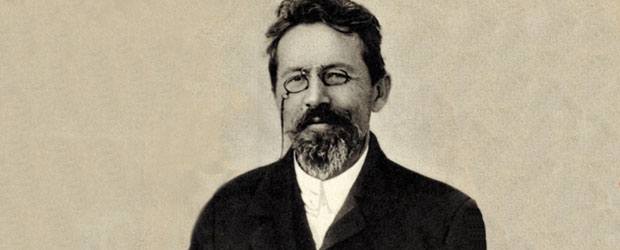
THE RUSSIAN WRITER Anton Chekhov was born in 1860, the son of a poor grocer. He studied medicine, supported himself and his family by writing, and eventually worked his way up to the profession of doctor. He travelled, lived five years on a country estate, and died in Yalta in 1904. He is today regarded as one of the finest writers of the short story. In short, he was a specimen of a Russian rarity, the upwardly-mobile peasant literary genius.

The above sketch is clearly skeletal, but it suggests already the themes with which Chekhov was concerned: rural life, the relation of the classes, and self-improvement through education. Most Chekhov stories involve something like the following. A Russian goes on a rural trip in harsh weather. He is brought by circumstance into the company of a differing social class. Someone brings out the samovar, or tea-urn, and conversation ensues, but the classes do not communicate. There is usually a long passage in which the protagonist dwells upon the absurdity of it all. This one, for example:

Why are there doctors and medical orderlies, he wondered, why are there merchants, clerks and peasants in this world? Why aren’t there just free men? The birds and beasts are free, aren’t they? So is Merik. They fear no one, they need no one. Now, whose idea was it – who says we have to get up in the morning, have a meal at midday and go to bed at night? That a doctor is senior to an orderly? That one must live in a room and love no one but one’s wife? Why shouldn’t things be the other way round – lunch at night and sleep by day? Oh, to leap on a horse, not asking whose it is, and race the wind down fields, woods and dales like some fiend out of hell! Oh, to make love to girls, to laugh at everyone!

There is a good deal to be said about this quotation and the attitudes it suggests. But before we come to the analysis, I should like to explain why I’ve chosen this particular passage. For I could as easily have produced a dozen other on the same theme, all of them making the same point. I chose this one because I have thought exactly these very thoughts. ‘Who decided we must eat breakfast in the morning? sleep at night? work from dawn to dusk for a wage? dedicate our lives to consumption? look forward to the weekend and retirement? etc. etc.’ One can hardly live in an organized society without feeling the subtle and not so subtle external compulsions that determine so much of her behaviour. Are we free? Most of the time we think so, but then come those moments when we know we are living according to a script. It interests me that those moments involve things like breakfast and sleep. After all, war is obviously absurd, but breakfast? Precisely what feels natural, precisely this is being questioned. Beneath the careful crafting of a Chekhov story, one discovers the question, Could the world be otherwise than it is?

The question Could the world be other than it is? tosses us into politics. Here we find what I shall call the skeptical turn of mind – that is, the calling of things into question. A writer whose characters wonder over the meaning of breakfast could hardly be expected to accept human arrangements at face value. Yet what did Chekhov think? He seems to disapprove of the abuses of the Russian class system, but what would he put in its place, if anything? That is the rub. On first reading Chekhov, I find a vague humanism and a pervasive skepticism. Life is absurd. Yes, the peasants are getting shafted, but look at what sort of folk they are! Stubborn, bigoted, suspicious, and above all, stupid. They cannot even perceive their self-interest. Chekhov is commonly portrayed, along with James Joyce, as an exemplary model of the disinterested and apolitical writer. If he is unwilling to accept flattering nonsense about the aristocracy, he is equally unwilling to romanticize, in the common manner of the social reformer, the common folk. The consensus is that he merely describes the world without rendering a judgement.

Is this correct? Consider ‘An Awkward Business,’ which examines an incident between a country doctor, Gregory Ovchinnikov, and a medical orderly, Michael Smirnovsky. Here, as elsewhere, Chekhov establishes a set of contrasts. The doctor is young, educated, and thoughtful. Furthermore, he is a professional with aspirations. Chekhov is careful to note Gregory’s “keen interest in ‘social problems,’” a phrase which seems to me deliberately fuzzy. For Gregory, in contrast to the aged, bumbling, alcoholic Michael, is profoundly at odds with something we would call the system, and yet he’s unable to put his discomfort into practical language. Gregory’s problem is this: he has punched Michael in the face for coming to work drunk. He knows this is unprofessional behaviour, and that he ought to be disciplined, and yet the norms of 19th-century Russian society make only one outcome possible. The ‘old boys’ will rally around Gregory, and as a consequence his behaviour will be pronounced just. Indeed, this is precisely what happens.

Regarding the workings of the system, Gregory comments on ‘the sheer, the crass stupidity of it all.’ Here we have the perspective of the radical, the would-be reformer who is interested in social problems. Gregory seems to me to have Chekhov’s sympathy, but the implicit lesson of the story is that, like it or not, the system works. That, after all, is its function – to keep things moving along. Michael himself understands this and begs the forgiveness of his assailant. It is only when the embarrassed doctor suggests instead a lawsuit against himself that things get complicated. The expedient course of action would be to observe social conventions and let the system do its work. Why drag impractical notions like ‘social problems’ into the matter? No answer is given for this question. The impractical notions are simply there, and as a result Chekhov’s fiction is much more complicated than I’ve made it appear. His characters are plagued by a concern with justice, but they’ve learned to get along in an unjust world. It’s worth noting that the passage quoted above (“Oh, to leap on a horse…”) ends with this: “It would be a good idea to burgle some rich man’s house at night, he reflected.” In other words, once we have decided that the status quo is so much cruel nonsense, which clearly it sometimes is, we may move in any direction. Those directions include murder, robbery, and all manner of violence. Having questioned the prevailing arrangements, Gregory learns what everyone else has known all along, that things flow most smoothly when they follow the established channels. The alternatives are, as the story’s title ironically indicates, awkward.

The Chekhov I’ve proposed thus far conforms to the conventional notion of him as a wry observer of human affairs. But this Chekhov is, I think, too much a quietist, too much a man who merely contemplates things as they are without believing one can make a difference. That Chekhov was no reformer I agree. And yet I’m not satisfied with the view I’ve advanced thus far, that he is a skeptic and nothing more. He makes observable commitments and characteristic choices. There are implicit answers to the question, Could the world be otherwise than it is? In short, there is more to be said about the world of Chekhov’s fiction.

We may note the following. Chekhov is more interested in rural Russia than he is in the cities. Whatever implicit views he has may be inferred from his fondness for the ‘backward regions.’ He is interested in peasants, but he consistently narrates his stories from the perspective of the gentleman, or, where gentlemen are lacking, figures of relative high status. The protagonists are sometimes disdainful of their social inferiors but sometimes are ‘anxious,’ which is to say they encounter the lower orders with a mixed emotion of fear and desire. In the latter case, the upper classes do not wish to be confused with the down-and-out, and yet deep down they believe that the down-and-out lead a fuller, richer, more ‘earthy’ existence than they themselves do. The result is that the lower classes assume a sinister but compelling aspect, as in this passage from ‘Thieves’:

‘Phew, that girl has spirit!’ Yergunov thought, sitting on the chest and observing the dance from there. ‘What fire! Nothing’s too good for her.’

He regretted being a medical orderly instead of an ordinary peasant. Why must he wear a coat and a watch-chain with a gilt key, and not a navy-blue shirt with a cord belt – in which case he, like Merik, could have sung boldly, danced, drunk and thrown both arms round Lyubka?

Yergunov is nearly seduced by Lyubka, and he is robbed by Merik, but the greatest danger these characters pose is the one suggested by the story’s ending, that Yergunov will betray himself and defect his class. And why not? The peasants are having a wonderful time of it, robbing and killing with apparent impunity. Here we get another glimpse, I think, of Chekhov’s ‘position’ on the question, Could things be otherwise in the world? Nowhere does Chekhov allow class defection to occur without at least the suggestion of dire consequence. One has a choice to be a peasant or a gentleman; beyond that there is mere anarchy. Furthermore, class mobility is properly a matter of sustained effort and self-transformation. His is the sensibility of a man who through his own effort has left behind poverty and achieved success, and who believes that the answer is for others to do likewise. In short, he is concerned with personal evolution, not social revolution.

This explains the features of his work, some of which I have already identified. There is no grand social-reform vision in Chekhov’s stories because he is interested in the individual. This interest informs the manner in which he both criticizes and affirms the system. The system dooms the occasional intelligent, gifted individual to be born a peasant; nonetheless, for most peasants, theirs is a proper and even necessary role. As Kuzmichov comments in ‘The Steppe,’ ‘The point is that if everyone becomes a scholar and gentleman there won’t be anyone to trade and sow crops. We all starve.’ It’s not clear to what degree Chekhov endorsed Alexander Arkhipovich’s claim (in ‘An Awkward Business’) that ‘It’s only among professional people and peasants – at the two poles of society, in other words – that one finds honest, sober, reliable workers nowadays,’ but isn’t it interesting that he chooses rural settings, precisely where he may best concentrate upon these two classes. My suspicion is that, like Kuzmichov, Chekhov accepts the practicality of the class system. Social revolution is regarded skeptically, while the system, though evidently flawed, is at least valued as a source of social stability. Those characters who do accomplish a sort of revolution, for instance the protagonist in ‘The Cobbler and the Devil,’ find the results disastrous. The cobbler sells his soul to the devil in exchange for riches, but because he has not risen to his position through his own efforts, but instead by a sort of trickery, he is unable to fill his social position credibly. Despite his riches, he is still at heart a cobbler. When he wakes to find the whole thing was a dream, he joyfully accepts his humble lot. He has learned it’s where he belongs.

The Chekhov I am inferring may today sound reactionary, but we should recall the sort of ideas which were about in the 1890s. Social Darwinism was in ascendance in America, Germany, and Russia – to cite only the most historically significant manifestations. One of Chekhov’s late stories, ‘The Duel,’ repudiates proto-fascist notions about the lower classes, i.e., that they are degenerate and must be sacrificed to the greater good. Chekhov had no kind feeling for this point of view. Here however we may introduce another characteristic of Chekhov’s fiction, that it is almost oblivious to the stirrings of what has come to be called Modernism. A rural setting allowed Chekhov to explore the Russian class system, but the exploration is devoid of what really matters, from a modern point of view. I am referring to the conditions of urban life, the urban proletariat, the aristocracy, and mass society. His fiction looks backward, or tries to ignore the march of history altogether. Considered in its historical context, Chekhov’s decision to write mostly about peasants and gentlemen is remarkable.

I should address the accusation that Chekhov cannot be judged by today’s standard. Modernism did not come along until after his death, so how can he be expected to have written about it? I believe this accusation is misplaced, because clearly Chekhov did see what was happening. He knew that something one of his characters calls the ‘in-betweeners’ was emerging between peasant and gentleman (likely a reference to the rural bourgeoisie, known also as Kulaks or miroyed), and he knew about conditions of life in the cities. The point is, these did not interest him as a writer. He must also have been aware of grievances against the tsar, of the ‘Land and Freedom’ movements, and of the growing state repression of reform efforts. Nonetheless, Russia in 1890, for Chekhov, is farm labour, violent weather, inns, and samovars. ‘Upper classes’ means country priests, doctors, and clerical workers: in other words, gentlemen who have been educated out of the peasant class. As I’ve remarked earlier, these are the only two classes of person you’ll find. Chekhov also gives us murderous criminals, madmen, and exiles, but these are people outside society. They serve as a foil to his chief interests. Nor does class as such seem to be his concern. The peasants complain of their lot, and their suffering is presented sympathetically, but with a suggestion that it is inevitable, given their ignorance. There is no hint of the political struggles that culminated in the 1917 Revolution – struggles, one should note, that had been going on for many decades. One encounters the odd peasant rant against ‘the rich,’ as in the story ‘New Villa’ for instance, but we are never encouraged to take these comments seriously. Class oppression does not seem to be the problem for Chekhov, who himself had shown you could move about in Russian society if you had talent and a bit of gumption.

I am tempted to say that Chekhov’s fiction is informed by something akin to ‘classical liberalism’ or ‘meritocracy,’ but neither term is quite appropriate. I do think nonetheless that the stories imply a rejection of social reform (especially revolution) and that they treat ‘social problems’ as a matter of the individual. The world is recognized as a cruel and harsh place, and the poor are shown to have it badly. But Chekhov suggests that nothing can be done for them which will alter the fact of their poverty; alas, there must forever be peasants. One cannot read ‘New Villa’ without getting this message rather clearly. If the odd, individual peasant has talent and education, he may become a professional. In any case, the system will sort things out and people will end up where they belong, either among the peasants or gentlemen. Note that some, like Chekhov’s cobbler, will belong at the bottom and will only be harmed by artificial arrangements that put them elsewhere. The end result of the system may be harsh – will probably be harsh – and you may not like it, but such is life. That is the apparent moral of many a Chekhov story. Chekhov believed in private philanthropy and the obligations of rank (he helped to organize famine relief), and his story ‘My Wife’ shows he found the gentry’s mere lipservice to these deplorable. But the fact of wealth and poverty does not seem to have bothered him, so long as everyone bore his social rank with dignity and treated others kindly. The people who flout this principle get Chekhov’s harshest treatment. One however should not mistake the harshness as the sentiment of a reformer. If I am correct, Chekhov’s fiction offers us a qualified and careful apology for the class system.

All of this no doubt sounds familiar. Something like the ideology I have been describing is emerging as the official political consensus in all the industrialized countries, including Canada. Already it is the dominant view in America. Put crudely, the beliefs are that social reform has been attempted and found misguided, most of the poor are the authors of their condition and aren’t helped by the state regardless, one’s social position is a matter of merit, the individual alone is responsible for his or her fate, and the best one can do is to alleviate suffering through private philanthropy. Along with the emphasis upon the individual we find renewed attention to education, crime, and the family. When the system is conceived as a mere collection of individuals, issues such as personal crime (as opposed to corporate crime), private education, and personal moral values will come to the surface. The behaviour of the individual will become the substance of reform. Class conflict, structural unemployment, systemic racism, and other such grand reformist catch-phrases will recede to the margins of public discourse. The system will be of little political concern. Reformation of the subject will be the political object. (June 1998)

How I Survived My Education

Writing-lines

WE ARE ALL deeply indebted to our education system, for despite it, and maybe even in rebellion against it, we have become educated persons. Education like birth is something that simply must be done, and however much you may have benefited from it, you’d hardly wish to do it all over again.

I remember peculiar details whose significance today escapes me. I was once forced to stand in the hall for something I’d done, or hadn’t done; I had to go to the bathroom but I feared interrupting the class, so I pressed my legs together and danced until the pressure was more than I could bear, and then I wet my pants. This sort of unpleasant experience is unusual only in particulars. Most of my memories of school involve the themes of crime, authority, fear, and punishment. I suspect any other student could tell comparable tales. Nothing which could be construed as a ‘lesson’ remains afterward. I remember only the punishment, and the rest might as well never have happened.

The grammar school I attended had a long tradition of military-style education. The principal as late as the 1950s was typically a retired sergeant, or some similar figure. ‘Stern, male, and authoritarian’ seemed to be the chief requirements of the job. The yet-surviving Victorian model of the teacher was vanishing, but examples were still plentiful enough. The awkward phrase ‘Victorian model of the teacher’ is my own, and if I had a better phrase I would use it. It designates the educated middle-age woman who, having raised her own children, is thrust upon the children of others only to keep her busy. Behind the practice were some ugly assumptions about women and children which I suspect are familiar. Even today the assumptions inform our education system, which is why tenured university professors tend to be male and grammar-school teachers female. One assumption, which applies to other professions as well, is that work done with children really isn’t important enough to command the respect and wages of work done among adults. Thus the school was a dumping ground of sorts, and though inspired and gifted teachers could be found, they were accidents. Deviation from the norm was an unfortunate condition to be beaten back, and the creative teacher faced, then as now, a host of opponents.

To appreciate the character of the education I’m describing, you’ve got to consider the sort of things one was expected to learn: spelling, penmanship, punctuality, respect for authority, and obedience. All of these involve conformity to standards, whose justification is taken as self-evident. One learned to spell ‘correctly,’ with the help of a British dictionary. The authority of the dictionary was taken for granted, as if there were only One True Dictionary. I was also taught there was a correct way to make a lower-case ‘p’ – with the vertical stroke rising above the curved, much like the Old Norse thorn, þ. Regarding punctuality, never my strong point, I was reminded that I’d never get a job if I couldn’t learn to be on-time. Here the clock was the authority, and there could be no questioning the exigencies of the schedule (correct pronunciation: ‘shed-jewel’). Regarding respect for and obedience to authority, no matter what subject was ostensibly under consideration, these were the lessons. I suspect they were ultimately all that we were meant to learn.

In my case the system failed; I somehow learned not to respect and obey, as a matter of habit, authority. School showed me that our leaders are not self-justified, and that they indeed often behave far from justly. I learned these lessons while reflecting on my experiences. As an adult I could see clearly that the function of the system was to produce moderately intelligent middle-managers and docile proles. That is what the industrial capitalist system of my childhood needed, and that is what it mostly got. The system was designed to produce people who would show up for work on time and do what they’re told, how they’re told, no matter how demeaning, pointless, or even stupid it may be. The system produced these folks the way it produced everything else: in mass quantity, according to specification. In such a world it’s inconvenient to question the structures and dictates of work, just as it’s awkward to ask why ‘fill-um’ is the correct Canadian way to say film. Such questions were discouraged. In both cases one was expected to do as one was told, period. Authority, I discovered, is often a mere matter of expedience. Education standards, for instance, may serve the interests of education bureaucrats more than they do students, and the function of the authorities may be to ensure that the standards always triumph. In my opinion, you’re not educated if you’ve never had this suspicion.

When you start to ask questions, a curious phenomenon occurs. Things begin to unravel. You learn that authority stands on shaky ground. The teacher is not all-knowing and in fact only says fill-um because she was told by someone (another authority) that it is proper to do so. Behind every authority is only another authority: the Oxford dictionary, the CBC, the Queen, and so on. Question any individual authority and there is nothing in principle stopping you from questioning authority itself. How frightening such a state must be for teachers whose insufficient training and meagre resources make them entirely dependent upon the teaching guide. Their authority is all that they have. At least the bureaucracy offers them the conditions they need to do their job. One person’s hell is another’s heaven, and I know today that mindless fill-in-the-blank work is a blessing if you’ve got the right temperament. Bureaucracy, after all, serves a useful and even civilizing function. You need only do and think as you’re told; the system will then propel you along toward your pension.

Although this may sound cynical, it describes the way most of us live. Consider the realm of opinions. Even if we don’t believe most of what we read, we at least have read most of what we believe. We couldn’t possibly have first-hand knowledge of all that goes on in the world. We have to believe something to function. I don’t mean ‘belief’ in the religious sense of ‘faith,’ as in the phrase ‘to believe in God.’ Instead I mean belief in the sense that we concede the world is pretty much what the experts say it is. Though the meanings overlap, they differ in the sense that the expert describes something you could see for yourself, like an atom, if you made the effort. Experts pretend to describe objective facts, in relation to which blind faith is not only unrequired but inappropriate. If you doubt the descriptions, you are free to examine the matter for yourself and to form your own opinion. Most of us however haven’t the time or inclination to do this, and so we acquire our opinions second-hand. This is not an argument against the media, but merely a description of the way in which opinions necessarily operate in the real world. We can only go so far in challenging conventional wisdom, if we challenge at all, because beyond conventional hearsay there is conventional heresy, and beyond that little more than regions of fire and dragons. The conventions, whatever their shortcomings, serve a function.

One of the great and overlooked paradoxes of the education system is that it is blamed for all social ills and called upon to remedy them. The possibility that it is neither the disease nor the cure offers little opportunity to the polemicist and so is rejected. Civilization has its discontents, but this is not entirely the fault of the education system. Even if we restrict the discussion to learning, the education system can be shown to have a doubtful role. Einstein’s genius did not flower as a result of his contact with the University; he was at best a mediocre student. There’s no doubt in my mind that the education system of my childhood tended toward stupefaction, but stupidity was not always the outcome. Yes, school inoculates the young against intellectual curiosity – but this is only merciful, so long as the adulthood to which the young may look forward consists mostly in mindless work, endless sitcoms, and cajoling advertisements. When’s the last time you heard an education reformer observe the obvious, that there’s almost nothing to do with intellectual curiosity except make a pest of oneself. The corporations do not want it, despite their talk of the knowledge economy; the government does not want it; the TV does not afford it; and your boss will retaliate at its first appearance. In short, intellectual curiosity is as useful to social success as bad breath. Nothing is cultivated at such cost, with such pains, only to be met by such perfect indifference. That is why the education system works the way it does. And it does work, by rooting out intellectual curiosity and replacing it with ‘workplace skills,’ lest a peaceful and gainfully-employed existence be forever precluded.

Any system will fail at least some of the time. Intellectual curiosity may survive prolonged therapy. In my case the education system was indispensable to my efforts, like the floor against which an athlete must push in order to leap. I began my life as a critical thinker when I first discerned what the education system is really designed to do – and how far this reality is from what education spokespersons claim it is designed to do. Reformers insist they want to make the education system a place of critical thought. Think about it: a generation of critical thought would pretty much put an end to the advertisement and PR industries, not to mention a good many political careers. The whole culture would have to be remade to suit the thinking and tastes of clever, skeptical people. Critical thought would pose a larger technical challenge than the Year-2000 bug. Our dullness is a national treasure. It is an industrial lubricant; without it the wheels of progress would grind to a halt. No more blockbusters, no more bad newspapers, no more trickle-down economics, and on and on. Do we really want to end civilization as we know it?

I would, but that is only because I am a pest who’s survived the education system. [-June 1998.]

Bertrand Russell on freedom of speech

Writing to the New York Times on the 20th of April 1940, Bertrand Russell reminded his audience (chiefly, the editors of the Times) of an unpleasant fact. His no-nonsense, that’s-the-way-it-is manner you will recognize as characteristic. “In a democracy,” he urged, “it is necessary that people should learn to endure having their sentiments outraged.”

The occasion of Russell’s letter was a Times editorial implicitly supporting a decision to ban Russell from teaching at the College of the City of New York. The outraged sentiments in this case belong, I presume, to the ecclesiastical authorities, politicians, citizens, and newspaper editorialists who demanded that the College Board ban Russell, and who to that end launched a bilious project of defamation. The history of that project is long, complicated, and rather ugly; a more thorough review of it can be found in the form of an Appendix to Russell’s Why I Am Not a Christian (London: Unwin Paperbacks, 1988). This account itself is derived from The Bertrand Russell Case, published in 1941 and edited by Horace Kallen and John Dewey. For the present purpose, which is to extrapolate from the above quotation, only a relatively brief sketching of events should suffice.

Russell at first was granted the appointment, by the Board of Higher Education on 26 February 1940, to teach 3 Philosophy courses: logic, foundations of mathematics, relations of pure to applied sciences and the reciprocal influence of metaphysics and scientific theories. Nineteen of the twenty-two Board members were present for the vote, and all nineteen were in support. Only when the decision was made public did trouble begin. A Protestant Episcopal Bishop by the name of Manning wrote to New York’s newspapers, denouncing “a man who is a recognised propagandist against religion and morality, and who specifically defends adultery.” Here I shall interject myself to suggest that these accusations weren’t so errant as they may appear. Russell was a propagandist against religion and, in a sense, against ‘morality’ too, morality here defined as a coercive fear-based system of control grounded in and perpetuated by the Church. Of course, Bishop Manning probably meant to imply that Russell was ‘against moral goodness,’ but that is another matter. The Bishop’s sentiments having been outraged, such quibbles went out the window. As the campaign against Russell aged, other judgements were rendered. The materialist philosopher and self-styled agnostic was called “a professor of paganism,” “a desiccated, divorced and decadent advocate of sexual promiscuity,” “an ape of genius, the devil’s minister of men” and an “anarchist and moral nihilist of Great Britain.” This last quotation openly displays the chauvinism informing these attacks; their general drift is that Russell is not one of Us, he’s one of Them, hence he must be repelled. It’s noteworthy I think that Russell’s response was to defend, not his opinions, but his democratic right to be one of Them. After all, it’s clear that’s what he indeed was.

What happened next is as follows. A member both of the Board and of the Protestant Episcopal Church, Charles H. Tuttle, altered his decision after claiming he’d been ignorant of Russell’s views. Tuttle put the appointment back on the agenda, public vilification intensified, new accusations appeared, and yet the original Board decision was sustained by a vote of 11-7. The campaign however only got nastier, if this was possible. City politicians and administrators urged the cancellation of college funding, the toughening of immigration policy to keep out “dogs” like Russell – the word was Councilman Charles E. Keegan’s – the undertaking of investigations into the education system of New York, tarring and feathering, and so on. During this controversy Russell had his defenders too, among them liberal religious leaders and publishers, academics, and politicians such as City Council Republican Stanley Isaacs, all of whom defended Russell’s appointment at great risk to their careers. Along the way Albert Einstein delivered one of his enduring observations: “Great spirits have always found violent opposition from mediocrities.”

Defeat of the Board was undertaken in a lawsuit issued by a Mrs. Jean Kay of Brooklyn and presented before Justice McGeehan. Kay filed a taxpayer’s suit in the New York Supreme Court, where her lawyer argued that Russell had not taken a competitive examination before receiving his appointment. To this, the lawyer added the charges that Russell was an alien, atheist, and an advocate of sexual immorality, all of which necessarily ought to exclude him from teaching. The Board’s lawyer attempted to restrict the case to the legal question of whether an alien could be appointed to a post in a US city college. Unfortunately for both him and Russell, McGeehan was a crusader on behalf of public morality and ruled two days later that Russell’s appointment was an “insult to the people of the City of New York.” Russell later was represented by independent counsel, but an application for permission to answer Mrs. Kay’s and her lawyer’s charges was dismissed by McGeehan on the astonishing ground that Russell had no “legal interest” in the matter. Successive requests for permission to appeal were also denied. However, McGeehan himself could not stop the Board from hiring Russell. In the end it took the combined efforts of New York Mayor LaGuardia, Bronx Borough President James J. Lyons, and several members of City Council, who banded together to ensure that Bertrand Russell would never teach in New York. Mr. Lyons introduced a resolution at the meeting of the Board of Estimate, which was made part of the terms and conditions of the budget. It read, “No funds herein appropriated shall be used for the employment of Bertrand Russell.” No funds were.

Believe it or not, this is the brief version of the story. The full version contains a good deal more twists and turns, principal players, ugliness, and also courage. The general theme of the story, if I may be allowed to use literary terms, is the Struggle for Intellectual Freedom versus the Defence of Decency. On the one hand we have Freedom of Speech, and on the other, ‘No, not if we don’t like what you’re saying.’

Here we arrive at the entrance of the Times. After a long silence, an editorial appeared on 20 April 1940 in which it was argued (among other things) that the appointment of Russell was impolitic and ought to have been declined by the recipient “as soon as its harmful results became evident.” That is to say, none of this would have happened had Russell just shut up and gone away. The Times editorialist concluded that it was all his fault.

In his response, Russell acknowledged that “it would certainly have been more prudent as far as [his] personal interests are concerned” had he declined at once his teaching position. He refused however, arguing a withdrawal would give tacit assent to the proposition that “substantial groups shall be allowed to drive out of public office individuals whose opinions, race or nationality they find repugnant.” As for the controversy he had occasioned:

I do not believe that controversy is harmful on general grounds. It is not controversy and open differences that endanger democracy. On the contrary, these are its greatest safeguards. It is an essential part of democracy that substantial groups, even majorities, should extend toleration to dissentient groups, however small and however much their sentiments outraged.

And then he added, “In a democracy it is necessary that people should learn to endure having their sentiments outraged.” This seems to have been the fundamental issue for Russell, as well as for the people who came to his defence. Challenging this point of view we find the propositions that some things are better left unsaid, and that ‘the people’ have a right to ensure that they aren’t said. This we may designate the right not to endure having our sentiments outraged.

Russell’s argument is, I think, characteristically harsh. We tend to think of freedom as a bundle of personal rights. Put crudely, democracy in this view consists in my doing what I want without you getting in my way and trying to stop me. We tend less to consider the necessary complement of this formulation – that is to say, rarely do we approach democracy from the point of the view of that fellow who has a strong moral impulse to do the stopping. When we do find ourselves in that position, freedom usually ceases to be the issue. The function of Russell’s letter is to make us see the matter from this complementary perspective. We are reminded that going swimmingly about your happy business without the interference of shits isn’t the sole outcome of democracy; it’s also having to live with the daily outrage of people who insist upon going about their happy business, of which you happen not to approve. Bertrand Russell is a writer who reminds you that your civilized comforts are possible only because somewhere there is someone else suffering on your behalf. The loftiest principles have to be founded somehow, usually in the muck. Since most of us tend to see democracy from the Get Off My Cloud perspective, Russell’s habit of looking up at things from the gutter is disconcerting.

Democracy isn’t a convenient arrangement. When Our side is winning then, obviously, it’s all fair and democratic. But when it’s Their side having a day of it, democracy seems somehow to have failed. We are all susceptible to that sort of hypocrisy, aren’t we? The remarkable thing however is that some of the people who came to Russell’s defence must have been personally offended by his views. At the very least, some of his supporters did not share them. Among his voluminous writings – forty-three books by my count – you will have trouble finding one positive word about religion. Russell, especially skilled at invective, reserved his harshest attacks for the church and its representatives. I have no doubt he felt as strongly about abolishing ‘superstition’ as his opponents felt about abolishing ‘immorality.’ Russell, in his own manner, was a moral crusader. In the world toward which he laboured, there was no place for God and religion. And yet among the people who defended his right to speech as well as to teach were Rabbi Jonah B. Wise, Professor J.S. Bixler of Harvard Divinity School, the Reverend John Haynes Holmes, and the Episcopal Reverend Guy Emery Shipler, the last of this list even disputing Bishop Manning’s right to speak on behalf of the Episcopal Church. Given Russell’s opinions, the public support of these individuals was quite generous.

You may also say this support was self-interested, but that does not diminish the gesture. Democracy itself is founded on, among other things, self-interest. When certain people are no longer willing to have their sentiments outraged, and seek to alter social arrangements on that account, the freedom of all is endangered. Russell, a logician, used words with great precision. Note that he did not write, ‘In a democracy, it helps when people learn to endure having their sentiments outraged.’ His view of freedom was self-interested, but it also considered the public interest. Follow Russell’s argument to its logical conclusion (he would be gratified by this approach) and you find the proposition that in a healthy democracy one finds, not only personal liberty, but people who’ve learned to endure being pissed off. One’s self-interest in liberty is easy to identify, and yet there is an equal self-interest in tolerance of others which tends to feel less compelling when you’re hot under the collar.

I’ve been considering freedom and democracy in abstraction, removed from the messiness of real life. Almost no one would argue against freedom in principle. And yet there are cases every day where freedom seems to many an intolerable burden. What do you make, for instance, of the freedom to publish Nazi tracts, kiddie porn, and hate literature? Here is a question that invites us to draw our personal boundary around freedom, something each of us does. In my case, I almost wrote in the above sentence: “What do you make, for instance, of the ‘freedom’ to publish Nazi tracts, etc.” The quotation marks around ‘freedom’ are a dead give-away; they tell you that, deep-down, I don’t think freedom ought to be extended to the hateful acts of creeps. Thus, when it’s Their speech under question, the issue is not Freedom, but rather Combating Racism, Violence, and Hate. That’s how I feel deep-down. Somewhere presumably higher-up however I suspect that racism and violence don’t go away just because you’ve told them to. Banishing unpleasantness from the public domain was the solution (or ‘solution’) of the Times editorialist, who presumably conceived the ideal public domain as a kind of smooth elevator ride, and ideal public debate as a kind of Muzak. The Times offers us comforting illusions of an easy peace, and although most of us believe peace is what we ought to have, our experience shows us Russell is closer to the truth of things.

By peace I mean the absence of controversy and dissent. We often complain that politics is nasty, that there should be bipartisanship, that people should put aside their differences and get things done, and that the government is too inefficient. To a degree I think the complaints are well-founded. Yet I also find it curious that dissent, controversy, and inefficiency should be regarded in this case as negatives. All of these could be eliminated through the institution of a fascist dictatorship, but few if any of us want this because we cherish the freedom of speech and the right to representation. In practice however these translate roughly into dissent, partisanship, and inefficiency. The trouble-free democracy advocated by the Times editor turned out not to be democracy at all, but instead the right of the raucous to their peace and quiet. In the end they got it, too. [October 1998.]

Indian Residential Schools: a brief history of the Mush Hole

Today I received news that my mother’s application for the Common Experience Payment, or CEP, (under Canada’s 2007 Indian Residential School Settlement Agreement) has run its course to a conclusion. This after two and one-half years of collecting documents, filling forms, phoning and re-phoning Government employees across the country, collecting further documents, and, having arrived at a procedural cul-de-sac, shutting things down to invoke an appeal. And, most of all, waiting.

This reference to procedural cul-de-sac concerns one of many stumbling blocks faced by former students of Indian residential schools who apply for the CEP. Often there are records in the Government’s possession showing some of the years of residence but not others. Researchers charged with assessing applications (the Government is careful to stress, by the way, the CEP is not “compensation,” but rather an acknowledgement of the common experience of being forcibly removed from family and community and placed in institutions) can not issue a payment for a year under consideration without proof of residence. If there is documentation concerning, say, 1950 and 1955 only, the intervening years can not be calculated for the purpose of the CEP. Unless the documents can be found, somehow, at some point down the road. And what a long road it can be! What is not widely known is that an applicant in this bind may request and be granted termination of the search — in effect to be deemed ineligible for a CEP in the undocumented years. This may seem like madness after a two or three year investment in a process. However, having in effect “asked” to be declined, one may proceed to an appeal process, which places the matter under the authority of persons authorized to make a judgement in the absence of records. In the hypothetical case above, the authorities may decide to issue a payment for the years 1950 to 1955, inclusive. This was the case in my mother’s appeal.

My mother is a highly confident, tenacious, assertive, and capable person — but the Sisyphean task of pushing this matter to a conclusion brought her on more than one occasion to tears. I can only guess at the number of applicants in the same situation who gave up and were, once again, humiliated and gutted by a “process” which, despite some well-meaning employees, quite shafted them. Some things really do never change.

The gaping colonial maw at the centre of this was the Mohawk Institute, an Indian residential school known more commonly as the Mush Hole. The Mush Hole had the distinction of being both the first and longest-operated Indian residential school in Canada, its construction having been begun in 1829, and its time as a federally-managed institution ending in 1969. In 1930, a one-hundred-year-later retrospective was penned by a bureaucrat at the Department of Indian and Northern Affairs Canada. (You can find it here.) I’ve often wondered what Joseph Brant, who in 1822 asked the British to construct a school and church at Six Nations, would have made of the Mush Hole. Or the negotiators of the numbered treaties, who made education in exchange for territory a strategic bargaining issue in the 1870s. Perhaps it’s a pointless exercise, but it at least suggests the enormous gap between what is agreed to in principle, and what is delivered by the political machinery. We negotiated an education agreement and got residential schools. Beginning from the Haldimand Tract, we end in Ohsweken (five percent of the land in that settlement, the rest having been sold off by Canada, which then used the money for its own infrastructure). Canada’s “interpretation” of the Kaswentha (Two Row Wampum) led to an invasion of our territories and a deposing of our government, in the 1920s.

It was roughly the time my grandfather was in the Mush Hole when protests against attempts by Canada to subvert the independence of the Haudenosaunee culminated in a 1923 trip to Geneva to petition the League of Nations. Deskaheh, or Levi General as he was known in English, was a man so eloquent and forceful in articulating the multiple crimes of Canada against the Six Nations that he was forced out of the country and died on Tuscarora land, near Niagara Falls, New York. Partly I suspect as a retaliation for having been shamed in Switzerland, and partly out of a “pre-emptive” desire to make certain it never happen again, Canada sent the RCMP into Grand River Territory in October 1924, and a puppet government (the Chief and band council system, which we have to this day) was forcibly imposed. Here’s an official characterization of these events, as recorded in the 1924 Annual Report of the Department of Indian Affairs:

Until the present year the Six Nations Indians, who are located at Ohsweken, Brant county, Ontario, had from time immemorial selected their chiefs and councillors by an ancient hereditary system in which the voting power lay with the Women of the different tribes and clans. It had been for some years obvious that this obsolete system was wholly unsuited to modern conditions of life and detrimental to progress and advancement. There has unfortunately developed, moreover, during the past few years a retrogressive and obstructive agitation on the reserve which has so impeded progressive administration that it was felt that an improvement in their political system must be effected without delay. In March, 1923, the Government appointed a Royal Commission in the person of Lt.-Col. Andrew T. Thompson to investigate the affairs of the Six Nations. The commissioner in his report, among other important recommendations, strongly urged the abolition of the old tribal system of choosing the councillors. This recommendation was promptly put into effect by the department. An Order in Council, dated September 17, 1924, was passed applying the election provision of Part Two of the Indian Act to the Six Nations. The election was held on October 21, 1924. Under the new method, the Six Nations will have a measure of local autonomy largely corresponding to that of a rural municipality but subject to the supervision of the department and the Governor in Council. It is felt that the change that has been made will assuredly further the development of these Indians and hasten the time when they will become a fully responsible and self-supporting community.

Deskaheh’s final speech, which rehearses this criminal undertaking, is one of the finest pieces of oratory I’ve ever read. On the other end of that spectrum is the above quotation, in particular the robotic falderal of the closing line.

My grandfather rarely referred to his years at the Mush Hole, though he did allude to times when hunger was so acute he and other children would dig by moonlight in the school’s adjacent field to find a raw potato to eat. In later years, he could be rather difficult to be around, and never far off when in his presence was the uneasy feeling that he carried within him some sort of unresolved quarrel better left unprovoked. Bitterness doesn’t quite cover it, but there was certainly that. He would attack his family, as well as the folks he’d chance upon at Six Nations, for not knowing how to speak the Haudenosaunee languages. I heard from him many stories of Deskaheh and learned of, quite without wanting to, the sufferings and grievances of our people. It was always unpleasant as a teenager to cross the US/Canada border with him, and to sit mortified in the passenger’s seat as he spoke Mohawk to the Customs Officer (“I’m speaking American to you. If you don’t understand it’s because you are an immigrant”) and lectured them on the Jay Treaty. Ask yourself: have you ever witnessed an armed American security official rendered speechless by someone he was duty-bound to question? Well I have. My grandfather was a Mohawk nationalist and a Seventh-Day Adventist, and I can tell you that the grass on either side of his improbable fence was sharp under the feet. But we all make our point in our own manner. My grandmother resolved without fanfare to live a dignified life, thereby rebuking those who would claim we were dirty and stupid. From her I learned the importance of developing one’s mind, and from my grandfather I doubtless inherited fire.

I’m glad that, so far as the CEP is concerned, there is a conclusion at hand for my family. But I feel sad also. No money can ever change the fact that this was yet another arrangement conceived and carried out by the Canadian Government to rub everything Indian, once and for all, from the face and memory of Earth. Many children were disfigured, in many cases irreversibly, by it. These are the sort of unpleasant facts I would prefer to forget, if it weren’t also the case that I know I must never allow myself to do so.

Follow me on Twitter