Strivers, voyagers, connectors, dreamers

Goals, diversions, relationships, ideas. ✎ By Wayne K. Spear

Some lives are lived with purpose. The people who live these lives are all about results. Inventors, entrepreneurs, artists, and politicians often fall into this category. When these people succeed, they make the history books.

Some lives are lived for the journey. The people who live for the voyage are not interested in results. They care about motion. Curiosity, a sense of wonder, the joy of discovery, and aesthetic beauty launch them into the world.

Some lives are lived for people. These lives are seen through the lens of relationships. Relationship people want to make deep connections. When they have a bonding experience, the experience is positive.

Some lives are lived for ideas and the play of mind. These lives can seem lonely and isolated to others, but the people who live for ideas have a rich and vibrant inner life. They will never be in the movies or on the news, but in their imaginations an extraordinary drama, much more compelling to them than the mundane world of pop culture, unfolds.

Be a Change Leader

Loss and leaders. ✎ By Wayne K. Spear

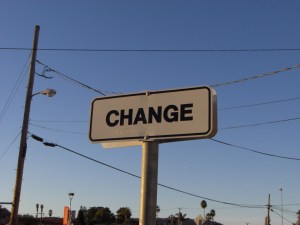
Change
Photo courtesy of m.a.r.c. on Flickr

All change is loss.

Change is commitment to giving something up in order to get something better.

I will lose 20 pounds. I will quit smoking. I will spend less time procrastinating.

It is the same in an organization or community. As a change leader, you are asking people to give up something known, familiar, and predictable—in exchange for something uncertain, unknown, and unpredictable.

Uncertainty breeds fear and mistrust. Address these emotions head-on by focusing first on positives.

Ask: “What do we value? What is good? What works for us?”

Identify the present positives. Build on the foundation of positive, shared values. Demonstrate your commitment to the good. This will reduce fear and mistrust and build consensus.

Now that you have focused everyone’s mind on the present positives, transition to the future positives.

A commitment to losing 20 pounds is not a future positive: it is the action that attains the future positive. It is a negative that focuses our minds on loss. A commitment to quit smoking is likewise not a future positive.

Negatives drain, positives energize. Find, and focus on, the future positives.

Ask “Why?” The answer to Why? will address the unspoken question “What’s in it for me?”

Why should I give up doing things the way I have always done them?

Your organization or community will champion change more readily if you show them the future positives, in a clear and concrete way.

Example: Don’t commit to “losing 20 pounds.” Commit instead to feeling and looking great at your new weight of X pounds.

Energize change by visualizing the Why? There are many reasons to lose 20 pounds, and if you identify the fundamental Why, you will have a powerful motivator.

Tell others what the future looks like and on what date it will be realized. Be as specific as possible.

Show how future positives are linked to present positives. Change, properly managed, supports and enriches our present positives. It does not displace, or replace, our values and our good.

Change requires you to ask good questions and to listen. Don’t dictate: facilitate.

Move from positive to positive.

Find the bedrock of shared values. Build upon strengths. Have a clear vision of the future.

When your great company isn’t actually that great a company

Stress
Photo “Stress” courtesy of Bernard Goldbach on Flickr

Lately, my friend has been telling me a lot about the “great company” he works for. At least that’s what he says: “It’s a great company; the problems are just in our department.” Yet there’s no evidence of the company’s greatness I’ve ever seen. In fact, everything my friend tells me suggests he works for a terrible company.

Under constant pressures, he is permanently stressed, and so are his coworkers. Many of the most talented and ambitious of the workers have left, or are thinking about leaving. The managers are in over their heads, and they are stressed to the breaking point. Morale is low. Worse yet, it’s well known throughout the company that things are terrible. And yet no one at the senior level ever addresses what’s really going on.

So how does this all add up to “a great company”?

Here’s how.

“Great companies” make great products. They go out into the world with an inspiring message that talks about treating the Earth kindly, loving nature, and making organic and cruelty-free products that everyone loves.

Their message is that they are progressive, thoughtful, conscientious, and all about loving people and the planet. And we tend to buy these kinds of messages, along with the products they are intended to sell. In fact, if I told you the name of my friend’s company, you would probably reply, “Oh, yeah—they’re a great company.”

We’ve all heard about the “great company” that buys pizza for its staff and even has dormitories attached to the office, so you never have to go home.

And you almost never do go home when you work in a “great company.” You eat the free pizza at your desk, and you work through dinner to midnight. Then you come back early in the morning, and do it all again, six days a week. Seven, when launch time is near.

The “great company” throws huge parties where everyone gets “free” beer. Forget that nothing is ever truly free if your time and labor paid for it. The company that gives you beer is always a great company.

The workforce of the “great company” is mostly young, impressionable people. They have no families and no life outside work. They don’t understand the fine line between working hard and being abused. They will give up their lives to work for a cool company that makes fairly-traded, Earth-friendly, biodegradable, organic, free-range, super-cool widgets that get featured in hipster magazines. Their employers count on it.

The people who work for the “great company,” and who have families, are filled with toxins that they take home with them each night. Some of them become alcoholics, some others spend their time at home depressed, exhausted, and miserable, dreading their return to the office or factory. They are never truly with their families and away from work. The toxins spread. Marriages and relationships suffer. The “great company” poisons everything.

In my experience these great companies are almost always paternalistic in nature. They hire young people and treat them like children—but in a cheer-leading way that, at least in the beginning, feels good. They say great-sounding things about how much they value you. Once in a while a door opens from above and the workers are showered with popsicles or ice cream or “staff appreciation day” stickers. The paternalistic “great company” only wants to talk about positive, happy things. There are no problems in the workplace, only the constant need to work harder. Everything in the “great company” is great. That’s because the paternalistic bosses carefully control the upbeat message, so that information only goes one way: from the top to the bottom. The real conditions, stresses, needs, and hazards of the workplace never filter upward, because the bosses are not that interested.

The paternalism seems less paternalistic when the official message is that everything is all great, all the time.

Great companies ask people to do unreasonable things, like give up their family life by working ever-lengthening shifts and work-weeks. When the stress fractures start to show, the manager orders pizza and gives a little speech about how great the company is, and what a great job everyone is doing.

What the manager doesn’t do is support the staff in a way that ensures they can meet their targets without burning out. The manager isn’t properly supported, either. You see, the rot—just like the propaganda—comes from the very top of the “great company.” The leaders of the “great company” tend to believe their own hype, when in fact they are running an operation that devours people and throws away their bones.

The company President is charming, charismatic, and fun. He’s so “cool,” people don’t notice he’s in charge of a highly dysfunctional workplace. For a while, the “great company” thrives on its hip image and high-energy, youth-oriented culture. Eventually however things gets so bad that even he sees the truth. By then it’s usually too late.

The source of interpersonal conflict, and what you can do about it

Understand. Be Understood. ✎ By Wayne K. Spear

15% of an iceberg is above the water, where we can see it. We know there’s much more ice below the surface, but it’s pure guesswork as to the size, shape, and nature of the submerged 85%.

Unless we dive down, which we’re now going to do.

Iceberg

Only, I’m not talking about icebergs today. I’m talking about you, your co-workers, your friends, and the next person you’re going to meet.

Our subject is nothing less than humanity itself. Let’s call it Introduction to People, or “People 101.”

You see, the universe gives us a magical thing called balance. I know this sounds weird, but it’s actually a practical, down-to earth matter.

Think of Newton’s Third Law:

For every action, there is an equal and opposite reaction

When we look at nature, we see action-reaction force pairs in everything. You push down on the earth, and the earth pushes up on you. If this were not so, car tires would have no traction. You’d float aimlessly in the air, rather than propel forward toward the office. (Maybe that’s a good thing!)

Human beings come in a variety of shapes, sizes, and personalities. At bottom, however, we all lean toward either a thinking / feeling orientation or relationship / task orientation. We are either introverted or extroverted, skeptical or optimistic, active or reflective.

We can be a blend of both, but most of us lean more toward one than we do the other.

Carl Jung observed that opposites attract. Look at your life and ask “Isn’t it so?”

A virtual Odd Couple, (almost) every marriage has a personality contrast. Maybe it’s a touchy-feely type and a hard-headed intellectual. Or maybe the outgoing, people-oriented person settles down with someone who’d rather stay home and read a book. One cares what everything thinks and wants to take on the world’s problems and make everything better. The other says “you’re crazy, and anyways who cares what people think.”

The universe gives us balance because without it we would not survive. Every human relationship is an action-reaction force pair. Someone in the company has to be good at balancing the books, and someone has to be good at selling.

For goodness sake, never ask your cautious, task-oriented accountant to go out and win people over. Don’t let the sales people keep your books. Learn to understand and leverage human differences.

The people around you fill in your gaps. Your strengths are their weaknesses, and vice versa. You pick your opposite because that’s a good life strategy. Alone, we’re all two-legged stools. Together we stand.

This brings us to a mystery: why is there so much interpersonal conflict in the world if the universe gives us balance?

The answer is that the balance is all happening under the water. Above the surface we see only the 15%—the behavior of others that drives us nuts, because we don’t understand what’s really going on. We don’t appreciate, or even understand, the true nature and value of human differences.

We find ourselves in a business or personal relationship with someone who is, in some important ways, very much unlike us, and we say to ourselves: “What is wrong with this person? Why can’t he be more like me!”

And by “more like me,” we mean “right.”

Conflict begins when we see others as impeding rather than as balancing us.

We human beings take the natural balance built into the action-reaction force pairs of relationships and we turn it into imbalance by wanting others to see as we see, to feel as we feel, to think as we think, and to value as we value.

If, in contrast, you can see what others see and feel what others feel, you can achieve the same end: harmony and understanding. You can restore the balance.

I’m not suggesting that we can all, or even should, fall in love with one another. Some people are going to drive you crazy, no matter what, but you still have to work with them in a productive, drama-free manner.

In my work I use empirical, data-driven workplace assessment tools to take my clients to the submerged dynamics of their interpersonal workplace relationships. I dive down with them to explore the talents, values, and personality of every individual—in a safe, positive, inspiring, and insightful way.

I focus on what’s right with people, not what’s wrong: their talents, strengths, assets, values.

When you take the world’s (fortunately rare) psychopaths and sociopaths out of the picture, all of us are just trying to do the best with what we have.

Because we live in a world of icebergs, and because most of us don’t know how to deep-sea dive, we make assumptions about our environment and the people in it that are incorrect, simply because we don’t have all the information we need.

The tagline of my business is “Understand, Be Understood.” That’s my guiding principle, and I use it to make workplaces happier, stronger, and more effective.

And it works, not only in your organization but also in your life.

Are you curious to know more? Send me an email, and we’ll talk.

The wisdom of balance

5766453552_621667909d_b
Photo courtesy of Sepehr Ehsani on Flickr

I used to work for a company whose motto was “Work Hard, Play Hard.” I sure remember the working hard bit. Maybe what they meant was “Work Hard, Play Hardly.”

Most days need to be about meeting deadlines, advancing goals, and taking care of business. There should also be days of idleness, but our busyness tends to nix that idea.

We struggle for balance. Or we don’t, because we’ve given up on dreams.

Our jobs are demanding and relentless. Life is complicated. It’s not our fault.

Balance, we decide, is a luxury. It’s for the rich and powerful, not for us working slobs.

Balance, however, is not really about work-life ratios.

Sure, that’s how we experience it—as a hellish time-management crush.

I’m super fortunate, because I’m my own boss. But don’t think for a moment this exempts me from the Struggle for Balance. My boss is a tyrant.

I love what I do as a consultant. It’s interesting and challenging work, and people tell me how much they appreciate it. I’d happily do it nine days a week.

The problem is that introverts, like me, come home exhausted. Tell me if this sounds familiar.

Every day we give our energy, focus, enthusiasm, concentration, and big smiles to the people we meet in the world. We want to help our customers any way we can. We work hard because we feel responsible. We work like we’re saving the world.

Then we come home and spend the evening on the couch. We have nothing left for our family, except maybe our moans about how tired we are and how hard our days was.

Does this sound like work-life balance?

Like I said before, stop thinking about balance as a work-life issue. There’s something deeper going on. Let me explain.

Growing up, I was exposed to two very different types of family dynamic. One was very British: reserved, demure, polite, private.

The other was Mohawk: loud, headstrong, opinionated, brash, combative.

Both styles had their virtues. Both definitely had their dangers.

My Mohawk relatives said exactly what they thought, without sugar-coating it. I admired this. I thought of my Mohawk aunts and uncles as ass-kickers. But as I got older, I saw the fruits of a lived lived by the principle “my way or the highway.”

My reserved English relatives were polite and conciliatory. I loved how easy it was to be with them. There were never fights or opinion contests. But again, as I got older I saw a dark side. The reserved side of my family also had strong wills. They just chose to rely on other methods, like passive-aggressiveness, to get their way.

I realized a long time ago I was capable of either extreme. The question was “Is there a good balance?”—between being candid and diplomatic, and between letting people know exactly what you think, need, and want, but without steamrolling over their needs and feelings.

Balance is not about how much you work. It’s about how you ensure that your needs are met in a way that respects and accommodates the needs of the people around you.

The people at work, the people at home, the people you meet in the world.

The company that says “work hard, play hard” when what they really mean is work until you drop is not balancing the needs of the company with the needs of employees.

A workplace out-of-balance is going to face low morale, low worker retention, hostility, and rebellion. The out-of-balance family will have conflict.

Either you work to achieve balance, or you wait for the storm. There’s no third way.

Balance is a negotiation. Your needs, the needs of your boss, the needs of your colleagues, the needs of your family, the needs of your organization and stakeholders.

When your needs are being met, you live in balance with others. When they are not being met, raw emotion takes over. You feel you’re on rough waters. The boat rocks. It’s as if you’re about to capsize.

You are the boss of your needs. Only you can open the Needs Negotiations in a way that restores balance.

What needs of yours are being met? What needs could be met better? What can you do to bring your needs, and the needs of those around you, into balance? What is the next step?

Big Negatives, small positives

The small picture. ✎ By Wayne K. Spear

Notepad

Human history is rich with stories of paradise: Heaven, Nirvana, Utopia, The Sweet Hereafter.

Each of us has imagined a personal world of perfect bliss. One day we’ll go there.

In fact, that’s what it’s called. One Day.

One Day when we’ve lost 20 pounds. One Day when we make more money. One Day when we pay off our debts. One Day when we’ve solved our big problems.

One Day, we’ll start living for real.

One Day lies beyond the realm of the Big Negatives. We humans tend to focus on negatives. It’s biological. We’d never have survived as a species if we weren’t forever attuned to risk, danger, and enemies.

The Big Negative is a mental check-list. It’s not only our problems, it’s the things we want but don’t have.

Drawing up a list of negatives and turning them into positives is not a bad thing. In fact, it can bring great satisfaction. We all need to face the problems in our lives that are within our power, and responsibility, to change.

But obsessing over the Big Negatives is a huge energy drain. Maybe in a few years, you’ll have crossed a couple Big Negatives off the list. Maybe not. We need a strategy that helps us fulfill long-term goals while also living our lives today.

Today is the realm of small positives. They’re all around us, right now. That’s why we take them for granted. It’s hard to see the small positive right in front of you when you’re dreaming about the day, twenty years from now, when you won’t have to deal with your idiot boss.

The cruel irony is that when you’re old, and your idiot boss is a distant memory, so too the small positives. That’s when we’ll look back to the good old days, regretting the things we took for granted.

Human nature. It takes some discipline to be otherwise. The good news is that we are also habit-forming creatures. Good habits, bad habits. We can do either.

Every week, make a list of a few small positives. Something you’re grateful for, something good you can easily do for a friend or colleague, something you always wanted to try or learn or see but have put off because you’re busy with the Big Negatives.

A little bit of knowledge

The world needs knowledge nutritionists. ✎ By Wayne K. Spear

A little bit of knowledge can be a dangerous thing. Ignorance is blissful—a clean slate, not blemished by troubling facts.

From uninformed to mis-informed to ill-informed: junk knowledge, like junk food, can fill you without nourishing you.

Here is an experiment:

Read five books on any subject. Discuss the subject with the people you meet. What do you notice?

Chances are that most of the people you meet will not have read even one book on your subject.

It only takes a few months, at most, to read five books. And yet, to most people you will be an expert in your topic, simply because you have read five books.

Who truly knows what went wrong in Syria, or if and how it could have been prevented? Many people blame Israel and “the Jews” for the miseries of war in the Middle East and the Levant. Others blame America and the CIA. Still others blame capitalism, the oil companies, and corporations.

Junk food, junk knowledge. Both are cheap and abundant. “Send the Muslim refugees to Muslim countries,” some say of the Kobani Kurds.

Who are the Kurds? Christians, Sunnis, atheists, secularists. Or none of the above. They are human beings, diverse and complex.

The Kurds are a persecuted, stateless people, over 30-million strong and spread across Turkey, Iran, Iraq, Syria, Armenia, and Azerbaijan. There are millions of Kurds, but (for a number of ugly political and historical reasons) no Kurdistan.

On whatever topic you pick, you can become an expert, relative to 90% of the world, by reading five books, perhaps even one.

Run your business like a nerd

Be the life of the corner of the room of the party. ✎ By Wayne K. Spear

Nerds
Photo courtesy of Nathan Rupert, Flickr

A business can attempt one of two things: to be all things to all people, or to find and serve a market niche.

The former requires scale. Big box stores, huge inventories, supply-chain management, constant growth and expansion, a franchise strategy.

To be all things to all people is necessarily to be aggressive. You must dominate multiple markets to survive, because your competition is legion.

Walmart is an example of this model. The stakes of an all-things-to-all-people strategy are extremely high, but so too are the potential rewards.

A niche strategy targets a small but focused market. The enthusiasm and loyalty of the customer, rather than a directive of constant growth and fierce competition, drives the business.

A niche business issues from an unusual or marginal interest. The box stores do not serve niches. The mantra of a mass-market business model is: Unless everyone wants it, we will not get it.

Often the niche business is started by a hobbyist, eccentric, specialist, or collector. He is driven by passion, and by a desire to serve and connect with the like-minded. Here, the mantra is: If you don’t fit in, don’t compete.

An all-things-to-all-people business strategy is capital intensive. It requires a marketing and advertising strategy, aggressive growth, and ruthless competition.

A niche strategy is passion intensive. It requires knowledge of the niche, and authenticity. You must love the niche, and you must care about the people who occupy it. You are not simply running a business, you are creating a community.

The big box store is the life of the party. She goes about the room, chatting up everyone in it. By the end of the night, she’s made a dozen new friends.

The niche business, meanwhile, spends the evening in the corner of the room, discussing Etruscan manuscripts.

In the niche, we form fewer bonds—but they are instant and powerful.

Your niche customers will find you. After all, it’s hard not to notice the one other person in the corner of the room

Let your passion, oddball and off-the-beaten-path as it is, guide you.

Find your people, and serve them.

Consumers and Producers

Eat, drink, and be a good marketer. ✎ By Wayne K. Spear

We live in a consumer society. We may not choose to define ourselves as “consumers,” and we may dislike the label, but we all are consumers.

Consumption is not simply the act of shopping and purchasing.

The Oxford English Dictionary coarsely defines a consumer as “He who or that which consumes, wastes, squanders, or destroys.”

Behind this notion of consumption is a moral judgement: the consumer is a parasite, contributing nothing of value to society.

The opposite notion has been elevated in modern times. Consumption is asserted to be a positive, even urgent, good. The consumer spends, which stimulates the economy, which creates jobs and prosperity.

Imagine performing to an empty room, or broadcasting a show in a world with no radios or televisions.

Sellers fail without buyers. Writers are nothing without readers. Producers need consumers.

Leaders and followers: there are countless books about Leadership, few about Followership.

An iMac is a production tool, but an iPad is a consumption tool. One is best suited to creating video, the other to consuming it.

Consumption has never been easier, nor more prevalent. The tools of consumption can be carried everywhere. The consumer is ever-present, ever plugged-in, ever-ready.

Supply and demand, consumption and production. A rise in consumption summons a rise in production.

This is also an age of producers, and of production.

The tools and media of consumption change, but the underlying reality does not. Producers must cut through the noise and the congestion to reach consumers.

As consumption drives up production, standing out from the crowd becomes more important, and more challenging, than ever.

In an age of abundant production, most of us are performing to empty rooms. We are not getting through.

The only way to get through is to find the room where the audience is, and to somehow put yourself on the stage at the front of that room.

That has been the challenge for producers since the beginning of time.

Everything has changed for consumers. Nothing has changed for producers.

Clean up your mess

Good messes vs. bad messes. ✎ By Wayne K. Spear

3238540623_d0a4dcc84e_o
Photo courtesy of udge, on Flickr

Messes can be figurative or literal.

You’ll find them in your thoughts, your relationships, your habits, your closets.

Messes can be emotional, psychological, physical, and spiritual. Often they are more than one of this list.

My son cleaned his mess. When he was done, he was amazed at how big his room was, beneath all the chaos and clutter that had made it seem cloistered.

How do you feel when you walk into a mess? Your emotional state is related to your physical environment, whether or not you are consciously aware of it.

A cluttered mind can be creative. For years I had a desk that raised eyebrows. I have lived a messy life.

When I was single, my apartment was immaculate. There was a place for everything, and for everything a place. It was great.

Then we were two, and three, living in an apartment. I bought a house. There was much more space, and then much, much more material possessions.

I had a semi-finished basement that we turned over to my son. It was nothing but wall-to-wall toys. When he outgrew his Lego, it filled three large garbage bags and probably represented over a thousand dollars of spending. (We sold it for a hundred dollars.)

The point is that I have not lived a life of austerity and simplicity.

The mess of my son’s play was a creative, fun mess. Allowance should be made for messes.

I am learning the distinction between a good mess and a bad mess.

In his book, Double Your Income Doing What You Love, Raymond Aaron advises us to make a list of our messes.

Pick one each month and clean it up. Maybe it’s a relationship that has gone sour, or a problem you’ve allowed to fester because you don’t want to face it.

“Abundance is everywhere,” writes Aaron, “but you lock it out with every mess in your life.”

He’s right.

Some messes are fun and creative. Others are toxic. They clutter your mind and spirit, and they make you feel anxious and overwhelmed. They are a burden that prevents you from experiencing freedom.

Make a list of your messes.

Clean them up, and feel free.

Workplace Moves

What are your workplace options? It’s time to check, mate. ✎ By Wayne K. Spear

In my consulting work, I meet people who are unsatisfied in their workplace role. They like their organization, and want to stay in it, but also want to make a move.

They often have no idea what to do, or how to do it.

There are many kinds of workplace moves. The kind of move that’s right for you depends on the nature of your situation.

Consider the many forms of dissatisfaction:

– You have talents that are not being used
– Your role isn’t natural to you
– You are not challenged enough
– You are challenged too much
– You are not being properly trained and supported
– You are being micro-managed
– Your immediate supervisor is incompetent and/or a jerk

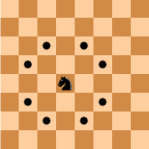
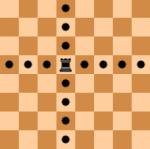
Think of your workplace as a chessboard. Each piece on the board has its own style and range of movement. Just like a game of chess, your workplace offers a variety of movement.

In most cases, you can modify your role, through workplace communication and collaboration. Maybe all you need is a small adjustment, which bring us to …

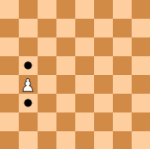
The Pawn

Pawn

This is the simplest move of all, best suited to cases where you’re in the right role but want a little more (or less) responsibility, authority, or challenge: promotion vs. voluntary demotion. Some companies I know of will even accommodate the request for a demotion without cutting pay.

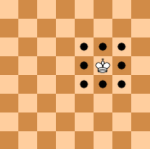
The King

King

The King is all about modest incremental, adjacent motion. This is how most moves occur, not only in business but in life. The expert on Italian opera makes a lateral move into the Italian food business. The best-selling author of Car Repair decides to write a book called Motorcycle Repair (rather than, say, Existentialism Explained). It’s about leveraging your proven expertise to move into a neighboring field. This is a logical, step-by-step process, and it makes the most sense in workplace situations where you want a bit more (or less) responsibility, authority and challenge—rather than a huge change.

The Knight

Knight

The moves of a Knight are bolder than those of a King. The Knight can leap over other pieces, as well as travel greater distance. More important, the Knight’s movements appear to be non-linear. In reality, the Knight makes a double move—two steps and a turn. This type of movement makes sense when you require a bolder transition that will take you slightly outside your current role and circumstances. In this move, it’s not only the degree of challenge and responsibility at issue, it’s the character of your role. You want something different, but not wildly different.

The Bishop

Bishop

Here we get into bolder moves. The Bishop is about transitions. Rather than keep on the established path, this piece moves at angles into new territory. This is a more difficult workplace move to make, but it can be done if you’ve demonstrated your talents and competence, or if you’ve completed training. I have seen employees move successfully from HR to finance. I’ve seen an entry-level Admin Assistant become a Financial Comptroller. It happens. As long as there is an openness and trust, and a willingness to create and commit to a plan, anything is possible.

The Rook

Rook

The Rook is also about big moves, but of a logical nature. Here we consider a powerful workplace strategy—the lateral move. Lateral moves are great if you want more challenge without more responsibility, or if you want to learn from a mentor in another part of the company. Also, it isn’t always possible to negotiate a better role with your boss, or to work out personality issues. Sometimes you just have to plan your escape. A lateral move is therefore advisable when you find yourself unable to work amicably with a supervisor.

The Queen

Queen

The world is a Queen’s oyster. She has it all, because she can see it all. The Queen looks out over the entire range of motion and chooses where she wants to land. This piece reminds us that an organization holds a wide range of opportunities. What if you don’t see the perfect role for your individual skills? Then consider having a discussion about creating a role. Good companies are open to this, so you should be open to thinking, and moving, like a Queen.

Winner and Losers

Have great answers to better questions. ✎ By Wayne K. Spear

Finish
Photo courtesy of Philo Nordlund on Flickr

In the Middle Ages, the king was the winner. He lived in a castle with legions of servants who brought him the best food and wine.

The king didn’t have air conditioning or aspirin or deodorant or a smart phone. You probably wouldn’t trade places with him, because his quality of life was quite low by the standard you enjoy.

However, he lived a much better life than the people around him, and everyone knew it.

That’s how the king won.

Imagine that you live in a mansion, and that you have a million dollars. It sounds pretty good, doesn’t it? Again, the life of a winner.

But now imagine that everyone you know has 5 million dollars and a much bigger mansion than yours.

Suddenly, you’re not the winner anymore.

Comparing ourselves and our fortunes to the character and lives of others leads inexorably to a world of winners and losers.

The winner finishes first and takes the prize. Everyone else is a loser.

If the world is really about winning and losing in this simplistic way, the truth is that most of us are losers.

And, yet, the lives of the “losers” today are objectively better than the life of a Medieval king. And the king was a winner.

Today’s winner will be tomorrow’s loser, because even if he doesn’t change the world around him will.

Winning like a king is arbitrary, not absolute. It’s a made-up thing.

To win at baseball, you must score more runs than your opponent. Baseball is a made-up game with made-up rules.

Life is not baseball.

If you compare yourself to others, you’re not living your life—you’re living theirs. Or, rather, you’re trying to live their lives, but in a bigger, better way.

Winning is important. No one wants to be a loser. The question “What does it mean to live a ‘winning’ life?” is a good question.

Unfortunately, the world gives us many bad answers.

Winning at life begins with asking good questions and finding good answers.

Today is the luckiest day of the year

Go ahead, make your day. ✎ By Wayne K. Spear

Astrology
Graphic courtesy of zeevveez on Flickr

Yesterday my mother sent me an email with the subject heading “tomorrow is the luckiest day of the year….” That means today is your lucky day.

The question is: what are you going to do to take advantage?

I don’t understand how the motions of planets have anything more to do with my fortunes than, say, the ocean currents or the flights of birds or the placement of the stones on the sidewalk. Or anything else that exists in nature.

But if you treat every day as the luckiest day of the year, there is a 100% chance that one day you’ll be right.

If you treat today as the luckiest day of the year, you’ll likely be a little more bold, and a little more intentional, because you are preparing yourself for something good to happen.

Maybe it will, maybe it won’t. The only certainty is that when you’re not prepared, and not preparing, opportunity passes by.

Taking control

You are the boss of this. ✎ By Wayne K. Spear

No one can control the weather. We can only control how we dress for it.

Sometimes the things we can’t control are life-and-death things. We can’t ignore life-and-death matters, nor should we. All we can control is our response to, and our management of, them.

You can’t make someone be nice to you. You can’t make someone else care. Whether or not you are nice, and whether or not you care, is within your control.

Maybe you will win the lottery. Maybe not.

Lotteries are random. But even random acts, such as random acts of kindness, are within your control—if they are your acts.

Sometimes, when I’m about to check my email, I’ve found myself wondering whether today is a day there will be something exciting, special, and memorable in my inbox.

Then I realize that I can control exciting, special, and memorable email—by sending it to someone.

Draw up a list of things you control. It can be anything: what you have for breakfast, what route you take to work, what you say today to colleagues, how you react to stressful things, what you choose to think about yourself.

Is there any way you can change, improve, or nourish the things you control.

Cultivate these things. Enjoy being in control of them.