All posts by Wayne K. Spear

waynekspear.com

Residential Schools: reviewers recommend my latest book

Goodminds, IEP

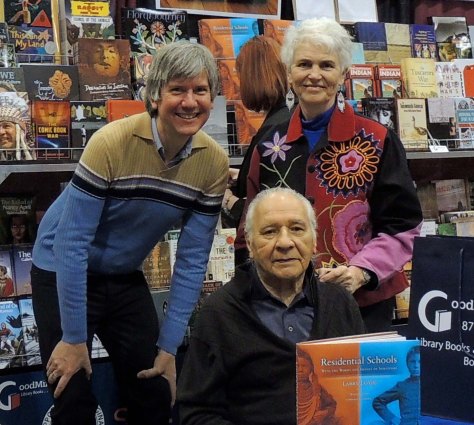
Above, l. to r., authors Wayne K. Spear, Constance Brissenden, and Larry Loyie, and Jeff Burnham, President, GoodMinds & Indigenous Education Press

Lovely reviews are arriving daily of my latest book, Residential Schools, co-authored with Larry Loyie and editor Constance Brissenden.

Here’s an excerpt from the Canadian Children’s Book Centre Winter 2015 edition of Book News (page 38). The author of this review is Karri Yano, a Toronto writer and editor.

The material presented is a balance of historical facts and personal experiences. While thorough in its overview—timeline, politics behind the events (racist attitudes in society and politics)—it is not explicit in the details of the neglect and abuse, but specific facts and personal testimonies reveal the deplorable conditions the children who were taken away and living far from any family support had to endure while also demonstrating the incredible resilience of the survivors and what they did to cope.

The book is suitable / appropriate for student 12 and up as a resource for one period of Canadian history that reveals the struggles of Aboriginal people to self-identify and their fight for equal rights and survival as a culture in Canada.

Residential Schools: with the Words and Images of Survivors—a National History | Released in 2014
“Residential Schools: with the Words and Images of Survivors—a National History”

The book has been featured recently in the Edmonton Journal and Brantford Expositor. Paula Kirman, writing for iheartedmonton.org, says “Residential Schools is an excellent introduction to this tragic subject, and will certainly have a place in classrooms around the province.”

You can order the book by phone from my Brantford, Ontario publisher, Goodminds, 1 (877) 862-8483 or email helpme@goodminds.com.

three-authors

Maslow’s hierarchy of needs, updated for the 21st century

2218320_9e329c0e68_b
Photo by Jezz, “Winter Traffic” on Flickr.


I WAS IN WINNIPEG, Manitoba last week, where the temperature reached a breath-taking -729.5°C when the FLTW is factored in.

And FLTW is, of course, the Feels Like To Wayne scale. Which is how all temperatures should be measured but for some absurd reason aren’t.

Anyways, the weather was so breath-taking that my breath got back on the airplane and went home to the warm Toronto temperatures, which hovered somewhere around -702.6°C. That left me, my legs, and a thin wool suit to deal unaided with the arctic winds of Portage Avenue.

The reason I was walking down Portage Avenue, in nothing but a suit, was that my brother-in-law’s cat was sick. You see, he went off to Africa (temp. 22C/72F) and left his cat with some lovely folks who weren’t quite prepared for a sick cat.

So there I was, leaving a business meeting to look for a bank so I could transfer money to pay for the vet.

And that got me philosophating.

First of all, how did the pioneers survive without electricity and medicine, back in the day, walking around in their moose-and-beaver-fur business suits? I truly can not comprehend it.

This makes me think that before about 1920, people in Canada just stayed indoors nine months of the year. They ate whatever walked past their house, or hut, or whatever it was, and drank melted snow. And then they dressed in the animal they had just eaten.

Life was simple.

Well I found the bank and needed a coffee to warm up, so I went to another thing they didn’t have in the olden days, Starbucks.

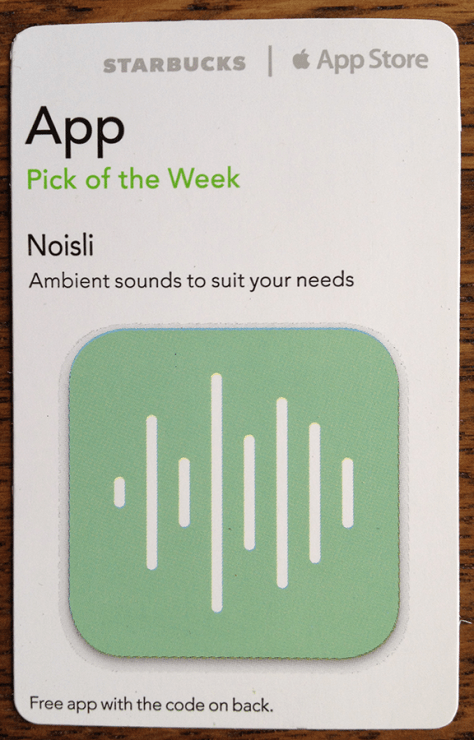
I don’t know if you ever go to Starbucks, but they have these free iTunes “App of the Week” that they give away. Here it is.

Noisli

I haven’t downloaded the app, and I’m not sure exactly what it is and does—but I can see from the card that it suits all my ambient needs.

And I didn’t even know I had ambient needs.

This is why living in the 21st Century is so freaky amazing: here is a company working around the clock on my needs, and I didn’t even know that I have these needs.

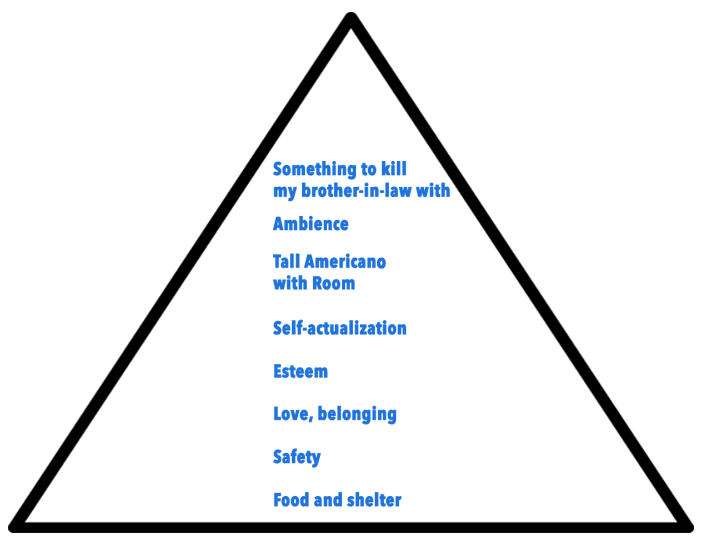
So I realized right away quick that it was time to update Maslow’s hierarchy of needs. You know, that triangle thingy that talks about food and clothing and shelter.

When you are in Winnipeg in February, looking for a bank on Portage Avenue, you don’t have to be told by Mr. Maslow that you need clothing and shelter. Your legs tell you this.

But you do need Starbucks to remind you that you need belonging, love, “a Tall Americano with room,” and ambience.

So I went straight to work, updating Maslow’s hierarchy of needs for the 21st Century.

maslow

I realize there’s still some work to do on this.

For example: there is obviously more than one type of ambient need, with one Brian Eno record for each.

And I’m not sure yet whether to Chinese water-torture my brother-in-law, or just make him walk around Saskatoon during a blizzard, in his underwear, looking for my dry cleaning.

So many options, all so attractive.

But if we’ve learned one thing today, it’s that every cloud has a silver lining. That would be the next blizzard taking shape.

Or, the silver lining could also be the inspiration for an update of Maslow’s hierarchy of needs.

You’re welcome.


Yes, it’s true. I have a new website.

I wasn’t going to announce this until it was official, but what the heck.

I have a new business-oriented website.

twitter-banner

There. Now it’s out.

Actually, this has been some time in the making.

You see, I’ve been thinking a lot about streamlining my life, so that it feels like everything I’m doing is pushing in the same direction, and not in the 20 directions I was going.

I’m guessing you can relate to this.

And, if you’ve been following this blog, you know I’ve been spending my time going back to the books. You know, the proverbial drawing table.

It’s been a time of learning, of reflection, and of intense planning. The fact is that I have some big ideas, and I want to give them a chance. But to do that I have to make some changes.

I won’t bore you with all the details. Let it be enough to say that while I’ve been away, I have developed a plan, and I’m very excited about it.

The business website is not going to replace this site, not yet anyway. I’ll still be writing here, but the truth is I don’t have the time or the energy to blog here to the degree I have in past years.

I’ll be focusing on developing my business. The new website is part of that focus. Because it’s a business site, the primary interest will be my communications work. However, there will be lots of other stuff too—about writing and personal growth and pursuing your passions.

Gradually, over the next couple of months, I’ll be making the transition. The business pieces of this site will be stripped away, leaving only the personal writing I’ve done on this blog.

I don’t know what will happen to this blog long-term. That will depend on how things go with my business!

My business site will officially launch in the Spring. Most of my time will be spent at the new website, which is:

spearcommunications.com

I do hope you’ll visit, find it of interest, and bookmark it.

Thanks for visiting. I hope to see you soon!

-Wayne.


Is one of these your perfect journal?

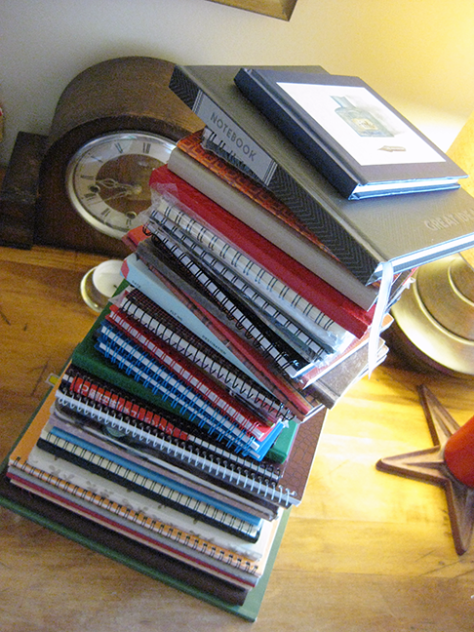
stack-1

Yes, it’s true: I have a lot of blank books

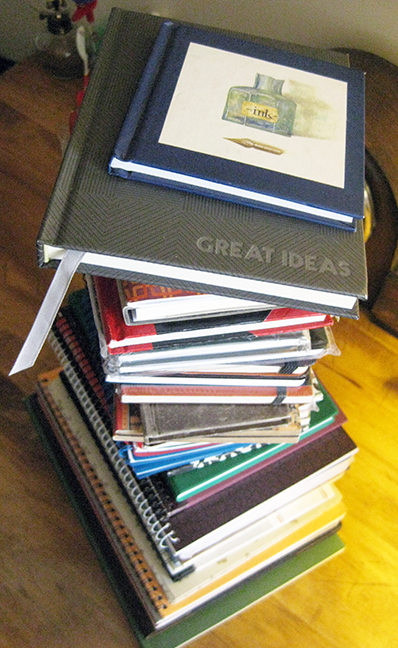
DOZENS OF THEM, tucked away in a drawer, waiting to be filled with the URLs of websites I’ve discovered, lists of books to read, ideas, things overheard on the subway, recipes, interviews, and other ephemera.

If there was a TV show about people with a lot of blank books, I’d probably be on it. Not that I’m a hoarder. I try to keep my stationery fetish in check: for every blank book that I buy, there are at least ten I would like to buy but don’t. And I fill these books up pretty quick.

stack-2

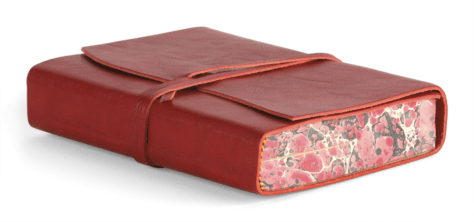
They come from all over the world, in many sizes and shapes and textures and colors. Some blank books are almost too beautiful to write in. I’ve coveted, but have never bought, a Cavallini Roma Lussa journal. This week I saw one at The Paper Place, here in Toronto. These journals are works of art, more suitable for use as a Downton Abbey prop than for defacing with my prosaic grocery lists.

Roma Lussa, a journal good enough to eat

What makes a blank book great?

I look for specific qualities in a blank book. To be great, the following criteria must be met.

Good binding. I want my books to lay flat. If I have to use a hand to keep it open while I write, I’m probably going to pass. Although ring bindings are best for books that open and lay flat, my preference is for stitched bindings. Rings add bulk and also can get caught on clothing or the lining of a satchel. Glue bindings can come loose, so I look for paper that has been gathered into signatures and threaded with a quality material.

Proper lines. By this I mean the lines should give me enough room for my writing but not be so generous that I can’t get a decent amount of text on the page. As I get older, the balance changes. I now look for more line height, since my eyes aren’t what they used to be. Also, I pass on a blank book if the lines don’t go to the edge of the page. I don’t have a good reason for this: I just think that lines which go to the edge of the page look nicer. It’s probably just me having an OCD moment.

Good paper. Again, this is objective. Because I write with a fountain pen, bleeding can be an issue. Also, the paper should take up the ink without feathering. Nowadays most journals pass these tests, so really what I’m looking for is a paper that feels and looks decent. Like most of these criteria, this is subjective. Over the years, I’ve learned which journals provide for the best writing. More on that in a moment.

Good covers. Have you ever bought a shrink-wrapped journal? Then, after a couple weeks of use, you discover that the covers curl? I’ve had this experience enough times that I now usually avoid anything shrink-wrapped. A cover should feel good in the hand, protect the pages, and keep its shape. I also prefer that it not have writing. So I mostly avoid journals that say JOURNAL on them, or that have inspirational quotations. An embossed logo is fine, since it’s subtle and blends in. Other than that, the plain old cover is for me.

Pockets. This one is optional. I won’t pass over a journal that doesn’t have pockets, but if it meets all the other criteria and also has a place to tuck receipts and lists, then bonus points. The Moleskine notebooks have a cover flap which serves this function, and I love it.

Here are some of my all-time favorite journals

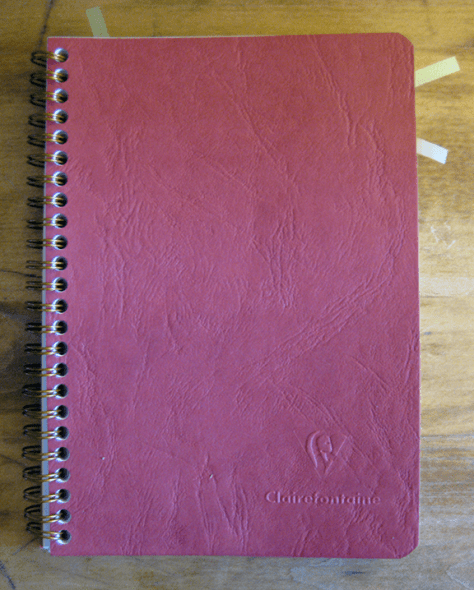
clare-fontaine
You can’t not mention Clarefontaine. They make great papers. You can throw anything at a Clarefontaine journal, no problems. The most saturated ink will not bleed or feather. They come in a huge variety of formats. There are pockets. The covers have a great hand-feel. They stand up well to abuse. And Clarefontaine is a well-priced product, aiming at the practical rather than the precious. This was purchased at the most excellent Paper Papier in Ottawa, my 3rd fav stationery store in Canada. Buy something there and say Hi to Gary.

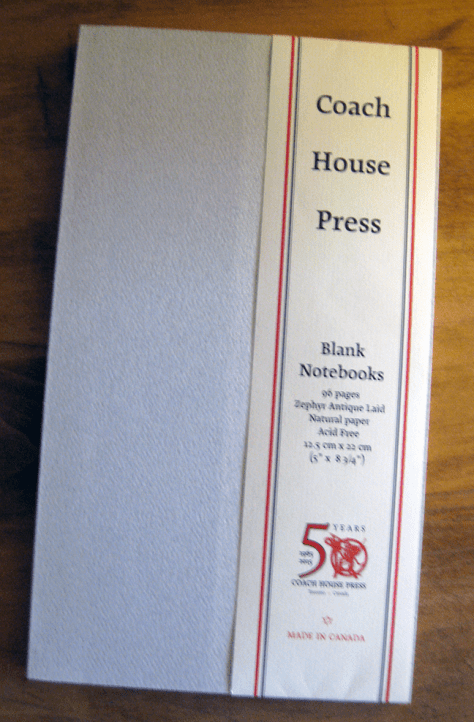
coach-house
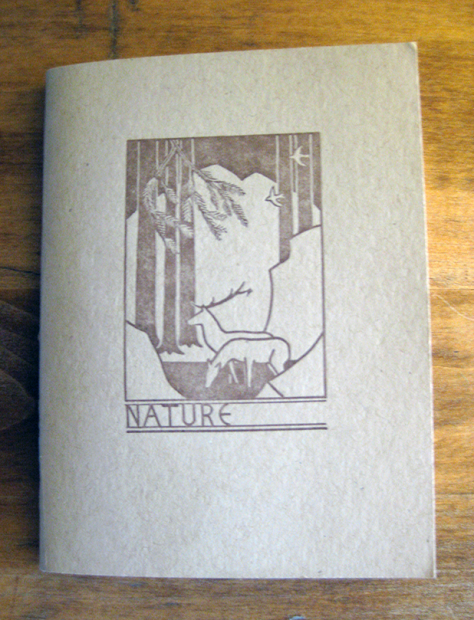
I had no idea until this week that Coach House Press made blank books. I don’t know why every publisher doesn’t make a journal that conforms to its book specs. I would definitely buy a Penguin or Random House or Oxford University Press or Anansi blank book that looked and felt like their paper backs. Especially Anansi. (P.S. I found this at Wonder Pens on Dundas West.)

moleskine-large
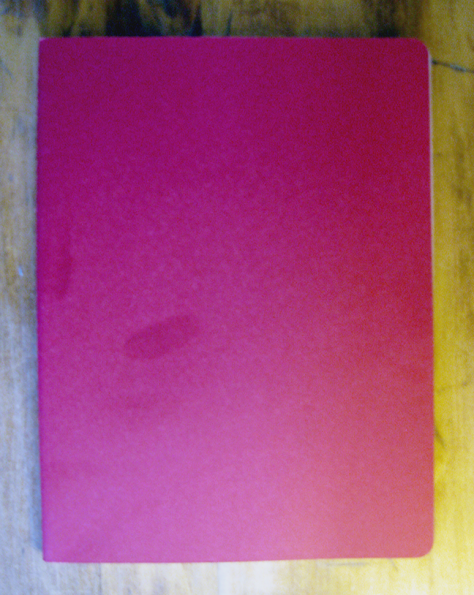
This is the Moleskine large notebook in the new Cranberry color, purchased at Valhalla Cards. I have already put a big thumbprint on it, and I guess that’s my only complaint about these. For some reason they seem to attract stains. I have these in three colors: Black is business, grey is personal research, and kraft is scribbles. I don’t know what cranberry is yet, but this is an unlined journal so I may dedicate it to sketches, mind maps and planning.

moleskine-sketch

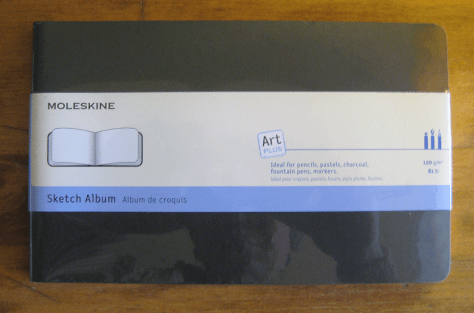
Another Moleskine, in landscape. Like the journal below, this can be used as a reporter’s notebook, and that’s what I’m going to do. (Found in Vancouver at Paper-Ya.)

monsieur
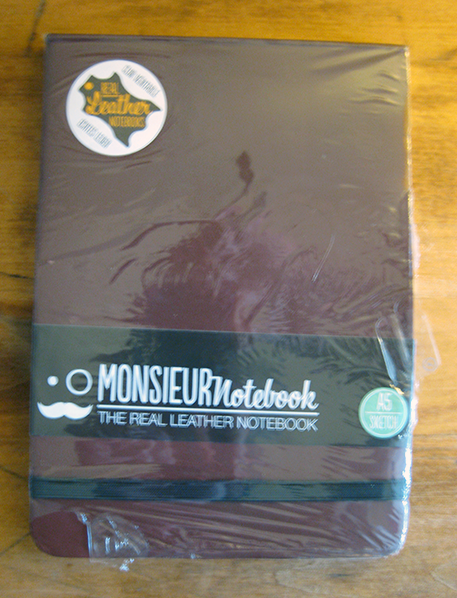
Most journals are standard book format, so I’m always on the look-out for something unusual. I like the A5. In fact, I really like European paper sizes. For some reason that tiny difference of a few millimetres, between Letter and A4, really works for me. So I’m looking forward to opening this A5 journal and using it with my interviews. (Also from Paper-Ya.)

pocket-dept
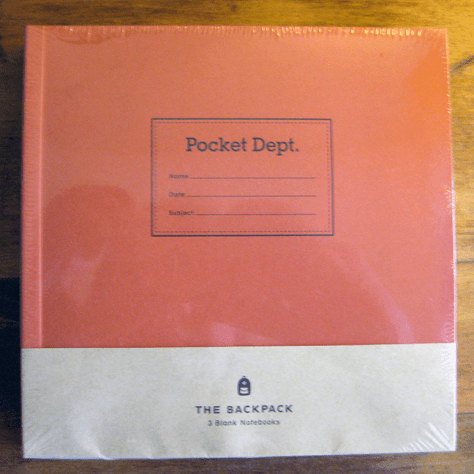
SQUARE NOTEBOOKS! They are so, so hard to find, and I really like them. Rarely do I pass up a square notebook. The Pocket Dept. notebooks are pretty decent. Nice laid paper, solid bindings. This one is the perfect size: 6X6. It’s called the Backpack, and that’s probably where it will go. Love it! (Bought at Valhalla Cards, Queen Street West, Toronto.)

press-bound
Ah, Pressbound. It’s the brain-child of Melissa Gruntkosky. I’m an Art Deco junkie, and so her vintage designs paired with quality hand-made paper is irresistible. I love everything about Melissa. On her About page she gives her grandma a shout-out and says she loves beer. Grandma-shout-outs+beer+top-quality-journals=big win. What are you waiting for? Go buy something.

rialto
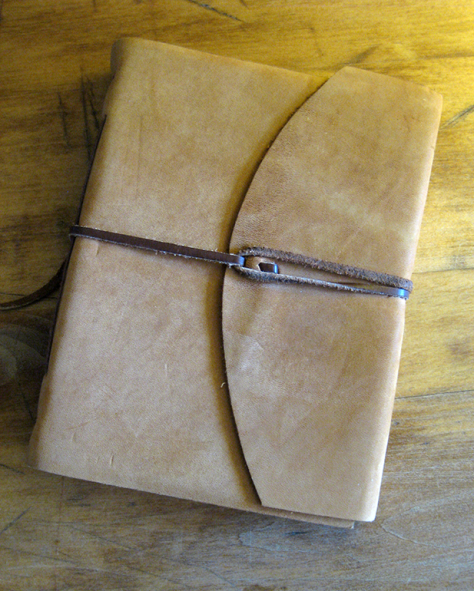
This Rialto Books “Venetian hand-bound” leather journal, by Darren Cole of Toronto, was a gift. Again, almost too nice to write in. But one day soon….

rustico
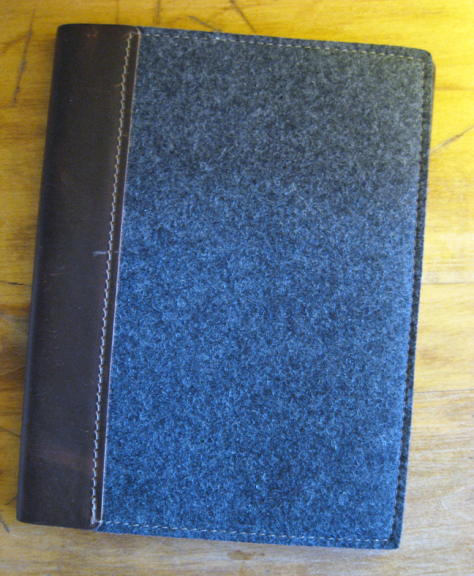
I found this Rustico felt journal cover at Paper-Ya in Vancouver, my second-fav stationery store in Canada. (My #1 fav is the mind-blowing Papeterie Nota Bene, in Montreal. It’s so good I’m scared to go there.) The refills are hard to find here in Toronto, but fortunately a Moleskine (just barely) will fit.

senfort
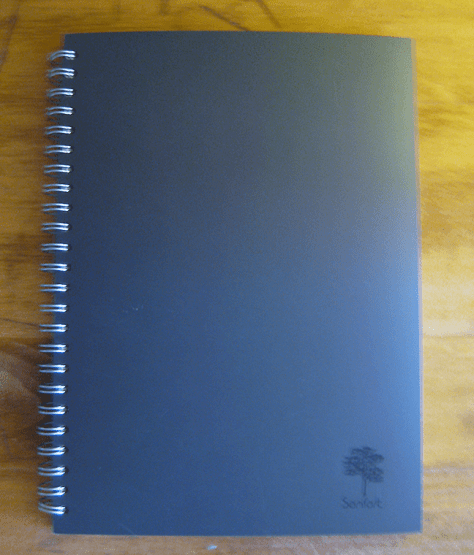
Here’s a Senfort ring-bound journal from Wallack’s. I like the heavy plasticized cover. This is one rugged journal. The paper is also very nice.

twin-ring
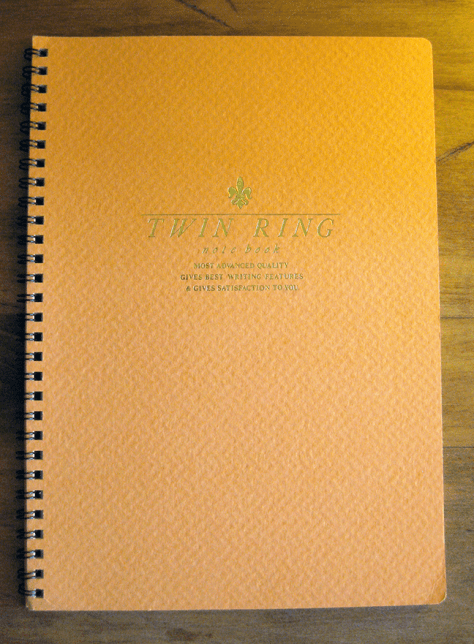
Last, but not least, Twin Ring. These are great, and they seem to be everywhere. I bought this one at a now-defunct Ottawa stationery store. They come in a variety of formats and colors. They really do provide satisfaction, as the cover states. By the way, does anyone know if the text is Engrish? Or maybe even faux Engrish? It’s just “off” enough that it kind of makes you chuckle. Anyway, Engrish is brilliant.

How about you?

Now it’s your turn to tell me about your great blank books!

Find me on Twitter. Check out my latest book.

like-share

Today I did something deeply meaningful: I bought staples

stapler

DO YOU EVER get discouraged? Or depressed?

Has there ever been a time in your life you’ve wondered why you bother? You know what I mean: you’re doing a million things, and you feel like the things you are doing are a waste of time. You may as well not bother, you conclude, because you’re not making a difference.

I’ll speak for myself here. For me, there are definitely days I feel like nothing I am doing matters. There are days I am frustrated and discouraged and hollowed out, because I can’t see the point or value of my busy-ness. I feel like I’m spinning my wheels, getting nowhere, making no difference.

The truth is that these days happen. But it’s not the whole truth.

I have a story, and it’s about buying staples. Yes, staples.

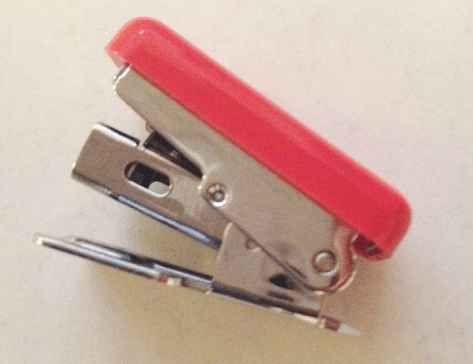
The picture above shows a stapler that’s on my desk. It takes a mini-staple I am having a bit of trouble finding. This story isn’t about mini-staples, however. It’s about the many small things you’ll do in a day, having no idea which one of your many decisions and actions will have a lasting effect.

Small decisions, small actions, small staples.

I have had this stapler for thirty-six years. In that time I have taken and left jobs. I’ve changed cities. I’ve re-invented myself. A lot of water has flowed under my bridge. Thirty-six years of learning and growing and changing—evolving into a different person—and this stapler has been with me the whole time.

You’ve deduced by now that this is no ordinary stapler—that it has a large significance. And you’re right.

You see, my grandmother gave me this stapler for Christmas when I was a teenager. My grandparents gave me a lot of other things for Christmas, too: toys and clothes and money and gadgets. I’m sure that there were years that I begged and pleaded for a particular present that was popular at the time. The fact is that I don’t even remember. And I certainly don’t have these once-coveted possessions, all these years later.

All that, despite the fact that Christmas at my grandparents’ house was as close to a sacred occasion as I’ve ever known. I will never forget the sights and sounds and smells of their house. The anticipation and the joy, the comfort, the familiarity. I have so many memories.

Uppermost in my recollections, as in my possessions, is the mini-stapler my grandmother bought over three decades ago, with me in mind.

This is a story about a stapler.

My grandmother was embarrassed and felt an apparent need to apologize when I pulled the small red stapler from the stocking. “It’s not a serious gift,” she said. “I don’t even know why I gave it to you. I just thought it was cute.”

My grandmother is no longer alive. I am in a stationery store in Bloor West Village, telling an employee stories about my grandmother.

“Every time I look at this stapler,” I say, “I think about my amazing grandma, and I smile.”

And it’s true. This silly little mini-stapler has travelled with me through so many turns. In good times, and in bad times, it has yielded its practical and dependable service. Writer and business-person that I am, I have never run out of uses for a humble, serviceable mini-stapler. And I never will. I like to think that she somehow intuited this, all those years ago. But even if that’s not that case, it’s quite enough for me that she saw the stapler and thought of me.

The point of the story is simple: all those years ago, my grandmother made a small, in-the-moment decision with lasting effect. She bought a stapler. I’m sure she didn’t think much about it. She was probably having an ordinary day. Maybe even a frustrating or difficult day. Definitely she was not thinking, “here’s a mini-stapler that my grandson will carry with him for through is life, for decades to come, thinking of me every time he uses it.”

But that’s exactly what has happened.

So now I find myself thinking about the big meaning of small gestures. And while I am no closer to being able to say which small gestures will have big paybacks, I at least know that the smallest thoughtful gesture can yield returns beyond expectation.

I guess the moral of this story is Be bold and think small. You just never know.

Find me on Twitter. Check out my latest book.

like-share

I wish I hadn’t been born an Indian

As I write this, it’s late. I’ve spent 11 hours travelling across a country. I’m exhausted. It’s quite possible I shouldn’t be writing, and maybe I shouldn’t be writing this. But I feel like I have to do it. These words are raw, honest and unedited. These words have been on my mind a lot.

So here it is, the raw truth:

I want to know where I go to quit being an Indian. I’ve had enough. I want to resign.

I don’t want to be an Indian anymore.

Maybe you’re wondering why I say this. The reason is uncomplicated.

Right now, in this moment, I think the racists and the haters and whatever names you want to call them are pretty much right about us.

So often we are a stupid, selfish, backward bunch. The trollers look at us, and they say, “there’s a bunch of losers who are so busy being self-destructive they are never going to get anywhere.”

And you know what? I am literally a card-carrying status Indian, and I think the haters are probably right.

We talk a big talk, but we still want the white man to pay the bills. And he does, so that makes the white man better than us. Right?

Because what are we doing, exactly?

For years I have been shaking my Indian head at all the stupid, self-destructive things we do. Sure, we got a raw deal. Like I didn’t know. There aren’t five minutes in a day we aren’t complaining about it. We’re experts at all the grievances we have. And they are legit grievances.

So what do we do about it?

We fight with one another. We tear down the leaders because we believe they are “selling us out.” We put road blocks in front of everything. If we manage to stop something, like a pipeline or a federal law, we have a little party, as if we’ve actually made progress or created something valuable that will make our lives better.

Look in the mirror. Do you see the ugly truth? I do. All that most of us Indians know how to do is complain and protest and fight. We are so amazingly together and unified and high on being Indian when we are doing these things. I mean, trash-talk the Canadian government and, wow, you are a rock star in every Indian’s eyes. Way to go!

But talk about the bad things going down in your community, or even just real-life shit, and everything changes.

So, effective immediately, I want to stop being an Indian. I want to be so white that the white people will come to me for white tips on being a more white white person.

You see, white people are still rocking the world. And we Indians? We can’t even agree on what we want.

Well here’s what I want: I want to walk through a magical doorway that takes away all the Indian. You know, all the poverty and misery and shame which is right there in the backdrop of my family history.

I want to be a 100% Proud Anglo-Saxon, Canadian, White Guy.

Why?

I just found out that a young Aboriginal girl died because, instead of getting a cancer treatment with a 95% probability of saving her life, her parents fought to give her traditional indigenous medicine.

Did you hear me? They fought for this.

Now this beautiful young girl is gone. And I see some Indians are “proud” of the decision to fight the white man’s medicine and to go with indigenous medicine instead.

In other words, another Indian victory. A point was made, right? We won! We stopped the big bad white man from telling us what to do. We put up a road block. We asserted ourselves. We protected our right to be Indians.

A child died to make a political point, and some of you people who are watching from the sidelines are proud. Seriously, what did you proud Indians win today?

I mean it. Tell me. WHAT DID YOU WIN TODAY?

I am ashamed of being Kanienkehake. I really really really am. Not that I’ve ever been a super-Indian or a role model or a poster-boy for the Haudenosaunee. I never wanted that.

And now? I want it even less than not at all.

Today I am just a guy who wishes I could take it all back. Start again. Forget all the stories, all the people I’ve known, all the places I’ve been. All the Indian in my past.

I want to wake up in the morning and discover that I’m not Indian anymore, that I never WAS Indian—that it was all a dream, that I belong to the great race of superior white people moving forward into the future.

I think of a camping trip I took decades ago, with a bunch of kids from the Indian Friendship Centre. Even then, as a young teen-ager, I knew being an Indian was like losing the lottery. Why didn’t I quit the program then, when I had a chance? Why did I keep being Indian all these years?

Maybe because I am just a stupid Indian, too. Is it possible I’m incapable of change? Of learning and adapting?

This is one of the hardest things I’ve ever written. I’ve dreamed of the day when the trauma and injustice of history was washed away by a generation of visionary leaders. But I’m getting old. Now I can see clearly that these leaders don’t exist. They are not coming, either. We are not going to get better.

All we seem to be able to do is resist change. We have lost the ability to create change.

The point is, we can’t make ourselves better. We have proven it.

The white man owns everything, creates everything, changes everything, controls everything.

The Indian?

We bet everything we have on casinos and cheap cigarettes.

Right now, in this moment, I think we suck. I think we need to see how much we suck if we are going to get better.

I think we should look less at Stephen Harper and more  at ourselves.

I’m sorry if I’ve hurt your feelings. I’m not feeling very good myself.

And that’s why I really wish I had never been born Indian.

Find me on Twitter. Check out my latest book.

like-share

I’m tired of being a crappy blogger, and here’s what I’m doing about it

old-typewriter

If you are a blogger, the odds are you have been going through the same experience as me. If that’s the case, keep reading. There is good news and hope at the end

IF YOU’RE A REGULAR VISITOR, you’ll have noticed my site has changed a lot these past months.

Here’s why.

But first: Thank-you for giving me your time—for reading my posts, for contributing your thoughts, for your company. A few of you even share my posts on social media. I want you to know I try to return the compliment, by reading your work and posting it on my Twitter feed. This website is meant to foster a community.

Now, back to this change business. There’s a lot to cover, but I’ll be as brief as I can.

My five-year blogging anniversary arrives in ten days. In other words, I started waynekspear.com on January 21, 2010. At that time I was averaging 16 visitors a day. It was a fun time.

I paid no attention to traffic in the early days. That changed. I posted regularly, as much as four essays a week. After two years, I got curious. How much traffic was I getting? What did my audience look like?

The short answer is that I did a bunch of research, and I started collecting and analyzing data, and I concluded that I had no more than a few readers. I figured no more than ten people actually read a post, and that included my friends and family. After five years of blogging, the numbers are telling the same story.

So why is that a problem?

Here’s why.

Having ten readers is great. If you’ve got this far, you are one of ten. You are great.

According to the data, 92% of the people who arrive at this site leave in under ten seconds. And another few percent leave in under a minute. Nothing I write can be read in under a minute. So I think of my readers as part of an elite group.

The writing i did between 2010 and 2014—those hundreds of essays—represents a lot of my time. I could have been doing a lot of other things. Each article took about an hour, so over four years that’s 600 hours.

My intention has been to build an audience and to earn income selling books and articles and whatnot. So to reach more folks, I started writing for the National Post. Some months later, in 2012, I was writing for the Huffington Post. I didn’t get paid for this work: it was done for exposure. And it didn’t work. Sure, more people saw my name, but my traffic flatlined.

Fast-forward three years, to 2015, and my daily average traffic is now 106 hits a day. Each of my posts gets, on average, about 18 hits. Keep in mind only five percent of these hits represent a reader.

In 95 out of 100 instances, a person enters words into a search engine, arrives at my site, decides in under five seconds it’s not what they are looking for, and bounces. (That’s the technical term for the non-engaged portion of your traffic.)

Okay, I could go down the rabbit hole now, and talk all about WordPress stats and what I’ve learned about the blogosphere, but again I’m going to give you the crisp summary. It’s worth repeating why I’ve written this post: you’ve given me your precious time, and I want to show my respect for this by explaining the changes on my site—and by telling you that more changes are on the way.

Also, if you are a fellow blogger, the odds are you have been going through the same experience. If that’s the case, keep reading. There is good news and hope at the end.

You see, I spent 2014 doing a lot of thinking and research and soul-searching. Not making money from writing wasn’t really my problem. It was the realization that my work was not connecting, that people couldn’t care less about it, that it just wasn’t good enough. I looked around the Internet and I found bloggers who, after a few months of writing, had thousands of readers. People took time to leave comments and to tell their friends about this amazing writer they’d found. Well, there was no denying that I was not this kind of writer. Why not? What magical thing did they have that I didn’t?

I also discovered that most bloggers were exactly where I was, pouring their heart and soul into writing that maybe a few people would read.

Trust me, that is the crisp version. The long version was a lot of studying, and a lot of messy and unpleasant introspection. In November I wrote a draft blog post that thanked my readers and announced I would be writing no more.

But then I got thinking. What if instead of quitting, I changed how I write? Make it more fun and accessible. I noticed that popular bloggers often have lots of pictures in their posts, and that they break paragraphs into bite-sized chunks with sub-heads and call-outs and CTAs. They write in a relaxed and even jargony style. So I started to do that.

Around this time I came across a fellow named Jon Morrow. I read a bunch of his blog posts, but here’s the one that blew everything I was thinking and doing out of the water: 20 Ways to Be Just Another Mediocre Blogger Nobody Gives a Crap About.

Yep, that was me: the crappy blogger no one gives a shit about. I’d managed to do every one of the twenty stupid things in this post. This pretty much sealed it: I was a failure.

Except I wasn’t. I was just a guy who didn’t know what he was doing. And once upon a time so was Jon. He knew what all the mistakes were because he’d made them. And now? He makes boat loads of money blogging.

So the good news is I can do better. I signed up for Jon’s course Serious Bloggers Only. Jon says you shouldn’t even bother writing anything on your blog until you have 10,000 subscribers. Instead put your effort into connecting with the influencers in your blogging niche, build a network, and write guest posts. He says you should put a note on your website, directing your readers to the guest posts you’ll be doing on those popular blogs.

I’m going to follow his advice, because maybe I’m delusional but I really do believe in my work. I just need to be smarter and more effective. So I’m studying marketing and business and other things most writers avoid like spoiled milk.

My partner doesn’t agree at all with the posts I’ve been doing since about last November. She says I’m dumbing it down, and that I’m smarter than that. I see her point. What I realized is that it’s not actually about my writing, it’s about cutting through the noise and clutter of the Internet.

When I’m finished this course I hope to have a few things sorted out:

• what is my niche in the blogging marketplace?
• who do I want to write for?
• what is my strategy for writing compelling prose that connects with readers?
• how do I turn this blog from a hobby (let’s be honest) into an income generator?
• in short: how do I stop being Just Another Mediocre Blogger Nobody Gives a Crap About.

I’m not going to stop blogging at waynekspear, but I am going to do less of it until I have completed the course-work and the strategies given to me by Jon.

I’d also love to hear your thoughts. I mean, if you’ve stayed with me this far, wow. Your thoughts are extremely important to me. I’m kind of dying to know them, to be honest.

Tweet Quote

Now, here’s why this matters to you. If you are also a blogger—I know some of my readers are—and anything I’ve written above is speaking to you, I recommend you visit Jon’s site. You deserve to have a community. I believe we should all be blogging to make a meaningful difference. You don’t have to settle for anything less. It took me five years to realize I was doing everything wrong. If I can help even one person to not waste five years making mistakes, this post will have been worth writing.

Cheers.

Find me on Twitter. Check out my latest book.

like-share

My interview with former AFN National Chief, Delbert Riley

Former AFN National Chief Delbert Riley

I told the chiefs, “We’re not Indian Affairs. We’re not here to do things for you. We’ll help you do the things you want to do, and we’ll work hard.”

DELBERT RILEY is a First Nations leader from the Chippewas of the Thames First Nation, west of St. Thomas, in southwestern Ontario. He was the leader of the Union of Ontario Indians and, from 1980–1982, National Chief of the National Indian Brotherhood (later known as the Assembly of First Nations). Now, at age 70, he is launching a London court case against the government and the church for the range of abuses and injuries he suffered in an Indian residential school. This interview was published in the Journal of Aboriginal Management.

Let’s begin with how you came to be a political leader.

What got me into it was that I lived in the States for ten years. I was very impressed with Macolm X and Stokely Carmichael. I read their stuff, and I thought, “Holy shit, these guys are trying to get something going on about racism in the United States.” I was very impressed, so I thought, “I have to go back to Canada. Maybe there’s something I can do to help my people.”

So I did. I had been a machinist. I enrolled in university and I got a job while I was there, doing land claims research. When I heard about the job, I thought, “I gotta grab that.” I was very aggressive. I spent months and months in the national archives, reading from when it opened to when it closed. It was just so interesting. I also learned how they thought. So my mind could go back in history. I could get in touch with the thinking. It also gave me one heck of a background and understanding of Aboriginal and treaty rights.

You learned a lot about history.

I’m a historian. My First Nation sent 124 warriors to fight with Chief Pontiac. He captured eight or nine of eleven forts. He killed everybody—men, women, children. This is part of history they won’t tell you. Britain issued the Royal Proclamation, I think, because of that. It doesn’t say that in any particular place, but that’s what happened.

In 1764 the Treaty of Niagara came out. This is probably the only time our people sat down and said, “Okay, we agree with you on this. We will come and fight with you if you respect our sovereignty.” This is always on my mind. The British wanted us as their allies, to fight against the Americans. Before that we fought off the white man for at least 300 years. We were always fighting for one major thing: our sovereignty—our independence, our ability to control our lands.

The Iroquois ran off the Americans at Niagara, not the British. The British sent 1000 troops to fight with us against the Americans on the Thames. But 600 gave themselves up to their cousins, the Americans, and the other 400 ran off to Toronto. The only ones fighting were Indians. At the Thames and Niagara we drove the Americans back. They hated fighting Indians.

After the War of 1812, they concentrated on taking our lands using every device they could, including racism. The Indian Act was developed from a multitude of laws they were already using in other countries at the time, especially Northern Ireland. So this is how the Indian Act was born. They sent over [Sir John A.] Macdonald to draw it up. He didn’t create it, but he took bits and pieces from all over.

Because our numbers were decimated by disease, we weren’t able to fight back, although we protested as much as we could against this Indian Act. It is the most devastating piece of legislation in the world. I tell people today that it was a model for South African Apartheid and for Nazi Germany.

Let’s talk about the background to Section 35 of the Constitution Act.

I was an activist. Because I was doing so many things for the Union of Ontario Indians, they said, “We want you to run as our leader.” I’d never been in politics. They put me in, and I changed the organization around. Well, anyway, I served a couple terms and I brought the organization from the red into the black. I started out with about eight staff who were ashamed to work there, and when I left they were all proud to be a part of that organization.

I told the chiefs, “We’re not Indian Affairs. We’re not here to do things for you. We’ll help you do the things you want to do, and we’ll work hard.” That’s the approach we took.

So all the constitutional talks were coming up. Trudeau wanted an amending formula, because for him it was embarrassing to have the constitution in England—the BNA Act. The only way to amend it was back in England. So he wanted changes. He was fighting the provinces, trying to get them to agree on what was the best formula. Fifty percent of the people? So many provinces? So much of the population? That kind of thing.

They finally did work out a formula that all reluctantly agreed to. In the meantime, things were happening. The Calder case, land claims, whatnot. I had this background in Indian rights. The national chief job was coming up—of what was at the time the National Indian Brotherhood. I was trying to pull all the leaders across the country together. I was telling them, “Look, we’ve got to get moving on this stuff.”

I had it in my mind from the early ‘70s that our best choice was to get entrenched in the constitution and have them recognize our rights in the highest law of the land. Then they couldn’t take it out. So I said I would support anyone who ran for the leadership to do this. None of them had the background I had, and none of them would run. I said, “If you’re not going to run, then I will. At least support me. I’ll put us in the constitution.” That was my platform when I ran for national leader.

It took me a year before we made the decision on the wording of the draft constitution sections. It was about nine pages. The Métis supported us, and I promised them that they would be in there, as well as the Inuit. But they didn’t do anything to support the kind of effort we did. We did one massive lobbying effort in Ottawa. I probably met every cabinet minister and the Prime Minister multiple times. I ate in all three houses of Parliament. I was a hard worker, and it took a long time and a lot of work.

How were the negotiations?

They wouldn’t go along with all of our draft, which if accepted would have set out a totally different system from what we have here. It would have been the kind of system we want, because everyone had contributed to that draft. All they would do in the government was put in four sections. The most important was section 35, the recognition and affirmation of Aboriginal treaty rights. I had a heck of a time. I had to appear before the committee, because there was no definition of Aboriginal people. But there was a precedent for this—they’d put words in the BNA that didn’t have a definition. So I was able to use that, and they finally accepted it.

In fact, they liked that it didn’t have a definition. They figured that Indian rights were what the St. Catherines Milling and Lumber Company v The Queen case had said in 1888, which was that we had usufructuary rights [rights of land usage, but not title]. This was their thinking. My thinking was, no, it’s more than that. John Munro, the Minister of Indian Affairs, called me over one day. I went to one of the restaurants. He said, “We’re getting so much flak from Alberta that we have to take your Aboriginal treaty rights protection out.” He said, “Here’s how we’re going to write it.” I took the paper and rolled it up in a ball, and I threw it at him and walked out.

What eventually brought about the acknowledgement of Aboriginal rights in section 35?

We had a big protest. But Alberta insisted that the word “existing” would go in. So it became existing rights. You see, the fight was all about resources. Alberta did this because of a case with the Maori in New Zealand in which the court determined that “existing” meant only from the time it went into the constitution. But when it got to the court here in Canada, existing included everything. So it was even better. [Laughs]

They called me into an all-party meeting at the eleventh hour. I think it was 11 pm. [Jean] Chrétien and I were screaming at one another. I said, “Goddamn it, we’ve got to have the wording in there.” “Okay,” Chrétien says. “But I want to take out the word Métis. Will you agree?” I thought, you cagey old bugger, you’re going to take it out and blame me. But I had a promise to the Métis that they would stay in there, and I’m a man of my word. So I said No: they stay in. I’m probably the father of Métis rights! [Laughs]

What was Jean Chrétien like?

He was tough. They were trying to figure out how to get rid of Indians and Indian rights. Trudeau was the same. We were working in the other direction. It was tough, but their racist attitudes were more out in the open. They downplayed us as inferior beings.

So, they put our rights in, but of course they didn’t plan on observing them. A lot of court cases came, something like 180 as of today we’ve won on section 35. I was in tremendous emotional pain at the 11th hour to go with only those four sections, and not everything we wanted. But I had to make that decision. It was my decision alone. I couldn’t even call anybody. There was no time, so I made the decision.

How was this received?

Of course I suffered the negative comments for years, people saying it’s not enough or it’s empty. There was so much controversy about section 35 I sort of got ostracized for years. They just kept me out of things. [Laughs] The jury was out, but as of the Tsilhqot’in [Aboriginal title] case this summer, the jury came in and exonerated me fully.

You must have known that this would happen all these years later—that you were laying the groundwork for the future.

Oh yes, I knew it. For sure. This is the basis for our Indian governance. This is going to be the basis for everything. The legal power is unlimited in my mind, even right now.

So in many respects this was a thankless task.

Oh, it is. But it had to be done. I did it. I have absolutely no regrets. If I had to do it again, I would. I’d do the same damn thing.


Find me on Twitter. Check out my latest book.

like-share

Dear Mr. God, It’s Me Charlie

Dear Mr God I am Charlie

In many places around this world, I would be killed just for posting this dumb letter

THIS IS SLIGHTLY weird for me. I don’t believe that you exist, so it’s like writing a letter to Santa, except I’ve never seen you at the mall or on a can of Coca-Cola or falling down drunk on 53th Street during a Santacon pub crawl (fun!). So maybe you’re not like Santa, or maybe you are—in which case, Dear Mr. God, I will be good this year and I’d like $250,000 and a few award-winning articles in a prestigious publication of your choosing, please and thank-you.

I don’t know if you’ve been listening in on the conversations, but a lot of people are talking about you. Not directly about you. More like about people who bring up your name a lot. Some of the talk is about whether or not it’s okay to make fun of the people who claim to believe in you, and who say they will defend your reputation from offence and ridicule and criticism. In fact, some of your keenest followers object to seeing depictions of you at all. A small percentage of them appear to think it’s okay to kill people who do or say things they (you?) deem improper or objectionable, because they are doing it for you.

Now, I know what it’s like to have followers. I’m on Twitter and I have, like, tens of them. (My handle is @waynekspear, btw, if you and the baby Jesus & anyone else want to, you know.) Like you, I don’t expect to be held responsible for the behavior of my followers. Some of them probably have bed-head and can’t even parallel park or order a proper deli sandwich. Odds are that at least one of my social media followers has feet that smell like cheese. I bet some of them don’t floss. My point is that I will be very embarrassed if one of them ever decides to start a feet-cheese anti-flossing religion in my name.

Okay, so that’s the male-bonding portion of this letter. It’s amazing how quickly I sort of eased into it. See how I’m just chillin with you, like you totally exist?

I gather you’re all about the Truth, and the truth as I see it is that I’m tired of all the killing and bigotry and hatred that people commit, for whatever reasons. I’m equally sick and tired of discussions and debates about: whether or not you exist, what it is exactly that you want from us, your rules for our lives, who speaks on your behalf, and which of your many books is the right one to read. I get it. I’ve written more than one book, too, and the answer to the question “Wayne, which of your books is the right one to read?” is, obviously, get all of them. You’re just doing what any author does, which is building a good product funnel. Heck, you invented that.

So, I’m tired. Many of the people who believe in you, most of them in fact, are just fine by me. They live in peace with their neighbors. They live simple decent lives. Some of them smell nice. Then there are the people who are destroying everything. They’ve made it a nightmare to get on an airplane. They’ve made it likely that civil war and mass murder and persecution will flourish for as far into the future as we can imagine. They’ve ruined entire countries like Syria and Iraq and Pakistan, and they aim to ruin more. They hate music and education and science and books and irony and sex and wine and movies and fun and even cartoons. They love death and war and terror. I mean, that’s not funny at all.

The arguments about whether or not they are “really” believers, killing and hating despite your words, or even because of them, bores me. But what really tires me more than anything are the people—the people!—who find all sort of reasons why it’s the fault of the people who got killed. If only they didn’t make fun of religion! If only they didn’t criticize! If only they didn’t stop being all racist and phobic! Seems it’s everyone’s fault except the people who did the actual killing. Man, you people are even less clever than the killers themselves.

Because, in my view, you are a made-up thing—like the idea that there are unicorns and fairies, or that Sarah Palin “writes” books—I’m not doing this to ask or tell you anything. You don’t exist. There is no evidence for you at all, except inside people’s brains and in the books those brains have made. Homo sapien brains and nervous systems make some people pretty certain you are real, and that’s fine. I can’t prove you don’t, and I’m not interested in even trying.

Here’s the reason I wrote this: in many places around this world, I would be killed just for posting this dumb letter. I think that is wrong and stupid and sick, and I hope everyone out there agrees with me. But I know they don’t all agree with me, and the evidence is in every newspaper, every day. So, Houston, we have a problem.

Anyway, I hope I was able to make you laugh. I like to laugh. Some people, not so much. I can be silly. Some people, not so much. I admit I don’t know the truth about a lot of things. Some people, not so much. So I’m going to make fun of the some people, not because I think they will laugh (they won’t) but because I have chosen Team Fun, Laughter, and Life. [Insert fart joke here.]

Find me on Twitter. Check out my latest book.

like-share

Some tips for keeping warm in interstellar space. I mean, Canada.

IF YOU LIVE in Canada, or northern USA, you know how nasty Winter can be. Also, if you live on the moon or in interstellar space, where I hear it gets almost as cold as Winnipeg.

Like me, every Winter you ask yourself What on earth am I doing here? Okay, I also ask myself that in the Spring, Fall and Summer. In the Winter, I just add “…in this cold country.” Why do I stay in such an inhospitable climate, year after year, when there are places in the world where you can live on the beach, basking in the life-giving rays of paradise, until a beaver-sized scorpion bites you and you go blind, and then slowly die as thick yellow foam erupts from your mouth.

And that’s how I remember why I stay in Canada.

Read More

Make anything funny with this one simple trick

funny-trick
LAST MONTH my family went on a mission. It was my son’s idea, and it went like this: from a hat each one of us picked the name of a family member and went to the local department store with a budget of $10 to buy that person stocking-stuffers. There was also a rule that what you bought had to be either a) edible or b) practical. So, naturally, I bought googly eyes.

Read More

11 teeny-tiny, totally do-able things that are great for your life

flossing and health

WHAT IF I SAID you can change your life for the better, and that all you’ll need is a gazillion dollars, a whackload of planning, and years of back-breaking effort? “That’s not very helpful or surprising,” you’d say. Most of us have limited resources—not only money, but discipline and energy and time. Sure, it’s great to have one big goal for the year, but anything more than that and you’re courting disappointment.

Read More

Twelve things Millennials have amazingly never experienced

Millennials-Team-Building

Seeing a movie once, and only once, forever

Before the mass adoption of video home systems (VHS) in the early 1980s, the only place you’d see a movie was in the theatre, and the only time you’d see it was at the time of its release. Sure, you could go back to the theatre during the two weeks it was playing, and see it again and again. If the movie was unusually popular, it might be held over for as long as a month. Eventually the screening would end, and the movie would disappear into a black hole with no plan or expectation of a re-release. There was no option of renting or streaming. And since sequels (and prequels) have become commonplace only in the last couple of decades, chances are there would be no revisiting of the story, ever. You’d move on to the next movie, and your recollections would be the only thing you’d have.

Read More

Dear Mister Captain—please let me on the life boat

Ship-Captain

NOTE—This piece is based on a writing assignment in the book 642 Things to Write About, published by the San Francisco Writers’ Grotto:

“Only ten people will fit in the life raft. Convince the Captain that you should be one of them.”

MR SMITH? Hi!—sorry about the mister. I realize I should have said captain. I know it’s not the best time, with the boat sinking and all, but I’ve been meaning to say that’s a nice uniform. The contrast of black and gold is masculine, audacious even, and conveys authority—while also being stylish. So often these days dress is nothing but function. Or you have uniforms like on the Love Boat, which have no gravitas whatsoever. I mean, short-sleeves? Really? Captain Stubing was no Mr. Smith, if you ask me. Sure, he was pleasant, but is pleasant really what you want when the ship is going down? Which brings me to what I was hoping to discuss with you, and I know you’re a busy man. All I’m asking for is a minute of your time and that you’ll consider letting me on the life boat. This is my story.

Click for more

Some tips on how to make effective New Year’s resolutions

New Year's Resolutions

THE OXFORD English Dictionary says that resolution comes from a Latin word, resolvĕre, meaning “to loosen or dissolve.” Its early appearances, in late Medieval England, refer to a state of dissolution or decay. So if today were December 30, 1389, I would already be well on my way to fulfilled resolutions! Also, I’d consistently be 625 years early for my appointments.

I can has more? Click for more!