All posts by Wayne K. Spear

waynekspear.com

Kalashnikov, Resurrected

I am returned, in the time of Spring

✎  Wayne K. Spear | April 5, 2018 · Fiction
Boiler Room

MY NAME IS KALASHNIKOV, it is true. And it is true I have come again, after a long absence, and after a kind of silence, in the season of the resurrection. Yes, even at the time of the resurrection of our Lord and Savior.

When the thought of a return arises, naturally the season of resurrections presents itself. Naturally, one chooses an auspicious moment, the moment of ripeness, the ripe moment. Or perhaps it is the moment when the thought of ripening occurs, the moment when Spring is at hand, that one thinks of a return. In any case, I am returned, in the time of Spring and in the time of rebirth and in the time of resurrection and ripening.

It happened as follows. I say that I thought of it, or that one thinks of it, by which I mean to say the returning and the resurrecting. But that is not exactly the case. I, Kalashnikov, was, for a time. Yes, most definitely, I was. In the flesh, in the word, in every sense of the word was, I was. For a time, of course. And then I was not, neither in the flesh nor in the word. The wasness yielded to nonwasness, which I shall call the silence, or the not thinking. Yes, that is it. The others spoke of Ivans and Dmitris and Yvors, but not of Kalashnikov. Because of course there was nothing to speak of, nor nothing of which to think. I was, and I was not, for a time. How could I have thought of a second coming, under such circumstances? Under such non-circumstances!

You may ask how long I was away, but I am unable to answer. It may have been an hour, or perhaps a year, perhaps also an eternity. It was probably not an eternity. Nor, in all statistical likelihood, which is the likelihood that matters most, an hour. To disappear, into the notwas unbeing silent nonexistence of oblivion, for one hour, is frankly impractical. It shows an utter disrespect for the thing. It is, in a word, impolite. One ought to undertake annihilation with more vinegar than that, if one is at all serious. To pass into this Beyond, and to return an hour later, is an affront to all that is holy. Therefore I am of the view that it was not an hour.

To have been gone an eternity seems unlikely. To begin, eternity is long. Imagine a long time, and multiply this long time by an infinity of long times, and then double this amount an infinite amount of doubles. I will wait. This may take some time, but no matter. I will be here when you are done. And when you are done, stack the amount on top of an equal amount, and double this infinitely, on an infinite redoubling of infinite redoublings. And the result will be nothing as compared to eternity!

It follows that I was away more than an hour and less than an eternity. And it follows that I was likely away at least a month, but probably no more than a year, for after a year one longs to return. It is the nature both of longing and of returning. It doubtless has something to do with the seasons, with the changing of weather, with the coming of Spring. After a time, one hankers for the return. I am speaking of hankering, of the nature of the hanker, of hankerings, of Hankerology. It is a well-documented thing, a matter of near certainty, this business of the hanker.

So many have departed. For example, I too once worked for the President. Once he and I were close, not as objects are close but rather as ideas are close, such as the idea of coming and the idea of hankering and the idea of Spring. Once, the President placed great faith in me, close as we were—in a conceptual sense, please note. The President trusted my words, my counsel, my notions, no matter how delusional or no matter how much under the influence of my medications. “I have full confidence in Kalashnikov,” he said. “Kalashnikov is not about to disappear into the silent unbeing,” he said. “It is fake news,” he said. “The rotten bastard, Kalashnikov, who I love.”

Imagine my surprise when I returned, in the time of the resurrection. It was not my idea, nor my will. I did not think of it, beyond all thought as I was, or was not, in the notwasness. It was not against my will, but also it was not my will. Will had nothing to do with it. Say nothing of will, it is a matter of irrelevance. As I said, I fell into a kind of silence. “A kind?” you say. “Well, what kinds of silence are there?” First, the not-speaking silence, the negative silence of negation. But there is also the silence of things that are not negation but are nonetheless silent, such as prayer. Or a silent fart, often the most deadly of farts, but not in this case. That was the kind of silence that I was, or rather was not: a prayer-fart, without sound and without smell. Not being able to speak of it, I did not speak. It was and yet was not. That gets to the heart of it, I think.

Yes, the heart, that bloody organ to which we advert in moments like this, when the invocation of an organ is requisite. It could well have been another organ. Goodness knows that the heart is among the least favorite of my organs, like the brain, very near the bottom of the list. If I am pressed to come up with an organ, then, yes, I may blurt out BRAIN! despite myself. Or I may scream FOOT, which is not an organ but let us not dwell on this. I am saying If pressed, there is a chance such words will issue from my orifice. My preference would be to return at the time of the erection, with a giant priapus. I am speaking of steely resolve, of standing tall and ready: I, at your cervix, ready to take matters into my own hand, if I must. Which, most days, I must. Ah the blessed days when I am taken by another hand, a stranger hand, in the alley or whilst riding the subway! I come with no hidden pudenda, cocksure, eye on the ball, a penetrating question on the mind. I take no responsibility. It is simply the time when one does such things.

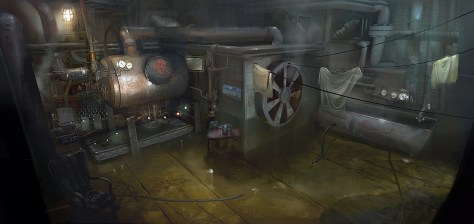
The time, I mean, of seed and sun. The time of pilgrimages and of rebirth, of birds and flowers, of regeneration. In a word, of fucking. Yes, that is the word, the precise word for it. The dirty dirty life-force unleashed upon God’s blessed creation. He gazes down upon the fucking dogs and the fucking cats and the fucking ants and the fucking capybaras. Presumably, too, he looks down upon I, Kalashnikov, almost hidden from sight in the boiler room, furiously tugging at my engorged member, to no use, to no use. In my own way, I get into the Spirit of the thing, with help from the videos. I see roughly how it is done. Spittle appears to help. I shout OHMYGOD at what seems to be the advisable juncture. I search the boiler room for a proper hole, this business of holes apparently critical to the success of the enterprise. It is the Life Principle that compels me. I am at one with the life-force, as I make sweet love to the furnace.

As I said, I mean only to get into the spirit of the season, to not be apart or left out or otherwise non-participatory. Everywhere life returns to the Earth; everywhere there is romance and love and intercourse. And so I throw myself into it, with abandon, with all that I have. I have crossed the Lubicon, shouting, “Alea ejecta est!” It is my second coming, already today. I, Kalashnikov, returned after a kind of silence, from the non-being nothing of eternal notwasness.


The Life of Cities

Everywhere, we are a stranger arriving into light

✎  Wayne K. Spear | April 3, 2018 · Essay

subway

EVERYONE IN A CITY is a unwritten message, a scriptless actor, a hidden quantity suspended between two moments of familiarity: the known they have left behind, and the known toward which they rush, through the tower atrium where calèches and footmen once passed. You are the next in the line, the subsequent fare, a neuron of commerce passing the bill, to a woman who pretends she is happy to see you. In a city, you befriend alleys and skylines, the shadows cast by skyscrapers, and the smell of foreign shops. You embrace the philosophy of the crane, its iron doctrine of destruction and rebirth, and you peer into the bones of a gestating condo, where love will take root, or not, among strangers of the future.

In a city, you wear your anonymity like a childhood sweater. We are all theoretical, without sin, mute yet plenipotentiary, emerging into the rush-hour light with undeclared purpose. Mere inconvenience compels us toward the sterile momentary intimacy of crowded subways. A portal disgorges us, severally, seeds to the wind. I have never seen you, and I will never see you again. The life of the city is the purest form of grace, a work of love, a perfunctory cohabitation without grievance or jealousy, without expectation or agenda, without the unbearable sweetness of hope.

We meet in moments of city inconvenience, with our burdens and propositions. You provide directions, hold the door open, carry the stroller down the stair, lend a stranger the charger for your phone. You feel embarrased to ask for these things. It is an imposition, perhaps even a mild trasngression of the unspoken compact. In the city we are, all of us, unto ourselves. We go out into the world with the requisite provisions, mindful of the hazards. The city is a living, unaccomodating beast. We accept this and get on our way.

A city is a bookshelf in a house where everyone writes, but does not read. The idea of reading, a vision of the forever- unread and unreadable, intoxicates us. But in the village, everyone has memorized the stories. There are no secrets and no strangers in the town. In town, you are an open book, a fully parsed sentence, always Mary or John or Maria. You have only one face, and you wear it wherever you go, to every human purpose. In town, you give the cashier an accounting of yourself, obliged to the currency of human curiosity, tethered to the law of ceremony and consanguinity, forever reconciling the ledger of entanglements.

The city is not better than the town. Nothing is better than another thing. Everywhere, in the skin of the earth, there are cracks and crevices. We call this place by one name, and by another name we come to know another place, or we think that we know, but nothing truly has a name. Everywhere, the road we are on will one day end suddenly, like the wrinkles of a palm. Everywhere, we are exchanging bits of data and drawing from our accounts. Everywhere, we are between two places. Everywhere, we are a stranger arriving into light.

Loss

You learn, sometimes too late, what is needed for the voyage, and what must be left behind

✎  Wayne K. Spear | March 29, 2018 • Essay

WE ARRIVE TO THE WORLD naked, with nothing but a connecting thread to those who, with any luck, will love and nourish us. Soon enough there will be clothing and bright light, crepundia, a crash of voices, perambulation, the blush of passing foliage, a human parade. Soon enough, a world of objects and subjects, of wordless wonders. All this, before there is a you and me, before the arrival of that indelible space that separates, all before the problematic ego, before the untidy business of living.

You learn, years later, that a hotel is not a place. You learn that you came into the world with all that you needed. You learn, but it is the forever too late. Somewhere in the distance is that place you call home, or once called home, where the woman who once loved you washes dishes, or stares into the distance, or does none of these. A hotel is not a place, but you are a man filling the requisite chair, a quadrate, among the absent unknowable others who are between an elsewhere yesterday and tomorrow. You learn, too late, what was needed for this voyage and what must be left behind.

Time passes. You learn the trick of putting names to things. You understand that evenings, when you are alone with yourself, are the most difficult. This is the time when unnamed things belabour themselves to the water’s surface, demanding to be named, needing to be sorted into a taxonomy of mourning. Grief has many hands. It overturns even the most hidden of stones, reconstituting origins and descent, questioning everything, anatomizing the fossils, naming.

You throw yourself into a world that does not see and does not care that everything has changed. Everywhere is a hotel. You begin to notice strange and inexplicable things, for instance that the sky is not the familiar sky. The cashier asks you how you are, and you pretend that this is an ordinary thing to say. You pretend to believe that words still mean to you what they once meant. You pretend that the ice beneath your feet is not slippery, but the moments arrive when a footing gives way and you are certain you will go down, down into the water. I am good, you tell the cashier, and she does not take your hand because she does not see the ice or the all-consuming sea. And in that moment, it occurs to you that the hand that once would have reached out to you will reach out no more.

We come into the world with only what we need, and in time we will lose everything. Some things we will leave behind, perhaps not knowing it for a time, and in other instances there will be a perfunctory kiss on the cheek, before someone disappears into the car that will never return. There will be arrivals and departures, the passing of place to place, a remembrance of love and bright light, from an unbridgeable shore. Gratitude and sorrow, the will to go on, the human parade, an ocean that forever empties into a sea.

The Old Familiar Madness

Everywhere you look there’s a strongman rising on the bitter tide of angry men

✎  Wayne K. Spear | March 22, 2018 • Politics

CHINA is returning to Mao and Russia is returning to Stalin and the President of the United States is jealous. Where is his Stalin, his Mao, the Father Figure he’ll restore to his glory, his Kim il-Don? Where is the Dear Great Leader, the Father to Keep America Great, Again. Everywhere you look there’s a strongman rising on the bitter tide of angry men. Yes, I mean men. You can walk a mile from here into the filth and chaos, the raw animal stench, of Chinatown, and buy virility enhancers made of the balls of endangered species. We men, with our fragile masculinity and our narcissism, had no problem killing off the last rhinoceros to drink and fuck with a little more stamina. Bodies are for buying and selling, life is cheap, we’ll blow up the world if it makes our dicks a little longer, and that’s all the truth you need to know.

There’s a mass-murderer in Syria, Bashar al-Assad, grinding a generation of children into dust, and he has the help of Putin and Erdogan and the Ayatollahs and all the others. The others, the men who dream of ultimate power. There isn’t a chance in hell Trump will stop them. He admires the murderers, wants to be a murderer, knows he’s the anointed, the man who can kill on Fifth Avenue and not lose voters. Evil has been set loose on the world, and for the foreseeable future we are all doomed, there isn’t a thing you can do about it now. The monster is loose, and we want it to be loose, and we want to see some goddamn explosions!

There is a great wave of violence coming, a real blood-letting, a gratification of our primal war-lust, the irrepressible desire of our species to kill with impunity, and to go on killing until the human will collapses. Don’t be fooled by the editorial pages and the other scoundrels, the other liars and cowards—we’re not doing politics anymore, we’re preparing for tribal warfare. We, the human species, every last one of us will be drawn into it, in the end. The old order won’t surrender, and the new won’t prevail without a fight. No one knows what the world will look like in one hundred years, but whatever it is, it’s going to require war.

It’s the old familiar madness, the deeply repressed barbarism that takes over, from time to time. Sure, we seem civilized, our orderly streets filled with shoppers, the calm commerce of a modern city. I’m sitting in a coffee shop, and no one, absolutely no one, is screaming for blood. The Filipino nannies go by, pushing strollers that bear the children of educated upper-middle white women. The children who will inherit the world, the children on whose behalf others will kill and die, the children who for now are innocent, not that it makes a goddamn difference.

We’re All Vampires Now

The Mercers Are Evil, Mark Zuckerberg Is a Bastard, and Facebook Is For Vampires

✎  Wayne K. Spear | March 20, 2018 • Politics

THE DISEASE KILLING US is a goddam burrowing maggot, and you realize how deep it goes when you pull. At first it’s just this sick and sickening President, like a pustule on the body politic, but then it’s the media and money in politics and all the greedy bastards who aren’t going to yield until they’ve killed the oceans and your city is under water. And the sickness doesn’t stop there. Pull a little more, and it’s you and me, every day a little more insane, every day a little more lost, and you’re a fool if you don’t see it.

Bastards

We’re all going down, once again into the churning primal vortex, the mad chaos that’s never far away. Eventually we’ll reach that place where the gravitational pull exceeds our collective will, and there will be no turning back. Bricks and battle, baseball bats in the streets, knives under our shirts, a foot stomping on a face over and over until one side runs out of bodies and blood. Today some of us are putting bombs on porches, and some of us are cheering for the Nazis, but most of the decent among us have simply given up on politics and are looking for a good seat to watch the world burn. That’s the best news the evil bastards have had in a long time. Don’t worry, you’ll get a fire.

The President of the United States is a vicious racist bastard who’ll kill your children and hang them high for a cameo on Fox. He’s surrounded himself with operatives every bit as dead on the inside as he is himself, grifters and junkies who feel nothing except the pain they inflict on others to get themselves off. It’s already too late to save the Republic: this President knocked and the world let him in, not because we didn’t know he was a vampire but because we are all vampires now. The President survives by feeding on our worst characteristics, and every depraved mutation of the human gene works to his advantage. He is us and we’re him and it’s useless to argue otherwise.

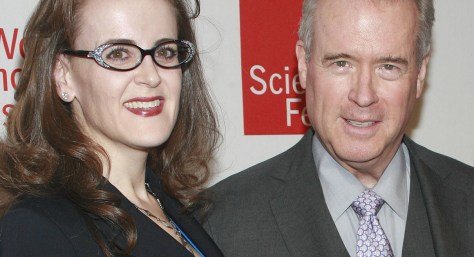
Before Steve Bannon and Kellyanne Conway, and the others of the vampire Trump nation, were White House sycophants, they were Mercernaries, part of a cult led by the misanthropic father-daughter team of Robert and Rebekah Mercer. Bannon was spreading his toxins on the Mercer-funded Breitbart News and hoping to burn everything to the ground. The Mercers are technocrats and data nerds, heavily invested around the world in “psychographic modeling,” which they hope to use to manipulate voter behaviour. Maybe they’re good at it, maybe not. Robert and Rebekah Mercer funded the theocrat Ted Cruz before they chose Trump, but the Cruz campaign wasn’t impressed with the work of the Mercer’s data firm, Cambridge Analytica. That’s how the falling-out began.

The Mercers prefer the dark—vampires usually do. They want to be in the background, not in the spotlight. Cambridge Analytica is in the news because a whistleblower, Christopher Wylie, admitted that the company took private information from millions of Facebook users to help the Trump campaign and the Brexit referendum. Not long before that, Cambridge Analytica’s CEO, Alexander Nix, was taped discussing his company’s role in the Trump victory and the techniques Cambridge Analytica uses to destroy opposition candidates, including bribery and entrapment. The Mercers want to overturn governments in Africa, Europe, Southeast Asia, and the Americas—not for ideology or policy, but merely to cause revolutionary chaos and turmoil, because it makes them feel powerful. There shouldn’t be a place, anywhere in the world, where these misfits can sleep without keeping one eye open, and the same goes for their reptilian operatives, right up to the Corrupter-In-Chief.

Pay attention. You and I let the vampires in, and if we don’t want to become vampires ourselves, we have a responsibility to do something about it. The Mercers and Mark Zuckerberg have been working together for years, and there’s no reason to think it’s gotten better. Don’t ever forget that Facebook started out as FaceMash, a hot-or-not drinking game that Mark Zuckerberg created with student data stolen from the Harvard server. It’s a small step from there to selling us all on the dark web to fake-news nihilists and power-drunk extremists who want to burn up the world, like the Mercers do, because they can and because we let them.

Dirty Deeds and the GOP

A brief history of the recent Pennsylvania race summarizes the moral bankruptcy of American conservatism

✎  Wayne K. Spear | March 15, 2018 • Politics


IT MUST HAVE BEEN a let-down for the President when Rick Saccone lost his Pennsylvania seat to Democrat Conor Lamb, earlier this week and in a Republican district Trump himself had carried by 19 points. But there was consolation. Paul Ryan claimed that the President had in fact helped Saccone, in a race that he described as even more dire before Trump’s rally, and on Fox and Friends the hosts re-cast Conor Lamb as a Republican supporter of GOP policies. Fake news, they call it. Anyways, Steve Doocy added, Lamb’s PA18 district won’t even exist after November, so no biggie.

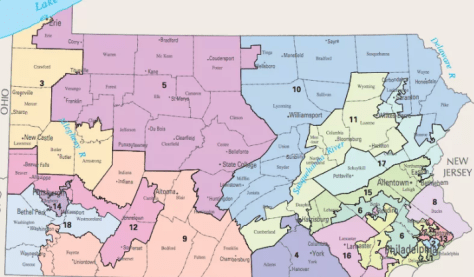
PA18

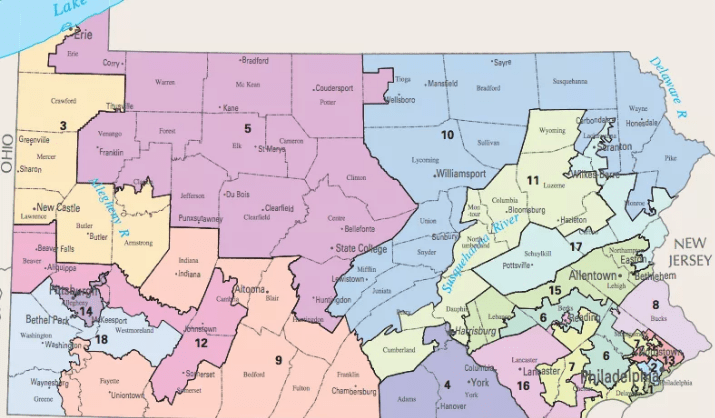
What Doocy didn’t mention was that PA18, a suburb of Pittsburgh, has been redrawn by order of the state’s supreme court. It’s the first time a state court has abolished district boundaries ruled to be the work of partisan gerrymandering. PA18 was engineered to make Democratic wins impossible, and for a while the effort paid off. So, yes, PA18 won’t exist after November, but the reasons ought to shame rather than encourage the GOP, assuming they are capable of shame.

The rise of Rick Saccone corresponds with the fall of David Levdansky. For twenty-five years Levdansky represented Pennsylvania’s 39th, but the Democrats went into the Obama 2010 midterm with a narrow, one-seat majority. The Republicans made no secret of their plan. They would pour campaign money into the state legislatures and, if victorious, re-draw the state districts in ways that favoured the GOP’s congressional ambitions. The work was handed to something called the Republican State Leadership Committee, under Chris Jankowski, and is the subject of a 2016 book, Ratf**cked: The True Story Behind the Secret Plan to Steal America’s Democracy. The Republicans code-named the operation REDMAP, the Redistricting Majority Project, and as I said made no secret of it.

The first step, ousting Levdansky, was simple enough. On Saturday October 9, with three weeks left in the race, the Republicans began a saturation campaign, filling the airwaves and the mailboxes each day with attacks on the Democratic candidate, claiming he had championed a $600M Arlen Specter Library. (Specter, as you know, had recently defected the Republicans to run as a Democrat. Thus by association Levdansky was labelled as not only a liberal, but a traitor.) The smear worked, the Republicans took over the legislature, and madly off in all directions went the gerrymander.

The redaction of PA18 was even messier than the GOP’s midterm assaults. The new congressional district excised Pittsburgh, and its urban Democratic voters, and produced a delirious map where one side of a street was in one district and the other side of a street in another. As I recall it, one of the candidates lived in a house that became the only house on the street in its district. The overall effect of this dog’s breakfast was to produce reliably Republican blocs in the southwestern suburbs of Pittsburgh, which was what the REDMAP operation had set out to do and what the state’s supreme court has now undone.

And let’s not forget what was special about this month’s special election. Rick Saccone was after the seat vacated by Republican Tim Murphy, a pro-life politician with a lover, an extramarital affair, and a “pregnancy scare” on his CV. Bad as that may be, it’s not what brought him down. Once the bad news started, it kept coming. Murphy’s staff provided the Pittsburgh Post-Gazette with astonishing and lurid stories of an office culture spinning out-of-control, and soaked in abuse, hostility, and corruption, where there was 100% turnover and where it had become impossible to recruit and retain competent staff. (Sounds familiar, right?)

Down went Murphy, like the PA18 gerrymandering project, and up came Saccone. In a statement about the court-mandated map, he said he would run and win, regardless of the district, “because it’s not about the lines that are drawn, but about the values I represent.” Haha, and yes, the lofty values of the GOP—we’re all experts on that now, living as we are in a moral universe where Republicans hold Roy Moore godly and where President Donald Trump champions an abstinence-only curriculum. Saccone likes to brag that he was Trump before Trump, but the voters have now weighed in on the GOP’s values and there’s nothing to be proud of. Let the Trumpists fall, let the conversation turn to life after this administration, and may the work soon begin of undoing the GOP’s dirty deeds.

Populism and the Elites

Under Doug Ford, Ontario politics will likely be organized around an enemies list of cultural foes and special interests. We’ve been there before.

✎  Wayne K. Spear | March 13, 2018 • Current Events

IT’S NOW CERTAIN that a battle, between the people and the elite, is coming to Ontario. As it did in the days of Mike Harris, the province is about to flirt with populism and might even go beyond flirting, to courtship and consummation.

Mike Harris

We heard quite a lot about the elites—always plural—when Rob Ford was mayor and Doug was the hype man and principal enabler of his brother. The word comes to us from an Old French noun derived from the Latin verb ēligĕre, to elect. The elite, in other words, are the elected, or chosen. Like Doug Ford.

Only, to hear Doug tell it, he’s no member, or even friend, of the elites—too-clever snobs who bore the common folk with lessons in etymology. They’re not defined by income or by power, but by culture and attitude. They live downtown and drink Chardonnay, and they use big words, and they mock the lives and values of the town and suburbs. Elites think they know better than you, and they think that they are better than you. And they have been chosen to lead and have made a balls of things.

There’s no necessary connection of this elitism with political power, beyond annoyances like support for bike lanes and streetcars. The list of elitist traits which drive Fordies around the bend has few explicitly ideological entries. Mostly it’s stuff like fixed-gear bikes and smugness and drinking champagne with a pinkie extended. Doug Ford complains about the elites the way that anglos are sometimes known to kvetch about the smell of east Indian cooking.

Elites are irritating, and you know them when you see them. The circularity of this term applies to its cognate, liberal, which is also defined as someone who is irritating. Critics may thus be condemned as elites and liberals, without further ado, because the terms boil down to something which is entirely in the eyes of the beholder.

Populism has some of the same characteristics. Nothing is objectively populist—the thing is set of attitudes and postures, a performance that is front to end a matter of individual interpretation. It helps to use rough and “plain” language, and to express ideas that would be scolded in polite company. Populism requires the claim that what matters most in this world is the little guy, and as a rule a populist will go out of his way to affect an unvarnished outlook and demeanour, the little guy being typically conceived as rough around the edges. None of this is incompatible with ulterior political motives like self-advancement and self-enrichment. History is filled with populist candidates who ascend to power on a pile of corpses.

The principal evil of elitism, which populism ostensibly sets out to vanquish, is the idea that some people or ideas or pursuits are objectively better than others, for instance that a Harvard graduate is a better choice of governor than an unlettered man who says y’all and ain’t. Moreover, it’s impossible to talk usefully about the Ford Nation idea of elitism without mentioning the aesthetics of social class.

It’s no coincidence that Doug Ford, like his brother, is large, whereas his political opponents have tended to be relatively slim. (The same is true of Donald Trump.) Class snobbery is such that large bodies will be subjected to often unspoken but condescending judgements, especially when they are bodies that sweat and that are clothed in ill-fitting clothing. Stephen Harper and Preston Manning, well aware of eastern prejudice, invested in makeovers before attempting to run for national office.  This earned them a great deal of suspicion and ridicule, but all politicians make their concessions to the masses. Ford is no different. His populism, however, is less accommodating than its predecessors, and as such it is more nakedly a display of something that is common to all populism, the compilation of resentments built up over time.

There is an entirely different way to conceive of populism, as an expression of the inherent decency and dignity of ordinary people, ordinary being defined as neither wealthy nor politically powerful. Many decades ago, generations of the political left cultivated the revolutionary conception of the self-educated worker, possessing a mind and consciousness of her own and equal in physical and intellectual prowess to her presumed social betters. This form of populism established workers’ libraries and orchestras and universities, and it advocated not only bread but roses, which is to say the attainment among the common people not only of bare necessities but of beauty. Rather than tearing things down, out of resentment for those at the top, radical populism sought to lift up the people and to make privilege a universal condition. Nothing was thought too good for the working classes—whether champagne, Bach, or caviar.

The populism of M. Trump and Ford is not, however, radical or revolutionary, and it doesn’t look very deeply into the nature of the system against which it has declared war. The anti-elitist populism we will get from the Ontario PCs, assuming Doug Ford becomes Premier, will very likely resemble the program of M. Harris. It will be a negative form of populism, conceived entirely in relation to an enemies list of cultural foes and special interests who must be brought low. And when one is consumed by the work of bringing things low, a generalized condition of lowness, with perhaps a few winners, is likely to take hold. After eight years of watching the Harris Conservatives tear things down, the voters tired of anti-elite populism and chose another path. We forget this at our peril.

The Free Speech Debate Isn’t Really a Debate

And it’s not just about free speech, either

✎  Wayne K. Spear | March 8, 2018 • Current Events


MORE AND MORE, I’ve been avoiding Twitter. It seems there’s always a dumpster fire in my feed, which may be an ill-suited metaphor, since I’d probably want to watch a dumpster fire.

What I have in mind are the routine and fierce online exchanges which begin with someone defending the free speech of a self-described ethno-nationalist, or some similar kind of provocateur, whose views are being condemned by others as hateful and racist, and so on. These exchanges often devolve into declarations concerning nomenclature and semantics, for example “you are defending x, and x is a Nazi,” followed by, “x is not a Nazi, a Nazi is y, and x is not y.” I realize that if you’re not on Twitter, this will make no sense at all. But stay with me.

The online debate about free speech isn’t really a debate, at least not on Twitter. It’s more like a sorting of people into teams, whether intentional or not, to conduct a game of language. This free speech game is furthermore a proxy battle, between various types of liberals and progressives, on one side, and conservatives, centrists, and traditionalists on the other. This much should be obvious to even a casual observer. In its present form, the free speech game is a cultural and ideological disagreement at the centre of which are gender identity and expression and the cultural authority of Western liberalism.

Young women—and especially black, Indigenous, people of colour, or BIPOC—are doing most of the heavy lifting on the progressive side of the ledger. On the other side, there are a good many men, but also quite a few white women who self-describe as anti-feminist (or perhaps first-wave), conservative, and/or traditionalist. The labels themselves are less important than the substance of the disagreement, which I will try to capture in a precise and economical way, for it tells us something about the time in which we are now living, as well as about what may lie ahead.

Even though something objectionable to progressives is often the origin of these free speech exchanges, there is almost never a discussion of what free speech actually is and why it might matter. Nor are the objectionable views themselves given much attention, expiration, defence, or rebuttal. Attention is drawn to a comment made, offence is expressed and then, in turn, dismissed, and invariably everyone, irrespective of their position, scrambles for a patch of moral high ground. Whatever the name for this, it is not debate, and nor is it discussion. Much is said, but much is also left unsaid. It is the unsaid, so far as I am able to tease it out, that is my present concern.

America is a country established on paper, at an early stage of the Enlightenment, and as such may be subjected to a critical reading. The Declaration of Independence begins, as everyone knows, with the words, “We hold these truths to be self-evident, that all men are created equal, that they are endowed by their Creator with certain unalienable Rights, that among these are Life, Liberty and the Pursuit of Happiness.” The men who wrote these words owned slaves, and in fact had men and not women in mind—and not all men, either, but land-holding men, otherwise known as gentlemen. From this it follows that, at the time of the American Revolution, probably no more than 40 percent of the American population enjoyed the full meaning of the phrase “all men are created equal.” Following the revolution, the work of slavery and genocide would be taken up in earnest, at the expense of much life, liberty, and happiness.

I mention this only to suggest that the hypocrisy of liberalism has a long pedigree. The inspirational music of Benjamin Franklin’s “We hold these truths to be self-evident” would have been deeply touching for the land- and slave-owning founders, but not so much for black and Indigenous people. Something of the same is going on with what I am calling the free speech game, and there is no use dismissing it in a country where most of the top-earning columnists at the major newspapers are white, and where many are also men.

Anyone who is paying attention notices that certain kinds of views are more lucrative than others. A simple thought experiment will make my point. Imagine that you are setting out on a life as a political writer, and that you must choose one of two kinds of writing, with your goal being to earn the most money possible. Your first option is to write as a champion of anti-capitalist radicalism, anti-hetero-normativity, and BIPOC feminism, and your second option is to defend the status quo, to champion free enterprise, and to argue that the established institutions and authorities have our best interests in mind, that white supremacy is a lie and also a delusion, and that corporations should pay lower taxes in the interests of workers.

With few exceptions, the person who chooses the first option will drift into the employ of a fringe publication sustained by volunteerism and bake sales, while the second option has much more potential to lead to Fox News or the Wall Street Journal and other corporate media. One is free speech, and the other pays handsomely. This may be one reason (there are others) why freedom of speech is less compelling for some on the left.

For at least a year now, and probably more, Jordan Peterson has claimed that the censor is at his door and that he is in imminent danger of imprisonment for expressing his views. But far from being silenced and ruined, he is now a wealthy international celebrity whose speech saturates the airwaves. When I recently walked into my local bookstore, my first sight was a wall of 12 Rules for Life. Peterson is of course known foremost as a University of Toronto professor of Psychology and as a defender of free speech who refuses to use non-gendered pronouns, gender identity and expression being, as I stated earlier, one of the battlegrounds for which freedom of speech is a proxy issue.

No one knows what the future holds, but we are living in a time when both the progressive left and the traditionalist right suspect the enemy of a secret plan to destroy the world. Jordan Peterson frequently adverts to something he calls postmodernism and cultural Marxism, which he maintains leads to fascism, nihilism, and the collapse of Western values and civilization. And the progressive critics of Peterson suspect him of being sympathetic to the alt-right, if not to neo-Nazism. This disagreement, it seems to me, concerns many things but above all else the fixed versus fluid nature of human beings and human societies. Progressives seek to jettison the oppressive baggage of the past, while conservatives look to the past for meaning.

But are the rejection of free speech by progressives, and the threats of violence against those with objectionable speech, merely a matter of cynicism, as I have suggested above? The position of progressives at the moment is felt to be a defensive position. Since at least the 1960s, a form of liberalism, driven by feminism and the fight of black people for their civil rights, as well as by suspicion of established authority, has predominated in the Western nations. But there are signs of a resurgent anti-liberalism, up to and including open expressions of admiration for Hitlerism. The victory of President Trump has greatly emboldened those members of society who had long ago learned to keep their illiberal opinions to themselves. Now they feel the time has come to organize, to rally, to salute their flags in public, and to put up posters on university campuses.

As some have stated on Twitter, Nazism was a historical artifact inseparable from the National Socialist German Workers Party and the cult of Hitler, defeated and eradicated in 1945. The crimes of the Nazis, he points out, were war, genocide, and vast human misery: they are not remembered for the crime of putting up posters or giving lectures. The problem with this position however is that there was a point in time when Hitler was the leader of a rabble that few took seriously and who were known mostly for meetings and speechifying. Today, in Canada, there are efforts underway to constitute a National Socialist political party, along the German model. Simply defending the freedom of speech of this group, without submitting that speech to vigorous criticism and counter-offensives, seems to me a remarkably casual posture.

As I have said elsewhere, in one hundred years hence we will either be saying ze and zir or we will not. The Judeo-Christian values will continue to inform the laws and cultural norms of America, or they will not. The descendants of Western Europeans will constitute a majority population in places like Texas and Alabama and Saskatchewan, or they will not. As for gender identity, and identity in general, it is difficult to imagine human nature as fixed and immutable, when artificial intelligence and bio-engineering and nano-technology are just around the corner, and when medical science will make it relatively easy to transform from one sex to another (and back again) and when human beings might soon be composed, perhaps even mostly composed, of synthetic and robotic parts. Seen in this light, the argument over pronouns seems a small and risible sideshow. Soon we will be dead, and given the increasing pace of change, the world that is coming is likely unimaginable for us. To survive we will need new myths, new ideas, and perhaps even new values.

Or maybe not. We simply don’t know where we are going.

Dishonor thy Mother

The Billy Graham Library tells the story of a vile and sickening son

✎  Wayne K. Spear | March 5, 2018 • Politics


WILLIAM MARTIN, author of A Prophet with Honor: The Billy Graham Story, says Franklin Graham’s relationship with President Trump “will come to embarrass him.” But for that to occur, Mr. Graham will need the capacity to feel embarrassment, for which there’s no evidence.

Franklin Graham

During the funeral of his father, Franklin reminded his audience how humble the man had been, and that he would have disapproved of the attentions given him on the grounds of a 40,000-square-foot museum dedicated exclusively to his life and work, and no one laughed. Nor did the obituaries delve, as far as I’m able to tell, into the origins of this tourist trap, ludicrously called the Billy Graham Library and set up by Franklin to further milk the lucrative family brand by exploiting the memory of his dead parents.

The backstory of the Billy Graham Library tells you everything you need to know about the vile money-and-power-grubbing charlatan who now controls the $300M “non-profit” and tax-exempt Billy Graham Evangelistic Association, or BGEA, and its annual revenues in excess of $100M. Franklin Graham had the idea for the compound in 2001, and it soon became the occasion of a bitter family struggle in which he prevailed. A family struggle, because Franklin’s plan required the burial of his parents on the museum’s Charlotte, North Carolina, property, in violation of the wishes of his mother, Ruth Graham.

Ruth and her son often engaged in power struggles, and as a child, as now, Franklin was stubborn and aggressive. This was no different. Once Billy had transferred control of the BGEA to his son, Franklin took his proposal to the city and leveraged an eventual family shrine for a sweetheart deal on 60 acres of land adjacent the Billy Graham Parkway, where the business headquarters and Billy Graham Library now reside. BGEA then received funding for the Billy Graham Library, including $1,000,000 from The Charlos Foundation. (Franklin has arranged his affairs in a way that allows him to pay for nothing and to profit from everything.)

The Graham siblings denounced Franklin’s proposal, calling it tasteless and tacky and little more than a tourist trap and money-making operation, beneath the dignity of their father’s reputation. One of the daughters referred to the Billy Graham Library as The Cracker Barrel, and Ruth denounced it is as a circus. The conflict-averse Billy audited these views but refused to participate, saying only that wherever Ruth ended up, he would be buried by her side. And so it was. Billy Graham announced the final resting place of his wife on June 13, 2007, at the point when she no longer had the physical capacity to speak on her own behalf, or to object. “I know this goes against my mother’s wishes,” Ned Graham was quoted as saying.

All of this, and much more, is detailed in a December 2006 Washington Post article, “A Family at Cross-Purposes,” by Laura Sessions Stepp. From Stepp we learn that, while lucid, Ruth Graham was clear that under no circumstances was she to be buried in Charlotte. Her wish was to be interred where she had lived for many years, in the mountains, but Franklin had his scheme and would not be thwarted. Because he controlled the family’s resources, and because his personality tends toward dominance (like the grifter President he so often defends) Franklin bludgeoned his siblings, and likely also his father, into submission. Ruth Graham was buried on the grounds of the Billy Graham Library, aka the circus, on June 17, 2007, nine days after its opening.

And a circus of a kind it is, a heavily subsidized, “40,000-square-foot experience” and Disney-styled cash cow—in this case, a singing animatronic cash cow who welcomes over 200,000 visitors each year along their “Journey of Faith” through the museum and toward Ruth’s Attic Bookstore and the Graham Brothers Dairy Bar. (One of the Billy Graham Library’s designers, ITEC Entertainment Co., is unsurprisingly a theme park contractor who has done work for Disney.) The website billygrahamlibrary.org helpfully informs prospective visitors that cash, personal checks, American Express, Discover, MasterCard, and Visa are accepted. Admission is free, but donation boxes are located in the lobby for those who want to subsidize Mr. Graham’s paranoia, hate, cultural warfare, and generous annual compensation, which ranges from $880,000 to over $1,000,000.

God Save America From Oprah Winfrey

America has had its magical thinking celebrity billionaires-endorsed President. Maybe, just maybe, it’s time for something different.

✎  Wayne K. Spear | March 1, 2018 • Politics


THERE’S A FRESH ENTRY this week on the familiar ledger of billionaire celebrities the media can’t quite seem to leave alone, but probably should, and it goes like this:

Amid calls for her to consider a run for the White House — from fans as well as her closest friends — “I went into prayer,” she tells PEOPLE in the magazine’s new cover story.“ ‘God, if you think I’m supposed to run, you gotta tell me, and it has to be so clear that not even I can miss it.’ And I haven’t gotten that.”

Oprah Winfrey

I can’t sort out whether this article, tellingly titled “Faith, Weight, The White House, & More,” clarifies the question, or if we’re now in murkier waters. A clear sign from God? What, exactly, would that be—and who is to decide? You must have noticed, as I have, that God rarely discourages political ambition and will often encourage a half-dozen narcissists to chase a prize. Presumably all were given “a sign,” whether clouds in the coffee, an auspicious horoscope, a random passage of a book taken from the shelf, or something felt in the gut. As we’ve long known, pretty much every potential candidate who consults God is special and deserving and will make a first-rate Senator or Governor or President, or whatever. So Oprah’s gambit may be a done deal, after all.

Or perhaps the Almighty jests, but at whose expense? He gave us Roy Moore, who not only ran by holy counsel but refused to concede defeat. “What we’ve got to do,” Moore told supporters, “is wait on God and let this process play out.” God gave us Presidents Scott Walker and Ben Carson and Rick Perry and Rick Santorum and Mike Huckabee and Marco Rubio and Ted Cruz. “I am certain,” President Scott Walker told an audience. “This is God’s plan for me and I am humbled to be a candidate for President of the United States.” President Ben Carson said he would run “if God grabbed him by the collar and asked him to.” President Rick Perry hoped to see a burning bush, but decided in the end that “God sends messages through a lot of ways.” In Perry’s case, the way was the wife, who claimed to see a burning bush on his behalf and ordered him to run.

These career politicians have one thing in common: a regard of their self-promotion as part of a grand, eternal design crafted in the Beginning by an onmiscient and all-powerful Being. How nice it must be to figure in The Plan in this way. Billions of years ago, The Lord God Almighty willed that President Rand Paul would one day prevent gun control legislation, and shortly after uttering the words “Let there be light,” Yahweh ensured that men would lie only with women, and vice versa, and that President Ted Cruz would make it so. Between the stars and the planets, I AM THAT I AM brainstormed an impediment to embryonic stem cell research, under President Mike Huckabee. Should Oprah run? We may soon learn that there’s a heavenly plan for that, too.

Divine warrant gives us the nauseating comingling of arrogance and humility that every aspirant to political office seems to have mastered, but most conspicuosly the humble servants of God. It’s never Would I Run, it’s always should I, “should” (like its cousin, supposed to) being a word that drips with the sugar of practical and moral necessity. If it’s clear signs you’re after, nothing is clearer than the fact that there are no shoulds, and no supposeds, in politics. Just ask President Michele Bachmann, one of the few people who has prayed for a sign in recent years, to replace Al Franken, and not (yet) received it.

And while we’re on the topic of clear signs: Oprah’s deference to “going into prayer” is yet another indication that she’s not fit for office. It isn’t God that’s been speaking to her, brothers and sisters, it’s the billionaires’ club, and we’ve been there seen that, too. America has had its magical thinking celebrity prayers-and-billionaires-endorsed President. Maybe, just maybe, it’s time for something different.

Anal Tax and Sex Carbons

The Ontario Conservatives Know How to Entertain

✎  Wayne K. Spear | February 27, 2018 • Politics


I WATCHED THE ONTARIO PC leadership debate last week, and while I found it a touch dull, there’s no denying that the Conservatives understand, and can deliver, entertainment. The entertainment value of the race to replace former leader Patrick Brown, for example, benefitted early on, with the entry of the up-and-coming political neophyte, Patrick Brown. He’s a fresh face, and he’s never governed, but, according to various rumours, he once had a leadership role somewhere but stepped down, or maybe didn’t. It’s not clear. No doubt we’ll learn more about this mysterious Mr. Brown from the papers, should he decide to re-enter, or re-re-enter the race. Or wherever we’re at now.

Hot Anal Sexleft to right: Anal Sex Woman, Too Sensible for Ontario, That Mid-Level Drug Dealer, Has A Famous Dad


The Ontario PCs are the most diverse of the provincial political parties. There’s something for everyone at the Conservative salad bar: the faux-populist entrepreneur, with mid-level experience in the retail pharmaceutical trade; the fresh and photogenic outsider with the famous last name; the family-values Puritan; the polished and informed candidate far too sensible to ever be elected by Ontario voters. And possibly Patrick Brown, who, if he re-re-enters the race, will distance himself from the theatrics of the previous Ontario PC leader, as well as of the previous leadership candidate, Patrick Brown, and Patrick Brown.

CommosJust say OhNos! to Commo-fascisms

Far and away, the top issues in the 2018 Ontario election are anal carbon and sex tax. If you watched the first debate, you heard the words carbon and anal quite a lot, just as you have over the past eight years, in your local church and grocery store. Every man, woman, and child is talking about these things. That’s because there’s hardly a citizen who is not daily imperiled by anal carbon and the sex tax. The build-up of carbon in the anal cavity is not only messy, but painful and dangerous, and it makes sitting for long periods, or passing waste, excrutiating. Anal carbon is said by some to effect the climate negatively, especially bovine anal carbon, but although anal carbon is taught in the schools, the evidence of its effects on climate is inconclusive. That, and the fact it encourages our children to hoard carbons, is why all the Ontario PC candidates repudiate the teaching of anal carbon in the classrooms, describing it as “making parents uncomfortable.” Whether it’s man-made anal carbon or mixed couples.

As for the sex tax, sex used to be the only fun thing you could do in Ontario, other than maybe stealing shopping carts, without spending money. And now the government is making sex expensive by taxing it. (The Ontario puritans are ruining everything. At this rate there will soon be liquor laws!) The HST, having sex tax, is highly unpopular in Ontario, as was the Great Sex Tax, or GST, before it. That’s why, wherever you go in Ontario, people are forever talking about sex taxes and anal carbon, unless they are talking about anal tax and sex carbon, which are also very common topics of discussion in the coffee shops of this province. You see, the principal concerns of all the people that live in this part of the world center on a single tetravalent chemical element from the periodic table, basically a lump of coal, and on the hole in their ass. That may be the best way to understand this leadership race, and why it may end with Ontario getting a lump of coal and an asshole.

Racism, sexism, and indifference

From Helen Betty Osborne to Tina Fontaine, Canada has been a deadly place for Indigenous youth but remarkably safe for the killers

✎  Wayne K. Spear | February 22, 2018 • Current Affairshelen-betty-osborne

TINA FONTAINE WAS A CHILD OF FIFTEEN when her body was found in a duvet cover, loaded with rocks, at the bottom of the Red River. That was August 2014.

In October police arrested Raymond Cormier, and at the end of 2015, over a year later, he was charged with second-degree murder. Winnipeg police spent six months recording their conversations with Cormier, secretly and under plainclothes, hoping to get useful information, perhaps even a confession.

The transcripts of these ramblings—there’s perhaps no better word for it—are at times opaque and contradictory. Cormier says he did and didn’t kill Tina Fontaine, and that he did and didn’t have sex with her. Statements are incomplete, some inaudible. After eleven hours of jury deliberation, Cormier was acquitted. Counsel for the defence presented no evidence and the accused did not testify. The burden of proof was entirely upon the prosecution, as is the case under common law, and it was a burden they did not carry.

Tina Fontaine was cast into a river, which is a nice way of saying disposed of, tossed, thrown away like garbage. It happens all the time in Canada. Causes of Indigenous deaths are declared unknown and unknowable, investigations are not started or they are soon abandoned, and in rare cases where there are suspects and charges, the accused are exonerated. The courtroom clears, making way for the summary consideration of the next dead child and the next acquittal, and then the next, and the next after that, and.

Child and Family services found Tina Fontaine on the ground, sleeping behind the Helen Betty Osborne Centre. This is something a novelist might come up, but it’s reality, not fiction. Helen Betty Osborne was abducted and murdered at 19, in 1971, and three of the four men involved in her death were never found guilty of a crime. Dwayne Johnston alone was delivered a lifetime of imprisonment, sixteen years after the fact, in 1987. The death of Helen Betty Osborne led to the creation of the Aboriginal Justice Inquiry of Manitoba. And the Aboriginal Justice Implementation Commission determined that racism, sexism, and indifference were the principal factors behind the length of time between Helen Betty Osborne’s death and a determination of guilt. And the Aboriginal Justice Implementation Commission made many recommendations, not only pertaining to justice but to the child and family welfare system, that remain unfulfilled aspirations.

And Murray Sinclair left the Aboriginal Justice Implementation Commission to later join the Truth and Reconciliation Commission of Canada and to study once again the systemic realities contributing to so much Indigenous death and misery. And the Truth and Reconciliation Commission of Canada made 94 recommendations and soon the Murdered and Missing Indigenous Women and Girls National Inquiry will make more and