Category Archives: First Nations

An Interview with Cindy Blackstock

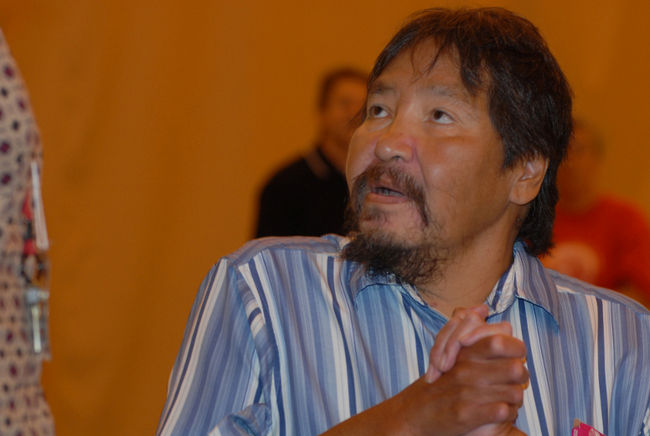
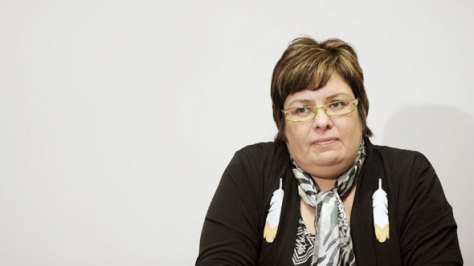
Cindy Blackstock

CINDY BLACKSTOCK is a member of the Gitksan Nation, the Executive Director of the First Nations Child and Family Caring Society of Canada, and an Associate Professor at the University of Alberta. Last year, she became the subject of media headlines when it was widely reported that the federal government had been spying on her. I spoke to her about her life, her work, and a human rights complaint launched by the Assembly of First Nations and FNCFCS against the Canadian federal government.

Please visit I Am a Witness.

Download the interview (320 kbps mp3).

Garnet Angeconeb’s Journey of Healing, Hope and Reconciliation

IN MANY RESPECTS, Garnet Angeconeb is representative of the countless Aboriginal children beaten and raped in Canada’s Indian residential schools. For years he told no one, including his wife. Angry, pain-filled and confused, he drank heavily to dull his feelings. The turning-point in his life arrived during a business trip to Ottawa, on October 31, 1990:

Read More

Canada Takes a Bold Step by Adding Indian Residential Schools to the Curricula

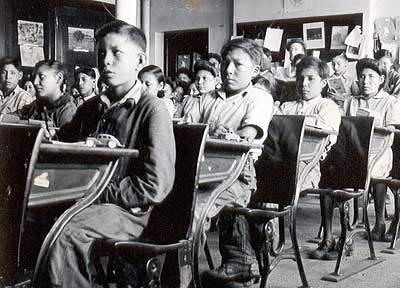
Canada Indian Residential Schools

THIS WEEK the governments of Nunavut and the Northwest Territories launched a “first of its kind” curriculum, the focus of which is Canada’s discredited Indian Residential School System. The Honourable Jackson Lafferty, Deputy Premier of the Northwest Territories, and the Honourable Eva Aariak, Premier of Nunavut, attended a Yellowknife ceremony to mark Canada’s formal commencement of a project urged sixteen years ago by the Royal Commission on Aboriginal Peoples (RCAP) and urged again in more recent years by the Truth and Reconciliation Commission of Canada, or TRC.

Read More

Ottawa’s Indian policies stick with tried and tested failure

WHEN THE politician and aspiring poet Nicholas Flood Davin visited Captain Richard H. Pratt’s Carlisle Barracks, in Pennsylvania, the Carlisle Indian Industrial School was only weeks along in its operations. Nonetheless, in March of 1879 an enthusiastic endorsement of this American Indian industrial and boarding school reached the desk of the Minister of the Interior, who happened also to be the author’s patron, John A. Macdonald.

Read More

Ottawa’s policy vacuum undermines its oil sands rhetoric

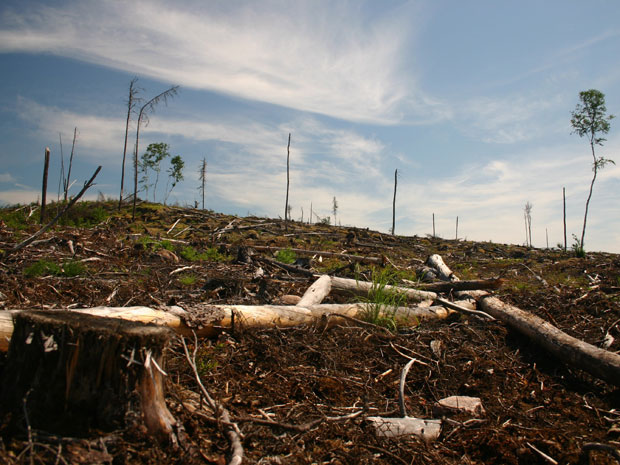
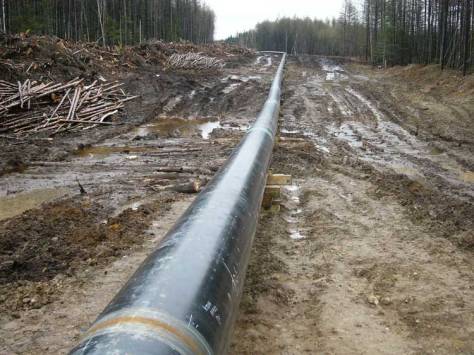
OIL: it’s an imposing and multi-faceted topic, into whose orbit come geopolitical intrigue, war and empire building. Oil fuels our modern industrial comforts and conveniences, as well as our controversies. In many parts of the petroleum-rich world — Iraq, Saudi Arabia, Sudan, Nigeria —  it has engendered violence and state corruption. A blessing of mixed character, oil production and its inevitable politics have arrived on a massive scale to Canada, most of it in the form of bitumen. Civil war and autocracy are unlikely in this democratic, rule-of-law nation, but don’t expect a smooth journey. There are battles ahead, and the evidence suggests Canada is ill-prepared both for its scope and scale.

Read More

13-year-old boy, Wes Prankard, steals show with short speech at AFN’s annual assembly

“THERE ARE MOMENTS,” says the Annual General Assembly Co-Chair, Harold Tarbell, and he’s right. It will turn out to be the most emotional scene of the Assembly of First Nations’ three-day Toronto gathering: a cheerful and wholesome-looking, blonde-haired and blue-eyed thirteen year-old from Niagara Falls, brought to the podium at the behest of child-rights advocate Cindy Blackstock, has just delivered the week’s shortest but perhaps most eloquent speech, and the audience is on their feet:

Hello everybody, my name is Wes Prankard. For the past three years I have been trying to bridge the gap between Aboriginal and non-Aboriginal children. What I’ve been doing started three years ago, when I saw pictures of the community Attawapiskat. Just seeing these conditions the children were living in, I just knew it wasn’t fair. And so I decided to do something.

Read More

Brazeau’s latest outburst shines a harsh light on the Senate

SENATOR PATRICK BRAZEAU was again in the news this week and, as is so often the case, for ignoble reasons. After a report emerged revealing that he holds the title for most-missed days of Senate business, Brazeau took to Twitter and called the reporter who had written the story, Jennifer Ditchburn, a bitch.

His outburst (for which he eventually apologized, while trying to explain that he had personal circumstances that prevented him from being present in the Senate) will likely re-open the never-quite-closed debate over the Senate and its legitimacy as a patronage plum. Brazeau’s career is a good illustration of the Biblical maxim “The race is not to the swift,” and his habitual partisan rowdiness on the Internet does make one wonder if the upper chamber retains any hope of the dignity which is — at least in principle — its chief recommendation.

With little more than a pretty face and a modelling CV, the university drop-out Patrick Brazeau threw himself into aboriginal politics, joining the Congress of Aboriginal Peoples, or “CAP,” just in time to inherit the position of President from the retiring Dwight Dorey. Brazeau well understood the art of political maneuvering. The Assembly of First Nations, under then National Chief Phil Fontaine, had by the mid-2000s cultivated a close working relationship with the federal Liberals. Paul Martin and Phil Fontaine, for example, were on especially good terms.

Brazeau shrewdly manipulated his niche of opportunity — the plentiful non-status, off-reserve aboriginals situated beyond the AFN’s mandate — and aggressively courted the federal Conservative Party of Canada. It was a shrewd move. Stephen Harper needed some aboriginal allies, and Brazeau needed funding and a political ally in Ottawa. Within three years, “National Chief” Brazeau (a title whose adoption turned the rival AFN leadership a lovely hue of purple) had the prospect of collecting a generous CAP salary concurrent with a Senate income.

Having absorbed the disappointing news that it was one or the other, Brazeau dispossessed himself of the weighty charge of national leadership and focused on moving on up to the East Block. Those of us who were around and paying attention will recall him cruising the nation’s capital in his Porsche SUV (purchased used, he pointed out) as local media reported some questionable CAP expenses, allegations of sexual harassment and, later, tardy child-support payments.

Brazeau has long been unpopular in Indian Country, where news of the sort summarized above travels swiftly. A more cautious fellow, having found himself in Brazeau’s blessed situation, would keep his head down, lest he risk his extraordinary good fortune. The Senator, however, never misses an opportunity to stir it up.

When his actions bring disrepute to an entire institution, as in this instance they have, a line is crossed. Patrick Brazeau owes an apology to his colleagues. He might also consider spending less time on Twitter (or, better yet, no time) and more on matters of substance. The Senate ought to be a place for grown-ups, and for debate, deliberation, and broad vision. Leave the antics to others, Mr. Brazeau.

Teach Canadians the history of residential schools

CANADA’S TRUTH and Reconciliation Commission has received a dab of media attention, much of it for regrettable reasons. In October 2008, the TRC Chair Justice Harry LaForme resigned, citing the political interference of the Assembly of First Nations and the insubordination of his (AFN-appointed) co-commissioners, Claudette Dumont-Smith and Jane Brewin Morley. This inauspicious beginning yielded to inauspicious mid-points, the Canadian franchise of the TRC brand-name drawing attention for delays and the bureaucratic impediments which hindered its progress. The messenger aside, what about the message? On the final day of a three-day AFN National Justice Forum, in Vancouver, the Commission has been scheduled to release an Interim Report.

Read More

The Crown-First Nations Gathering: a parting of the ways

OVER THE PAST few years I’ve had some off-the-record discussions with senior federal bureaucrats and politicians, folks who are in a position to know of what they speak. In such company the prospect of the politically practicable invariably rises to the river’s surface, through implication or, more often, inferences. Here the word “inference” alludes to the immovable fact that even in those cases where the spirit is willing, the flesh is bound to cabinet confidence and other such protocols of discretion. Hearing what I’ve heard, and seeing what I’ve seen, I’m not at all surprised by the outcome of the recent Crown-First Nation Gathering in Ottawa.

Read More

Canada’s Eighth Step to Roseau River

IF YOU’VE lived among Anishinabe, you’ve heard the phrase “too many chiefs and not enough indians.” It refers to the familiar spectacle of an environment which is rich in big ideas and big talk, but rather poor in the getting of things done. At the Roseau River Anishinabe First Nation in southern Manitoba, near the U.S. border, two chiefs have been elected within the last year, and the community is now facing a February referendum to sort out a bit of a jurisdictional mess. I advise you to put on your seatbelt as I rehearse a fascinating story which tells us quite a bit about how things work in the world of Indian Country.

Read More

The Richard Smoke Trial

ON DECEMBER 23, 2011, Ontario Superior Court Justice the Honourable Alan C. R. Whitten rendered his verdict in the case of a vicious beating in Caledonia of builder Sam Gualtieri, by defendant and Six Nations resident Richard Smoke. The judgement has received only a smattering of press attention, most of it issuing from the National Post. My feeling is that there ought to be more attention paid, but of a sort which begins by acknowledging universal failure and the urgent need to do something constructive before southern Ontario becomes a Gaza strip of AK-47-wielding Warriors, rock throwing children, and the Canadian army. If you think this is a dramatic and paranoid fantasy, then you are simply one of the many sleep-walking Canadians who has forgotten (or never bothered to notice) that such a thing has already happened. There is no reason at present to conclude it can’t happen again.

Read More

Onkwehonwe-Neha: A Guide to Integrating into Turtle Island

Editor’s Note: We have noticed a great deal of controversy following the release of “Énoncé de valeurs: Des clés pour mon intégration à Gatineau.” This strikes us as curious, since documents of this sort have existed for centuries, without causing similar uproar. To cite one well-known example, we present the following English-language translation of the pamphlet, “Onkwehonwe-Neha [Our Ways]: A Guide to Integrating into Turtle Island,” published in 1557 by the Haudenosaunee and given to each new immigrant on arrival to Haudenosaunee territory.

Read More

Doing the Math in Attawapiskat

EARLY IN THE week, during an interview whose topic was the relationship in Canada between aboriginal and non-aboriginal people, I was asked what I would hope for “in an ideal world.” My answer was an alteration of political will, and more specific a beyond-mere-rhetoric commitment to a renewal of the relationship on the principle of mutual respect. I then felt it necessary to argue, along the lines of Theodor Herzl’s “If you will …” , that the only impediment to progress in Canada is the absence of political will.

Read More

Canadians need to educate themselves about indigenous peoples

TOMORROW MORNING I will get on an airplane and fly to Halifax, where the Truth and Reconciliation Commission of Canada is hosting its latest gathering. Already the event has produced headline material, derived from the statement yesterday of University of Manitoba President, David Barnard. Toronto Star Reporter Louise Brown characterizes this apology to Aboriginal people “an unusual move,” and so it is. Yet Canada’s universities, and indeed the entire education system, have good reason to feel the bite of conscience. Please allow me to expand upon that theme.

Read More