Category Archives: Politics

Justin Trudeau and the Liberal’s Groundhog Day

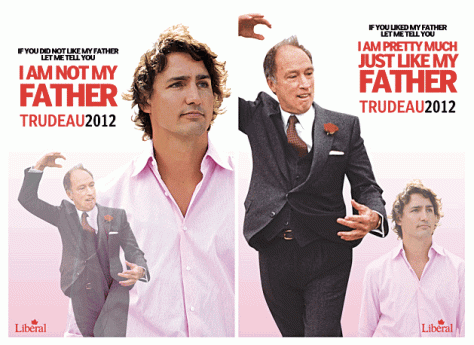
IN THE YEARS since the departure of Prime Minister Jean Chrétien, the Liberal Party of Canada has been trapped in a political Groundhog Day. Three times across a decade, the party has risen at what it expected to be the dawn of its charismatic leader. During the fall of 2003, for example, the word coronation was applied more thickly than the autumn leaves, the media consensus being that Paul Martin was beyond challenge. One after another, up came the saviours — and with equal and opposite force, down they went.

Read More

Republicans liked Todd Akin before they disliked him

HUMAN REPRODUCTION is nothing if not a fertile topic, and our fecund media have underscored the point in the current case of US Senate hopeful, Todd Akin. At issue is his recent musing on the improbable concurrence of rape and conception, but there are other curious branches and sub-branches to the Akin story which are instructive. As the elections and leadership conventions approach, let’s peer down the avenues opened up by this case of unfortunate phrasing.

Read More

Brazeau’s latest outburst shines a harsh light on the Senate

SENATOR PATRICK BRAZEAU was again in the news this week and, as is so often the case, for ignoble reasons. After a report emerged revealing that he holds the title for most-missed days of Senate business, Brazeau took to Twitter and called the reporter who had written the story, Jennifer Ditchburn, a bitch.

His outburst (for which he eventually apologized, while trying to explain that he had personal circumstances that prevented him from being present in the Senate) will likely re-open the never-quite-closed debate over the Senate and its legitimacy as a patronage plum. Brazeau’s career is a good illustration of the Biblical maxim “The race is not to the swift,” and his habitual partisan rowdiness on the Internet does make one wonder if the upper chamber retains any hope of the dignity which is — at least in principle — its chief recommendation.

With little more than a pretty face and a modelling CV, the university drop-out Patrick Brazeau threw himself into aboriginal politics, joining the Congress of Aboriginal Peoples, or “CAP,” just in time to inherit the position of President from the retiring Dwight Dorey. Brazeau well understood the art of political maneuvering. The Assembly of First Nations, under then National Chief Phil Fontaine, had by the mid-2000s cultivated a close working relationship with the federal Liberals. Paul Martin and Phil Fontaine, for example, were on especially good terms.

Brazeau shrewdly manipulated his niche of opportunity — the plentiful non-status, off-reserve aboriginals situated beyond the AFN’s mandate — and aggressively courted the federal Conservative Party of Canada. It was a shrewd move. Stephen Harper needed some aboriginal allies, and Brazeau needed funding and a political ally in Ottawa. Within three years, “National Chief” Brazeau (a title whose adoption turned the rival AFN leadership a lovely hue of purple) had the prospect of collecting a generous CAP salary concurrent with a Senate income.

Having absorbed the disappointing news that it was one or the other, Brazeau dispossessed himself of the weighty charge of national leadership and focused on moving on up to the East Block. Those of us who were around and paying attention will recall him cruising the nation’s capital in his Porsche SUV (purchased used, he pointed out) as local media reported some questionable CAP expenses, allegations of sexual harassment and, later, tardy child-support payments.

Brazeau has long been unpopular in Indian Country, where news of the sort summarized above travels swiftly. A more cautious fellow, having found himself in Brazeau’s blessed situation, would keep his head down, lest he risk his extraordinary good fortune. The Senator, however, never misses an opportunity to stir it up.

When his actions bring disrepute to an entire institution, as in this instance they have, a line is crossed. Patrick Brazeau owes an apology to his colleagues. He might also consider spending less time on Twitter (or, better yet, no time) and more on matters of substance. The Senate ought to be a place for grown-ups, and for debate, deliberation, and broad vision. Leave the antics to others, Mr. Brazeau.

Good fortune and Bob Rae weren’t always on the best of terms

FEDERAL LIBERAL LEADER Bob Rae’s citation of William Shakespeare was an indirect invocation also of a commonplace political euphemism — the putting aside of personal ambition “to spend more time with the family.” Announcing his decision yesterday not to run for permanent leadership, he produced the closing lines of Sonnet 25:

Read More

Ottawa mixes platitudes with parsimony for Canada’s veterans

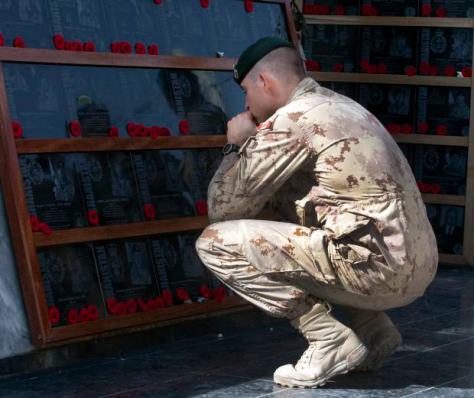
AT FIRST GLANCE the federal government’s proposed changes to the Department of National Defence’s soldier suicide prevention program is an offense against common human decency, and it doesn’t much inspire confidence that this news arrives from the Minister of National Defence, who has made headlines in recent months for indulging himself needlessly on the public dollar. The principle that Austerity Is Good For Everyone Else is a familiar hypocrisy, and on this foundation we now apprehend Parliamentarians such as Peter MacKay and Bev Oda.

Indulgence necessarily brings us to the question, Why are these under-performing lugs still warming their over-priced Centre Block seats? Why is a mediocrity and liability like MacKay able to preside over the affairs of veterans, praised by politicians when it’s a matter of expedience but otherwise under-valued, in this supposed time of cost-consciousness? Was Conservative MP Rob Anders representing the sentiments of his caucus when he fell asleep in a Halifax meeting with veterans? Perhaps Ottawa is no longer alive to the pulse of the nation anywhere. One thing is certain. To promote the interests of soldiers has been, in recent years, to know the indifference of the federal government. Speaking of Halifax: consider the five-year battle of Nova Scotian Dennis Manuge, which this week ended with a Federal Court of Canada ruling against the government’s claw-backs of SISIP long term disability benefits for disabled veterans. According to a May 2 press release of the Veterans Ombudsman, “all witnesses who appeared before us, with the exception of witnesses from the Department of National Defence, felt the reductions were indeed unfair.”

This business of nickel-and-diming those who have served in the armed forces is neither new nor restricted to Canada, but it rankles nonetheless. Mr. MacKay claims that “Canada has become a world leader in fighting the stigmatization and raising awareness of PTSD and other operational stress injuries,” but in the meanwhile his department has forced veterans to take legal action and has brought substantial grief to Canada’s Veterans Ombudsman Guy Parent, on issues ranging from denied claims for the Agent Orange ex gratia payment to decisions made by the Veterans Review and Appeal Board. Now, despite the Department of National Defence’s acknowledged priority of post-deployment PTSD treatment and suicide prevention, the politicians appear to be offering little more than vague platitudes and assurances of commitment.

It’s not only bad politics to deny services to disabled and distressed veterans, it’s bad policy. As bad policy, the government’s ill-considered parsimony undermines the relationship of trust and reciprocity between those who serve and those who are served. As bad politics, this instance of mealy-mouthing and short-changing makes the Harper Government look distant from, and unresponsive to, Canadians of every variety. But these are matters for Canadians themselves to weigh — and, Mr. Harper, you can be certain that they will.

How J.S. Woodsworth opposed the war and saved capitalism

J. S. Woodsworth

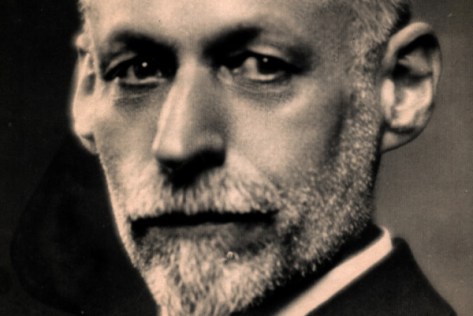
ONE MIGHT HAVE anticipated, with all the recent talk of conscience rights, that J.S. Woodsworth would soon enough become a hash tag. But not as the object of a slander. The man who once led the Co-operative Commonwealth Federation was nothing if not conscience driven. His lifelong, principled commitments to the Social Gospel, socialism and pacifism were amply rewarded — both by the Methodist church and the nation which he dutifully served — with accusations of sedition, criminal charges, harassment and imprisonment. Whatever one’s politics, one could do worse than to emulate the spine of this man.

Read More

What difference does it make what Michael Ignatieff says?

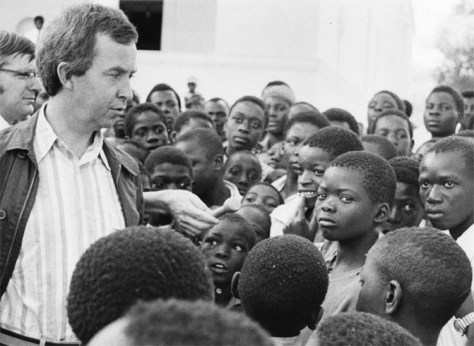
Michael Ignatieff

In his essay “Notes on Nationalism,” George Orwell observed that “if one harbours anywhere in one’s mind a nationalistic loyalty or hatred, certain facts, although in a sense known to be true, are inadmissible.” By his reckoning, nationalism is a matter of sentiment mixed with a desire for power and prestige; “swayed by partisan feelings … there is no limit to the follies that can be swallowed.”

There are several passages that Barbara Kay may have had in mind when she concluded, in her essay “Michael Ignatieff hands Quebec separatists an unexpected gift,” that “Professor Ignatieff has just cheerfully thrown us all under a bus for the pleasure of adding colour to an international interview. Orwell was right about intellectuals.” One concerns war propaganda that he noticed being spread about by academics. Observing the credulity of certain intellectuals, the author of Animal Farm and 1984 dryly observed that (I am citing this from memory) some notions are so absurd that only an educated person could believe them. There is also a passage, again from “Notes on Nationalism,” which comes to mind: “One has to belong to the intelligentsia to believe [these follies]: no ordinary man could be such a fool.”

It’s dangerous for any writer to quote Orwell, more dangerous to cite Notes on Nationalism, and most dangerous to cite Notes on Nationalism in an article about nationalism. I know what I’m talking about: I lived nearly a decade in Quebec, and in that time I absorbed the lesson that a rational, dispassionate discussion of separatism in Canada is a rarity. Orwell’s essay is saturated with the cautionary observation that in such matters “no unbiased outlook is possible” and that the best one can hope for is an “essentially moral effort” to struggle against our own loves and hatreds.

I labour this point because, having listened to the Ignatieff interview , I was surprised at how measured it was, when juxtaposed with the partisan reactions. It is objectively true that Canada, since 1980, has undergone political decentralization. It is furthermore objectively true that fiscal and monetary policies uniquely bind Quebec to the federation. Less certain are Ignatieff’s claims that the two solitudes have nothing to say to one another, and that Canada is on a path logically tending to separation, but what affront is there in considering these possibilities as possibilities?

Only the affront to sentiment, and the power-and-prestige contests with which readers of Orwell are well familiar, stand in the way. Accordingly, Heritage Minister James Moore attacked Ignatieff’s statements as “arrogant, irresponsible and narcissistic,” while NDP leader Thomas Mulcair noted his own opportunity to pander, accusing the Liberals of obstructing his party’s past efforts “to give real meaning” to the recognition of Quebec nationhood. (More note should have been taken of this loaded declaration.) The Quebec premier, stumbling in the polls, reassured federalists while invoking the destructive intentions of the PQ leader, Pauline Marois. Soon everyone had their partisan speaking points on the podium, each declaiming over the others. Could it really be that there are only two solitudes in this country?

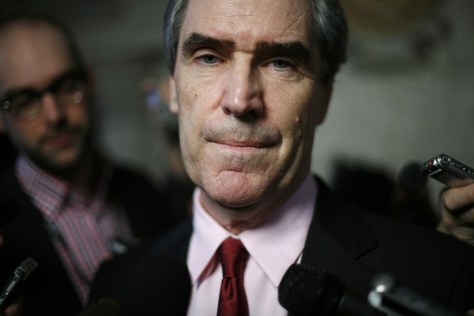
Kay’s central assertion that the former Liberal leader had “just handed [the] separatists a metaphorical bunker buster,” may have fallen short of the truth. By the time the sunlight had arrived to Canada’s shore, everyone was armed. The fury however overlooked the inadmissable fact that no one much cares what Mr. Ignatieff thinks and says. During the last federal campaign I had argued that this was a shame, and that the Liberal leader was himself largely responsible for it. Despite having thought a good deal about topics like war, foreign policy, nationalism, and terrorism — and despite having written numerous books on these and other topics — Michael Ignatieff dishonestly campaigned as if he were the down-home, plaid-and-ballcap type he most clearly is not. As a result, he bored everyone even more than he might have had he actually talked ideas. But for the purposes of nationalism, his not-so-outrageous speculations had to be dangerous and potent. The man who proved himself capable of sinking a political party had to be seen as capable of sinking a country also. This is a case of folly, the swallowing of which I don’t recommend. If Mr. Ignatieff possessed the power to direct the fate of a nation, he would not now be back at his other day job, leaving behind the also-rans of the Liberal Party of Canada.

Belhassen Trabelsi — a criminal, not a refugee

Belhassen Trabelsi

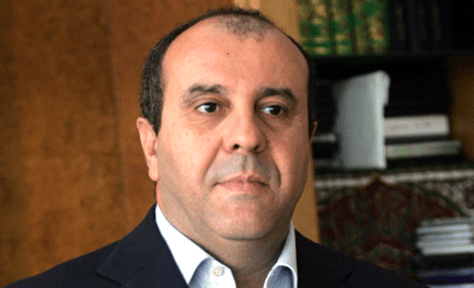
THE RIVALRY BETWEEN Alberta’s Wildrose and Progressive Conservative parties at several points alluded to another contest, of Canada and Saudi Arabia in the designation of the world’s premier crude-yielding nation. There’s however another contest underway, crude in a differing sense, and concerning the harbouring of Tunisia’s former oppressors and exploiters.

Read More

Wildrose adds to politics’ rich history of gaffedom

Joe Clark

The Alberta race, within view of the ribbon, is yielding the gaffes which invariably issue from the combined stresses of mental fatigue, excitement and desperation. In the gaffe genre, there are many sub-species of misspeaking. Each fresh entry into the canon tells us something distinct.

We begin with a politician of Albertan extraction. “What is the totality of your acreage?” former Prime Minister Joe Clark once asked, addressing an indigent farmer on a trip to India. Like Gerald Ford’s inept descent from an airplane, infamous thereafter as a recurring Chevy Chase gag, Clark’s pinheaded phrasing became a metonym for his perceived signature fault: an inability to connect with the common folk and to perceive the blowing of the political winds. Rather swiftly, Clark’s tin ear for politics brought him down. (In the case of Gerald Ford, one of the most nimbly athletic persons to occupy the White House, the perception of ineptitude was well off-the-mark: but in politics perception is everything.)

Moving further afield from Alberta, Kim Campbell submitted two gaffes under the rubric “Things Which Are Probably True But Should Not Be Said.” During her campaign, she asserted that the recession was likely to go on for some time (it did) and that elections were a lousy time to discuss the issues (quite arguably true, when you consider it).

In the gaffe category of “What I Meant To Say” falls the recent statement of Calgary-Greenwood aspirant, Ron Leech. In my estimation an unfairly labeled instance of bigotry, Leech’s claim that “As a Caucasian, I believe that I can speak to all the community” confirmed certain familiar stereotypes of Westerners. Seeking his office in Calgary-Greenway (a come-lately electoral district patched together from among three previous ridings, in a 2010 re-distribution), Leech meant to say that he can win in an ethnically diverse area. Having narrowly lost in his last attempt, this is precisely his current political challenge. A “white” candidate the political version of Type O blood? This is a whack of gaffe, but hate is not a part of the package. (An aside: the word candidate derives from the Latin term “shimmering white,” describing the bright toga put on by Roman campaigners. White candidate is thus a tautology.) A better argument would have been to observe that social conservatism is the ideological home of many immigrant populations, and that Leech is nothing if not a social conservative. Oh well.

Then there are the gaffes — the ones we most cherish — which are merely humorous. In this context I recall Bob Wenman’s professed allegiance to “Judo Christianity” (which brings to my mind the so-called muscular Christianity of Henry Fielding) and Allan Lamport’s assertion that Canada is the greatest nation in this country. Such comments are usually laughed off and forgotten, but they do risk exemplifying Mark Twain’s observation that “it is better to keep one’s mouth shut and be thought a fool than to open it and remove all doubt.”

An example here is Stockwell Day, who after an initial burst of extraordinary political promise seemed bent in both word and deed toward making a proper fool of himself. His pointless attack on Lorne Goddard eventually cost the Albertan taxpayers over $700,000, and along the way he made a specimen of himself in two water-related incidents, decrying that “jobs were flowing south just like the Niagara River” and appearing on Jet-Ski for a wet suit photo-op. At first merely comical, his miscalculations and fumblings eventually split the Alliance Party, leading to the ascendance of the current, and surprisingly gaffe-free, Prime Minister.

In the final category fall gaffes of a more serious nature, as my colleague Kelly McParland has observed. These gaffes bring forth questions which can be evaded or brushed aside for only so long, for the “mispeakings” here are cases neither of comical confusion nor of political tone-deafness, but of views likely held by candidates but dishonestly withdrawn or repudiated for a home-stretch tactical advantage. In these cynical instances, the gaffes are no matter for laughter.

The great achievement of the Charter

Canada's Charter of Rights and Freedoms

I neither have a horse in, nor would desire to enter one into, the race between Alberta’s Progressive Conservative candidate Alison Redford and her Wildrose rival Danielle Smith. My interests furthermore were of no concern in the American Senator Roy Blunt’s “conscience amendment” — appended to a transportation bill in response to President Barack Obama’s mandate to extend employer health coverage to contraception. In these and many other related developments around the world I am a mere observer, and so I might well say, and would prefer to say, “Best of luck to you” — and leave it at that. Unfortunately, this stuff is in the air. Wherever you happen to be, the winds are blowing in your direction. The principle of minding one’s own private business is now on a course of collision with the incipient work of fitting the square pegs of public policy into the round holes of private conscience.

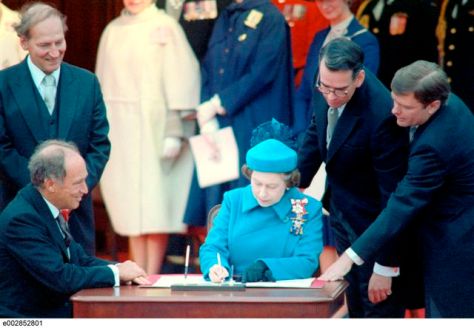
Thirty years ago Queen Elizabeth II authorized the Constitution Act, thereby entrenching the Canadian Charter of Rights and Freedoms. Whatever your view of the Charter, the work of sorting out intrinsically incompatible world views and notions of personal rights, and balancing these against the public interest, is the core challenge of our generation. Today this rights challenge arrives in multiple forms, from petitions for accommodation of Sharia to endorsement of gay marriage. Each challenge must be met individually, on its own merits or lack thereof. As the Wildrose candidacy of Edmonton South’s Allan Hunsperger this week drifts onto the media’s front pages, I am reminded (as if I needed a reminder) of the living notion that homosexuals will “suffer the rest of eternity in the lake of fire, hell, a place of eternal suffering.” A conscience of a definite kind may be inferred from this assertion, and while it’s light years from my own, in my view there must be peaceful co-habitation of the skin of this Earth by the differently thinking, whenever this is both principled and possible. Now that the Wildrose party is proposing to institute a conscience-based alternative to the Alberta Human Rights Commission, I find myself keen to know what folks like Allan Hunsperger — the avid compilers of lists of the hell-bound — mean to do with it.

The balancing of competing rights and interests will stand as the supreme object of policy deliberation, at least until the world’s ideology-driven moral police get the upper hand. Balance may seem the tepid object of soft-headed middle-of-the-roaders, but in fact it requires moral courage. In the case of President Obama’s contraception health coverage mandate, there was earlier this year a widely perceived over-reaching of state power and a concomitant infringement of religious rights, thereafter succeeded by a compromise. Obama’s conciliatory conscience exemptions, although imperfect, satisfied many — but not all. The few holdouts, one could argue, were simply adhering to their own internal logic: if you are of the conviction that contraception is immoral, how it is paid for is irrelevant. The necessary thing is to keep others from having it. Once engaged on this issue, the most vocal and obdurate opponents seemed hardly to care for a compromise. But the extremists as a rule fail, because they do not represent a credible way forward. The unpleasant truth, if you happen to be an anti-contraceptives Catholic bishop, is that lay Catholics have their consciences too — and that by means of these consciences they have found contraception to be quite compatible with morality.

The Charter of Rights and Freedoms is not a perfect document, but what in this human world is perfect? Present-day criticisms of the Charter, and of related institutions and legislation such as the Canadian Human Rights Act, demonstrate the necessary work of seeking reasonable and principled balance. Those who wish to discuss and critique and engage in heated disagreement uphold the very principles of human rights, dignity, and freedom. Those who seek to impose their views on others, by means of violence or subterfuge, uphold only their selfish will.

How gaudy baubles and military Keynesiasm gave birth to the F-35

Canada's F-35

A STRAIGHT-SHOOTING bureaucrat will admit that procurement processes are often initiated with the final selection a foregone conclusion. If you know in advance what you need, and you furthermore know who’s most qualified to deliver, then formalities intended to promote transparency and accountability are at best inconveniences to circumnavigate — and every public servant knows well how to steer that ship. That this occurs regularly within the bureaucracy is an open secret.

Read More

If Mulcair can’t hold the NDP’s gains, the merger whispers will begin

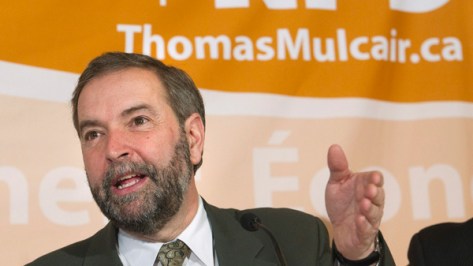
The rise of Thomas Mulcair brings Canada one step closer to a settling of its parliamentary landscape. This former Quebec Liberal, whose one-time boss was a former Progressive Conservative, will henceforth parry with the Liberal interim leader — a former NDPer — and the Conservative Prime Minister, previously of the Canadian Alliance, which not long ago went by the name of the Reform Party.

The preceding highlights the fluid, and in some cases opportunistic, character of recent Canadian politics. Mulcair’s candidacy invoked the familiar weighing of purity against pragmatism, a debate concerning whether one should advance the candidate who can win, rather than the candidate who is authentic. Given that the victor has among his assets deep-pocketed campaign contributors and experience in Quebec and a notoriously combative style, it appears pragmatism has won this time around. Refusing to cut a self-serving deal, Nathan Cullen has won the war of principle by foregoing what the author and politician Nicholas Flood Davin termed, in his 1876 satire The Fair Grit, the “buncombe struggle” — in which contestants “out-vie each other first in professions of purity, and then out-do each other, as far as it is possible, in acts of corruption.” Under Davin’s formulation, “In Opposition all is virtue; in power all the reverse.”

In a slightly modified form this principle, long familiar on the Social-Democrat left, demands of virtue and authenticity the rejection of compromise for the purpose of achieving political power. Considered from the perspective of expedience, however, Mulcair is impressive: a serial first-placer, he is chronologically second only to Phil Edmonston on the list of winning Quebec NDP candidates. (If one puts aside by-elections, Mulcair becomes the first NDP candidate to win a Quebec seat in a general federal election.) Regarding the second criterion, authenticity, there are skeptics and detractors. Judy Rebick asserts that “the NDP has elected an old-style patriarchal politician [who is] more of a liberal than a social democrat and who will move the party to the right, especially on international issues including free trade and Israel, two issues at the centre of Harper’s agenda.” As John Ivison notices, [“Thomas Mulcair’s challenge is to prove he is no political opportunist”] and Rebick discloses, Mulcair must now navigate a sea roughened not only by external challenges, but by internal rivalries and hostilities.

But let’s return to the theme of fluidity. I was in the East Block office of Senator Di Nino, and in the course of our conversation he produced a framed copy of the December 2003 voting card sealing the Progressive Conservative – Canadian Reform Conservative Alliance merger, signed by all involved. The Senator’s recollections made me mindful of how far, and in such short time, the Reform Party came from being an amateurish western grievance club (my wording, not his) to forming the Government of Canada. Along the way, the movement got a makeover — think Preston Manning — and learned to speak in a language comprehensible east of Winnipeg. In other words, another case of purity yielding somewhat to pragmatism, to the inevitable disappointment of some. Imagine where conservatives would be today, if their representation was parceled amongst two or three inter-warring parties.

Observers have been tempted to recommend a similar effort on the left, thereby forging a united opposition to the Conservatives. While there are no indications that a discussion along these lines has occurred, or even will occur, the NDP shall now be forced to divert precious resources into a fight with the Liberals for dominance. Bob Rae’s provincial record, brought fresh to the mind in recent attack ads, arguably makes him appear “more NDP” than the NDP. In any case, you must have noticed how similar is the diction of Mr. Rae to that of the Occupy movement, which is a tactical inconvenience if you are Mr. Mulcair. Should both remain long in leadership, there will hardly be an environmental niche sufficient to nourish them: something must give way. The New Democrats are well positioned to seize the Liberal party’s traditional ideological niche, just as they’ve occupied their traditional seats in Quebec. Mulcair’s chief problem is that the Liberal Party of Canada will soon sort out its internal affairs, and once it has done so it will be back to reclaim its lost territories. The party is too well-monied, too organized, and too much a feature of Canada’s political establishment to be kept down for long. In the short time he has, the NDP leader must apply his attention, not to defeating Harper, but to the long-term goal of holding recent and tenuous gains which the Grits are certain to contest.

If this turns out to be a draining and inconclusive battle, the topic of merger will arise. The ideologically pure will of course have none of it; nonetheless, there are reasons to suspect the years ahead will not be kind to these two parties. In his article, “A budget, a leadership race — and a nation split up the middle,” Andrew Coyne identifies the natural resource industry, demographics, and Quebec separatism as the three “fault lines” of current Canadian politics. Each of these three will doubtless present itself politically as a zero-sum prospect, posing winners against losers and fracturing the country more deeply along regional lines.

To get at the spoils, the parties have positioned themselves accordingly. An intriguing insight of Coyne’s piece is the unpredictable ways in which the politics of regionalism may intersect with the politics of resource extraction and demographics and fiscal federalism. As the loyal opposition, the NDP has an opportunity and a responsibility to take bold stands on these issues. Yet if Coyne is correct, the deepest fault lines are going to run straight through the NDP (and until recently, Liberal) territories. Quebec, for instance, has proven itself to be an especially fickle fair-weather friend. Looking ahead through Coyne’s lens, the political landscape is as fluid as it appears in the backward glance at the beginning of this essay. A sort of political climate change is underway. Interesting times are ahead, and one has to wonder if either the New Democrats or the Liberals are preparing.

Canada still lacks the political will to curb sexual abuse

SHORTLY AFTER the much discussed, and rightly much derided Graham James two-year sentence for sexual assault, I had a conversation with a journalist who is ghost writing the memoir of a sexual abuse survivor. Why, she asked me, do these abusers get such light sentences?

Continue …

The objective economic case against Granny and Gramps

In the days and weeks following Prime Minister Harper’s Davos speech, there’s been ample commentary, provoked by the following:

“As I said earlier, one of the backdrops for my concerns is Canada’s aging population. If not addressed promptly this has the capacity to undermine Canada’s economic position and, for that matter that of all western nations, well beyond the current economic crises. Immigration does help us address that and will even more so in the future. Our demographics also constitute a threat to the social programs and services that Canadians cherish. For this reason, we will be taking measures in the coming months. Not just to return to a balanced budget in the medium term, but also to ensure the sustainability of our social programs and fiscal position over the next generation. We have already taken steps to limit the growth of our health care spending over that period. We must do the same for our retirement income system.”

To some ears this prefigured a budgetary assault on grandma and grandpa, the spiteful Harperites ready to press every layabout 65 to 67- year-old into forced labour, for the greater good. Kevin Page, the parliamentary budget officer, was sufficiently stirred to report that It’s All Good, People. According to his math, the cost of Canada’s pension system will indeed rise, from the present 2.2% of GDP to 3.2% in 2036-37. Even further down the road, about seventy years ahead, costs will return to current levels. The reason, as any fool could guess, is purely demographic: there are today proportionally more old people — the baby boomers — than there are going to be in the next couple generations. Any balancing of this will probably have to be made up through immigration levels, birth rates being unlikely soon to change.

If you read Harper’s Davos speech, you’ll see it’s all there: the changing demographics, immigration, the need for reform. Even the fiscal soundness of the pension system is affirmed. The fortunate thing about demographics is that you can make decent predictions decades ahead. A big whack of young people today is a big whack of retirees in future. The Prime Minister has only said what demographers well know. Yet for some reason folks are bracing for the pension sky to fall, even though the Prime Minister acknowledges the fiscal soundness of the system and polls show overwhelming public resistance to OAS reform. Curiouser and curiouser.

Reading about this issue I was reminded of the first Canadian universal welfare program, the so-called “baby bonus.” Introduced after the Second World War, this modest monthly stipend was designed to encourage and assist anxious young families in the years following war and economic depression. I well recall my mother’s occasional references to this state allowance, when the topic of the family budget would come up. To be sure, that was a different time — but the baby bonus and the OAS are I think connected in several respects. Both are inherently matters of demographics, and both derive from the egalitarian logic of a previous era, the universality of social programs and benefits partaking of an “all in the same boat” ethic which itself followed logically from the collective sacrifices and efforts of the war.

After a generation, the seams of that wartime and depression ethic were giving way. One of the most vigorous attacks on universality, specifically in relation to senior benefits, was penned in the U.S. by the British journalist Henry Fairlie. In a 1988 New Republic piece called “Talkin’ ‘Bout My Generation,” Fairlie attacked the powerful retiree lobby and outlined the case for means testing and needs-based benefits. He was probably right to do so, the American entitlement system having uncoupled itself from fiscal logic. A similar discussion has yet to occur in Canada, for both fiscal and political reasons. Fortunately for Canadians, pension policy appears so far to have been informed less by the American-styled politics of interest group pressure and vote-seeking and more by objective economic analysis. That’s how it should stay.