Category Archives: World

Living in the Age of The Endless War

ON A WALL at the National Capital’s War Monument are inscribed these words, past which I walk each day and derived from the ninth book of Virgil’s Aeneid: “nulla dies umquam memori vos eximet aevo.” Here I shall provide some context, deferring to Robert Fitzgerald’s 1983 translation for Random House:

Fortunate, both! If in the least my songs
Avail, no future day will ever take you
Out of the record of remembering Time,
While children of Aeneas make their home
Around the Capitol’s unshaken rock,
And still the Roman Father governs all.

Read More

As Tibet Burns

I‘LL WAGER that you weren’t informed of it by the media, but it happens that yesterday was the Global Day of Action undertaken by the International Campaign for Tibet. I was on Parliament Hill in Ottawa when a large crowd assembled and marched down Elgin Street in a desperate effort to raise awareness here in Canada of China’s official policy of slow-motion genocide.

Read More

Gaddafi: The Last of the Longest Rule

showimage_x1x.jpg_1718483346

IF YOU are at or under the age of forty-two, Moammar Gaddafi has presided over Libya the full span of your life. This factoid must certainly describe the majority of Libyans, most of whom have never known of life under another dispensation, let alone had the opportunity to choose something or even just someone different. Now that is about to change.

Read More

Linda Sobeh Ali and the Mediocrity of Palestinian Leadership

IT HAPPENS that I today regard the sudden retraction from Canadian soil of Linda Sobeh Ali, the Palestinian chargé d’affaires, as someone who has spent a number of years working in communications and public relations. In my profession — which has among other things interpolated me between and among differing cultures — I’ve had to pay due attention to protocol. I like to think I’m reasonably good at this delicate work and that I can smell from a distance those who are not. And at this moment I rather detect the aroma of amateurism on the air.

Read More

Palestinian Statehood: a plague on your houses

AT SOME point, without the help either of the nudge or the wink, I’ll wager you have grasped through one commonplace observation the cynical and fraudulent character of the more crude manifestations of American nationalism. Well, are you in? Good. The observation to which I refer is the Chinese manufacture of so many American flags.

Read More

How Different are Anna Hazare and Mohandas Gandhi?

IN RECENT days, critics of the so-called anti-corruption activist and Lokpal Bill agitator, Anna Hazare, have contested the notion that a Gandhi-like leader today walks among us. A National Post article, “Gandhian lookalike good for the messiah business, bad for democracy,” summarizes the efforts to refute the analogy. The question arises however: is Hazare really that different from the man with whom he so eagerly connects himself?

READ MORE

Anders Behring Breivik: when an enemy of your enemy is your enemy

ONE MIGHT hope a journalist working for a media outlet under the “Christian Science Monitor” brand would gloss the Knight’s Templar, but in this case the hope would be misplaced:

[Anders Behring Breivik’s] manifesto says he is among 12 “knights” fighting within a dozen regions in Europe and the US, but not India. It’s not known yet whether this group, which he calls the Knights Templar Europe, actually exists.

Continue reading Anders Behring Breivik: when an enemy of your enemy is your enemy

Gaddafi: The Last Of The Longest Rule

Gadaffi

If you are at or under the age of forty-two, Moammar Gaddafi has presided over Libya the full span of your life. This factoid must certainly describe the majority of Libyans, most of whom have never known of life under another dispensation, let alone had the opportunity to chose something or even just someone different.

Continue reading Gaddafi: The Last Of The Longest Rule

An Unwelcome Birthday Gift For Kim Jong Il


It seems to me that Kim Jong Il’s birthday is a good day to reflect upon the fact that the regimes of North Korea and China are this world’s most depraved and dangerous abominations. The former constitutes “the world’s greatest ongoing atrocity,” and the latter, which appears to compete for that honour, has an ever-growing sphere of influence reflecting its ambition to become the leading world power. So the question ought to be asked, What do you suppose are the prospects if the “international community” continues to shrink from the firmness of commitment that these times require? Before you answer, consider the following.

Continue reading An Unwelcome Birthday Gift For Kim Jong Il

The Tunis Commitment, The Commitment to Tunisia


When it was announced last week that the entry of Zine al-Abidine Ben Ali and his horrible in-laws would be denied by Tunisia’s former colonial protector, I was about to depart from my usual course and say something kind of the French government. Then I learned that Jean-Claude Duvalier was back in Haiti, and the disgusting dictator-coddling aspect of the French establishment was once again at the front of my thoughts. A great deal of guilt-based French shilly-shallying preceded the eventual taking of a definite position (i.e. not to snuggle up to the expelled President), a fact France’s Foreign Minister, Michelle Alliot-Marie, appeared to be glossing when she said that “the constant principles of our foreign policy are non-interference, support for democracy and freedom and the implementation of the rule of law.” Continue reading The Tunis Commitment, The Commitment to Tunisia

The Killing of Salman Taseer

It may be that the most eloquent words I can summon, in the wake of businessman and Punjab, Pakistan Governor Salman Taseer’s assassination, are these: “the death was received with shock in India.” Here I am quoting a Times of India article which is accurately headlined, “Taseer’s killing a warning to Pak’s liberal politicians.” It has been, or should I say, ought to have been, received with shock anywhere that people care about the advancement of good governance and peaceful coexistence, not only in Pakistan but all across our fractured and bloodied world. Continue reading The Killing of Salman Taseer

The Diminishing Marginal Utility of Torture


Across the past few days and in deliberation of the Guantanamo Bay trials we have, all of us, had ample opportunity to note the ideological, intellectual, and moral deficiencies of our opponents. Omar Khadr confesses in a military commission to his crimes, the case against Ahmed Ghailani unfolds in civilian court, and there arrives fresh news of terrorism originating in Yemen. Justice is done, or is undone, depending upon one’s perspective. What we perhaps fail adequately to clutch is that we are all of us in this together. I say this quite without sentiment, my point being only that an explosive device is indifferent to the bend of your politics. If that is not a compelling cause for solidarity, then it happens that nothing is.

Then there is the personal. Here is one example: the cargo planes destined for the United States and for a destruction prevented this past weekend were meant to have exploded in the coming days over Chicago. As it happens, I will myself be flying to Chicago this week. I know this is a facile pairing, but can you honestly say a thought such as this would never have crossed your mind, were you in the same position? Nor is this the first time I’ve had occasion to draw such an inference. From a statistical view of things, any one of us has little to fear — but you are quite probably on the list, comrade. Your kind is marked, by the Takbīr shouting killers, for destruction. If you are not on the list, it is because you are one of the murderers, in which case I will be happy to see your wish for martyrdom fulfilled in the least ceremonious and individual manner possible. That is, without harm to others and with the pointlessness of it all laid bare. Continue reading The Diminishing Marginal Utility of Torture

Good Things, Bad Things, and the Ayodhya Dispute

WHEN KARAN JOHAR’S excellent film, My Name Is Khan, was released worldwide this past January, the Hindu right-wing nationalist group Shiv Sena attempted a disgraceful and ultimately failed boycott. At the centre of this meddling was the film’s lead actor and owner of the Kolkata Knight Riders, Shahrukh Khan, who had recently said “Mumbai belongs to all Indians” and had supported the inclusion of Pakistani cricketers on the eight teams of the Indian Premier League. Due however to the IPL’s fears that Visas would be denied following the 2008 Mumbai terrorist attacks (the work of SIMI and Lashkar-e-Toiba, who today jointly operate as Indian Mujahideen), no Pakistani cricket players were chosen. Continue reading Good Things, Bad Things, and the Ayodhya Dispute

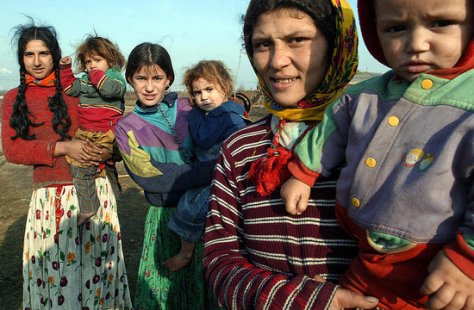
Roma and the Debts of History

I HAD JUST been to France when les émeutes de banlieues, in the Fall of 2005, rendered it impossible to ignore what some would characterize a failure of integration, and others a failure to keep out the undesirables. The May 2007 assumption of President Nicolas Sarkozy, whose father had for decades been a “stateless person,” having left Hungary under the advisement of his mother to escape military service, formalized the ascendance of the “keep out the undesirables” side of the argument and prepared the way for fresh campaigns against the Travellers, Gypsies, and Romani.

The “riots in the suburbs,” as the phrase above may be translated, were a shock and a difficult-to-absorb contrast to the pre-rentrée Paris still vivid in my memory. Characterized as an uprising of Muslim youth, which is not entirely accurate, the violence was an indication of longstanding (which is to say pre-9/11) issues. In the case of the Romani, recent sweeps and deportations recall the time of Louis XII and events of one-half a millennium ago.

The 2010 expulsions, unconvincingly claimed by the French Government to be voluntary (“if you please” being for the Romani a quite unprecedented way of putting these things), are the endgame of twenty-two year-old Luigi Duquenet’s death by police bullet. French officials claim the Roma man impacted a gendarme while driving through a checkpoint, adding that he was suspected also of committing burglary. President Sarkozy’s reaction to this incident has been, in the words of Amnesty International’s David Diaz-Joeix, “to target the Roma and Travellers in general and to perpetuate the negative stereotypes of which they are victim.” Some words, concerning both the Roma and the substance of this matter of the victim, are in order.

Almost immediately following their fifteenth-century arrival to Europe and the Iberian peninsula, the Romani —  inferred by the English to be of Egyptian derivation, hence the Gypsy misnomer — were regarded sinister outsiders and subjected to slavery, forced labour, and ethnic cleansing. Perhaps the most succinct way to make the point is to recall England’s 1530 Egyptians Act, crafted (unsuccessfully as it happens) to expel the “outlandish people calling themselves Egyptians” and to counteract their “devlish and naughty practices and devices” by subjecting them to a death penalty added in a 1554 amendment. The term for these anti-Roma attitudes is “antiziganism,” which in Nazi Germany took the literal form of a Zigeunerfrage, or “Gypsy Question,” settled in 1936 along the unambiguous lines of the Final Solution.

The result was a wartime Romani and Sinti genocide today generally known by the term Porajmos (or baro xaimos, Great Devouring). The killing of Romani though widespread was especially vicious in Germany, Romania, and the Baltics. Worst of all however was the hateful bloodthirst of Nazi Germany’s proxy regime, the Croatian Ustasha. With the support and cheering of the Vatican, Croatian fascists murdered at Jasenovac an estimated 20,000-50,000 Roma and Sinti, the gold stolen from their teeth eventually being used to fund Nazi post-war flights from justice and the remainder to this day sitting in the Vatican Bank. (For this reason one gags on the rich pontification directed by Rome at the Sarkozy government.)

If this sounds familiar, it will then come as no surprise to you that long before the Second World War the Romani had been blamed for the plague, and that more recently they had been formally denied entry into several of the world’s nations (among them the United States) and into the remainder admitted only to be consigned to the margins and called upon as scapegoats in times of crisis. In 2008, the Italian government declared an Emergenza Nomadi following a murder in Rome, establishing a segregated camp at Castel di Decima, south of the city. The same old same old, and certain to do nothing beyond perhaps scratch a scabby itch at an opportune moment in the election cycle.

In 2007 the controversial and much-beleagured Romanian President Traian Basescu apologized for his country’s role in the Porajmos, having apologized only five months earlier for calling journalist Andreea Pana a stinking Gypsy during an encounter in a Bucharest supermarket, recorded by Pana and broadcast on Romanian television. I’m not able to characterize the relationship of these two events, but it does seem to me that Romania has at least taken some steps in the right direction. Anywhere one today finds the Romani, the words below (from an April 2010 Amnesty International publication “Stop Forced Evictions of Roma in Europe”) will apply:

EU leaders must adopt a concrete plan of action to address the human rights abuses faced by Romani communities. They must speak up against racist attacks and hate speech and provide concrete measures to end discrimination in access to housing, education, health and employment.

In 2009 Turkey’s Prime Minister Rejeb Erdogan acknowledged, in a non-specific manner, that “many things were done in this country for years. People from different ethnic backgrounds were expelled. This was the result of a fascist approach.” There is at present no reason to conclude this sort of thing will not continue for another half-millenium. France is only one of many countries today employing history’s discredited policies in service of history’s ugliest features. The Roma, Sinti, Kale, Romanichal, and other related peoples are very well overdue for formal recognition of their suffering, practical acknowledgement of their human rights, and forward-looking government initiatives which depart from the bankrupt conventions of scapegoating and race hatred.

Follow me on Twitter