What I’ve learned by looking at trees

Tree

HAVE YOU EVER WONDERED, as I did recently, what determines the seemingly random pattern of tree branches?

A case of “every which way,” it appears. One branch projects confidently toward the sky—another launches tentatively in one direction, suddenly adopting a new trajectory.

A life is the same.

I know this, because I can see my own life in these branches. That little ragged outgrowth that goes nowhere? That’s a girl I dated in high school. The long, straight branch which stops suddenly? An office job I once had. The fat branch with many small off-shoots? My writing career. The trunk? That represents my upbringing: the formative experiences which established my values, outlook, and dreams.

To this day, my trunk is nourishing the new branches which sprout in my life.

I noticed that there are a lot of dead-ends on a tree: but look at those branches, and you’ll see many outgrowths. Again, I think of the times I’ve come to the end of a path. Maybe it was a goal I didn’t reach, or a job I didn’t get.

When you’re standing at the end of a path you thought and hoped would go farther, you only see  losses and failures—the job you didn’t get, the money you won’t make, and the things you won’t be able to do and have because you won’t get that paycheque.

Looking back, you can see that those endings are in fact launching points, like new shoots from a branch. My first business, which I created in high school, was the result of having the doors to gainful employment shut in my face. Within a month, I had more business than I could manage. I made more money and was far happier than I would have been in a job, but I felt depressed and defeated all the same when my plan to be hired by someone else didn’t work out.

What I learned by looking at trees is that you can reverse engineer the process, applying it to your future. You can look forward as well as back. Today I see “dead-ends” and “failures” as intrinsic to the organic process of creating a path of your own.

A tree is the sum total of its experiments in reaching the light, and rarely (if ever) is this effort a straight line from vision to reality. We humans, however, seem to be addicted to the idea that life works (or at least should work) as follows:

Aspirations ———> A Well-Laid Plan ———> Goal Achieved!

I know this kind of thinking has often been applied by me. Many times, I’ve been disappointed and discouraged because I haven’t been able to draw, and then pursue, a straight line from Point A to Point B. Even when I’ve “known” life is more complicated than that, I’ve acted as if it weren’t.

The prime directive of a tree is to reach the life-giving light. All that apparently crazy, here-there-and-everywhere is in service of the tree’s need for sun. And that’s why I’ve changed my thinking, as well as my way of creating a path.

You see, the tree is on to something—and I think I know what it is.

I’m not talking about creating 10 new businesses or launching 50 new projects. I’m not suggesting you should run, willy-nilly, in every direction. That’s certainly not what I do. Instead, I focus on activating as many potential trajectories in my life as I can, by nourishing relationships in my life and business. Just as the prime directive of a tree is to reach the life-giving light, my prime directive is to nurture my community, every day.

The second thing I do is to introduce as much variety into my life as I can. I take long showers. I go for walks in the woods. I meet with, and talk to, as many interesting people as I can. When I really need to be productive, I get away from my desk.

Because here is the worst way I’ve found to be productive:

Sit at Computer ———> Work Eight Hours ———> Get Results

And yet that’s still how we see work, as a linear process.

The fact is that we are addicted to straight lines and old ways of doing things. I know how hard it is to let go. I’ve made painful adjustments. I used to believe in things like:

Go to School ———> Get An Education ———> Work Hard ———> Succeed

or

Get an Agent ———> Find a Publisher ———> Write Books ———> Make Money

or

Get Hired by a Newspaper ———> File Stories ———> Get Paid ———> Retire

None of these things have worked out as advertised. I’ve only been miserable and unfulfilled pursuing them. It took a painful adjustment, and months of study and effort, to let go of the old ways of thinking. And that was after years of emotional work, gradually getting to the place where I could admit that what I was doing wasn’t working—and would never work.

Going in a new direction is hard. You may have a decade invested in that branch of yours. It may be the favourite branch on your tree. Maybe it’s the only branch. You probably imagined it soaring one day above the canopy, into the full and glorious life-affirming sun of a new day. But what if it doesn’t?

If you build your life on the principle of abundance, each day nurturing a wide network of relationships, being open to many possibilities—sending out many branches—you’ll never have this problem. You’ll soon realize that your life is, like a tree, the sum total of its trajectories, explorations, and so-called “dead-ends.”

A tree, like a life, is nothing less than the sum of its experiments.
94ways: how we will ensure the TRC report is not the RCAP report

 RCAP

A COUPLE WEEKS AGO, Zoe Todd posted a YouTube video inviting people to read from the Truth and Reconciliation Commission of Canada’s 388-page executive summary. The video was conceived by Erica Violet Lee and co-organized by Zoe Todd and Joseph Murdoch-Flowers, and its inspiration came from Chelsea Vowel’s blog post “Reaction to the TRC: Not all opinions are equal or valid.” Ever good one, that.

You can read a CBC article about this project here.

As a result of these amazing folks, people are now posting their readings of the TRC summary on YouTube.

Chelsea’s post, which I recommend, was itself a response to Conrad Black’s National Post article “Canada’s treatment of aboriginals was shameful, but it was not genocide.”

Black took up a Utilitarian argument, heavily inflected by 19th-century tropes and by the White Man’s Burden—arguing that European civilization was such a gift to the natives that there’s no way you could call what Canada attempted genocide, even if you preface it with the qualifier cultural.

His point-of-view, that aboriginal people should be thankful for the gifts of human civilization, has a vocal following. Maybe not a majority following, but likely a sizeable minority. And since it’s a common enough position, it should be aired and not just dwell in the dirty cracks of CBC’s comment section.

I love a heated debate, and I’d be happy to undertake one in my (limited) spare time. But, OK, I’m coming down now from the soapbox. Lord Black is not the point of this post!

That National Post article has indirectly inspired a YouTube campaign, in which ordinary people—i.e. people who are not referred to in public as “Lord Such & Such”—are reading the very report that Black dismisses—without having read it! Seems to me like a decent turn.

But I had another idea, too. That’s the real reason I have written this post—to tell you about my idea.

It’s called 94ways. I’m not 100% settled on this name, but it’s the best I’ve come up with so far, in my opinion.

The idea is to create a website and the related social media where people can post simple, practical, actionable ideas related to each of the 94 recommendations of the TRC’s document Calls to Action. It could be an idea they are planning to do, or one they’ve already done. We could all brainstorm. We could trade experiences and stories. We could bring the report to life.

Nowadays you can even do things like organize a Meetup or host a Webinar. All of this could be part of the 94ways.com or 94campaign.com or 94toRestore.com or whatever it ends up being called.

All of this and more. The only limits are imagination, human will, and courage.

One final thought

Years ago I had a conversation with Georges Erasmus about RCAP—the Royal Commission on Aboriginal Peoples. (Actually, we had a lot of conversations over the years about RCAP!)

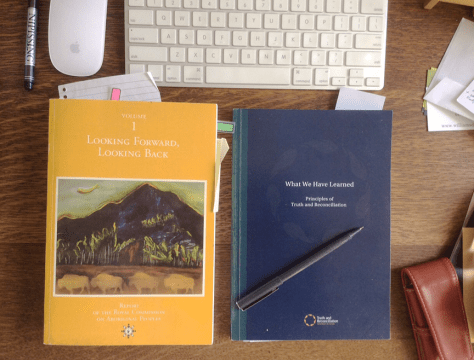
Georges was reflecting on the 1996 final report. It had just come out, and he was looking forward to a holiday, after his intense traveling and media work around that extraordinary and unprecedented five-volume, 4,000-page work.

You see, he went straight from being National Chief of the AFN to being co-chair of the Royal Commission. Every time the man tried to take a holiday, someone would arm-twist him into another job. In fact, that’s what happened after RCAP. Phil Fontaine called and said, “Georges, you’ve got to come help create this Aboriginal Healing Foundation. If we don’t do it by April 1st, we’ll lose the $350 million.”

Georges said, “I’m not looking for a job, Phil!” But it was futile.

He spent the next 14 years at the AHF, and even today he is hard-at-work, building up a nation run by the Dene, for the Dene.

Anyway, what Georges told me was that, just as the report was to be distributed, the feds pulled the funding. As a result, RCAP lacked the resources it needed to properly and effectively get the report into the hands of Canadians.

Remember, this is before YouTube and Twitter and Facebook. It would be years before the technology existed to put RCAP on the Internet, and even more years before anyone did. (You can now find it here.) So back then, if you didn’t have an actual printed copy, you were pretty much out of luck.

And most of us did not have printed copies.

RCAP’s final report became a cliché: you know, the report that collects dust sitting on a shelf. Only I doubt it even did sit on a shelf in more than a couple Parliamentary offices. There were some great efforts to get the word out, for example by reading the entire report, page-by-page, on the radio.

A few lucky people (like me) managed to get the report on CD, but back then the technology was so primitive that they may as well not have bothered. It was designed for installation on a server running Windows NT, because back then a five-volume report was basically an unimaginably huge amount of data—certainly not something you’d pop into your lousy desktop.

I never did get that darn RCAP CD-ROM to work!

I’m sure the feds were happy to have a report no one could access. Because that meant no one could challenge the government to do something.

Well, it’s now 2015, and the people can do all sort of things. It will be 100% impossible for Mr. Harper and his kind to bury the TRC report, the way RCAP was buried, although they will try as best they can.

And they will fail.

Contact me if you think 94ways is a good idea.


Update (06/25): I have registered the domain 94ways.com and am gradually building the site. You can now visit and have a look around. The next step is to create the social media accounts. I hope to have this done in the coming days. Please share your comments, ideas, suggestions or other content here, or at 94ways.com. Thanks!

Education is the key to reconciliation

100 Years of Loss

BRITISH COLUMBIA’S Education Minister, Peter Fassbender, announced late last week that the province will introduce a new education curriculum on Aboriginal cultures and history this autumn.

Education was a focus of the Truth and Reconciliation Commission of Canada’s 94 recommendations. (Download the TRC’s “Calls to Action” document here.)

Here’s an excerpt from the TRC’s education-specific recommendations:

Education for reconciliation

62. We call upon the federal, provincial, and territorial governments, in consultation and collaboration with Survivors, Aboriginal peoples, and educators, to:

i. Make age-appropriate curriculum on residential schools, Treaties, and Aboriginal peoples’ historical and contemporary contributions to Canada a mandatory education requirement for Kindergarten to Grade Twelve students.

ii. Provide the necessary funding to post-secondary institutions to educate teachers on how to integrate Indigenous knowledge and teaching methods into classrooms.

iii. Provide the necessary funding to Aboriginal schools to utilize Indigenous knowledge and teaching methods in classrooms.

iv. Establish senior-level positions in government at the assistant deputy minister level or higher dedicated to Aboriginal content in education.

63. We call upon the Council of Ministers of Education, Canada to maintain an annual commitment to Aboriginal education issues, including:

i. Developing and implementing Kindergarten to Grade Twelve curriculum and learning resources on Aboriginal peoples in Canadian history, and the history and legacy of residential schools.

ii. Sharing information and best practices on teaching curriculum related to residential schools and Aboriginal history.

iii. Building student capacity for intercultural understanding, empathy, and mutual respect.

iv. Identifying teacher-training needs relating to the above.

There are many more education recommendations in Calls to Action. Murray Sinclair, Chair of the TRC, has said that “Education is the key to reconciliation.”

It makes sense for him to say this. The residential school system was an education system of a sort. It didn’t provide much at all by way of skills or learning. Mostly, it was a child labor system.

Always poorly-funded, the residential schools depended upon the output of child workers. Relatively little teaching and learning took place, especially until the 1950s, when reforms gradually were introduced.

The point is that the present-day education system can help to redress what was done by an education system of the past.

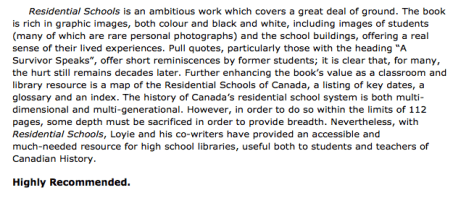
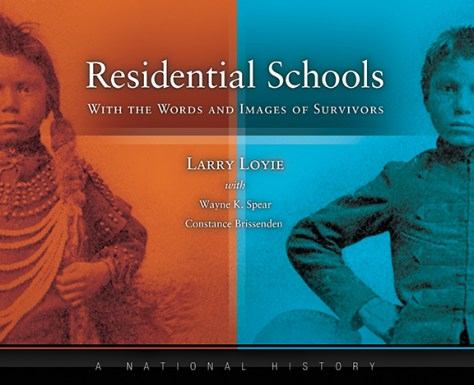
For this reason, I’ve been working for years on residential school curriculum. One of the projects with which I’ve been involved—”100 Year of Loss”—is already in use in two Canadian school systems, Nunavut and Northwest Territories.

Next month, I’ll start work on an exciting new curriculum project which I will say more about when the time arrives.

In the meantime, I commend British Columbia. And I look forward to more school systems responding to the TRC’s recommendation to “make age-appropriate curriculum on residential schools, Treaties, and Aboriginal peoples’ historical and contemporary contributions to Canada a mandatory education requirement for Kindergarten to Grade Twelve students,” in “consultation and collaboration with Survivors, Aboriginal peoples, and educators.”

When a business changes your life

SupperSolved

I RECEIVED SAD news this week that a neighbourhood business, SupperSolved, will be closing after eight years of operation.

I only found out about this service months ago, and have only been using it since March. And, yet, it’s become an integral part of my daily life.

SupperSolved is one of the most well-thought-out businesses I’ve come across. You can tell attention has been paid to every detail, and to the overall experience of the customer.

The idea is simple, but brilliant. For a reasonable cost (a month’s worth of entrées costs me $360) you get access to a beautiful, clean work space and all the ingredients you need to make meals. Everything is pre-cut and arranged when you arrive. It’s like having your own sous chef. All you do is follow the recipes and assemble the meals, placing them into the provided foil trays. Then you take the trays home and freeze them. It takes an hour-and-a-half for my son and I to assemble a full month’s worth of meals.

He enjoys preparing the dishes, as do I. I think that learning to cook is such an important life skill that I take him out of school to do this. And I enjoy having with me. The staff also tell me they love seeing father and son working side-by-side, cooking their family meals. Everyone is sad that, at the end of this month, this will all come to an end.

It’s such a great business model that I would buy it if I had the time and energy to run another business. I’m told the owners are looking for another space. The issue is condos. All around the area of Toronto where I live, land owners are selling their properties to developers. Businesses are being driven out. And I get it: we need places to live at least as much as we need shops. I’m not among Toronto’s many high-rise haters. I think population density is the only way we can go. We have to build up, and there;s limited real estate on which to do it.

Still, I’m sad to see this business go. I’m also inspired by it. As someone who helps clients build powerhouse businesses, I’m forever on the lookout for good models and success stories. SupperSolved was one. The staff were friendly and helpful. The cost was reasonable. The space was big, bright, clean, organized and pleasant. The level of organization and attention to detail was extraordinary. SupperSolved took all the stress out of meal planning. Having found them, I was liberated from the awful daily chore of taking time from my busy working day to think about dinner—and then to shop, clean, prep, and serve. And clean again.

I dread going back to the stressful, inefficient, costly and irksome daily routine I had before. The fact is I’ve experienced liberation. And because of that, I don’t think I can go back. When you come into contact with a brilliant idea—and, more important, a brilliant system—”going back” isn’t an option.

The experience has given me insight into what I want in my own work. I want to have just this effect on my clients. I want my business to be a comprehensive, well-thought-out system that changes the lives of people who use it for the better. I want to make a practical difference, the way that SupperSolved has made a practical, pleasant, liberating difference in my life. And I want them not to go away, but that’s another matter.

Thinking outside the laundry bin

Laundromat

CC photo “Down at Every Laundromat in Town” courtesy of hjhipster on Flickr


THERE’S A coin-operated laundry room in the building where I live. Each load, washer and dryer, is $1.75. That’s $3.50 for a full, wash-and-dry cycle. The machine-mounted coin collector has one slot for loonies (that’s a one-dollar-coin, for you non-Canadians) and one slot for quarters.

Yes, it sounds like the beginning of a math quiz. But in reality this a tale about human psychology.

For three years, I’ve been buying rolls of quarters and loonies from the bank to feed the laundry machines. Because there is a slot for both loonies and quarters, I enter my $1.75 in the form of one looney and three quarters. I’ve done it this way every time, for three years.

The coin tray is regularly raided for soft drinks, bus fare, coffee, and other items. Every day pockets are emptied, and coins are deposited in the tray. Eventually either the looney or quarter supply is depleted. The dollar coins are typically the first to go, leaving behind a bunch of quarters.

That’s what happened recently. So I go to the nearby convenience store to rebalance the quarter-looney ratio, because it’s one looney and three quarters to do a load of laundry. And all I have is a tray of measly quarters.

Have you spotted the fallacy I’ve been under for three years? It’s obvious once someone points it out to you, as it was pointed out to me this week.

It’s not one looney and three quarters to do laundry, it’s $1.75.

One of my family members came up with the idea. What if we just took the quarters and put 7 of them into the machine? The answer, of course, is that you get to do a load of laundry. No loonies required.

It’s remarkable to me that a household of highly-educated people could have missed this for so long. Talk about the obvious. And yet a machine with one slot for quarters and one for loonies has a subliminal ambiguity built into it. Is this a system which provides options, or is it delineating the requirements? Sub-consciouly we had decided upon the latter: there’s a slot for loonies and quarters because 1+3 is the inviolable rule.

It got me wondering about how many versions of this I’m living in my life, right now. Where else am I unnecessarily putting loonies and quarters into slots, metaphorically speaking? What else am I doing uncritically, mechanically, unconsciously? How many insights, breakthroughs, leaps, mind expansions, and personal liberations could I be effecting?

The lesson I’ve drawn is that opportunity is all around. What is required is a mindset that is ever-vigilant, always on the lookout for a new and better way: a mental attitude that says “don’t limit yourself by tacitly accepting things as they are.” There is always another way, if you go looking for it.

eBook Download: Reconciliation & the Way Forward

Reconciliation and the Way Forward

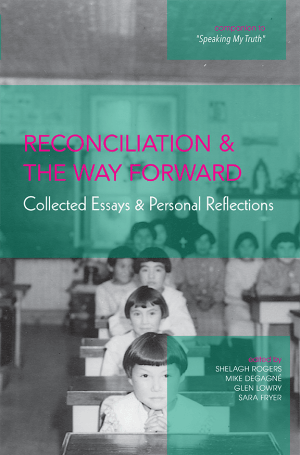
LAST WEEK in Ottawa I had the pleasure of launching the book Reconciliation & the Way Forward with my friends Shelagh Rogers, Glen Lowry, Sara Fryer and Mike DeGagné. I contributed an essay (“Time to Get Our Indian Act Together for First Nations Students”) that was previously published at the National Post. Click on the image above to download a 4.2Mb PDF version of the book.

Looking back on this week’s Truth and Reconciliation final event

The Delta Hotel

It’s a sunny Tuesday in Ottawa, and I’m having shawarma with my son on Bank Street. We are the only customers this late in the afternoon. On the TV there’s a live broadcast from the nearby Delta Hotel, where I too had been only minutes ago. Earlier in the day, the Truth and Reconciliation Commission of Canada released its report “What We Have Learned: Principles of Truth and Reconciliation.” As I eat my shawarma I try to imagine all the restaurants, all the bars and lobbies and lounges across Canada, and elsewhere, that this broadcast is reaching.

It’s difficult to summarize how I feel.

It’s earlier in the week and I am tucked into a corner of the second-floor balcony, looking into the Delta foyer. There are people everywhere. It smells of burning sage and the grilled chicken from the restaurant below. Voices combine to an indecipherable roar that resembles crashing water. The noise is punctuated by the sounds of forks surrendered to exhausted plates, of drumming, of abrupt laughter. A drum group whose members include Wab Kinew plays a song, and right above the drummers, on the same second-floor balcony to which I’ve escaped, the Primate of the Anglican Church of Canada taps his foot.

My senses are numbed. It’s relieving, and also a bit strange, to realize that I can walk two blocks in any direction and find myself in the sleepy day-to-day of downtown Ottawa.

I see many familiar faces. I’ve been at this long enough now that I catch myself reminiscing about the old days. The people I talk to agree: it was different then.

Twenty years ago the pain of Indian residential schools was raw. It tore through the rooms where we gathered. Anger and hurt so fresh, so intense, it was frightening to behold. I’ve lost count of the gatherings of residential school survivors I’ve attended—some well over a decade before there was a TRC—but the emotions are something you can never forget. I knew more than a few senior bureaucrats who didn’t mind admitting they were terrified, half-convinced they wouldn’t get out unscathed.

All these years later, there are survivors of terrible abuse who are telling their story for the first time. The familiar anger, and the hurt, remain. But the mood at this week’s final event is not what is used to be at gatherings of this sort. We aboriginal people are stronger than we were. We are no longer so filled with shame and self-loathing that we are unable to talk about what happened in those institutions. Survivors know that it wasn’t their fault, and one by one they are letting go of the destructive emotions which have held them back. We are looking to the future, and we’re in no mood to settle for anything less than what we consider good and just.

Healing and reconciliation, as Justice Murray Sinclair notes, are personal matters. It’s up to individual survivors to assess progress. Everyone wants to believe, but when it comes to the relationship between aboriginal people and the Canadian government we are all agnostic. For a century now native people have complained of politicians who deal only in fine-sounding words. Although the mood of the week is positive, I note the standing ovations given to people who, like Ellen Gabriel, have had their goodwill and patience depleted—not only by inaction but by government actions which are seen to contradict the spirit of reconciliation.

Here, at the Truth and Reconciliation Commission’s final event, we are reliving the June 2008 apology. On that day the painful experiences of aboriginal people were recognized and validated by every political party, including the Prime Minister of Canada, Stephen Harper. No longer could anyone credibly argue (as I remember people did) that there was nothing to apologize for, beyond perhaps the unfortunate zeal or wickedness of “a few bad apples.” Now, as in 2008, we were receiving official acknowledgement of the pain and injustices inflicted on us.

It took decades to get here. Years of survivors telling their stories, year after year pushing for recognition, apology and restitution. It’s been over 20 years since Phil Fontaine saw his story of residential school abuse on the front page of the Globe and Mail. (He later told me he didn’t expect this airport conversation to end up in print.) In the years following this revelation, many hundreds of survivors organized themselves.

A remarkable coalition formed around the cause of truth-telling, healing and reconciliation. Survivors, churches, activists, artists, politicians, elders, front-line workers, citizens, and other joined for a common cause. Survivors and their supporters published books and commissioned reports. They created support groups and lobbied for an apology. They launched what would become Canada’s largest-ever class action lawsuit, the Indian Residential School Settlement Agreement.

Out of this exhausting and relentless effort came the Truth and Reconciliation Commission. To understand the feelings in that room, as the TRC summarized its findings, you have to understand the amount of time and work that went into making that day a reality. In terms of sheer human will and commitment, the determination to have the history of Indian residential schools properly recognized rivals anything else this country can put up—including the building of a transcontinental railroad, or the establishment of a nation from sea to sea.

It’s done now. There’s no turning back.