All posts by Wayne K. Spear

waynekspear.com

Miche vs Canada: the dangerous quicksand of First Nations rights

This is a story about folks who just want a chance to clean the slate and get on with their lives

Meet my good friend, Miche. Here is his story.

miche

Some years ago, Miche and I belonged to a company called Native Leasing Services, based on my reserve—the Six Nations of the Grand River, near Brantford in Ontario.

The idea of Native Leasing Services is simple: you work for the company, and the company leases you to aboriginal organizations across Canada. NLS provides all the services typical of its industry: payroll, group benefits, HR, and so on. Miche and I worked at the Aboriginal Healing Foundation, in Ottawa. That’s how we got to be good friends.

Because NLS is located on a reserve, our income was income-tax-free. We paid Employment Insurance and other common payroll deductions, including a leasing fee. It was legal and, in the opinion of NLS (which Miche and I share), consistent with long-standing Aboriginal rights in Canada.

Somewhere along the way, the federal government changed the rules concerning native income and taxation. They didn’t like the idea of NLS, so they came up with new rules that made it near-impossible for an Aboriginal person to claim income-tax-free status.

Today, you have to live and work on a reserve, and any product or service that you produce has to be delivered and consumed on a reserve as well. As soon as you or your product steps foot off a reserve, the federal government demands the taxes.

Tomorrow, who knows? The government is always changing its rules.

NLS went to court to fight the changes. The test cases dragged on for years (court cases usually do) and the Canadian courts ruled against us.

Typically in these test cases, the government will issue a Remission Order. The idea is that once you’ve lost in court, the ruling applies and you have to start paying taxes, as per the court’s decision. The Remission Order “forgives” the taxes up to that point, and you start from zero.

So far that hasn’t been the case. Revenue Canada, or CRA, is claiming all the back taxes from the roughly 4,000 former NLS employees. Some of us were with NLS as early the ‘80s and ’90s and face decades of back taxes. The government is pursuing hundreds of thousands of dollars from people who make, maybe, 30 or 40 thousand dollars a year. In some instances, tax bills that started out as $10,000 are now ten times that, due to compounding interest.

Miche takes home about $24,000 a year, after taxes, or just over $1,000 every two weeks. This month, CRA began to garnish his income. Even before this happened, he was borrowing money to pay the rent. He has a young daughter, and all the usual bills. He’s been struggling to make ends meet.

As a result of CRA’s actions, Miche’s wife has taken a new job a few hours away, on her home reserve in Akwesasne. Their daughter goes back and forth. The family gets to spend a day or two together each week, except when a shift comes up and Miche’s wife gets a last-minute call to come into work, as she did last weekend.

Miche is so stressed he’s been on medical leave. CRA is demanding over $195,000 in back taxes, a number that goes up every single hour of every single day due to compounding interest. Absent a Remission Order, he’ll be under financial stress for the rest of his life—even if he lives 50 more years and dies at 100. (He figures this is unlikely, and that stress is taking years off of his life.)

As crazy as this is, it’s not unusual. Former NLS employees are routinely hounded and threatened. Many, like Miche, work at health and social service agencies, for modest wages. CRA has clawed back the pensions of former NLS employees who are now sick and elderly. They’ve seized bank accounts. They’ve threatened further, unspecified legal actions. All for something that was legal not so long ago.

They have also made it impossible for people to plan and secure their financial future. What’s the point of getting a better job, saving for your child’s education, or putting retirement funds aside (asumming you’re even able to do this—which most NLS employees aren’t) if it’s just going to be suddenly taken away without your even knowing? Imagine looking 30 years down the road and still seeing an uncertain, even desperate, financial picture. Maybe you don’t have to imagine. Maybe that’s you. In any case, it’s the very definition of hopelessness.

Although we applied for the Remission Order 3 years ago, no progress has been made. The Minister of Revenue has to sign the order, and when we ask about progress we get a bureaucratic answer: “we’re looking at it.” And looking, and looking.

Meanwhile over at CRA they’re wreaking havoc with marriages, families, and lives. Here’s the best-worst part: the pocket change they are getting from Miche (about $300 a month) is not even going to pay for the psychological and physical help he needs already. He’s a wreck. He can’t sleep. He can’t focus. He breaks into tears. He worries, understandably, about his wife and daughter. Things were already tough. Now he’s being pushed to the end of his rope.

There are many, many of these stories that I could tell. As we’ve all seen in the recent KPMG affair, if you are a millionaire or billionaire, CRA has bottomless understanding and compassion. Your Remission Order is on the way, even before you ask. But if you live paycheck-to-paycheck, and you owe even $100 dollars, expect to be hunted to the ends of the earth and squeezed for every last dime. CRA has even sent people to banks to get a few bucks from NLS employees.

Let’s be clear: the government is never going to get this money. They will get cents on the dollar, because that’s all that there is to be had. No one has $200,000 sitting in a pile, in the corner of the room. CRA will spend a hundred dollars to get one dollar back, and the cost of getting this dollar won’t just be financial: it will be emotional and psychological.

A lot of good, generous people have written letters to the new federal government asking that the Remission Order be issued for the NLS employees. I’d like to think the Prime Minister and his cabinet will look at this issue and see it for what it is: an impossible situation. For the federal treasury, Miche’s debt is an irrelevance. It’s less money than the rounding error on a new military fighter jet or the federal cabinet’s annual meal budgets. Pocket change.

But for Miche, this debt is a burden that’s slowly grinding him down, and the same is true for many others.
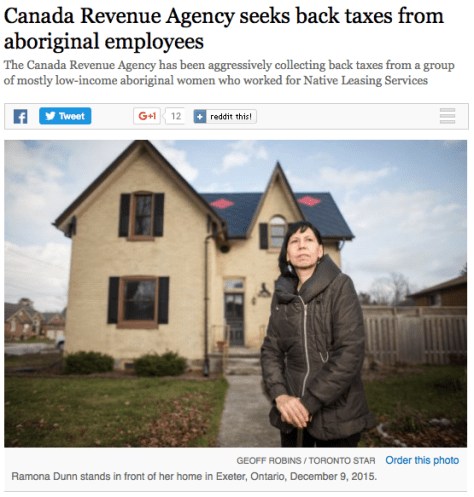
Screen Shot 2016-04-19 at 4.01.34 PM

This is a story about folks who just want a chance to get on with their lives. That’s why Miche and Ramona Dunn (above) have gone public: to resolve an impossible situation. They are not scam artists or criminals. They have jobs and families and hopes for an ordinary decent life, a hope that is slipping away.

Go here to read Ramona Dunn’s petition to have the Remission Order Application moved quickly through the assessment process to bring closure and to allow the individuals affected to get on with their lives.


The Indian Residential Schools Are Still With Us

In 2010, I interviewed the former National Chief of the Assembly of First Nations, Phil Fontaine, about his many years as a politician. The conclusion of the Indian Residential Schools Settlement Agreement negotiations was a few years behind, and I asked Phil for his assessment. What did he think of the agreement?

Never mind that this settlement was, as people like to say, “historic”—at $5-billion and more, the largest court-supervised class action in Canada’s history. Never mind that it had involved dozens of lawyers in simultaneous, multi-city sessions, or that it was front-page news for months and even years running. Indeed, today’s Globe and Mail headline reads “Residential Schools: Bennett puts settlement onus on Catholics.” Who would have thought the Indian Residential Schools Settlement Agreement would be news nearly a full decade after its 2007 roll-out. Maybe Phil. But on that day he shrugged and pulled a face. He was proud of the agreement and said something to the effect that it was the best they were going to get. But there was something wrankling him, and he told me what it was.

Phil had many accomplishments over his career. He listed a few. I couldn’t dissent: he’d been more than a few places, made more than a few waves. Yet inevitably when he’s introduced, he pointed out, it’s the residential schools that everyone mentions, and only the residential schools. Everything else disappeared.

I don’t usually commiserate with politicians, but in this instance I knew exactly how he felt. I’ve written on hundreds of topics over the past three decades, but to the degree I’m known for anything at all, it’s the Indian Residential School System. My articles on residential schools, routinely the most-visited pieces on this blog, are about the only thing I’ve composed that could be called “evergreen.” My book on residential schools is by far my most successful book, by which I mean it’s the book that people actually read, more than any other of mine.

I’m not complaining. I am, however, registering genuine surprise. I never expected the article I wrote in May 2002, for the Globe and Mail, to be at the top of the most-read list in May 2016. In the meanwhile I’ve written nearly a thousand essays that have dropped (as they do, for most writers of current event) into the black hole of yesterday. Perhaps I should have expected this. Twenty years ago I’d learned to assert that, just as the Indian residential schools had done decades worth of damage, it would take decades to heal and restitute. Canada may wish to be done with its residential school history, but history is not done with Canada. Not even close.

Today’s Globe and Mail headline refers to the amounts negotiated in Schedule 0-3 of the Indian Residential Schools Settlement Agreement, by the Corporation for the Catholic Entities, Parties to the IRSSA (or CCEPIRSSA). Why then an “onus”? The short answer is that the (in my estimation) badly-written agreement committed the Catholic Entities to the “best effort” fund-raising of a $25-million “Canada-Wide Campaign.” It didn’t pan out, according to lawyers for the CCEPIRSSA. So the federal government released the Catholic Entities, who ran ~65% of the residential schools, from this settlement obligation.

I mention the badly-written bit because the current mess was created by the agreement, insofar as it is a vaguely-composed document with no clear timelines or enforcements. And what exactly constitutes a “best effort”? Who decides? These and many other questions are not answered by Schedule 0-3, which bears all the evidence of having been drafted by junior lawyers while, elsewhere, the bulk of the effort went into the Common Experience Payment.

All of this makes me wonder where we’ll be five years from now. Or ten, or twenty. With some confidence, I can say that the Indian residential schools will probably be with us. The question is, will we be inching closer to restitution, or slinking yet further away?

Larry Loyie, 1933–2016

2014-Toronto-109
WITH CO-AUTHOR LARRY LOYIE

I learned today that my friend and co-author, Larry Loyie, is gone.

Larry’s Cree name was Young Man. It was fitting. He had a gentle, even light spirit, despite all he’d been through. Somehow he never lost touch with the character of childhood. I won’t say innocence: there was little of that for children like Larry. In residential school, he dreamed of being an author, but his education at St. Bernard Mission was cold and meagre. He was in his 50s when he went back to school to fulfill his life’s purpose. And fulfill it he did.

Larry developed a simple yet powerful voice. He had an ability to communicate with readers of all ages, but especially with the young. Along with his writing partner, Constance Brissenden, he published books about his youth before and during residential school, reaching thousands of readers across Canada and beyond.

His love for his culture was with him throughout his life, as was his love for writing and for teaching the young. Gentle and honest, compassionate and warm, Larry’s work reflects the respect that he had for his readers, whatever their age. He had a few guiding principles: always tell the truth, make sure the writing is interesting, and inform the reader.

Larry was soft-spoken. He could summon a mental picture with great economy. He felt no need to hit anyone over the head with his message, and so he never did. His prose is disarmingly open, and anyone who follows him in the work of writing about residential schools is well-advised to study his example. He’s given us a wealth of books, and if you haven’t read them I encourage you to do so.

He loved baseball, and we enjoyed going to the stadium together. Connie and I would talk shop, and he’d hush us. “I’m here to watch the game,” he’d say. He’d go from funny to serious in a beat, hitting just the right note in each register. A few times I got a glimpse of the darker stuff, when he’d talk about picking potatoes and chopping firewood. He wanted so badly to read and to learn, and the residential school system denied him. To the school he was a source of cheap, forced labour, nothing more. It could be hard to reconcile this with the gentle, funny guy sitting behind home plate. Why wasn’t he angry all the time? I know survivors who are. It’s a mystery to me, and I guess it always will be a mystery.

Larry left us peacefully. He has done what he came to do. I miss him, and I’m sad he’s gone, but I know if he were here he’d have none of that. Not for Larry, the long-drawn face and the dirge. “Cheer up, young man, and keep going,” he’d say. For you, Young Man, I will. For you.

Positive versus negative tribalism

Group
Photo courtesy of yung, on Flickr

It doesn’t matter what you do, or where you do it, or how, or even why.

Chances are, you’ll encounter opposition. There will be critics and naysayers. Trollers and cranks. In a word, negativity.

I know what I’m talking about. I’ve written hundreds of articles, blog posts, and op-eds for newspapers, websites, and magazines.

Some of this work has been on controversial topics, but even in cases where I was being deliberately positive, out came the name callers and pot-stirrers.

Sure, I could argue with every one them. But it’s a waste of energy and time. The reality is that you are not going to change a person;s mind in 99.9% of the cases.

Nothing you say, or even can say, will make even a slight difference.

Sure, a heated debate can be thrilling—especially when your opponent is intelligent and lively. Public debates provide an opportunity for an audience to consider the issues from divergent perspectives. Debates have their use.

Social media were supposed to make it easier for people to exchange ideas across vast distances. When the Internet arrived, it was promoted as a public space, akin to a town square.

Unfortunately, in virtual space all the critical ingredients of a good debate are missing.

Instead of face-to-face dialogue, we get avatars and anonymous profiles. Instead of the formal rules of engagement that inform and make possible a civil debate, we get insults and diatribes.

The sad, unfortunate, but also unavoidable truth is that the Internet isn’t very helpful when it comes to having important conversations. In fact, it’s a toxic hazard. All the early promises of vibrant virtual spaces have turned out to be hollow and meaningless.

Have you noticed that in recent months many websites have shut down their comment section? What we are seeing is end result of a realization that comment boards offer nothing of value. The Internet is great for one-way broadcasting. It’s great for finding information.

It’s lousy however when it comes to having an intelligent, useful conversation.

Social media, it turns out, are not very social, at least not in the real-world sense of that term. We don’t even know any of the people who we follow, and who “follow” us. We wouldn’t recognize them if we saw them on the street, which of course we never will.

That doesn’t mean the Internet has no value. On the contrary: as the above suggests, the value of the Internet is in broadcasting your message to (hopefully) reach your tribe. Meaning, the people who already share your views, worldview, affiliation, or passion. Or whatever.

The Internet, and especially social media, is tribal. And it’s primary effect is to further tribalism.

That can be either a good or bad thing, depending on how it’s used.

Some forms of tribalism are dangerous, because they’re founded on the principles of chauvinism, exclusion, and fear or hatred of those who are different.

Tribalism can also be a positive force, if it is open and welcoming. Positive tribalism’s mission is to forge connections with others, in order to make the world better for all.

Positive tribalism doesn’t waste time trying to convert the haters. It accepts that there will be naysayers and focuses its time and energy on finding like-minded people.

Modern digital technology is a wondrous innovation, but the truth is that everything still happens in the real world.

The Internet is not really real.

Broadcast your message. Reach your tribe. Understand the use and value of what you do in the flesh-and-blood world. Create a pathway from the virtual to the material.

Don’t waste your time on the distractions.

The power of broadcasting positive indigenous stories

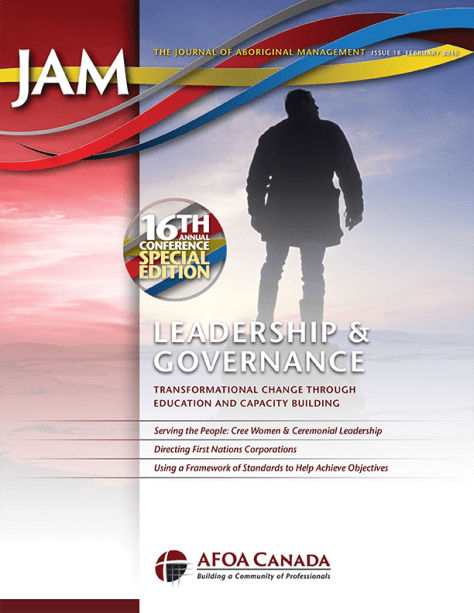
JAM18cover.png

I love being an entrepreneur.

Why? Because every day, for me, is an opportunity. An opportunity to connect, to help someone, to make a small difference. Maybe that sounds corny, and if so I don’t care. It also happens to be the truth. Being an entrepreneur is simply a mindset of looking at the world as one big opportunity.

What’s not to like about that?

Each day, I try to send an email or make a phone call to someone I truly believe I can help. I’m not talking about cold-calling or pitching or lead generation. I’m talking about giving my best ideas to people who I am confident could put them to practical use. I routinely give away ideas that could potentially be worth hundreds or even thousands of dollars.

Maybe that sounds arrogant. If so, understand that I have decades of experience at what I do. I have worked in my field a long time, and I’ve studied it carefully. I’ve had great mentors. I think constantly about my industry. Every day I am working to get better.

You can’t buy expertise on the cheap. It’s valuable.

If you give your expertise away, in the hope it will make something positive happen, sometimes people will like your ideas so much they’ll hire you. Sometimes however they’ll say “thank-you,” and that will be the end of that.

Thing is, a nice thank-you email makes my day.

Here’s where I’m going with this. I have an idea that I know is game-changing, and I’m going to tell you what it is.

Actually, I’m surprised no one is doing it already. You see, I have the privilege and pleasure of working with a lot of energetic, driven, successful, and goal-oriented people. The kind of people who get things done.

All of my clients are Aboriginal. They work in a wide variety of fields, from health-care to finance to investing to the arts. Some of my clients are charities, some are for-profit, some are governments, some are NGOs. Some are business-oriented, others are more focused on their traditional cultures. They all have one thing in common, and it’s this:

They are trying to help people, and they are making a positive difference.

All of them have the same complaint. They all say that the media only pay attention to negative stories about indigenous people. Positive stories, they say, are ignored. No one ever gets to hear about indigenous successes. Only misery and poverty and failure make the news.

They’re right. The media are failing.

We native people are just as guilty as the mainstream media. Think about it. Whenever we want to drum up support for our causes, what do we do? We talk about our problems and challenges. We make lists of grievances. We quote the horrible statistics. We try to make people angry and sad and outraged, in the belief that these are the best ways to inspire action.

I see it all the time. I’ve even been guilty of it myself.

Then one day I realized that even though the bad news was all true, no one was truly listening anymore. It’s not anyone’s fault. The truth is that you can only hear the same tragic story so many times before you stop actually hearing it. Unconsciously, you shut down. You decide nothing will ever change.

Face it. There’s nothing new or surprising about a sad story involving indigenous people in Canada.

Everyone pretty much expects it. After a while, the tsunami of bad news is paralyzing. A feeling of inevitability seeps in. What’s the point? Nothing can be done, and nothing will ever change.

That brings me to my radical, outside-the-box, man-bites-dog idea. Here it is….

Positive stories.

Behind the scenes I am quietly starting a revolution. I’m giving everyone I come into contact with a strategic pathway. Not just an idea, but a plan. Why? Because I believe that we’ve been making, and we continue to make, an easily-avoidable communication mistake.

A mistake with a huge opportunity cost.

The astonishing thing is that the positive stories are already out there. So are the means to broadcast them. For example: anyone with a laptop could start a curated website or app like Digg, Flipboard, or Boing Boing, focusing on positive indigenous news stories. I am 100% confident that a site like that would be hugely successful.

Instead of paralyzing people with an endless stream of the depressing and frustrating news we’ve all come to hate, we could energize and mobilize people around hopeful messages of transformation.

All we need is to put the pieces together, in a strategic way, and that’s what I’m showing people how to do.

Speaking of positive broadcasting, watch for the next issue of the Journal of Aboriginal Management, out next week. (The picture above is the cover.)

I am the editor of this unique magazine focusing on excellence in Aboriginal finance and management. It’s just one of the vehicles out there providing an alternative to the failed mainstream media.


Residential Schools: now an ebook

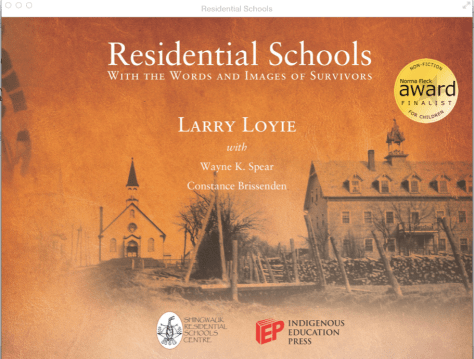
Screen Shot 2016-02-03 at 10.10.25 AM.png

Good news today. Residential Schools, With the Words and Images of Survivors will soon be available as an electronic book, suitable for your Kindle, Nook, iPad, laptop, or smartphone.

Read the ebook on the bus. Or the subway. Or wherever. It’s just like the print book, but better:

  • 76 pages longer
  • enhanced with video and audio
  • additional, high-res images
  • reproduction of the 1932 Coqualeetza Indian Residential School commencement program
  • … and more

Residential Schools is a unique work. Why do I say this?

It’s comprehensive. The book begins with a look at life before the residential schools.

It’s accessible. You can give it to anyone: a grade five student, a new Canadian, a Survivor, a teacher. Everyone will find something of value in this book.

It’s written in simple, clear, and unadorned English. I have been writing about residential schools for over 20 years, and so have my co-authors Larry Loyie and Constance Brissenden. We worked very hard to get the tone and detail just right.

Decades of learning how to speak to Canadians of all ages about residential schools have gone into this book.

Larry Loyie is himself a survivor. He and his partner Constance have visited dozens of schools over the years, to talk to the young about his life in an Indian residential school.

For almost fifteen years, I worked for an agency called the Aboriginal Healing Foundation. When I started, in 1999, few Canadians had even heard of Indian residential schools. It was my job to change that.

It’s not just another archive-based book. Yes, I have done a ton of archival research. But for this book I wanted something different, and so did my co-authors. Residential Schools contains not just the words of former students, but images and objects.

There are things in this book you will not see in any other residential school book, like photos taken in the schools by the children themselves. That alone makes this book special.

When you put all of this together—the engaging tone, the comprehensiveness, the decades of research, the contributions of Survivors, the unique images—you have a book like no other.

My vision for this book has always been that it will one day be in every library and every classroom. I believe that this book is one of the best resources available to educate today’s young people about the Indian Residential School System.

Residential Schools is a Finalist for the 2015 Norma Fleck Award for Canadian Children’s Non-Fiction and a 2016 Nominee for the Golden Oak award in Ontario’s Forest of Reading program.

Both the print and digital version of the book are published by GoodMinds, in Brantford, Ontario. You’ll find the print version in many bookstores.

You can also order the book from the publisher’s website:

www.goodminds.com — for ordering information
Tel: 1 877 862 8483
Also: Jeff Burnham, publisher, Indigenous Education Press / goodminds.com
Tel: 519 761 0366

GoodMinds specializes in wholesale supply to educational institutions. But you can also order books as an individual, by credit card.

Jeff Burnham is a bit old school. The best way to order is to phone toll-free. Jeff, or one of his team, will take all the info and fill your order promptly.

Turning things upside-down

Flying Lesson
Photo “flying lesson” courtesy of Peter Shanks on Flickr

We’ve all asked ourselves the question “Why bother?” We all have a To Do list. We all wish that some things in life were different.

When you turn something on its head, you get a new perspective.

The things in your life you’d be happy to never change, a Not To Do List, an answer to the question Why not bother?

My partner works the midnight shift. When all of a sudden you are eating lunch at 3 in the morning, your body gets confused. It knows what 3 am is, and it knows what to do with lasagna. But it doesn’t know what to do with lasagna at 3 in the morning. My point is that you learn a lot of new things when you stay up all night, instead of all day.

If you turn a problem upside-down, it looks like a solution. An upside-down barrier is an opportunity. The only way to get good answers is to turn a good question upside-down and shake it until what you’re looking for falls out.

All of the valuable lessons came to you in the toughest times of your life. The experiences you wanted to run away from at the time are the same experiences you keep returning to today for your wisdom.

A frown is a smile upside-down. Yesterday it was awful, but today you are laughing about it. We turn the world over all the time. It’s how we learn, discover, and grow.

The most delicious meals you’ve eaten were fertilized with some of the most unappetizing stuff. That’s the reality of nature, and of life. You can fight reality, or understand and use it to your advantage.

Opposites are connected. You can turn darkness into light, bitterness into contentment, emptiness into fulfillment. How? But turning over misery to discover gratitude.

What do you do? Who are you? Keeping two sets of books.

Ledger
Image “Vintage ledger paper tags” courtesy of Cutiepie Company

What do you do?

It’s the question most often asked at cocktail parties. “What do you do?” is an ice breaker, a cliché, a point of departure, or just something to say when you’re not sure what to say. It can also represent genuine curiosity.

Who are you?

It’s a big, and personal, question. That’s why we don’t ask it at cocktail parties. Rarely is the question Who are you? answered by what someone does.

– Who are you?
– I am Dentistry.

In a perfect world, What we do is Who we are, and Who we are is What we do. But we don’t live in that perfect world, so we keep two sets of books. In the day we do, in the evening we are.

We put our loves and priorities and hopes and passions—in short, our authentic selves—on a shelf, where they wait for us, until we return at the end of our shift.

A ledger of tasks, a ledger of love. Money and joy, productivity and meaning. What you do and Who you are.

Who are you? Ask, and tell. Keep one set of books. Start the revolution.

The idea virus

Cold
Image “Cold?” courtesy of Allan Foster on Flickr

When you ride the subway in fall, you’re reminded that this is the time of year when people share an invisible gift called The Cold.

There are hundreds of viruses that cause the common cold. All of them have one thing in common, which is that they are good at spreading.

The common cold is relatively harmless from a health perspective. Its impact is cumulative. Millions of people get a cold each year. A cold influences productivity and sociability. The true costs of a cold in most cases are social and economic, not physiological or epidemiological.

Every year, millions of small differences make one big difference. The cold season ends, and the gift exchange attenuates. In the meantime, the common cold feeds the medication industry and accounts for almost half of all the hours spent at home, away from work.

Cold viruses have the simplest of business models. Always be on the move, always adapt, and replicate over and over across a large population.

An idea has “gone viral” when it has met these conditions. It need only have a small, temporary impact on any one individual. If it has the ability to always be on the move, and to adapt across populations and cultures, it will have a cumulative impact.

Make your ideas simple, adaptable, and easy to share. Win over the individual but also consider the cumulative impact of your efforts.

On giving up

British Royal Marine Joe Townsend, a Wounded Warrior with the Allies Team, shot puts during the 2012 Marine Corps Trials, hosted by the Wounded Warrior Regiment, at Marine Corps Base Camp Pendleton, Calif., Feb. 19, 2012. Townsend, from Eastbourne, England, placed first in the 10-kilometer hand cycling competition and 200-meter wheelchair race. Wounded Warrior Marines, veterans and allies are competing in the second annual trials, which include swimming, wheelchair basketball, sitting volleyball, track and field, archery and shooting. The top 50 performing Marines will earn the opportunity to compete in the Warrior Games in Colorado Springs, Colo., in May.
Photo “Shot Put” courtesy of Daniel Wetzel on Flickr

Every success is the culmination of a series of failures. To get it right once you have to get it wrong a hundred, maybe a thousand, times. Then you get it almost-right a thousand times more. The day arrives, at last, when you succeed.

Or it doesn’t, because there are no success guarantees.

Not all visions will come true. Many businesses will fail. For every story of Olympic glory, there are a million stories of dreams unfulfilled.

Giving up on a dead-end strategy or a flawed prospect can be part of a powerful process. The challenge is knowing when to change course. How can we know the time has come to give up on a venture, a product, a career, or a goal?

There are two kinds of success—task success and life success.

Task success. If your goal is to go to Rio de Janeiro and win the 2016 gold medal in shot put, you have one pathway.

Life success. If your goal is to lead a happy, satisfying life in sports, there are infinite pathways: weekend warrior, coach, fan, collector, researcher, writer, historian, trainer, scout.

Task success is clear, discrete, and measurable. Either you win the gold or you don’t. You can assess progress and the likelihood of reaching your specific goals. Emotional success is the desired long-term condition of your life.

Imagine a thousand-mile trip. How do you navigate your way to the destination? By focusing on a visible, short-term point along the horizon that brings you ever closer to an end-point you can’t see.

Have a long-term pathway and a series of short-term pathways that support it.

One is a point on the near horizon, and the other is your final, desired destination. Both speak to the things that will enrich your life.

What is your value?

Beauty
Photo “Beauty Is Simplicity” courtesy of Reji, on Flickr

We express value, and we hold values. Honesty, authenticity, courage, beauty, integrity. Our values are conceived in the abstract realm and negotiated in the material world of objects. They are subjective but indivisible from our relationships with other living beings.

Value can be measured. Each day on eBay, thousands of bidders answer the question What is it worth?

What about loyalty, truth, or faith? We frown on the idea of putting dollar amounts to values. Loyalty transcends cash. Our values are precious and priceless. Money can’t buy you love.

A skill is an abstraction. So are competence and intelligence and professionalism. No one has an objective number indicating the value per hour of your skill or professional value. Yet, for business to happen, a value must be determined.

Value and values intersect. One of your clients recommends you. She says that you’re honest, reliable, professional, and pleasant. None of these things can be auctioned on eBay. They are values. They are also value.

Your value increases as its intersection with values becomes more clear and compelling in the mind of your customers. This is not a cheap marketing gimmick, it is an insight into value.

You can choose to make a widget, or you can choose to enrich people’s lives by doing something that supports and nourishes their values.

The choice is yours.

Things that don’t matter

Thirty years ago my university professor quoted a friend. “I’ll never forget this,” he said. “It’s one of the most wise things I’ve ever heard.”

Everything matters, and nothing matters.

In about 4.5 billion years, our galaxy will collide with another. They won’t actually touch—instead they’ll blend together. There’s a high chance our solar system will be ejected from this newly-merged galaxy, and will drift until it is absorbed, or destroyed, or otherwise transformed by an encounter with something else.

The good news is that our sun will have exhausted itself by then, and all of the inner planets, including Earth, will have been vaporized.

Does it matter?

The only difference between a weed and a plant is that you want one of them to die and the other to grow. Dandelions matter if you make dandelion wine.

Everyone has his own version of an emergency. We want the world to get out of our emergency’s way, and we’ll push past anyone else’s emergency to get where we’re going. An emergency is a weed, or a flower. It’s a matter of perspective.

Or it’s not.

The point is that I’ve had clients who for years have banged their heads on things that didn’t matter. They had their version of an emergency, and there they were, trying to solve riddles like How many angels can dance on the head of a pin?

Somehow it never occurred to them to ask “Does this really matter?”

Socrates once said that the way to overcome a fear was to fear something greater. If you have one big, overarching fear, you become a big-picture fearer. Your life gets some focus. You figure out what really truly matters, and what you most definitely want to see, and don’t want to see, happen in your life.

Problems are like friends. You have fewer than you realize. But, sure, go ahead and tell yourself you have a lot. Only, you probably don’t.

Identifying the problems that aren’t problems is a skill. Often there’s a problem behind the problem, and a problem behind that. A ten-layered onion is still only one onion. Sounds simple, but I’ve met the people who think they have ten onions.

That means 90% of their time is spent thinking about a layer of their problems and ignoring the core 10% where the one root problem is.

Maybe we should throw away our problems the way we clean out our closets. You don’t put on everything in there anyway.

How many comfortable pairs of jeans do you have? How many friends? How many problems? What really matters?

The world’s most effective people use this simple formula

Junior Detective
Photo “junior detective” courtesy of Jessica Lucia on Flickr

What sets the geniuses apart—in journalism, entrepreneurship, cosmology, business innovation, and the arts?

It’s not the school they went to. Some of the world’s most successful and brilliant people never had a formal education.

It’s not good luck, or connections. It’s not hard work, although hard work helps.

The world’s most effective people use a simple formula. With it, they get powerful insights that they can then use to reach their destination.

Here is the formula:

Ask good questions and have the tenacity to get answers

What is a good question?

A good question is clear, specific, and strategic. It’s a laser-guided missile. The person who asks good questions may not know the answers, but she knows where the answers are. Not just any answer: the true answer.

To get to the true answer, you have to be patient. You may have to ask the question two, three, or more times. You’ll have to knock down doors. Some answers prefer to go undiscovered. Some are shocking, embarrassing, or scandalous. Only the brave and tireless will discover them.

Learn how to ask good questions, and be tenacious.

Content marketing and discontent people

Shopping Despair
Photo “Shopping – Despair” courtesy of David Blackwell on Flickr

Newspapers have content, and the business of marketing content is, of course, content marketing.

Content marketing asks What gets and holds a reader’s attention? Then it says Do this, and you’ll get higher conversions.

We know that the news is mostly war, terrorism, political fighting, catastrophe, scandal, and tragedy. Newspapers sell discontent, or they try to. These days it’s not working so well.

The truth is that all marketing presumes discontent.

The worst thing that could happen to the global economy is a world of content people, 100% satisfied with their lives and uninterested in adding or subtracting anything from them.

Universal human satisfaction would be great, but it wouldn’t sell most products. For the economic system to function, we need millions of consumers who have a good life but not a “perfect” one.

What is the perfect life? Your life, plus an iPhone with a slightly larger screen than the iPhone screen you have. Once you have the new iPhone, the definition of perfect changes. The ideal consumer is restless and always wants bigger, brighter, more, newer, and different.

What if we were to practice content marketing in the second sense of the word—using our talents to encourage satisfied, centred, peaceful, and grateful human beings?