All posts by Wayne K. Spear

waynekspear.com

Consumers and Producers

Eat, drink, and be a good marketer. ✎ By Wayne K. Spear

We live in a consumer society. We may not choose to define ourselves as “consumers,” and we may dislike the label, but we all are consumers.

Consumption is not simply the act of shopping and purchasing.

The Oxford English Dictionary coarsely defines a consumer as “He who or that which consumes, wastes, squanders, or destroys.”

Behind this notion of consumption is a moral judgement: the consumer is a parasite, contributing nothing of value to society.

The opposite notion has been elevated in modern times. Consumption is asserted to be a positive, even urgent, good. The consumer spends, which stimulates the economy, which creates jobs and prosperity.

Imagine performing to an empty room, or broadcasting a show in a world with no radios or televisions.

Sellers fail without buyers. Writers are nothing without readers. Producers need consumers.

Leaders and followers: there are countless books about Leadership, few about Followership.

An iMac is a production tool, but an iPad is a consumption tool. One is best suited to creating video, the other to consuming it.

Consumption has never been easier, nor more prevalent. The tools of consumption can be carried everywhere. The consumer is ever-present, ever plugged-in, ever-ready.

Supply and demand, consumption and production. A rise in consumption summons a rise in production.

This is also an age of producers, and of production.

The tools and media of consumption change, but the underlying reality does not. Producers must cut through the noise and the congestion to reach consumers.

As consumption drives up production, standing out from the crowd becomes more important, and more challenging, than ever.

In an age of abundant production, most of us are performing to empty rooms. We are not getting through.

The only way to get through is to find the room where the audience is, and to somehow put yourself on the stage at the front of that room.

That has been the challenge for producers since the beginning of time.

Everything has changed for consumers. Nothing has changed for producers.

Clean up your mess

Good messes vs. bad messes. ✎ By Wayne K. Spear

3238540623_d0a4dcc84e_o
Photo courtesy of udge, on Flickr

Messes can be figurative or literal.

You’ll find them in your thoughts, your relationships, your habits, your closets.

Messes can be emotional, psychological, physical, and spiritual. Often they are more than one of this list.

My son cleaned his mess. When he was done, he was amazed at how big his room was, beneath all the chaos and clutter that had made it seem cloistered.

How do you feel when you walk into a mess? Your emotional state is related to your physical environment, whether or not you are consciously aware of it.

A cluttered mind can be creative. For years I had a desk that raised eyebrows. I have lived a messy life.

When I was single, my apartment was immaculate. There was a place for everything, and for everything a place. It was great.

Then we were two, and three, living in an apartment. I bought a house. There was much more space, and then much, much more material possessions.

I had a semi-finished basement that we turned over to my son. It was nothing but wall-to-wall toys. When he outgrew his Lego, it filled three large garbage bags and probably represented over a thousand dollars of spending. (We sold it for a hundred dollars.)

The point is that I have not lived a life of austerity and simplicity.

The mess of my son’s play was a creative, fun mess. Allowance should be made for messes.

I am learning the distinction between a good mess and a bad mess.

In his book, Double Your Income Doing What You Love, Raymond Aaron advises us to make a list of our messes.

Pick one each month and clean it up. Maybe it’s a relationship that has gone sour, or a problem you’ve allowed to fester because you don’t want to face it.

“Abundance is everywhere,” writes Aaron, “but you lock it out with every mess in your life.”

He’s right.

Some messes are fun and creative. Others are toxic. They clutter your mind and spirit, and they make you feel anxious and overwhelmed. They are a burden that prevents you from experiencing freedom.

Make a list of your messes.

Clean them up, and feel free.

Workplace Moves

What are your workplace options? It’s time to check, mate. ✎ By Wayne K. Spear

In my consulting work, I meet people who are unsatisfied in their workplace role. They like their organization, and want to stay in it, but also want to make a move.

They often have no idea what to do, or how to do it.

There are many kinds of workplace moves. The kind of move that’s right for you depends on the nature of your situation.

Consider the many forms of dissatisfaction:

– You have talents that are not being used
– Your role isn’t natural to you
– You are not challenged enough
– You are challenged too much
– You are not being properly trained and supported
– You are being micro-managed
– Your immediate supervisor is incompetent and/or a jerk

Think of your workplace as a chessboard. Each piece on the board has its own style and range of movement. Just like a game of chess, your workplace offers a variety of movement.

In most cases, you can modify your role, through workplace communication and collaboration. Maybe all you need is a small adjustment, which bring us to …

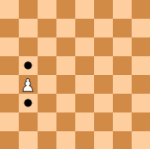
The Pawn

Pawn

This is the simplest move of all, best suited to cases where you’re in the right role but want a little more (or less) responsibility, authority, or challenge: promotion vs. voluntary demotion. Some companies I know of will even accommodate the request for a demotion without cutting pay.

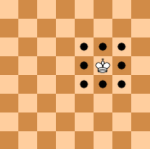
The King

King

The King is all about modest incremental, adjacent motion. This is how most moves occur, not only in business but in life. The expert on Italian opera makes a lateral move into the Italian food business. The best-selling author of Car Repair decides to write a book called Motorcycle Repair (rather than, say, Existentialism Explained). It’s about leveraging your proven expertise to move into a neighboring field. This is a logical, step-by-step process, and it makes the most sense in workplace situations where you want a bit more (or less) responsibility, authority and challenge—rather than a huge change.

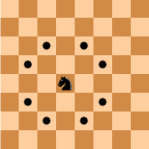
The Knight

Knight

The moves of a Knight are bolder than those of a King. The Knight can leap over other pieces, as well as travel greater distance. More important, the Knight’s movements appear to be non-linear. In reality, the Knight makes a double move—two steps and a turn. This type of movement makes sense when you require a bolder transition that will take you slightly outside your current role and circumstances. In this move, it’s not only the degree of challenge and responsibility at issue, it’s the character of your role. You want something different, but not wildly different.

The Bishop

Bishop

Here we get into bolder moves. The Bishop is about transitions. Rather than keep on the established path, this piece moves at angles into new territory. This is a more difficult workplace move to make, but it can be done if you’ve demonstrated your talents and competence, or if you’ve completed training. I have seen employees move successfully from HR to finance. I’ve seen an entry-level Admin Assistant become a Financial Comptroller. It happens. As long as there is an openness and trust, and a willingness to create and commit to a plan, anything is possible.

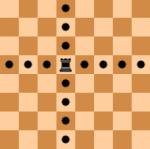
The Rook

Rook

The Rook is also about big moves, but of a logical nature. Here we consider a powerful workplace strategy—the lateral move. Lateral moves are great if you want more challenge without more responsibility, or if you want to learn from a mentor in another part of the company. Also, it isn’t always possible to negotiate a better role with your boss, or to work out personality issues. Sometimes you just have to plan your escape. A lateral move is therefore advisable when you find yourself unable to work amicably with a supervisor.

The Queen

Queen

The world is a Queen’s oyster. She has it all, because she can see it all. The Queen looks out over the entire range of motion and chooses where she wants to land. This piece reminds us that an organization holds a wide range of opportunities. What if you don’t see the perfect role for your individual skills? Then consider having a discussion about creating a role. Good companies are open to this, so you should be open to thinking, and moving, like a Queen.

Winner and Losers

Have great answers to better questions. ✎ By Wayne K. Spear

Finish
Photo courtesy of Philo Nordlund on Flickr

In the Middle Ages, the king was the winner. He lived in a castle with legions of servants who brought him the best food and wine.

The king didn’t have air conditioning or aspirin or deodorant or a smart phone. You probably wouldn’t trade places with him, because his quality of life was quite low by the standard you enjoy.

However, he lived a much better life than the people around him, and everyone knew it.

That’s how the king won.

Imagine that you live in a mansion, and that you have a million dollars. It sounds pretty good, doesn’t it? Again, the life of a winner.

But now imagine that everyone you know has 5 million dollars and a much bigger mansion than yours.

Suddenly, you’re not the winner anymore.

Comparing ourselves and our fortunes to the character and lives of others leads inexorably to a world of winners and losers.

The winner finishes first and takes the prize. Everyone else is a loser.

If the world is really about winning and losing in this simplistic way, the truth is that most of us are losers.

And, yet, the lives of the “losers” today are objectively better than the life of a Medieval king. And the king was a winner.

Today’s winner will be tomorrow’s loser, because even if he doesn’t change the world around him will.

Winning like a king is arbitrary, not absolute. It’s a made-up thing.

To win at baseball, you must score more runs than your opponent. Baseball is a made-up game with made-up rules.

Life is not baseball.

If you compare yourself to others, you’re not living your life—you’re living theirs. Or, rather, you’re trying to live their lives, but in a bigger, better way.

Winning is important. No one wants to be a loser. The question “What does it mean to live a ‘winning’ life?” is a good question.

Unfortunately, the world gives us many bad answers.

Winning at life begins with asking good questions and finding good answers.

Today is the luckiest day of the year

Go ahead, make your day. ✎ By Wayne K. Spear

Astrology
Graphic courtesy of zeevveez on Flickr

Yesterday my mother sent me an email with the subject heading “tomorrow is the luckiest day of the year….” That means today is your lucky day.

The question is: what are you going to do to take advantage?

I don’t understand how the motions of planets have anything more to do with my fortunes than, say, the ocean currents or the flights of birds or the placement of the stones on the sidewalk. Or anything else that exists in nature.

But if you treat every day as the luckiest day of the year, there is a 100% chance that one day you’ll be right.

If you treat today as the luckiest day of the year, you’ll likely be a little more bold, and a little more intentional, because you are preparing yourself for something good to happen.

Maybe it will, maybe it won’t. The only certainty is that when you’re not prepared, and not preparing, opportunity passes by.

Taking control

You are the boss of this. ✎ By Wayne K. Spear

No one can control the weather. We can only control how we dress for it.

Sometimes the things we can’t control are life-and-death things. We can’t ignore life-and-death matters, nor should we. All we can control is our response to, and our management of, them.

You can’t make someone be nice to you. You can’t make someone else care. Whether or not you are nice, and whether or not you care, is within your control.

Maybe you will win the lottery. Maybe not.

Lotteries are random. But even random acts, such as random acts of kindness, are within your control—if they are your acts.

Sometimes, when I’m about to check my email, I’ve found myself wondering whether today is a day there will be something exciting, special, and memorable in my inbox.

Then I realize that I can control exciting, special, and memorable email—by sending it to someone.

Draw up a list of things you control. It can be anything: what you have for breakfast, what route you take to work, what you say today to colleagues, how you react to stressful things, what you choose to think about yourself.

Is there any way you can change, improve, or nourish the things you control.

Cultivate these things. Enjoy being in control of them.

Food for thought

You think what you eat. ✎ By Wayne K. Spear

The brain is a hungry organ. In a human being, it makes up only 2% of total body mass but consumes 20% of available energy.

Input and output: these exist in balance.

The best way to be more creative, more thoughtful, and more productive is to feed your brain.

Better outputs begin with better inputs.

Read books, listen to podcasts, observe the world. Go for a walk. Notice what is going on in your environment. Take an interest in what you see, hear, feel, touch, smell. Be curious.

Feed your brain a healthy diet.

Be Preposterous

Forward-thinkers have it all backwards. ✎ By Wayne K. Spear

preposterous, a. (prɪˈpɒstərəs) [f. L. præposter, reversed]
1. Having or placing last that which should be first; inverted in position or order.

“Life can only be understood backwards,” wrote Soren Kierkegaard.

Michael Gerber, author of The E-Myth Revisited, advises us to imagine what we want people to say of us at our funerals, and to live accordingly.

It’s called reverse engineering. Start at the end, work your way backward.

Put the cart before the horse. Read the last page first. The answers really are at the back.

“In my end is my beginning” – T.S. Eliot

Here is a great idea from the writer James Altucher: Take a sheet of paper and a pen. In the middle of the sheet, write THAT’S CRAZY. Now work backwards, figuring out all the pathways to THAT’S CRAZY.

James Altucher is crazy, because he doesn’t let THAT’S CRAZY get in his way, ever.

THAT’S CRAZY is where you want to end up in your life. It’s your wildest dreams, your fantasies, the things you tell yourself you can never have, or do, or be.

Why? Because that’s crazy.

So be crazy, and be preposterous.

What is communication?

Communication breakdown is not always the same. ✎ By Wayne K. Spear

It is the hardest simple thing you will ever do.

That is why communication failure is at the root of many ills.

And, yet, in our hearts and minds we human beings believe that communication is an ordinary, ever-day act—as natural to us as breathing.

Well, what if your communication strategy has emphysema?

Think about this: homo sapiens is older than words, by many thousands of years. We evolved to communicate without a verbal language.

Emotion, gesture, posture, and facial expression trump verbal communication. We need these so much that in the age of social media we have found ways to interpolate them.

Every face is an open book.

Our communication styles vary. We each have a language of our own. Asperger syndrome is a communication style. The language of poetry is another.

Understand, and be understood. This, in a phrase, is the goal of all communication.

Relationships, marriages, and politics all depend upon effective communication.

Businesses fail when their internal and external communications are shoddy.

The work of managing internal communication is Organizational Development.

The work of managing the effective, bi-directional flow of information is Public Relations.

The work of understanding your audience’s needs and perceptions is Marketing.

Figure 1: the three modes of communication

Figure 1

Do you understand yourself and your communication style? Do you understand the audience? Are you a seller speaking the language of sellers, when you should be speaking the language of buyers? Do you have the right message for the wrong audience, or the wrong message for the right audience?

What does communication mean to you, and to your business?

Authenticity

“I am, sincerely.” ✎ By Wayne K. Spear

Babe Ruth

Here is something that has happened to every parent:

Child: “Look, mommy. That person is fat!”
Parent: “We don’t say fat, dear.”

The child is authentic. Over time, she is socialized. She learns to be something that is socially acceptable. She simulates, equivocates, euphemizes, gets along.

This is called Being Polite.

An adult does not say, “That person is fat.” Unless he is running in the GOP primary.

Straight-talk, candor, directness, honesty—we value them so much that the simulation of authenticity has become a political art.

We call this hypocrisy.

To paraphrase Captain Pierce, of M*A*S*H: “Authenticity? I could fake that.”

An authentic Babe Ruth signature is extremely valuable. A fake one is worthless.

Give us the authentic goods, not the knock-offs; the original, not the derivatives; the Real Deal, not the imitations.

We cast our contempt upon lies. We want an honest opinion. We applaud sincerity. We are wounded by deception, white lies, double-talk, lack of candor.

“I’m looking through you. Where did you go?” sang Paul McCartney. “I thought I knew you, what did I know?”

What is real? What is authentic?

Deception is undertaken for gain. When authenticity is a valuable currency, expect counterfeit.

Authenticity is never for gain: it always costs something. It is risky.

To be authentic is to follow your conscience, not the consensus. It is to be true to oneself, even if it hurts.

And it will hurt.

That is because authenticity requires that we be open and vulnerable.

It is not enough to say “I am great,” even if that is objectively true. To speak only of your triumphs, strengths, virtues, and accomplishments is to fall short of the standard of real authenticity.

Authenticity demands that we be honest about our fears, doubts, failures, weaknesses, hopes, and loves.

The authentic person is exposed. His humanity is there for all to see in its glorious imperfection.

An authentic dollar is what it is. We accept it as legal tender, even when the bill is wrinkled and soiled.

Likewise we reject the counterfeit, no matter how shiny it may be.

Warning: this is bad for your health!

Warning: this article contains healthy subject matter ✎ By Wayne K. Spear

Warning
Photo courtesy of Thomas Leth-Olsen, Flickr

Some things are so bad for you, they come with warning labels.

WARNING: Smoking Causes Lung Cancer, Heart Disease, Emphysema, And May Complicate Pregnancy.

Many things that are bad for you don’t come with a warning label. Yet you know they are bad, because you can feel the badness.

Some things that are bad for you may be good for someone else. Health is complicated. It is individual. It comes in various forms.

Mental health, physical health, emotional health.

It is up to you to make your own labels.

WARNING: Reading The Comment Section Only Makes You Angry.

WARNING: You Are Getting Nothing Of Value From Social Media, And You Know It.

WARNING: You Are Surrounding Yourself With Toxic Relationships.

What do you love? What makes you feel good? What nourishes your body, soul, and mind? Make a health label for this, too.

WARNING: You have let your love of nature fall by the wayside. Put down the smart phone right now and go for a walk in the woods.

Write a list of ten things that make you feel good. A favorite song, a movie, a friend, a place, a meal, a book that changed your life, a vacation, a hobby. Whatever it may be, write it down.

When was the last time you enjoyed these pleasures? Days ago? Months? Years?

WARNING: Life is busy. We are all surrounded by distractions. It is easy to lose sight of the things that make you healthy, and to fill your life instead with unhealthy substitutes.

Put your list of loves where you are most assailed by distractions and toxicity. It is your personal warning label.

On knowing your limits

Everything is impossible, until it isn’t. ✎ By Wayne K. Spear

Weightlifter
Photo courtesy of Peter Reid, Flickr

What would it be like to live in another era, or another country? What would it be like to live your life as a king, as a slave, or as the opposite sex?

What would it be like?

The many answers to the many forms of this question may be less interesting, and less useful, than the observation that most of us never bother to answer it.

One of the most powerful insights into our human condition is the tendency of our species to live within the limits.

– the limits of our physical endurance and strength
– the limits of our understanding
– the limits of our beliefs
– the limits of our intelligence
– the limits of our will, knowledge, and comfort

There are names for those who test limits.

The weightlifter who can comfortably lift x pounds sets a goal to lift x+10 pounds.

The runner who can complete 3 miles in 25 minutes determines to run 3 miles in 20 minutes.

These people are called athletes.

The person who imagines what it would be like to wake up as a giant cockroach, and who writes a book about it, is called an artist.

The athlete wages a battle against physical and mental limits. The artist confronts the limits of imagination.

There is no name for the people who never test their limits, because they are simply ordinary human beings.

Limits show us where the possibility of growth exists.

The limits of political will define the status quo. Will is the wall that encircles every social order.

The politician says “that’s impossible,” when what he really means is, “I lack the will to do it.”

Don’t accept the world as it is, because it will be that and nothing more.

Questions push up against the limits of what is known. The answers lie beyond. Don’t ask questions, and you will forever live within the limits of your current knowledge.

There are emotional limits, mental limits, physical limits, psychological limits.

Fear, lack of confidence, comfort, doubt, resignation.

Everything has an absolute limit: but since we so often accept the given limits as if they were absolute, we don’t explore the realm of the possible.

What is impossible? Airplanes, medicine, going to the moon. A 2-hour marathon. Time travel. The line between what is and what could be is a line we are re-drawing every day.

Artists, athletes, explorers, innovators, and philosophers do not accept limits. They identify that which is unknowable, undiscovered, unseen, unthinkable. They know, discover, see, and think.

Find a limit and push against it. Accept nothing as it is, and it will soon be something else.

Time to trick your brain

Think outside the watts. ✎ By Wayne K. Spear

Brain

Your brain is lazy. Here is the proof.

Take a piece of paper and a pen. Make two dots. Below the dots, draw a line. Like this:

Smile

Your brain decides immediately that this is a face and files the information accordingly. But two dots and a line could be any number of things, or nothing.

We know it’s not a face, but we can’t not see a face. The brain is a tyrant.

Your brain, the lazy tyrant, takes the easiest route.

Every piece of information that the brain receives is treated in the same way, usually without your awareness. It organizes the world into boxes, whether you like it or not.

In a perfect world, from your brain’s point-of-view, nothing new or strange ever happens. Dots and lines are forever going to be faces. Your brain is not interested in whether or not it’s really a face. It’s interested in putting the information into a box, already.

Everything is assigned by the brain to pre-fabricated categories determined by assumption, prejudice, routine, familiarity, and efficiency.

To do this, your brain needs less than 20 watts of electricity.

According to Moore’s Law, the power of computers will double every two years. A computer as powerful as the brain would consume 10,000,000 watts of energy, about the amount required by a small city.

Your brain is more interested in efficiency than it is in insight or innovation. It has evolved to make quick decisions in potentially life-threatening situations, with minimal expenditure of energy.

The brain thrives on routine.

And so, we are creatures of habit, set in our ways.

The script in our head keeps us from considering new ways of seeing and being. The brain is happy to remain set in its ways. This is efficiency.

To change your life, you first have to overcome the lazy tyrant that is your brain.

Go somewhere you have never been before—a country, a neighborhood, a part of town. Surround yourself with unfamiliar people and languages. Eat new foods, redecorate your office, shake up your routine. Make your brain think new, more healthy thoughts.

Reinvent yourself and reinvigorate your life by making your brain do something it doesn’t like to do—break out of the routine.

Right Brain. Left Brain.

Today the technocrat, tomorrow the artist. ✎ By Wayne K. Spear

The historian looks backward in time to understand the present.

The lawyer argues from precedent.

Technocrats study the world as it is and apply rational, systems thinking to their endeavors.

Interpretation, argumentation, and rational systems thinking.

Artists create something from nothing. They see the world that does not yet exist, the world that may never exist, the world that the powerful do not want to exist.

Creation.

Imagination is an act of will. To create something from nothing is to choose a radical form of human freedom.

Rational thought is also an act of will. To understand the world as it is, and to apply this knowledge to human society, is to choose the freedom of living according to natural law.

The world was created perfect. We shall create the perfect world.

Human nature is fixed and eternal. Human nature is a creation of human beings.

The laws of the natural order must prevail. Human freedom must prevail.

Progress is an illusion. Progress is the human story.

We must look to the past for our answers. The answers will be found in the future.

Conserve. Progress.

Right. Left.

The will to imagine the world in radical new ways versus the will to conserve and manage it as it is: this is human politics.