All posts by Wayne K. Spear

waynekspear.com

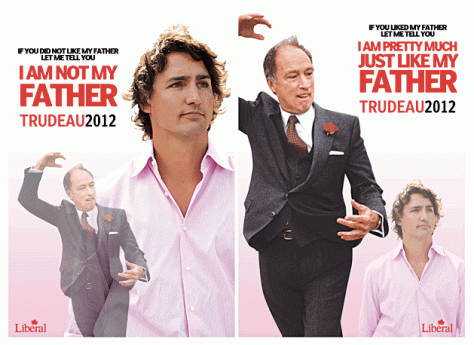
Justin Trudeau and the Liberal’s Groundhog Day

IN THE YEARS since the departure of Prime Minister Jean Chrétien, the Liberal Party of Canada has been trapped in a political Groundhog Day. Three times across a decade, the party has risen at what it expected to be the dawn of its charismatic leader. During the fall of 2003, for example, the word coronation was applied more thickly than the autumn leaves, the media consensus being that Paul Martin was beyond challenge. One after another, up came the saviours — and with equal and opposite force, down they went.

Read More

Going to the Antique Market

I DON’T KNOW when the antique market first got underway, but I suspect that like everything else the notion of an antique is era-specific. Mass industrial production of commercial consumer goods is an innovation whose origins are of slight remove, both geographically and historically. Before 1900, there were relative few objects to be bought and sold, near all of them hand produced in small number and bartered outside of the production and marketing cycles which now seem as inevitable to us as breathing. This is not to suggest that the idea of mass production had not yet occurred by the twentieth century. In textiles and food and furnishings and housewares, and a few other lucrative industries, industrial-based fortunes were amassed in the eighteenth and nineteenth centuries. But the antique, which by necessity requires time to develop, is a modern idea. And that is our present topic.

Read More

Art (Deco) is Everywhere

I‘VE LONG BEEN a pursuer of the decorative style designated in the 1960s by the phrase Art Deco. Perhaps it’s best to begin this little piece of mine with something by way of definition. So: art deco is a visual style created in Paris in the 1920s and characterized by simple, linear and geometrical forms. This aesthetic was popularized at the 1925 International Exhibition of Modern Decorative and Industrial Arts, held in Paris between the months April and October.

Read more

Small minds are behind The Innocence of Muslims

The Innocence of Muslims

IN THE YEARS since the Danish broadsheet Jyllands-Posten, or Jutland Post, incited retribution for its publication of satirical Mohammed cartoons, we’ve had a negative case study of Bertrand’s Russell’s 1940 observation that “in a democracy, it is necessary that people should learn to endure having their sentiments outraged.”

This Russell controversy concerned a New York State school board decision to hire the atheist philosopher, a decision reversed as the result of a pious defamation campaign. The recent killings in Libya of American diplomatic staff (a revisiting of the 2006 cartoon “controversy”) remind us that neither democracy nor the endurance of having one’s sentiments outraged are principles universally accepted, which is why I designate the outrage of some Muslims a negative manifestation of Russell’s principle. Nonetheless it’s into these camps — the democrat and the outraged revenge-murderer — rather than into race or tribal or national categories, which we may in the present instance be most usefully divided.

As did many of you this week I wasted thirteen minutes of my time on the amateurish Innocence of Muslims video, my amusement over its barrel-bottom production values and the shoddy acting of its chubby twenty-first century midwestern American cast (am I alone in seeing the resemblance to a young Michael Gross, from the sit-com Family Ties, in the actor chosen for the lead role?) tempered by the knowledge that revenge had been exacted on dedicated and by all accounts decent public servants.

As I write this, speculation concerning the identity of Sam Bacile, the film’s supposed creator, is abundant. The complete film itself, like Bacile, may not even exist. But does it even matter who made this obvious and clumsy piece of calculated slander, and why? Bertrand Russell’s challenge cuts through the fat and gets to the bone of the current contention: human sentiments will from time to time be outraged, and it is the distinction of civilized persons to endure and to find peaceful means by which to mediate their differences.

We ought to be mindful that the Jutland Post cartoons were the culmination of a debate, at the centre of which were, for example, a September 2005 article “Dyb angst for kritik af islam” (“Deep anxiety over the criticism of Islam,” which registered a cresting Scandinavian fear that candid talk of the world’s youngest monotheism was dangerous and ill-advised), as well as the death of Dutch filmmaker Theo van Gogh and the precarious existence of the Islam critic Ali Hirsi Ali. That debate is as vital and important as ever and, I would add, while it is more active in the West, it will have universal application.

If Innocence of Muslims’ ramshackle depictions of Mohammed invoke Edward Said’s Orientalism (and they do), the intemperate and insecure response of a fringe rabble invokes the indictments, as well as commitments, of Hirsi Ali. Writing of the conflict between religious extremism and “the values of personal freedom,” in her book Infidel, she asserts that “I was a one-issue politician, I decided. I am still. I am also convicted that this is the largest, most important issue that our society and our planet will face in the coming century.” Such is the big picture for these acts of the small minded.


On Getting a Haircut

TODAY I HAD my hair cut at one of the many hip Toronto salons, and I found myself recalling the many haircuts I’ve had. Long ago, when my youthful hair was of unadulterated pepper, a haircut meant a visit to the barber. I don’t know that the word style was of any application to the trade, and in either case what a boy got from the barber of the 1950s to the early ’70s was always the same, at every visit and for every boy. I can’t imagine my mid-century european barbers, who had wielded a scissors and straight-razor through war and possibly also the Depression, submitting to the modish term hair stylist. But then, these were the days before everything, even life itself, became a style.

Read More

A Clothing Store, Hitler, Gandhi and Indian Independence

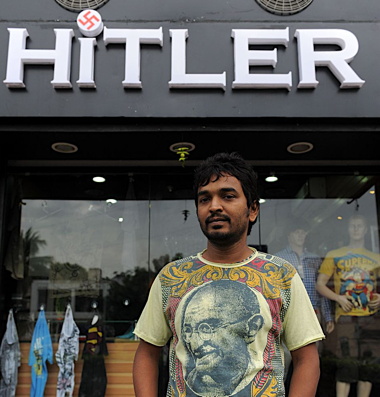
Hitler and India

ALMOST PRECISELY seventy years ago, in March of 1942, Winston Churchill dispatched his Marxist-leaning cabinet minister and political rival Stafford Cripps to secure India’s co-operation in the war against Hitler. Partly a result of the well-founded suspicions of Indian nationalists — chief among whom were Jawaharlal Nehru, Rajaji, Subhas Chandra Bose and Mohandas Gandhi — but mostly the result of Churchill’s covert efforts, the negotiations of the Cripps mission failed (as Churchill all along intended). In the subsequent months Gandhi, anticipating a German-Japanese victory, led his colleagues in the Quit India movement, demanding the withdrawal of Britain and immediate Indian independence.

Read More

Why Desmond Tutu’s Indictment of Bush and Blair is Weak

Desmond Tutu on Tony Blair

IN HIS SEPTEMBER 2 Guardian editorial, “Why I had no choice but to spurn Tony Blair,” Desmond Tutu reproduces the canonical indictments with which opponents of the Iraq war, as well as supporters, are familiar. In doing so he commits familiar errors, and it is to these I shall advert your attention, dear reader, in the hope of furthering a clear-sighted assessment.

Read More

The Imperfect Pleasure of Reading Christopher Hitchens

Christopher Hitchens

THE AUTHOR known chiefly from his 1949 work Nineteen Eighty-Four was by turns a police officer, tramp, gardener and soldier, as well as a broadcaster — his depiction of the Ministry of Truth drawing upon the BBC building in which he broadcast a literary radio program. George Orwell subsisted at poverty’s doorstep, dying at age 46 just as literary acclaim and a general brightening of prospects approached.

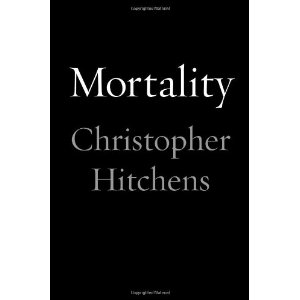
This week I had the imperfect pleasure of reading the final work of an author who admired Orwell and who died at age 62 under comparable circumstance. The imperfection of the pleasure with which I greeted the arrival to my mailbox of a new Christopher Hitchens book was a matter of subtraction, a momentary joy diminished by the awareness I’d never experience it again.

A few qualifications are in order. Hitchens did not live so meager a life, materially speaking, as Orwell did. Neither was Hitchens a soldier, except in an attributed manner which he loathed. The cliché of “battling cancer” bored and irritated him, serving only to underscore a lifelong awareness that — unlike both Orwell and Hitchens’ father (the latter of whom also died of esophageal cancer) — he had never confronted his enemies with the sword, but only with the pen:

“Myself, I love the imagery of struggle. I sometimes wish I were suffering in a good cause, or risking my life for the good of others, instead of just being a gravely endangered patient. Allow me to inform you, though, that when you sit in a room with a set of other finalists, and kindly people bring a huge transparent bag of poison and plug it into your arm […] the image of the soldier or revolutionary is the very last one that will occur to you. You feel swamped with passivity and impotence: dissolving in powerlessness like a sugar lump in water.”

“Only” with pen, but in this mode of battle Hitchens confronted few equals. For years, he was a now-and-again guest on Brian Lamb’s C-SPAN show, each time putting his wit and erudition on display. He might well have remained a fringe interest of the political junkie, had the attacks of September 11 not focused his attention on the topics — theocratic totalitarianism and atheism — which would soon bring him fame. Before 2001, he was an obscure Socialist Brit and former columnist at The Nation who’d written unkindly of Mother Teresa.

His promotion of war against Saddam Hussein and the Afghan Taliban, and his publication of God Is Not Great: How Religion Poisons Everything, made of him a notorious media celebrity, as well as the leading representative of religious skeptics and dissenters of all kinds. Life, for a time, was good — but as is invariably the case, only for a time:

“Of course my book [Hitch 22] hit the bestseller list on the day that I received the grimmest of news bulletins, and for that matter the last flight I took as a healthy-feeling person […] was the one that made me a million-miler on United Airlines, with a lifetime of free upgrades to look forward to. But irony is my business and I just can’t see any ironies here: Would it be less poignant to get cancer on the day that my memoirs were remaindered as a box-office turkey, or that I was bounced from a coach-class flight and left on the tarmac? To the dumb question “Why Me?” the cosmos barely bothers to return the reply: Why not?”

Diagnosed with esophageal cancer on June 8, 2010, the long-time heavy drinking and smoking Hitchens died 18 months later, on December 15, 2011. His was a life of burning the candle at both ends, better to yield a “lovely light” — thereby illuminating the feast of reason and the flow of soul transacted in his many friendships, as well as in the public life of polemic he so evidently enjoyed.

This little book, much of which was printed last year by Vanity Fair, in serial essay form, meditates upon illness, prayer, religion, the state of medical science, the etiquette of cancer and the literal and metaphorical loss of voice, all of which became the quotidian business of Hitchens’ “living dyingly.” As is the case in his many other works, this book is rich in wit and insight and what Orwell termed “the power of facing unpleasant facts.”

In his final years, Hitchens was an advocate of skepticism, rational inquiry, science, and the secular state. As he had many times before, he delivered a regular minority report — in this period of his life the minority constituted by atheists, agnostics, and all manner of infidel. On the other side of his ledger were those eager to impose truth upon the enemy, if necessary by means of lethal force. The convention by 2003, at which time Hitchens was known as a proponent of war against the enemies of civilization, was that he had abandoned his political affiliations and become a neoconservative. But the Trotsky Hitchens and the Anti-Jihad Hitchens were one and the same, promoting internationalism and anti-fascism as against what he in the end felt to be the source of all authoritarianism, the god proposition.

Among the few Washington pundits to have suffered the English Public School — in which one was formally trained in debate, rhetoric, and classical literature — Hitchens was a lover of literature and aesthetics. This and his grasp of history set him apart from the great mass of Washington commentators, extracted from the country’s departments of Poly-Sci and most at-home in the horse race approach to political analysis. It wasn’t only what Hitchens thought that made him worth a hearing: it was how he thought and wrote which set him apart. One of the finest passages of Mortality concerns “voice,” and while it is a general observation, it applies to Hitchens himself:

“The most satisfying compliment a reader can pay is to tell me that he or she feels personally addressed. Think of your own favorite authors and see if that isn’t precisely one of the things that engages you, often at first without your noticing it. A good conversation is the only human equivalent: the realizing that decent points are being made and understood, that irony is in play, and elaboration, and that a dull or obvious remark would be almost physically hurtful. […] Without our feeling for the idiolect, the stamp on the way an individual actually talks, and therefore writes, we should be deprived of a whole continent of human sympathy, and of its minor-key pleasures such as mimicry and parody.”

With the departure of Christopher Hitchens, we have been deprived precisely of this unique stamp of a singular human voice.

On September 15, 2012, Christopher Hitchens’ Mortality will be available in Canada from Signal Books.

The Virtue of Watching Your Language

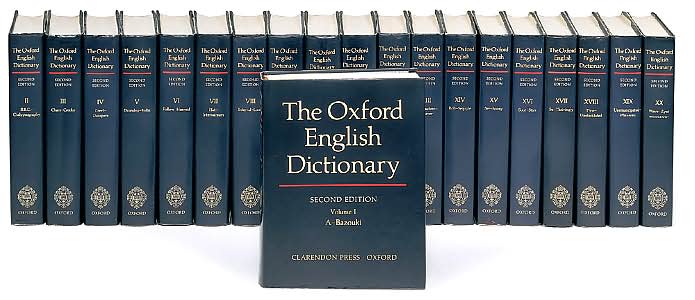
THE ENGLISH LANGUAGE is not unique in having a fluid, ever-changing character. Best described as a Low German dialect imbricated by Latin and Greek, via eleventh century Frenchified Norseman, English has changed a good amount since Geoffrey Chaucer wrote the following lines, somewhere about the year 1390:

Now, sire, and eft, sire, so bifel the cas,
That on a day this hende Nicholas
Fil with this yonge wyf to rage and pleye,
Whil that her housbonde was at Oseneye,
As clerkes ben ful subtile and ful queynte;
And prively he caughte hire by the queynte,
And seyde, “Ywis, but if ich have my wille,
For deerne love of thee, lemman, I spille.”

Read More

Republicans liked Todd Akin before they disliked him

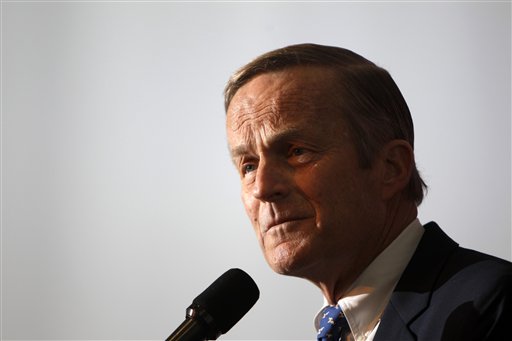
HUMAN REPRODUCTION is nothing if not a fertile topic, and our fecund media have underscored the point in the current case of US Senate hopeful, Todd Akin. At issue is his recent musing on the improbable concurrence of rape and conception, but there are other curious branches and sub-branches to the Akin story which are instructive. As the elections and leadership conventions approach, let’s peer down the avenues opened up by this case of unfortunate phrasing.

Read More