All posts by Wayne K. Spear

waynekspear.com

Podcast #001: Paul Fussell, Aung San Suu Kyi, Ethical Oil … and more

Podcast 001 | Week of 23.06.2012


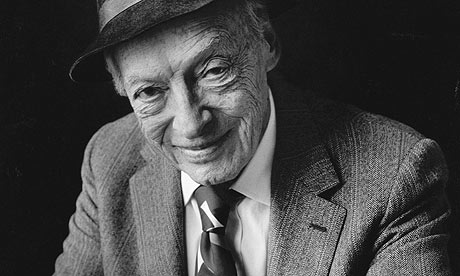
Media Round-up / Retrospective of Paul Fussell (1924-2012) / Ethical Oil / Over- and Under-reported media stories / This week’s game: Portmanteau Titles (examples: “Erin Go Brockovich” “To Kill Two Mockingbirds with One Stone”) — submit your entries.

Download entire podcast (320 kbps mp3).


One last chance to do the right thing on Omar Khadr

The case of Omar Ahmed Khadr has long divided Canadians into two respective camps, Bring Him Home and Let Him Rot Over There. The federal government of Canada now appears to constitute a third, having for years shilly-shallied and otherwise kept the matter in limbo.

The Let Him Rot camp might do well to review the following facts. Born in Toronto, on 19 September 1986, Khadr was eight years old (give or take a couple years) when he perhaps met the falsely accused Maher Arar. He was ten when he met Osama bin Laden in Jalalabad. After September 11, these childhood encounters constituted a state asset and a potential weapon against al-Qaeda, and as a consequence Khadr was detained, tortured, and likely permanently damaged.

There are — as always in battle — contradictions, ambiguities, and gaps in the record. On July 27, 2002 Sergeant Layne Morris lost an eye and Sergeant Christopher Speer his life in Khost, Afghanistan. The lawsuit filed on behalf of these individuals, by Morris himself and by Speer’s widow, was against the estate of Omar’s father, Ahmed Said Khadr. Some distance was to be traversed to leverage “an act of terrorism,” as the formal charge put it, against a court-enforceable civil liability. To further this case, the plaintiffs argued that Khadr senior was ultimately responsible both for the loss of an eye and the loss of life, and that his estate should pay.

This case, whatever its merits, was in my judgement aiming in the right direction. Khadr senior’s movements, from Peshawar to Logar to Jalalabad, are winks and nods to the knowing. One does not accidentally end up in Bab al-Jihad (Jihad’s Gate), as Logar is known. Nor would Ahmed Khadr be observed by intelligence agencies with Ayman al-Zawahiri, Abu Laith al-Libi, and the bin Ladens as a matter of mere coincidence. In the case of Abu Laith al-Libi, it seems clear the young Khadr was being exploited and perhaps groomed by his elder on account of his ability to speak, among other languages, Pashto. (This detail serves to remind us that international jihadism was imported into Afghanistan by outsiders – in the case of al-Libi, a foreigner of Libyan origin.) Omar Khadr is a bright individual, and even at fifteen he had some experience of the world and would have presented himself as ripe for the taking.

One crisp January morning, on the way to a Parliamentary breakfast with members of the federal Senate, a former CBC journalist wryly told me that 80% of that august body was useless, but that the other 20% made up for it. Among the redeeming contingent is surely Senator Romeo Dallaire, who considers Omar Khadr a former child soldier, and who on this foundation rests his call for the Guantanamo Bay prisoner’s release.

Khadr, the son, may well have gone down the dead-end Jihadist road upon which Abu Laith al-Libi found his martyrdom, but at no time during the events under consideration does he appear to have been an instigator. He was a child who had the all-encompassing misfortune of being born to rotten and hateful parents, and for that proxy offence he has paid enormously — in a decade’s detention and in the currencies of interrogation, abuse and humiliation (both, please note, by American and Canadian officials). The trial which gave rise to his plea agreement was a piece of calculated cynicism designed to rehabilitate the Guantanamo name brand, by applying charges like “murder in violation of the law of war” which could be defined and re-defined as required — as indeed they were. Among those arguing the wrongness of Khadr’s treatment have been the United Nations and the Supreme Court of Canada. Last month, my own publisher McGill-Queen’s University Press released the critical anthology “Omar Khadr, Oh Canada” featuring contributions by Dallaire, Maher Arar, Craig Kielburger, and many others.

The disagreement over Khadr’s place, or lack of place, in Canada will go on, but the moral battle is in my view already lost. The Khadr detention and especially the dirty work of Guantanamo which followed was a disgrace and a crime. Now there appears a new challenge and a new opportunity, to reintegrate and restore a Canadian citizen so badly abused, by so many, and for so long.

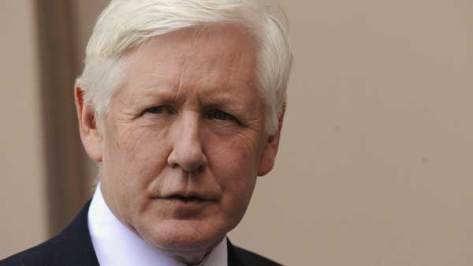
Good fortune and Bob Rae weren’t always on the best of terms

FEDERAL LIBERAL LEADER Bob Rae’s citation of William Shakespeare was an indirect invocation also of a commonplace political euphemism — the putting aside of personal ambition “to spend more time with the family.” Announcing his decision yesterday not to run for permanent leadership, he produced the closing lines of Sonnet 25:

Read More

Ripples from the War of 1812 are still being felt

IN RECENT MONTHS, there has been debate over the federal government’s decision to spend a yet-undisclosed sum commemorating the War of 1812. The Americans will doubtless overlook this bit of their history, but I’m unable to imagine any Canadian government ignoring the two-hundred-year anniversary of a conflict that could have converted Upper and Lower Canada into two of the coldest states of the Union.

According to the official government website announcing the initiative, “Canadians gave [the Harper Government] a strong mandate to celebrate important historical events”: in this instance a war which — again, from the Government’s website —

… helped establish Canada’s path toward becoming an independent and free country, united under the Crown, with respect for linguistic and ethnic diversity. Simply put, the War of 1812 helped define who we are today, what side of the border we live on, and which flag we honour. Against great odds, it took the combined efforts of Canadians of all ancestries to repel the American invasion and defend Canada in a time of crisis.

A grand feel-good take on the conflict, and who could disagree? Jeffrey Simpson, for one, who on October 7, 2011 characterized the war as horrible and stupid, and “among the dumbest ever fought.” Whether agreeing with this assessment or agreeing not, one should probably award points for the spot-on retort of Dorchester Review editor, C.P. Champion:

Jeffrey Simpson, a columnist at The Globe & Mail, thinks Canada should not celebrate the upcoming 200th anniversary of the War of 1812 because the conflict was “stupid” and “dumb,” with “bad leadership” and “messy battles.” If that is the standard, we had better forget celebrating much of our history. Get out your calendar and scratch off Remembrance Day, November 11. That date commemorates the allied victory in 1918 that marked the end of the First World War — a conflict that presumably fits Simpson’s definition of a stupid and messy war.

A good point. All wars are indeed irrational and vicious and stupid, even when necessary, their accomplishments invariably measured in the numbers of children turned into corpses and summoning to one’s mind these lines of Hamlet:

… to my shame I see
The imminent death of twenty thousand men
That for a fantasy and trick of fame
Go to their graves like beds, fight for a plot
Whereon the numbers cannot try the cause,
Which is not tomb enough and continent
To hide the slain.

So the question remains, Why commemorate war in general, and the War of 1812 in particular?

Journalist Steven Chase has reported a Department of Canadian Heritage study showing in detail what we should already know, that most Canadians are unfamiliar with the details of the War of 1812 — the countries involved, the causes, the individuals who played prominent roles, the locations of battles, and so on. The figures are as a general rule appalling and culminate in the pronouncement that “only one of the 1,835 respondents correctly identified all six of the historical figures from a list.” Here one should put due emphasis on the cadence from a list, which tells us that the respondents probably didn’t know anything about other historical events either, and therefore were unable to arrive at an answer by means of elimination. This state of collective amnesia is probably as good a reason as any to do some commemorative work, commemorate being a verb meaning “to bring to remembrance.”

An honest and candid assessment of the period 1812-1814 will show that the war was started on false grounds, by American jingoists and super-patriots, as Simpson asserts. However, once started, the people of Upper and Lower Canada had good reason to fight. Also, while the war was lost by the inept and over-confident Americans as much as it was won by the British and the Canadians —and the Canadiens — the character and accomplishments of — for example — Major General Isaac Brock were what they were. The 1814 Treaty of Ghent confirmed the pre-war, and indeed post-Revolution, territories and borders of British North America and the United States, and while the Harper government will tell you that peace followed as a result and ever since, the fact may well be that the Americans would have accomplished at a later date what they could not accomplish in 1812-1814, had they not had vast western and southern frontiers to divert their apparent boundless attention and energy.

In other words, the legacy of the war was neither territorial nor geopolitical, but rather psychological. After 1814 the occupants of territories north of the 49th parallel were possessed of what is today termed “Canadian identity,” which may be summarized in the phrase “not American”. Although there has been peace between Canada and the United States ever since 1814, suspicion and a vague condescension toward the Americans was henceforth a permanent feature of the Canadian psyche. An early example of the Canadian apprehension of Uncle Sam — and of the Canadian habit of arriving at self-understanding by looking south — can be found in Thomas Haliburton’s acerbic 1836 novel The Clockmaker. In this work the satire cuts both ways, reflecting a deeper and uncomfortable awareness that Canada must either side with Britain or else be absorbed by America.

In the preceding paragraph I have stated that “after 1814 the occupants of territories north of the 49th parallel were possessed of what is today termed Canadian identity.” There is of course a large and important exception, the indigenous peoples of this land. One of the principal immediate causes of the war was the growing conflict between a brutal and expansionist settler population and its indigenous resistance, among whose most famous leaders in 1812 was Tecumseh. In the three decades leading up to 1812, the Haudenosaunee (like Tecumseh’s people, and indeed all indigenous groups) had been dispossessed of their land base at an alarming rate. The 1812 war offered an opportunity to extract concessions from Britain and Canada through military alliance, a strategy which had served the League in the past and might do so again. It was a military alliance with Britain, during the American Revolution, which yielded to the Six Nations the Haldimand Tract, in Ontario. Ninety-five percent of this land would eventually revert to Canada through a series of transfers, some of which are held by the Six Nations to have involved deception and outright theft. (The current-day Caledonia dispute is a direct legacy of this period.) Not a promising record, but in 1812 military alliances still counted for something, and then as now there were things for which it was worth fighting.

As it happened, the War of 1812 marked the end of the historical era of British-Indian and French-Indian military alliances. European rivalries having been settled on the continent, the provinces within a couple decades of the war’s conclusion were formulating a new, inward-looking Indian policy at the centre of which was assimilation and absorption of indigenous peoples into the sea-sea-sea body politic. Before the War of 1812, indigenous peoples were viewed by Canadian and American alike either as dangerous enemies or as military allies; after the war, they were increasingly viewed as a problem to be resolved through absorption and legislation. The war probably hastened what would have occurred anyway. Nonetheless, whatever victory Canada may justly claim, it is the case that to the indigenous people who fought alongside the British loyalists, as to the later generations who would do the same on European soil, there fell few of the spoils. An emergent outward-facing nation became after 1814 preponderantly inward-looking, the Indian problem thereafter, and to this day, displacing colonial rivalries of the previous centuries.

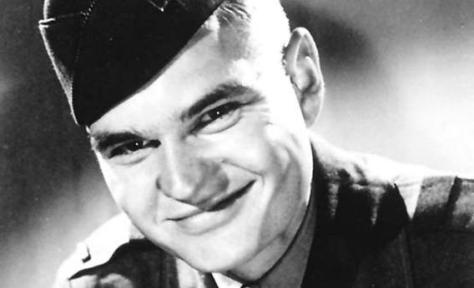
Ratko Mladić: How Civilizations Tumble

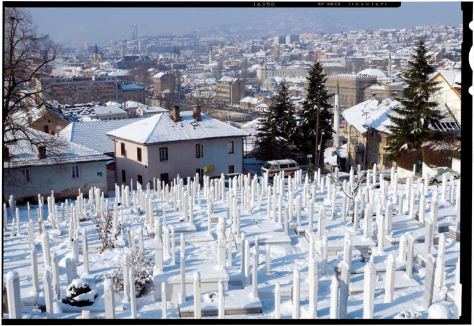
ACROSS THE NEXT dozen or-so months, the Hague tribunal deliberating charges against former Bosnian Serb army commander Ratko Mladić will review a good amount of evidence, much of it rendered on videotape. The significance of this detail is easily missed if you are too young to have been an adult during the Bosnian War — but if you are of sufficient age, the richness of the record against Mladić constitutes a reminder not only of the crimes but of the character and indefensibility of the world’s slowness of response.

Read More

Abortion, Augie and the March for Life

SUBMITTING MYSELF TO the Ottawa weather, which today possessed all the charm of wet underpants, I lingered while the wind carried my way the Parliament Hill speeches of the March for Life assembly. In the middle of one characteristically sonorous appeal, I found myself thinking about a passage from Saul Bellow’s The Adventures of Augie March:

Read More

Ottawa mixes platitudes with parsimony for Canada’s veterans

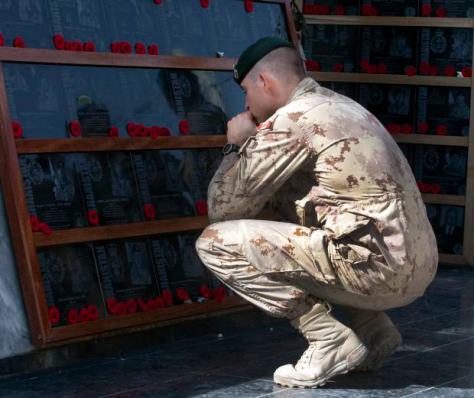
AT FIRST GLANCE the federal government’s proposed changes to the Department of National Defence’s soldier suicide prevention program is an offense against common human decency, and it doesn’t much inspire confidence that this news arrives from the Minister of National Defence, who has made headlines in recent months for indulging himself needlessly on the public dollar. The principle that Austerity Is Good For Everyone Else is a familiar hypocrisy, and on this foundation we now apprehend Parliamentarians such as Peter MacKay and Bev Oda.

Indulgence necessarily brings us to the question, Why are these under-performing lugs still warming their over-priced Centre Block seats? Why is a mediocrity and liability like MacKay able to preside over the affairs of veterans, praised by politicians when it’s a matter of expedience but otherwise under-valued, in this supposed time of cost-consciousness? Was Conservative MP Rob Anders representing the sentiments of his caucus when he fell asleep in a Halifax meeting with veterans? Perhaps Ottawa is no longer alive to the pulse of the nation anywhere. One thing is certain. To promote the interests of soldiers has been, in recent years, to know the indifference of the federal government. Speaking of Halifax: consider the five-year battle of Nova Scotian Dennis Manuge, which this week ended with a Federal Court of Canada ruling against the government’s claw-backs of SISIP long term disability benefits for disabled veterans. According to a May 2 press release of the Veterans Ombudsman, “all witnesses who appeared before us, with the exception of witnesses from the Department of National Defence, felt the reductions were indeed unfair.”

This business of nickel-and-diming those who have served in the armed forces is neither new nor restricted to Canada, but it rankles nonetheless. Mr. MacKay claims that “Canada has become a world leader in fighting the stigmatization and raising awareness of PTSD and other operational stress injuries,” but in the meanwhile his department has forced veterans to take legal action and has brought substantial grief to Canada’s Veterans Ombudsman Guy Parent, on issues ranging from denied claims for the Agent Orange ex gratia payment to decisions made by the Veterans Review and Appeal Board. Now, despite the Department of National Defence’s acknowledged priority of post-deployment PTSD treatment and suicide prevention, the politicians appear to be offering little more than vague platitudes and assurances of commitment.

It’s not only bad politics to deny services to disabled and distressed veterans, it’s bad policy. As bad policy, the government’s ill-considered parsimony undermines the relationship of trust and reciprocity between those who serve and those who are served. As bad politics, this instance of mealy-mouthing and short-changing makes the Harper Government look distant from, and unresponsive to, Canadians of every variety. But these are matters for Canadians themselves to weigh — and, Mr. Harper, you can be certain that they will.

How J.S. Woodsworth opposed the war and saved capitalism

J. S. Woodsworth

ONE MIGHT HAVE anticipated, with all the recent talk of conscience rights, that J.S. Woodsworth would soon enough become a hash tag. But not as the object of a slander. The man who once led the Co-operative Commonwealth Federation was nothing if not conscience driven. His lifelong, principled commitments to the Social Gospel, socialism and pacifism were amply rewarded — both by the Methodist church and the nation which he dutifully served — with accusations of sedition, criminal charges, harassment and imprisonment. Whatever one’s politics, one could do worse than to emulate the spine of this man.

Read More

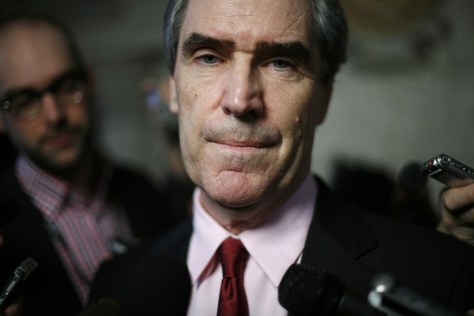
What difference does it make what Michael Ignatieff says?

Michael Ignatieff

In his essay “Notes on Nationalism,” George Orwell observed that “if one harbours anywhere in one’s mind a nationalistic loyalty or hatred, certain facts, although in a sense known to be true, are inadmissible.” By his reckoning, nationalism is a matter of sentiment mixed with a desire for power and prestige; “swayed by partisan feelings … there is no limit to the follies that can be swallowed.”

There are several passages that Barbara Kay may have had in mind when she concluded, in her essay “Michael Ignatieff hands Quebec separatists an unexpected gift,” that “Professor Ignatieff has just cheerfully thrown us all under a bus for the pleasure of adding colour to an international interview. Orwell was right about intellectuals.” One concerns war propaganda that he noticed being spread about by academics. Observing the credulity of certain intellectuals, the author of Animal Farm and 1984 dryly observed that (I am citing this from memory) some notions are so absurd that only an educated person could believe them. There is also a passage, again from “Notes on Nationalism,” which comes to mind: “One has to belong to the intelligentsia to believe [these follies]: no ordinary man could be such a fool.”

It’s dangerous for any writer to quote Orwell, more dangerous to cite Notes on Nationalism, and most dangerous to cite Notes on Nationalism in an article about nationalism. I know what I’m talking about: I lived nearly a decade in Quebec, and in that time I absorbed the lesson that a rational, dispassionate discussion of separatism in Canada is a rarity. Orwell’s essay is saturated with the cautionary observation that in such matters “no unbiased outlook is possible” and that the best one can hope for is an “essentially moral effort” to struggle against our own loves and hatreds.

I labour this point because, having listened to the Ignatieff interview , I was surprised at how measured it was, when juxtaposed with the partisan reactions. It is objectively true that Canada, since 1980, has undergone political decentralization. It is furthermore objectively true that fiscal and monetary policies uniquely bind Quebec to the federation. Less certain are Ignatieff’s claims that the two solitudes have nothing to say to one another, and that Canada is on a path logically tending to separation, but what affront is there in considering these possibilities as possibilities?

Only the affront to sentiment, and the power-and-prestige contests with which readers of Orwell are well familiar, stand in the way. Accordingly, Heritage Minister James Moore attacked Ignatieff’s statements as “arrogant, irresponsible and narcissistic,” while NDP leader Thomas Mulcair noted his own opportunity to pander, accusing the Liberals of obstructing his party’s past efforts “to give real meaning” to the recognition of Quebec nationhood. (More note should have been taken of this loaded declaration.) The Quebec premier, stumbling in the polls, reassured federalists while invoking the destructive intentions of the PQ leader, Pauline Marois. Soon everyone had their partisan speaking points on the podium, each declaiming over the others. Could it really be that there are only two solitudes in this country?

Kay’s central assertion that the former Liberal leader had “just handed [the] separatists a metaphorical bunker buster,” may have fallen short of the truth. By the time the sunlight had arrived to Canada’s shore, everyone was armed. The fury however overlooked the inadmissable fact that no one much cares what Mr. Ignatieff thinks and says. During the last federal campaign I had argued that this was a shame, and that the Liberal leader was himself largely responsible for it. Despite having thought a good deal about topics like war, foreign policy, nationalism, and terrorism — and despite having written numerous books on these and other topics — Michael Ignatieff dishonestly campaigned as if he were the down-home, plaid-and-ballcap type he most clearly is not. As a result, he bored everyone even more than he might have had he actually talked ideas. But for the purposes of nationalism, his not-so-outrageous speculations had to be dangerous and potent. The man who proved himself capable of sinking a political party had to be seen as capable of sinking a country also. This is a case of folly, the swallowing of which I don’t recommend. If Mr. Ignatieff possessed the power to direct the fate of a nation, he would not now be back at his other day job, leaving behind the also-rans of the Liberal Party of Canada.

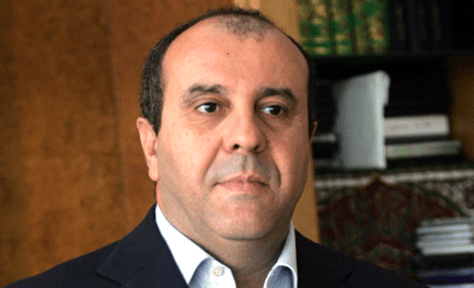
Belhassen Trabelsi — a criminal, not a refugee

Belhassen Trabelsi

THE RIVALRY BETWEEN Alberta’s Wildrose and Progressive Conservative parties at several points alluded to another contest, of Canada and Saudi Arabia in the designation of the world’s premier crude-yielding nation. There’s however another contest underway, crude in a differing sense, and concerning the harbouring of Tunisia’s former oppressors and exploiters.

Read More

Wildrose adds to politics’ rich history of gaffedom

Joe Clark

The Alberta race, within view of the ribbon, is yielding the gaffes which invariably issue from the combined stresses of mental fatigue, excitement and desperation. In the gaffe genre, there are many sub-species of misspeaking. Each fresh entry into the canon tells us something distinct.

We begin with a politician of Albertan extraction. “What is the totality of your acreage?” former Prime Minister Joe Clark once asked, addressing an indigent farmer on a trip to India. Like Gerald Ford’s inept descent from an airplane, infamous thereafter as a recurring Chevy Chase gag, Clark’s pinheaded phrasing became a metonym for his perceived signature fault: an inability to connect with the common folk and to perceive the blowing of the political winds. Rather swiftly, Clark’s tin ear for politics brought him down. (In the case of Gerald Ford, one of the most nimbly athletic persons to occupy the White House, the perception of ineptitude was well off-the-mark: but in politics perception is everything.)

Moving further afield from Alberta, Kim Campbell submitted two gaffes under the rubric “Things Which Are Probably True But Should Not Be Said.” During her campaign, she asserted that the recession was likely to go on for some time (it did) and that elections were a lousy time to discuss the issues (quite arguably true, when you consider it).

In the gaffe category of “What I Meant To Say” falls the recent statement of Calgary-Greenwood aspirant, Ron Leech. In my estimation an unfairly labeled instance of bigotry, Leech’s claim that “As a Caucasian, I believe that I can speak to all the community” confirmed certain familiar stereotypes of Westerners. Seeking his office in Calgary-Greenway (a come-lately electoral district patched together from among three previous ridings, in a 2010 re-distribution), Leech meant to say that he can win in an ethnically diverse area. Having narrowly lost in his last attempt, this is precisely his current political challenge. A “white” candidate the political version of Type O blood? This is a whack of gaffe, but hate is not a part of the package. (An aside: the word candidate derives from the Latin term “shimmering white,” describing the bright toga put on by Roman campaigners. White candidate is thus a tautology.) A better argument would have been to observe that social conservatism is the ideological home of many immigrant populations, and that Leech is nothing if not a social conservative. Oh well.

Then there are the gaffes — the ones we most cherish — which are merely humorous. In this context I recall Bob Wenman’s professed allegiance to “Judo Christianity” (which brings to my mind the so-called muscular Christianity of Henry Fielding) and Allan Lamport’s assertion that Canada is the greatest nation in this country. Such comments are usually laughed off and forgotten, but they do risk exemplifying Mark Twain’s observation that “it is better to keep one’s mouth shut and be thought a fool than to open it and remove all doubt.”

An example here is Stockwell Day, who after an initial burst of extraordinary political promise seemed bent in both word and deed toward making a proper fool of himself. His pointless attack on Lorne Goddard eventually cost the Albertan taxpayers over $700,000, and along the way he made a specimen of himself in two water-related incidents, decrying that “jobs were flowing south just like the Niagara River” and appearing on Jet-Ski for a wet suit photo-op. At first merely comical, his miscalculations and fumblings eventually split the Alliance Party, leading to the ascendance of the current, and surprisingly gaffe-free, Prime Minister.

In the final category fall gaffes of a more serious nature, as my colleague Kelly McParland has observed. These gaffes bring forth questions which can be evaded or brushed aside for only so long, for the “mispeakings” here are cases neither of comical confusion nor of political tone-deafness, but of views likely held by candidates but dishonestly withdrawn or repudiated for a home-stretch tactical advantage. In these cynical instances, the gaffes are no matter for laughter.

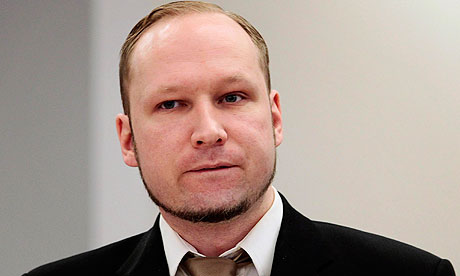
Anders Breivik: not mad, but definitely a failure

Anders Breivik

It’s odd that a journalist writing of the Norway murders for the Christian Science Monitor would dwell upon Hindu nationalism while failing to consider the Knight’s Templar, but such was the case in the days following this depraved act of violence:

“Mr. Breivik’s primary goal is to remove Muslims from Europe. But his manifesto invites the possibility for cooperation with Jewish groups in Israel, Buddhists in China, and Hindu nationalist groups in India to contain Islam. … [His] manifesto says he is among 12 ‘knights’ fighting within a dozen regions in Europe and the US, but not India. It’s not known yet whether this group, which he calls the Knights Templar Europe, actually exists.”

Of course, a Knights Templar did exist in Europe — and while in business, they made a name for themselves throughout the Crusades of the Middle Ages. I mention this because Andrew Berwick (or as he is now known, Anders Behring Breivik) begins here also. His 1,500-page “manifesto” bears a Knight’s Templar motto on its frontispiece: “Pauperes commilitones Christi Templique Solomonici,” or “The Poor Fellow-Soldiers of Christ and of the Temple of Solomon.” If you detect the aroma of the secret society in this, allow me to remind you that the Freemasons, historically hostile toward to Christianity, liberally appropriated the symbols of the Knights as well. It’s an old business, this cult stuff.

Having gone through his weird and self-absorbed work, I arrive at two observations. The first is that the man has long marinated in the fetish of fame, and the second is that he represents an extreme manifestation of views which are unfortunately not unfamiliar. The current trial of this paranoid also-known-as is in a sense giving him exactly what he wants — a global platform. This fame has been lamented by survivors such as Tore Sinding Bekkedal, but it should be kept in mind that the regrettable gift is extended under the principle that the other hand will simultaneously take. Here I refer to the fact that this lowlife thug employed murder as a cheap marketing trick, the object of which was to get you and me to pay attention to his message. Yes, he’s been given the audience, which is for him a victory of a sort. However, we were then expected under this arrangement to rally around his ugly cause, rather than denounce it. Today the fact that he is a chained man, rather than the hero he clearly wishes to be, is the only consolation in this depressing and disgusting matter. There was a time crusader and bigots of his stamp might actually lead, and how good for us the pseudo-politics of racial hatred and xenophobia are now so widely discredited.

There is some controversy whether or not Breivik is indeed of sound mind. His acts seem to some too mad to be the product of a rational intelligence. The remarkable thing about his writing however is how tediously ordinary it is in many respects. He includes for instance a Question and Answer section which divulges his sexual interests and (limited) experiences. The last eight pages are awkwardly postured photos. In each case Breivik strikes a note of pathos, apparently absorbed in the notion that everything he is and does is inherently interesting. The effort comes across less as madness than as self-importance further puffed up by his chauvinism.

There are further themes in the manifesto one cannot responsibly ignore. The man is a medieval Holy War nostalgist and a cultural Catholic extremist who admires the awful bigot Serge Trifkovic and who, if he could meet two famous persons, chooses the Pope and Vladimir Putin. (This too is covered in the Q & A.) The Pope is valued as a defender of Christian culture, seen by Breivik as under attack from bolshevism and radical Islam. The choice of Putin derives from similar logic, as well as from the recent Chechen Wars, and it is worth noting here the recent political and cultural resurgence of the Russian Orthodox Catholic Church, an institution deeply invested in the Russian dictator’s fortunes.

The last and certainly least of this trio, Serge Trifkovic, is a Serbian nationalist and a former Radovan Karadzic spokesman. A Republika Srpska hack, ethnic cleansing denier and Muslim hater, Trifkovic is most known (along with Walid Phares) for the development and dissemination of the “taqiyya thesis” — the idea that all Muslims are terrorists bent on world domination, required by their religion to lie about this essential fact. Today his tribal prejudices, which had ample indulgences during the Christian-fascist killings of Bosnian Muslims in former Yugoslavia, find a receptive audience among the far right all around the world. This is the sort of folk Breivik most admires.

So if he is mad — and I don’t for a minute think he is — he at least has the lucidity needed to expound at length his thesis. Putting it as plainly as I can, that thesis is as follows. The Christian world is under attack and may only be redeemed through a violent and atavistic effort to repel modernism, as manifested in the twin forces of Bolshevism/Marxism and liberalism. Note that this is the argument which gained an audience in the late Weimar Republic, excepting one important detail: anti-Semitism. Nowhere does Breivik stoop in this manner, and nor does he profess to admire Hitler or the Third Reich. (Mein Kampf comes up, but only to make the point that Goebbels’ propaganda techniques are today being employed by the multiculturalists.) Rather than the familiar scapegoating of the Jews we find instead the Islamic menace, which has the curious effect of aligning this proto-fascist with Israel. Do not be misled however by the character of the creed in this new political sleeping arrangement.

As a parting exercise, I invite you to submit to a thought experiment. Imagine if you will that Breivik’s war does arrive, and in the form for which he has committed mass murder. Whose side will you be on? I myself have no desire to be on either. Precisely the things I detest about jihadism I hate also about Breivik’s holy war and the thinly-veiled authoritarianism of those who have attempted to qualify or explain away his actions. By apologize I refer to those who have publicly denounced his methods only to then say “he has a point.” If you crawl even a bit into his head, you see that you can’t pick and choose so languidly: the disease of his worldview is down to the bone. Returning to the point at which I began, I observe with relief the failure of Berwick’s appeal to Hindutva chauvinism and every other kind of bigotry. His manifesto is a failure, and he is a failure also. Meanwhile the work of civilization — in whose service labour millions of Christians, Jews, Muslims, Buddhists, atheists, agnostics, and Hindus — marches forward. Amen.

The great achievement of the Charter

Canada's Charter of Rights and Freedoms

I neither have a horse in, nor would desire to enter one into, the race between Alberta’s Progressive Conservative candidate Alison Redford and her Wildrose rival Danielle Smith. My interests furthermore were of no concern in the American Senator Roy Blunt’s “conscience amendment” — appended to a transportation bill in response to President Barack Obama’s mandate to extend employer health coverage to contraception. In these and many other related developments around the world I am a mere observer, and so I might well say, and would prefer to say, “Best of luck to you” — and leave it at that. Unfortunately, this stuff is in the air. Wherever you happen to be, the winds are blowing in your direction. The principle of minding one’s own private business is now on a course of collision with the incipient work of fitting the square pegs of public policy into the round holes of private conscience.

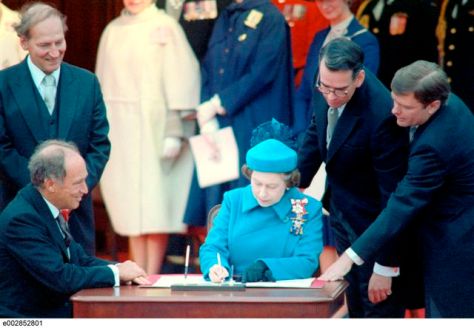
Thirty years ago Queen Elizabeth II authorized the Constitution Act, thereby entrenching the Canadian Charter of Rights and Freedoms. Whatever your view of the Charter, the work of sorting out intrinsically incompatible world views and notions of personal rights, and balancing these against the public interest, is the core challenge of our generation. Today this rights challenge arrives in multiple forms, from petitions for accommodation of Sharia to endorsement of gay marriage. Each challenge must be met individually, on its own merits or lack thereof. As the Wildrose candidacy of Edmonton South’s Allan Hunsperger this week drifts onto the media’s front pages, I am reminded (as if I needed a reminder) of the living notion that homosexuals will “suffer the rest of eternity in the lake of fire, hell, a place of eternal suffering.” A conscience of a definite kind may be inferred from this assertion, and while it’s light years from my own, in my view there must be peaceful co-habitation of the skin of this Earth by the differently thinking, whenever this is both principled and possible. Now that the Wildrose party is proposing to institute a conscience-based alternative to the Alberta Human Rights Commission, I find myself keen to know what folks like Allan Hunsperger — the avid compilers of lists of the hell-bound — mean to do with it.

The balancing of competing rights and interests will stand as the supreme object of policy deliberation, at least until the world’s ideology-driven moral police get the upper hand. Balance may seem the tepid object of soft-headed middle-of-the-roaders, but in fact it requires moral courage. In the case of President Obama’s contraception health coverage mandate, there was earlier this year a widely perceived over-reaching of state power and a concomitant infringement of religious rights, thereafter succeeded by a compromise. Obama’s conciliatory conscience exemptions, although imperfect, satisfied many — but not all. The few holdouts, one could argue, were simply adhering to their own internal logic: if you are of the conviction that contraception is immoral, how it is paid for is irrelevant. The necessary thing is to keep others from having it. Once engaged on this issue, the most vocal and obdurate opponents seemed hardly to care for a compromise. But the extremists as a rule fail, because they do not represent a credible way forward. The unpleasant truth, if you happen to be an anti-contraceptives Catholic bishop, is that lay Catholics have their consciences too — and that by means of these consciences they have found contraception to be quite compatible with morality.

The Charter of Rights and Freedoms is not a perfect document, but what in this human world is perfect? Present-day criticisms of the Charter, and of related institutions and legislation such as the Canadian Human Rights Act, demonstrate the necessary work of seeking reasonable and principled balance. Those who wish to discuss and critique and engage in heated disagreement uphold the very principles of human rights, dignity, and freedom. Those who seek to impose their views on others, by means of violence or subterfuge, uphold only their selfish will.

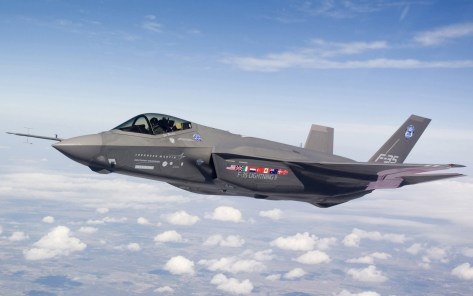
How gaudy baubles and military Keynesiasm gave birth to the F-35

Canada's F-35

A STRAIGHT-SHOOTING bureaucrat will admit that procurement processes are often initiated with the final selection a foregone conclusion. If you know in advance what you need, and you furthermore know who’s most qualified to deliver, then formalities intended to promote transparency and accountability are at best inconveniences to circumnavigate — and every public servant knows well how to steer that ship. That this occurs regularly within the bureaucracy is an open secret.

Read More

Nickels and Dimes

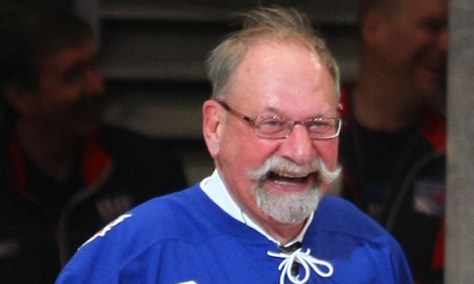
YESTERDAY, MY father reminded me of a 1978 Pop Shoppe advertisement featuring the singular Eddie Shack. If you’re old enough to have seen it, you’ll recall this former Toronto Maple Leafs player’s catch-phrase, found in a number of Shack advertisements of the ’70s and ’80s: “Maybe I didn’t go far in school, but there’s one thing I’ve learned from my mom and dad: look after the nickels and dimes, and the dollars will look after themselves.”

Read More