
All posts by Wayne K. Spear

Podcast 79
Trump’s Budget Will Fix America | EXCLUSIVE: This Podcast Has The President’s Tax Return! | Kim Jong Un vs. President Trump Cage Match
The columnist versus the commons
In my experience it is not the editors of papers but rather the readers who are intolerant of unorthodoxy
✎ WAYNE K. SPEAR | MARCH 13, 2017 • Personal Essays
ALL WHO HAVE WRITTEN for the newspaper editorial section know what readers know, that theirs is a strange and, in some respects, ridiculous task. We understand how tedious it can be to discover us, once again, with our opinions of the moment. In the defence of editorialists, however, I’ll note it’s simply the case that someone must fill the area between the ads, and a fellow with something to say about the President’s latest tweet (or whatever) is a cost-effective proposition. Not only this, comment sections are as a rule popular features of a paper. As a result you are probably stuck with us, as we with you. This being so, isn’t it time we confessed to some unspoken truths of editorial, opinion, or political writing?
I have already alluded to the self-awareness of an op-ed writer, whose job subsists on the improbable and therefore embarrassing conceit that she has something useful, intelligent, and worthwhile to say on any and every topic. A columnist is someone forever sticking out his neck, a broadsheet whack-a-mole impelled by some impenetrable force that no normal person experiences. This raises the unavoidable question, What compels an opinion writer to do it? There are as many possible answers as there are people to give them, but the more credible explanations begin with the observation that newspaper columnists are human beings driven by ordinary human impulses, such as ego, need for acceptance, a desire to do something useful with one’s time in this world, and so on. Once a writer has clothing and shelter (not easily obtained by the labor of writing, alone) she moves up the hierarchy of need, where objects like belonging and love and meaning obtain. A news writer is likely to offer you all kinds of high-minded and self-congratulatory nonsense—he is defending democracy, fighting for truth, standing up for the little guy—but none of these speak to the base and universal human motivations. Taking my own case, I knew I was going to be a writer by age eight, long before I knew there was something called “politics.” From this it follows that my ultimate motivations as a writer, whatever they may be, must involve things that would be available to a typical eight-year-old. And sure enough, I recall from my earliest days a fascination with the sound of words and the shape of printed letters, the feel of paper and the smell of books, the click of typewriter keys. First came the inner compulsion to write, and only years later the ennobling propaganda.
Notice that, for the purposes of this essay, I am focused on writers of opinion pieces. Much of what I have to say will apply to novelists and journalists and poets, but these are not my concern. The relationship of a professional editorialist to the novelist is that writers start out imagining themselves the next Faulkner or what-have-you, and when this turns out not to be the case, they go in search of other pastures, arriving eventually at the opinion pages. There is a definite hierarchy of writerly ambition, with literary fiction at the top and mere utilitarian prose—things like tampon instructions or VCR manuals—at the bottom. The editorialist is somewhere in-between. It is a broad category of persons, comprising well-paid media celebrities as well as obscure bloggers. Most opinion writers work for no money and less fame, a sure indication that something beyond material gain is their motivation. I mention this because I have encountered the charge that my opinions are purchased, which is not the case. Everything I have written at the National Post, for example, is untainted by the moral filth of pecuniary recompense. Once in about 2012 Kelly McParland took me out for lunch, on Postmedia’s dime, and although the leasing of my opinions could have been put into play, no one present (McParland, Matt Gurney, and Christopher Nardi) undertook the gambit.
This leads me to a second common misconception, that opinion writers are under the control of media owners and/or editors. The problem with this notion is that it posits a totalitarian world of invigilating Big Brothers and thoroughgoing thought control, a proposition which requires efficiencies well beyond contemporary newsrooms, including Postmedia. I know as fact that editorial staff have been cut to the point at which articles now get published with only the most cursory review. My opinions have never once been censored or silenced by an editor, but then again I have yet to call for Marxist-Leninist revolution or Juche in the classroom or other beyond-the-limit measures. For reasons I’ve never understood I got a few letters over the years accusing me of subservience to Jonathan Kay (the former National Post editor), but we spoke only twice in the years he was there, and as I recall them our conversations went something like the following:
– How are you?
– I’m doing well. Some weather we’ve been having.
– Yeah, some weather.
– Etc.
This is as good a place as any to note in passing that the “provocateur” type of columnist, Ezra Levant for instance, often turns out to be mild and unobjectionable when you meet him. (People you have only known from television also tend to be smaller than you imagined.) Opinionists are no more anti-social jerks than any other segment of the population, and it is revealing when we suppose people with whom we disagree to be bad people. Nor are comment pages run as a matter of course by zealots. In reality, editorialists intuitively sense where the boundaries of respectability are and go about their business accordingly. The term for this is self-censorship, which is nothing to be proud of but neither is it necessarily an evil. The person who decides not to tell her grandmother about the great sex she had last weekend is self-censoring, and good on it. I can remember the times when I decided not to write something that I wanted to, and invariably those decisions had to do with considerations such as decorum or libel—for example wanting to call such-and-such politician a “lying piece of fucking shit” but deciding against it. Jon Kay and I had, and have, real disagreements, especially as concerns Indigenous people, and it happened that we took them to the pages of the National Post.
In my experience it is not the editors of papers but rather the readers who are intolerant of unorthodoxy. To write opinion pieces is to be denounced as a Bolshevik and a mouthpiece of the dividend-drawing classes, in equal measure. No matter what you do half of your readers will decide that you are a dangerous left-wing radical and the other half that you are a reactionary war-monger and capitalist-apologist. My friend at Macleans, the columnist Terry Glavin, collects insults the way our parents’ generation collected the porcelain Wade figurines that came with their tea. Most of the email an editorialist receives is incoherent if not deranged, so much so that a writer for the newspapers soon enough comes to regard his mail-bag as a kind of freak show offered up by Providence for his amusement. Along the way, many editorialists and would-be influencers confront the unpleasant fact that they have gone into the business under the false expectation of serious and important conversation. At 25 years of age the budding columnist envisions a milieu of movers and shakers, but by 35 hers is a world of Internet trolls and inboxes stuffed with cut-and-paste invective. Whatever one says to the contrary, the first time you are attacked it is arresting. Until you have been denounced by a stranger in a public manner, you have no idea how it will feel. Some of your detractors will go to great lengths, probing into your history and your finances and your family for something to hurl against you. But the other surprise is how quickly the attacks become routine and tiresome, even absurd. To read a newspaper comment section thread is to witness a form of human entropy, and since one grasps the point the very first time, I saw no use in reading the comments ever again.
On the subject of comments, a number of truisms occurred to me quickly. The first is that many judgements about a columnist’s work are based on the headline alone, which is supplied by the newspaper’s headline editor and not by the author of the article. But even in those rare cases when a reader has attended to your words, his judgement of your writing will almost always come down to the question of whether or not he agrees with what he takes to be your politics. If he disagrees, then you will be dismissed as a stupid and incompetent hack, a lousy writer, a fool, a fascist, etc. If she agrees, you will be praised, but either way the thing is meaningless. What you will likely never encounter is actual criticism, which is to say discernment of the strengths and weaknesses of your position, as well as of the mechanics by which it is articulated. For years I waited in vain for the person who would say: “I disagree with your politics, but I think you’re a good writer, and here’s why…” (or the inverse: you’re absolutely right, but a shame about the writing). Everyone is sorting out whether or not you are on their team, so that they might stuff you into the appropriate conceptual drawer. After this there is nothing to do but string together the appropriate adjectives and press send.
My object in the preceding is not to elicit sympathy for the editorialist. No one who insists upon broadcasting his unsolicited opinions to the world deserves coddling. Criticism, abuse, insult—we ask for and therefore deserve all of it. Of course there are, or ought to be, limits to this arrangement, such as injunctions against violent physical attacks. An editorialist should not be subject to credible threats of harm, whether in the real or virtual world. When you write for a newspaper, especially a national one, you have something that is denied to the great mass of people, a voice which is carried over the air. Perhaps no one will pay any heed to you, but you nonetheless will be perceived to have a measure of power and privilege, a perception which can be invidious. I have always felt a keen awareness of this, and it has made me sympathetic to the critics, up to a point. Many times I have been the fellow yelling at the television, to no use, and I know how it feels. One of the terrible shortcomings of our age is that we have made it possible for corporations, media conglomerates, politicians, and celebrities to pound their nonsense into our ears no matter where we are, but we have not made it possible for the common citizen to be heard even on matters that effect her deeply. If the revolution ever arrives, it is probable that the talking heads and the spokespersons and the pundits will be rounded up and shot, which is after all an unanswerable retort. ⌾

Trumpists Triumphant
So much has been written of the current President that it feels almost a work of uselessness to sprinkle one’s grains on the ash pile. And yet, to a degree unmatched by his recent predecessors, Mr. Trump makes one feel both compelled to speak and, at the same time, exhausted by the thought of doing so. I’ve wondered what it would have been like to live under the regimes of, say, Saddam Hussein or Kim Jong-il, and the Trump administration provides a measure of insight into an important psychological aspect of authoritarianism. That aspect is the inescapability of the Dear Leader, the tendency of the regime to smother and exhaust its critics and their faculties. This raises the question of whether or not the President will succeed in his evident work of discrediting and confounding his critics, including those within the state who function in a constitutional capacity as a check and balance. Assuming the Trumpists do prevail, what might the world look like? That is the topic of this essay.

An iBook, Now in its 2nd Edition! “Residential Schools: With the Words and Images of Survivors”
In 2016, Residential Schools: With the Words and Images of Survivors won the Golden Oak Award. Now in its 2nd Edition, this comprehensive history of Canada’s Indian Residential School System is also available on iTunes as a deluxe Apple iBook. The electronic version features audio and video enhancements, as well as other additional material. The full colour, hardcover version can be ordered from the publisher here.

Here is what readers are saying:
“A respectful and informative book about the residential school system written by Aboriginal author Larry Loyie. It includes first hand accounts of many different survivors of the school system as well as photos and documents. This is a heartbreaking, but very important read as it includes the long term effects the school system has had on these families.”
“This is an excellent introduction to the history of the Indian Residential School System in Canada. I truely hope it finds it’s way into every school and church library. The authors compile personal stories, many photographs, and history in a well sequenced telling of the tragic history of relations between First Nations peoples and colonial Canada.”
“Researched and written over the span of almost two decades, the authors document the history of residential schools with first-person interviews (including that of author Larry Loyie) and photographs. It is written in a very accessible way for readers from teens to adults, and should serve as an important introduction to this blight on Canada’s history.”
“Absolutely wonderful overview of Canada’s residential schools, with firsthand accounts and pictures from survivors. Especially loved the “myths” section at the back of the book 🙂 Bravo to the survivors and authors brave enough to share their story.”
“Very comprehensive summary of Residential Schools and their legacy. Great visuals and witness accounts.”
The Immaculate Conception of Kalashnikov
It is true that my name is Kalashnikov, and that I have returned. This is not to say that I was gone, for I was always present, to myself. I labor this point only because I wish to inspire no rumours of a departing and of a return, of a passing and a reanimation, of a death and a resurrection. If you hear stories along such lines, of my resurrection and of my offers of a blesséd redemption, pay no attention. Paradise is a work of deceit, calculated to prey upon your credulity. They will invariably ask for money, but do not give it to them. Simply walk away, paying no heed to their stories.
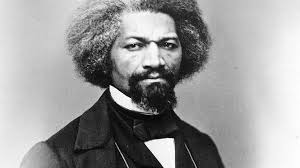
Podcast 78
• Week of 30.01.2017

Christian Jihad | An Interview with Frederick Douglass | Busyness
The Roundtable Podcast 78
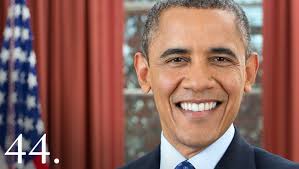
Terry Glavin on President Obama’s Legacy: Podcast 77
• Week of 23.01.2017
The Legacy of President Barack Obama: an interview with Terry Glavin
The Roundtable Podcast 77
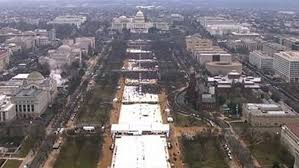
On the Vastness of The President’s Crowd
My name is Kalashnikov, it is true. The President is a lover of honesty, and of facts, and of reality, and so he has hired me to be his personal detective. That is why I carry this notebook of mine wherever I go. I am forever conducting investigations on behalf of the President. I am forever sorting out the truth on behalf of the President. Which is to say the facts. Which is to say the reality. Yes, I am in the business of reality, the real, the thing in and of itself. The President is a lover of the thing itself, the thing in and of itself. And I am at his service.

The Rage of a President
Mr. Crusher is intoxicated. He is a world spectacle. All eyes look upon him, all ears listen to his words. The heavens still the rain when he speaks at the inaugural. It seems as if God Himself now defers to the orange menace.
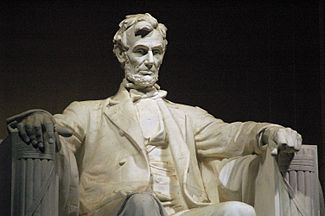
President Lincoln Has Returned
The fog of a Washington sky obscures the waning moon, as an inaugural gloom overtakes the nation. Lightning strikes the Lincoln Memorial, piercing the paraffin-saturated ceiling of translucent Alabama marble. The bolt electrifies the sixteenth President of the United States. The animated figure rises, breaking free of the fasces with one heave of its arms. Mr. Lincoln has returned.
The Inauguration Episode: Podcast 76
• Week of 16.01.2017
The Scottish Twilight Zone Inauguration Preview | The Two Donald Trumps | Totally All-American Karaoke Springsteen Inauguration Party
The Roundtable Podcast 76

Dear Diary (Jan 17)
Dear Diary,
In three sleeps I will be the 45th President of the United States and the best President ever of all time. My inauguration will be the best inauguration and they will look back and see that the marching bands were the best marching bands. I will say to President O, Get the F*** Out Of My House! Maybe I will say something else (I haven’t decided) but in my mind I will definitely be thinking GTFO. Then I will have someone pee on the bed where he slept and then burn it on a giant fire, while I dance naked under the full moon, because I hate him.

The Orange Menace and the Spirit of MLK
in the dark pushing the tiny buttons the tiny buttons and soon morning in the dark pushing tiny buttons almost and hit send that will show the loser who is the stronger my army of angry followers my army so angry we are strong they will see how strong how so so and i am the president greater than all others the winner strong damien crusher has won has destroyed the others the president leader of the world the leader of the world i am that i am that i am

Talk Amongst Yourself: Podcast 75
• Week of 09.01.2017
How CNN and BuzzFeed Failed | The Women’s Clothing Store Man’s Oasis | Ronald Reagan Revisited | An Interview with Me | Toronto’s Indigenous Business District
The Roundtable Podcast 75
 Journalism, Essays, Broadcasting, Books