Category Archives: First Nations

My Truth, My Reconciliation

TRC

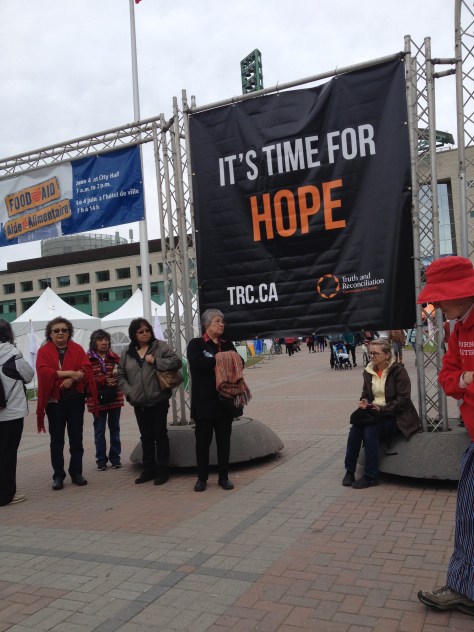
Will Canadians learn anything of useful value from the Truth and Reconciliation Commission of Canada? Will they even be interested in doing so?

These and other questions are on my mind as I prepare for the final closing events of the TRC, from May 31 to June 3. I don’t expect to find the answers to my questions in Ottawa. It will take years to assess the efficacy of this commission. And ordinary Canadians, not the Establishment, will be the ones who decide. Or perhaps not.

I’ve been asking questions about the Indian residential schools, and looking for answers, for a quarter century now.

In the early years of the last century, my grandfather Gowandehsonh was in the Anglican-run Mohawk Institute (the longest-running Indian residential School, better known today as the Mush Hole). He rarely spoke of it, mentioning as we drove by the building that he used to dig in the moonlight for raw potatoes to eat. This information—delivered casually and in passing—came without context or further explanation, and young as I was I could do nothing but sit in confused silence.

In the 1990s I began studying the residential schools for my doctoral thesis. Around the time former AFN National Chief Phil Fontaine went public with his story of residential school abuses, and others soon came forward. In 1992 I had my first candid conversation with a former student, or “inmate” as Indian Affairs had once termed them, about what really happened.

Since then I’ve interviewed hundreds of people and written several books, including Full Circle: the Aboriginal Healing Foundation & the unfinished work of hope, healing & reconciliation (get your free ebook version here) and Residential Schools: with the words and images of survivors.

Bob Watts, who played an instrumental role in setting up the Truth and Reconciliation Commission, said something to me I’ll never forget. It’s quoted in my book Full Circle:

I don’t think of reconciliation as the Prime Minister of Canada and the National Chief of the Assembly of First Nations having some sort of hug-fest on Parliament Hill, and then everything will be okay. I think about my friend Ken, who was in his sixties when he told his daughter for the first time that he loved her. He didn’t know that was part of the deal being a parent, because he never got that himself as a kid. To me that’s reconciliation. I think there’s going to be hundreds and thousands and maybe tens of thousands of little wee tiny reconciliations. But all those have a force.

I’ve interviewed former students, church leaders, therapists, lawyers, journalists and government officials from the front-lines right up to the Prime Minister. I’ve found that everyone has their own ideas about what reconciliation is and how we get there. My book ended up being a collection of personal truths, jostling against and conflicting with one another. I expect the TRC’s final report to be the same, offering to Canadians myriad reflections on the truth of experience rather than the objective Truth of a judicial inquiry. I also think my friend Bob is closest to being right about the nature of reconciliation.

I was in the House of Commons when the Prime Minister of Canada apologized for the government’s role in residential schools. It was a powerful speech, and I was frightened at how unprepared I’d been for my nearly-overwhelming emotional reaction. But even then I knew that, on their own speeches and slogans and photo-ops are not going to get us very far. This isn’t about the National Chief nor the Prime Minister, although they doubtless have a role to play. The thousands of unseen, unreported, uncelebrated gestures of ordinary folks are what will make the difference—if there’s going to be a difference at all.

I’m going to Ottawa in search of this.

You can join me this weekend, wherever you are, by participating in the Legacy of Hope Foundation’s #hopeis social media campaign.

I wish I hadn’t been born an Indian

As I write this, it’s late. I’ve spent 11 hours travelling across a country. I’m exhausted. It’s quite possible I shouldn’t be writing, and maybe I shouldn’t be writing this. But I feel like I have to do it. These words are raw, honest and unedited. These words have been on my mind a lot.

So here it is, the raw truth:

I want to know where I go to quit being an Indian. I’ve had enough. I want to resign.

I don’t want to be an Indian anymore.

Maybe you’re wondering why I say this. The reason is uncomplicated.

Right now, in this moment, I think the racists and the haters and whatever names you want to call them are pretty much right about us.

So often we are a stupid, selfish, backward bunch. The trollers look at us, and they say, “there’s a bunch of losers who are so busy being self-destructive they are never going to get anywhere.”

And you know what? I am literally a card-carrying status Indian, and I think the haters are probably right.

We talk a big talk, but we still want the white man to pay the bills. And he does, so that makes the white man better than us. Right?

Because what are we doing, exactly?

For years I have been shaking my Indian head at all the stupid, self-destructive things we do. Sure, we got a raw deal. Like I didn’t know. There aren’t five minutes in a day we aren’t complaining about it. We’re experts at all the grievances we have. And they are legit grievances.

So what do we do about it?

We fight with one another. We tear down the leaders because we believe they are “selling us out.” We put road blocks in front of everything. If we manage to stop something, like a pipeline or a federal law, we have a little party, as if we’ve actually made progress or created something valuable that will make our lives better.

Look in the mirror. Do you see the ugly truth? I do. All that most of us Indians know how to do is complain and protest and fight. We are so amazingly together and unified and high on being Indian when we are doing these things. I mean, trash-talk the Canadian government and, wow, you are a rock star in every Indian’s eyes. Way to go!

But talk about the bad things going down in your community, or even just real-life shit, and everything changes.

So, effective immediately, I want to stop being an Indian. I want to be so white that the white people will come to me for white tips on being a more white white person.

You see, white people are still rocking the world. And we Indians? We can’t even agree on what we want.

Well here’s what I want: I want to walk through a magical doorway that takes away all the Indian. You know, all the poverty and misery and shame which is right there in the backdrop of my family history.

I want to be a 100% Proud Anglo-Saxon, Canadian, White Guy.

Why?

I just found out that a young Aboriginal girl died because, instead of getting a cancer treatment with a 95% probability of saving her life, her parents fought to give her traditional indigenous medicine.

Did you hear me? They fought for this.

Now this beautiful young girl is gone. And I see some Indians are “proud” of the decision to fight the white man’s medicine and to go with indigenous medicine instead.

In other words, another Indian victory. A point was made, right? We won! We stopped the big bad white man from telling us what to do. We put up a road block. We asserted ourselves. We protected our right to be Indians.

A child died to make a political point, and some of you people who are watching from the sidelines are proud. Seriously, what did you proud Indians win today?

I mean it. Tell me. WHAT DID YOU WIN TODAY?

I am ashamed of being Kanienkehake. I really really really am. Not that I’ve ever been a super-Indian or a role model or a poster-boy for the Haudenosaunee. I never wanted that.

And now? I want it even less than not at all.

Today I am just a guy who wishes I could take it all back. Start again. Forget all the stories, all the people I’ve known, all the places I’ve been. All the Indian in my past.

I want to wake up in the morning and discover that I’m not Indian anymore, that I never WAS Indian—that it was all a dream, that I belong to the great race of superior white people moving forward into the future.

I think of a camping trip I took decades ago, with a bunch of kids from the Indian Friendship Centre. Even then, as a young teen-ager, I knew being an Indian was like losing the lottery. Why didn’t I quit the program then, when I had a chance? Why did I keep being Indian all these years?

Maybe because I am just a stupid Indian, too. Is it possible I’m incapable of change? Of learning and adapting?

This is one of the hardest things I’ve ever written. I’ve dreamed of the day when the trauma and injustice of history was washed away by a generation of visionary leaders. But I’m getting old. Now I can see clearly that these leaders don’t exist. They are not coming, either. We are not going to get better.

All we seem to be able to do is resist change. We have lost the ability to create change.

The point is, we can’t make ourselves better. We have proven it.

The white man owns everything, creates everything, changes everything, controls everything.

The Indian?

We bet everything we have on casinos and cheap cigarettes.

Right now, in this moment, I think we suck. I think we need to see how much we suck if we are going to get better.

I think we should look less at Stephen Harper and more  at ourselves.

I’m sorry if I’ve hurt your feelings. I’m not feeling very good myself.

And that’s why I really wish I had never been born Indian.

Find me on Twitter. Check out my latest book.

like-share

My interview with former AFN National Chief, Delbert Riley

Former AFN National Chief Delbert Riley

I told the chiefs, “We’re not Indian Affairs. We’re not here to do things for you. We’ll help you do the things you want to do, and we’ll work hard.”

DELBERT RILEY is a First Nations leader from the Chippewas of the Thames First Nation, west of St. Thomas, in southwestern Ontario. He was the leader of the Union of Ontario Indians and, from 1980–1982, National Chief of the National Indian Brotherhood (later known as the Assembly of First Nations). Now, at age 70, he is launching a London court case against the government and the church for the range of abuses and injuries he suffered in an Indian residential school. This interview was published in the Journal of Aboriginal Management.

Let’s begin with how you came to be a political leader.

What got me into it was that I lived in the States for ten years. I was very impressed with Macolm X and Stokely Carmichael. I read their stuff, and I thought, “Holy shit, these guys are trying to get something going on about racism in the United States.” I was very impressed, so I thought, “I have to go back to Canada. Maybe there’s something I can do to help my people.”

So I did. I had been a machinist. I enrolled in university and I got a job while I was there, doing land claims research. When I heard about the job, I thought, “I gotta grab that.” I was very aggressive. I spent months and months in the national archives, reading from when it opened to when it closed. It was just so interesting. I also learned how they thought. So my mind could go back in history. I could get in touch with the thinking. It also gave me one heck of a background and understanding of Aboriginal and treaty rights.

You learned a lot about history.

I’m a historian. My First Nation sent 124 warriors to fight with Chief Pontiac. He captured eight or nine of eleven forts. He killed everybody—men, women, children. This is part of history they won’t tell you. Britain issued the Royal Proclamation, I think, because of that. It doesn’t say that in any particular place, but that’s what happened.

In 1764 the Treaty of Niagara came out. This is probably the only time our people sat down and said, “Okay, we agree with you on this. We will come and fight with you if you respect our sovereignty.” This is always on my mind. The British wanted us as their allies, to fight against the Americans. Before that we fought off the white man for at least 300 years. We were always fighting for one major thing: our sovereignty—our independence, our ability to control our lands.

The Iroquois ran off the Americans at Niagara, not the British. The British sent 1000 troops to fight with us against the Americans on the Thames. But 600 gave themselves up to their cousins, the Americans, and the other 400 ran off to Toronto. The only ones fighting were Indians. At the Thames and Niagara we drove the Americans back. They hated fighting Indians.

After the War of 1812, they concentrated on taking our lands using every device they could, including racism. The Indian Act was developed from a multitude of laws they were already using in other countries at the time, especially Northern Ireland. So this is how the Indian Act was born. They sent over [Sir John A.] Macdonald to draw it up. He didn’t create it, but he took bits and pieces from all over.

Because our numbers were decimated by disease, we weren’t able to fight back, although we protested as much as we could against this Indian Act. It is the most devastating piece of legislation in the world. I tell people today that it was a model for South African Apartheid and for Nazi Germany.

Let’s talk about the background to Section 35 of the Constitution Act.

I was an activist. Because I was doing so many things for the Union of Ontario Indians, they said, “We want you to run as our leader.” I’d never been in politics. They put me in, and I changed the organization around. Well, anyway, I served a couple terms and I brought the organization from the red into the black. I started out with about eight staff who were ashamed to work there, and when I left they were all proud to be a part of that organization.

I told the chiefs, “We’re not Indian Affairs. We’re not here to do things for you. We’ll help you do the things you want to do, and we’ll work hard.” That’s the approach we took.

So all the constitutional talks were coming up. Trudeau wanted an amending formula, because for him it was embarrassing to have the constitution in England—the BNA Act. The only way to amend it was back in England. So he wanted changes. He was fighting the provinces, trying to get them to agree on what was the best formula. Fifty percent of the people? So many provinces? So much of the population? That kind of thing.

They finally did work out a formula that all reluctantly agreed to. In the meantime, things were happening. The Calder case, land claims, whatnot. I had this background in Indian rights. The national chief job was coming up—of what was at the time the National Indian Brotherhood. I was trying to pull all the leaders across the country together. I was telling them, “Look, we’ve got to get moving on this stuff.”

I had it in my mind from the early ‘70s that our best choice was to get entrenched in the constitution and have them recognize our rights in the highest law of the land. Then they couldn’t take it out. So I said I would support anyone who ran for the leadership to do this. None of them had the background I had, and none of them would run. I said, “If you’re not going to run, then I will. At least support me. I’ll put us in the constitution.” That was my platform when I ran for national leader.

It took me a year before we made the decision on the wording of the draft constitution sections. It was about nine pages. The Métis supported us, and I promised them that they would be in there, as well as the Inuit. But they didn’t do anything to support the kind of effort we did. We did one massive lobbying effort in Ottawa. I probably met every cabinet minister and the Prime Minister multiple times. I ate in all three houses of Parliament. I was a hard worker, and it took a long time and a lot of work.

How were the negotiations?

They wouldn’t go along with all of our draft, which if accepted would have set out a totally different system from what we have here. It would have been the kind of system we want, because everyone had contributed to that draft. All they would do in the government was put in four sections. The most important was section 35, the recognition and affirmation of Aboriginal treaty rights. I had a heck of a time. I had to appear before the committee, because there was no definition of Aboriginal people. But there was a precedent for this—they’d put words in the BNA that didn’t have a definition. So I was able to use that, and they finally accepted it.

In fact, they liked that it didn’t have a definition. They figured that Indian rights were what the St. Catherines Milling and Lumber Company v The Queen case had said in 1888, which was that we had usufructuary rights [rights of land usage, but not title]. This was their thinking. My thinking was, no, it’s more than that. John Munro, the Minister of Indian Affairs, called me over one day. I went to one of the restaurants. He said, “We’re getting so much flak from Alberta that we have to take your Aboriginal treaty rights protection out.” He said, “Here’s how we’re going to write it.” I took the paper and rolled it up in a ball, and I threw it at him and walked out.

What eventually brought about the acknowledgement of Aboriginal rights in section 35?

We had a big protest. But Alberta insisted that the word “existing” would go in. So it became existing rights. You see, the fight was all about resources. Alberta did this because of a case with the Maori in New Zealand in which the court determined that “existing” meant only from the time it went into the constitution. But when it got to the court here in Canada, existing included everything. So it was even better. [Laughs]

They called me into an all-party meeting at the eleventh hour. I think it was 11 pm. [Jean] Chrétien and I were screaming at one another. I said, “Goddamn it, we’ve got to have the wording in there.” “Okay,” Chrétien says. “But I want to take out the word Métis. Will you agree?” I thought, you cagey old bugger, you’re going to take it out and blame me. But I had a promise to the Métis that they would stay in there, and I’m a man of my word. So I said No: they stay in. I’m probably the father of Métis rights! [Laughs]

What was Jean Chrétien like?

He was tough. They were trying to figure out how to get rid of Indians and Indian rights. Trudeau was the same. We were working in the other direction. It was tough, but their racist attitudes were more out in the open. They downplayed us as inferior beings.

So, they put our rights in, but of course they didn’t plan on observing them. A lot of court cases came, something like 180 as of today we’ve won on section 35. I was in tremendous emotional pain at the 11th hour to go with only those four sections, and not everything we wanted. But I had to make that decision. It was my decision alone. I couldn’t even call anybody. There was no time, so I made the decision.

How was this received?

Of course I suffered the negative comments for years, people saying it’s not enough or it’s empty. There was so much controversy about section 35 I sort of got ostracized for years. They just kept me out of things. [Laughs] The jury was out, but as of the Tsilhqot’in [Aboriginal title] case this summer, the jury came in and exonerated me fully.

You must have known that this would happen all these years later—that you were laying the groundwork for the future.

Oh yes, I knew it. For sure. This is the basis for our Indian governance. This is going to be the basis for everything. The legal power is unlimited in my mind, even right now.

So in many respects this was a thankless task.

Oh, it is. But it had to be done. I did it. I have absolutely no regrets. If I had to do it again, I would. I’d do the same damn thing.


Find me on Twitter. Check out my latest book.

like-share

The First Nations Financial Transparency Act and Business as Usual in Ottawa

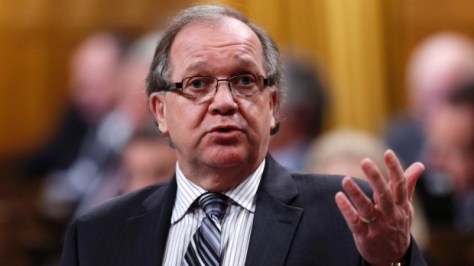
first-nations-education-bernard-valcourt-20140224

THE RON GIESBRECHT story is an everyone-saw-it-coming affair, and that’s among the reasons why the First Nations Financial Transparency Act has engendered both its champions and detractors. “This is the greatest piece of legislation passed by our parliament, I believe, in a long time,” Derek Fildebrandt (of the Canadian Taxpayers Federation) has been reported as saying. You can imagine him salivating these recent and delicious months, in anticipation of the handful of uncloseted Chiefs à la Giesbrecht, just as you can imagine the few rueful and disgraced Chiefs lamenting a lapsed age of innocence.

Continue …

Why Would Anyone Want to Be the National Chief of the AFN?

Why Would Anyone Want to Be the National Chief of the AFN?

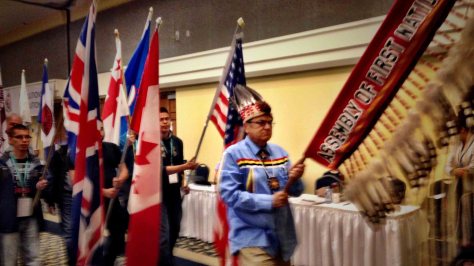
THE ASSEMBLY of First Nations 35th Annual General Assembly, held last week in Halifax, was remarkable more for what wasn’t said than what was. The name of the former national chief was seldom spoken, and the consensus appeared to be for a reconstitution of the leadership as quickly as possible, better to put behind the recent—and unprecedented—disruption.

Continue …

The Long Tsilhqot’in Journey to Aboriginal Title

DSC_0112

THE WEBSITE of the Xeni Gwet’in (pronounced Honey Gwi-deen) reads like a manifesto:

In a world full of travel promises, some kept others not, the Xeni Gwet’in people offer none. The Xeni prefer to simply share their home with respectful travelers—those who follow their hearts, live their passion and still have the capacity to be awestruck by mountain peaks reflecting on sparkling alpine lakes and by magnificent creatures at home in a pristine wilderness. This is a place of freedom and of contentment—a place to be shared with friends, new and old.

Continue …

Looking Beyond the First Nation Control of First Nations Education Act

LAST WEEK I WAS interviewed for a CBC program on the topic of Bill C-33, the First Nations Control of First Nations Education Act. The name of the program is immaterial. If you look it up, you won’t find me. That interview was tossed, and another guest was found.

Continue …

Shawn Atleo’s Political Education

Shawn Atleo

The former National Chief of the Assembly of First Nations, Shawn Atleo, may now be realizing that the inspirational and aspirational modes are insufficent.

I‘VE MET EVERY Assembly of First Nations National Chief going back to the late 1980s, when Georges Erasmus was the leader. Taken as a group, they cover a broad range of personality and disposition. I’ve gotten to know Georges the best, having written for him across a decade and more, but Shawn A-in-chut Atleo is probably the AFN chief who put me most at comfort, right from our first conversation, in a North Bay restaurant.

Continue …

FNCFNEA: An Interview with Grand Chief Gordon Peters

Grand Chief Gordon Peters

Download entire interview (320 kbps mp3) | Visit The Roundtable on Facebook.

Grand Chief Gordon Peters is a citizen of the Delaware First Nation, near Chatham, Ontario, and the Chair of the Association of Iroquois and Allied Indians Chiefs Council. The Association of Iroquois and Allied Indians (AIAI) is a non-profit organization which advocates for the political interests of its member Nations in Ontario – the Oneida, the Mohawk, the Delaware, the Potawatomi and the Ojibway.

Follow me on Twitter

FNCFNEA: An Interview with Chelsea Vowel

fncnea

In this interview with Chelsea Vowel, we discuss the recent Bill C-33 – the First Nations Control of First Nations Education Act. Download Bill C-33 here. Visit the AFN’s website here.

Download entire podcast (320 kbps mp3)

Follow me on Twitter

Subscribe

I Went to an Indian Residential School, and My Father was the Principal

Guest post by Mark DeWolf

Indian residential schools

Part of my Truth is my memory of how it was at the residential school during the years my Dad was the Principal

IT’S A COLD BUT sunny day in Edmonton as I cross Jasper Avenue and approach the front doors of the Shaw Centre, the venue for the final national event of Canada’s Truth and Reconciliation Commission. Streaming out one door is a large group of non-aboriginal teens, chatting, laughing, doing a bit of good-natured jostling. It’s Education Day at the TRC event, and a good number of local schools have arranged for their students to attend, no doubt hoping that the kids will not only learn about the work of the TRC and the reason for its establishment, but also gain something from the experience of sharing the event with thousands of their First Nations neighbours. Have they? I wonder.

Continue …

“Residential School: A Children’s History” | CBC Interview

Larry Loyie and Constance Brissenden

My friends and co-authors, Larry Loyie and Constance Brissenden, discuss residential schools and the forthcoming book Residential School: A Children’s History on CBC Radio.

Follow me on Twitter

Notes Toward a Candid Conversation About Genocide in Canada

gen

AS THE TRUTH AND RECONCILIATION Commission of Canada hosts its national event this week, in Edmonton, the topic of genocide is once again surfacing. Usually the topic is posed as a question: is Canada “guilty of genocide”? Over the years, I’ve had many conversations that began with this question, and I’ve done a fair amount of reading and thinking. Here are my notes toward an informed conversation about Canada and genocide.

Continue …

The Sixties Scoop

Sixties Scoop

WINNIPEG FREE PRESS reported this week that Manitoba Aboriginal Affairs Minister Eric Robinson will host a two-day roundtable with twenty people who were part of something now known as the “Sixties Scoop.” For some of you this will be a new and unfamiliar phrase, and you’ll wonder why adopted aboriginal children are calling for an apology from the federal government of Canada. This essay will attempt to inform you on these and other points.

Continue …

We Are Better than Blockades

blockade

GREETINGS, PEOPLE. This is one of my regularly scheduled posts in which I address something happening in Indian Country. I encourage all of you to stick around, but let me be clear: I’m speaking to Onkwehonwe here, and only Onkwehonwe, and only on my own behalf. More specifically, I’m talking to Kanien’keha:ka, the People of the Flint, better known by some of you as the Mohawks. I am Kanien’keha:ka, of the Haudenosaunee – the People of the Longhouse, aka Iroquois, the name given to us by our longtime Huron enemies.

Continue …