Category Archives: Writers and Writing

Books, writers, and the art of writing by Wayne K. Spear

The Virtue of Watching Your Language

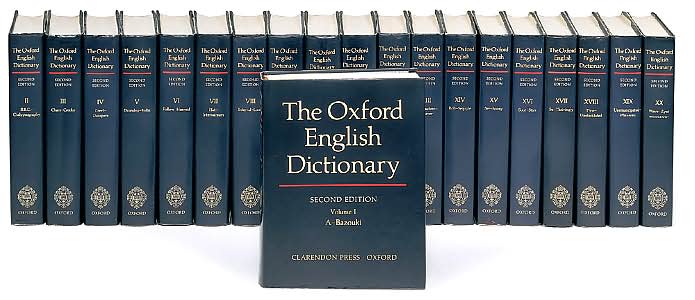
THE ENGLISH LANGUAGE is not unique in having a fluid, ever-changing character. Best described as a Low German dialect imbricated by Latin and Greek, via eleventh century Frenchified Norseman, English has changed a good amount since Geoffrey Chaucer wrote the following lines, somewhere about the year 1390:

Now, sire, and eft, sire, so bifel the cas,
That on a day this hende Nicholas
Fil with this yonge wyf to rage and pleye,
Whil that her housbonde was at Oseneye,
As clerkes ben ful subtile and ful queynte;
And prively he caughte hire by the queynte,
And seyde, “Ywis, but if ich have my wille,
For deerne love of thee, lemman, I spille.”

Read More

Remembering Christopher Hitchens

I FIRST CAME across the writer Christopher Hitchens when he was a young Socialist contributing his “Minority Report” to the Nation. Very much yet in his soixante-huitard, Trotskyist phase, if not in possession any longer of his Socialist International card, he reminded me of my favourite writer, George Orwell.

Read More

Making a living, dead languages, and why so many pros write so badly

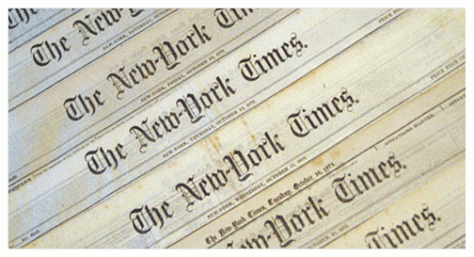
RARE IS the day that I do not find a piece of bad writing in the New York Times, Washington Post, National Post, or Globe and Mail. This statement, I am confident, could be applied with justice to any newspaper of your choosing. The badness is delivered in many varieties, and in fairness I must observe that some errors are a product of working conditions, deadlines and the under-resourcing of bureaus and so on. Most bad writing however has as its root a more troubling fact: its creators do not know what words mean.

Read More

How Writers Write

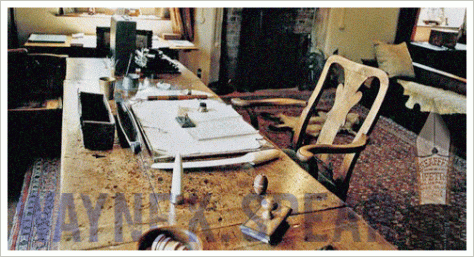
THERE IS an enormous store of narrative concerning the working habits of authors, much of it interesting and in my case consumed with amusement but skepticism also.

Read More

News of the World and the Ethics of Journalism

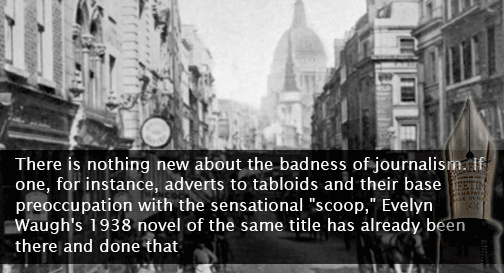
The demise of Rupert Murdoch’s News of the World, though sensational, is of little significance either economically or journalistically. Now and again a journalist is found to be in breach of her profession’s code of ethics, or in more scandalous instances of common decency, and the requisite heads come off. The ordinary business of journalism — which ought itself to be the scandal, but isn’t — goes unremarked.

Continue reading News of the World and the Ethics of Journalism

Ulysses, Bloomsday, and the Best of All Literary Parties

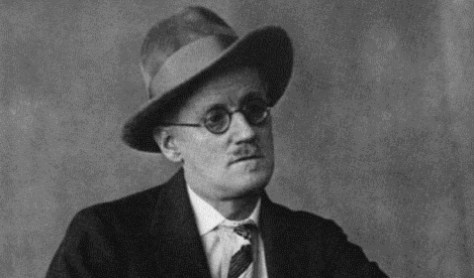
James Joyce

IN AN AGE which commends novels by citing their “accessibility,” one praises James Joyce’s Ulysses before a good many deafened ears. This singular 1922 work demands much from the reader, but the reward of one’s efforts is enormous. The highest tribute I can pay is this: I derive pleasure beyond what I can describe from the time I’ve lived among the fictional citizens of Dublin on June 16, 1904. I feel a bit sorry for anyone who doesn’t, or can’t, understand why I say this.

Read More

When the Bookish Finish Last

There is a famous anecdote concerning two nineteenth-century British Prime Ministers and bitter rivals, Benjamin Disraeli and William Gladstone. The former may be credited with first articulating “Progressive Conservatism” — by way of his 1844 novel Coningsby, or The New Generation — and the latter with both establishing and dominating the British Liberal Party, having ended his affiliation to the High Tories. According to the standard account, Gladstone asserted (doubtless with approval) “I predict, Sir, that you will die either by hanging or of some vile disease.” Disraeli’s response was characteristically immediate, biting, and witty: “That all depends, sir, upon whether I embrace your principles or your mistress.”

Continue reading When the Bookish Finish Last

Scrapping The Social Media

Were you to find me by chance at the local pub, I’d be in the dark corner with a scotch and, at most, two or three friends. This may seem an odd way to begin an article headlined in part by the phrase Social Media. The point is I’m not much a practitioner of the social. I don’t “do” small talk well, I don’t care for crowds, and rarely do I think my personal life (which in any case is no one’s damn business) of interest to my interlocutors. So it may seem a contradiction to you that I have had accounts at MySpace, Twitter, Flickr, Facebook, and other such social media websites. I know of people more anti-social than I who can say the same. What is it that draws us, the sub-social, to these improbable places? Continue reading Scrapping The Social Media

The Compulsion to Write (pt. 3)

Writing

ALTHOUGH I KNEW at a young age that I should be a writer, little else would be sorted out until many years later, and then often by accident. When I was a child, say, ten to thirteen years old, I had only vague ideas about what a writer even was. I suppose I imagined a cold and dark room and a gaunt person at a desk, producing poems and novels, posting them to publishers who would promptly send back letters which read Thank-you, but no thank-you. In time I would have a more informed picture of a writer’s existence, having learned that publishers in fact do not send these letters, or any other, promptly.

Read More

The Compulsion to Write (pt. 2)

In his essay, “Why I Write,” George Orwell identifies the following: 1. Sheer Egoism (“desire to seem clever, to be talked about, to be remembered after death, to get your own back on grown-ups who snubbed you in childhood, etc”), 2. Aesthetic enthusiasm (“perception of beauty in the external world, or, on the other hand, in words and their arrangement”) 3. Historical impulse (“desire to see things as they are, to find out true facts and store them up for the use of posterity”), and 4. Political purpose (“desire to push the world in a certain direction, to alter other people’s idea of the kind of society that they should strive after”). Knowing that I would be writing this essay, I tried to improve upon this list, but to no success. There is only one conceivable addition, approaching the matter as a male heterosexual writer: 5. To bed women. Continue reading The Compulsion to Write (pt. 2)

The Compulsion to Write (pt. 1)

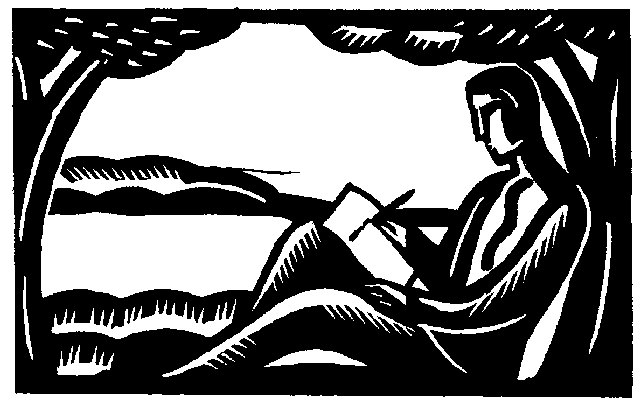
Illustration by Anthony Russo

I was eight years old and urinating in the bathroom of my parents’ Central Avenue house when the precise words manifesting a desire to fill my life with writing first came into my conscious mind. Why this thought occurred to me at so late a date, I am unable to say. Continue reading The Compulsion to Write (pt. 1)

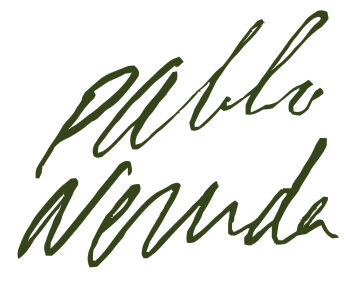
Pablo Neruda

There was a moment in an interview I conducted in the 1990s with American social documentary photographer, Milton Rogovin, at which it occurred to me that I had arrived at a single degree of separation from the great Chilean poet born Neftalí Ricardo Reyes Basoalto, later to become Pablo Neruda. Or perhaps I ought to say I would have been at one degree of remove, had Neruda lived beyond my seventh birthday. As it is he died in 1973, a result of cancer, shortly after the Kissinger-backed military coup against Salvador Allende. Continue reading Pablo Neruda

Supposing It Happens

What will you do when you become a billionaire? Well, supposing you do. Become a billionaire. You’ve got to think about something while you’re supposed to be working. Of course, the work day is almost over. When you’re finished, you’ll go home to your dream house in the country and your personal Italian chef will prepare for you a gourmet meal. And this time the chef’s name won’t be Boyardee, either.

Well, supposing it happens.

You better decide right now whether you will have a Jacuzzi after dinner, or see a film in your personal movie theatre. Or maybe just lounge around the master bedroom: build a fire, lie in your big bed, look out of the picture window at the mountains. Boy, your river sure is beautiful. Wish I had one of my own.

Supposing I did. I’d go fishing everyday and catch trout. Fly fishing. Who knows what else I’d hook. Yeah, I’d be a fisherman.

Think of all the things you’re going to have when you’re rich. And the travel! Paris, Bermuda, Greece, South America. Me, I’ll be right here, fishing.

You could finally do the things you’ve always wanted to do. And suppose on top of being rich, you were young and sexy as well. With perfect health. Did I mention you are also brilliant? Everyone thinks you are the best.

You have wonderful taste in clothing. Money isn’t everything: you have to know how to spend it. Anyone can throw a billion dollars around. But taste, that’s another matter. And you have je ne sais quoi, which no amount of money can buy either. That’s why members of the opposite sex find you so attractive. Of course, you’re already involved in a passionate and exciting love affair. You and your lover travel the world together and see exotic places. You make love on beaches and buy each other delightful gifts in Rome and Moscow and Rio de Janeiro.

Meanwhile, I’m quite content to be fishing. In fact, I’m pretty sure I’ve hooked something. I’m just reeling it in.

Most billionaires aren’t cultured; have you ever noticed that? They’re all capitalism, all business. They have no charm, no class. That’s why it’s so refreshing to see someone like you. You’re rich, but you wear it well, if you know what I mean. You know exactly what you want. You make good choices. Your lover is a cultured person too. Has a great singing voice. A sensitive person. Has lots of talent. Athletic and creative. And witty, but not pretentious or condescending. Kind, loving, generous. And a great body, if you don’t mind me saying so.

Wow, that was a quick catch. Amazing how easy it is when you know what bait to use.