
From the somewhere beyond a pedicel has pricked the baseboard and attached itself to the telephone. Or perhaps it’s the opposite, a root burrowing outward to the world. It doesn’t matter. What matters is that I have permitted this stubborn parasite to remain and I don’t know why.
To boil a frog
I was in an Upper Manhattan bar with Herbert J. Gans, around the time he was writing The War Against The Poor, and once again we were discussing media bias. Journalism would be better without objectivity, I argued. Better to be truthful than objective. Report the facts, and never be afraid to declare and defend a position. I had the best arguments that day.
Celebrities
Everywhere I go, I see them. I am talking about the celebrities.
The day arrived when I understood. I had not found them, they had found me. It made sense. I wasn’t looking for the celebrities: it was the other way round. A celebrity is always on the lookout for me, hoping that if she just stands on a dais I will buy a ticket and applaud. Or at least pay attention.
The Pirates of Memory
My brain was on a loop, forever reprocessing the same irrational thought, so I slept poorly. In the morning, I couldn’t recall the idée fixe over which my subconscious had obsessed for what must have been hours. Tell me what you can’t remember, Freud once famously said. I grope in the mist but nothing solid remains.
The angry man rises
The bar in this small central Pennsylvania town is like many others. A few tables, a mounted television, branded tap handles, metal tube stools. I order a draught and scan the snack menu, turning my attention to the TV because it’s impossible not to.
What’s in it for me?
Look, I know what you’re thinking. “Should I read this? What’s in it for me?”
The studies of Internet reading habits (and there are many) suggest that you have already left and that I’m now talking to myself.
Winning (or, The time I met Malcolm Gladwell)

I was a half-century old, and I’d never won a thing.
Not a book award, not a lousy toaster or a trip to Cancun or nice stationery or a dinner for two at the downtown Keg Manor. I’d fantasized about prestigious ceremonies, big cash prizes. I read John Steinbeck’s 1962 Nobel speech and thought, “What would I say?” Or maybe I thought “What will I say,” because I had quite the imagination, and I was delusional.
What if I am not real?

My face was an inch from the wall and I was shouting my lines as fast and loud as seemed possible. “Faster,” came the command. “LOUDER!” I sent a hand down my red, television power tie, took a deep breath, and shot my lines as if I’d just landed on the French coast and either had to repel the Germans with my words or die on this horrible beach. I would have gladly had death.
Kill or Be Killed
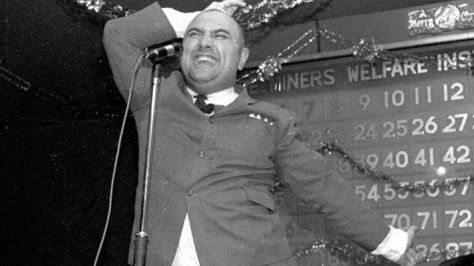
I grab the mic. No longer an Everyman, another face in the crowd, a safely indistinct unit among the species, I’m on stage. In a microsecond their eyes focus and it’s Them and Me. My job is simple: to entertain. But really it’s, as show business terminology puts it, to kill and not be killed. So I deliver the lines I’ve practiced a hundred times to get it just right. With as much confidence and command as I can summon, I deliver the lines. And nothing happens. The room is silent, the faces without expression. I have died.
Georges Erasmus Calls for Action on RCAP Recommendations
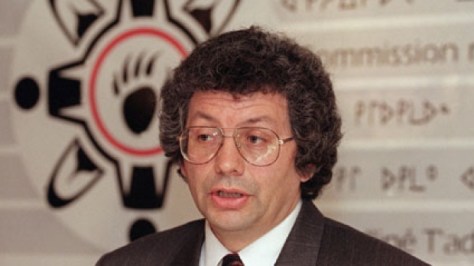
In November, it will have been 20 years since the Royal Commission on Aboriginal Peoples issued its multi-volume final report. In this audio clip, former RCAP Co-Chair, Georges Erasmus, renews the call to make those recommendations a reality.
The Ottawa Book Awards and new work from Chelsea Vowel
I’ve been working away these past months at the 2016 Ottawa Book Awards reading list. One of three jurors in the non-fiction category, I drew up my list of finalists this past week, along with my colleagues. I’m pleased to say there was consensus on three of our top five selections. Early in June, I expect, we’ll sort matters out.
There’s an opportunity cost to a commitment of this scale. I agreed to read 21 books in about as many weeks, some of them rather hefty and dense. That’s a lot of hours I could have been doing many other things, but I did enjoy the labour and along the way discovered some books I might not have found otherwise.
Now I have a smallish library of book award books I will be passing along. Only a couple weeks ago I (once again) thinned out the over-flowing shelves, and I’ve no desire to go backwards. Already I have specific books in mind for specific people. And I wish I could tell you what I’ve read and what I thought about it, but until the requisite announcements have been made, I’m keeping my reading list and my thoughts private.
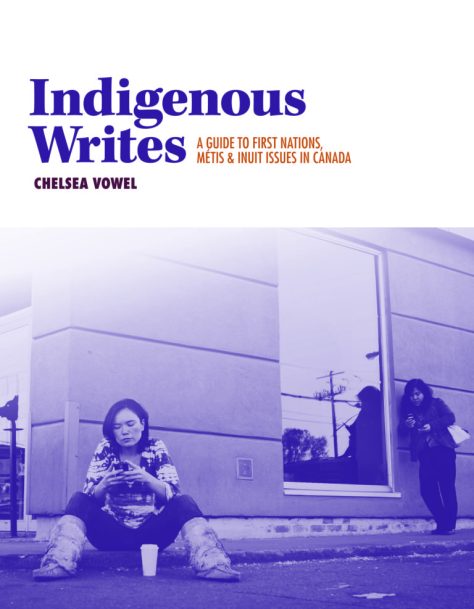
In the meantime, here’s a book I’m looking forward to reading, to recommending, and to giving away. It’s by Chelsea Vowel, more widely known by the name âpihtawikosisân. The book will be released in September but is available now for pre-order.
Will colonial domination survive UNDRIP?
This week Canada’s ministers of Justice and Indigenous Affairs, Carolyn Bennett and Jody Wilson-Raybould, addressed the United Nations Permanent Forum on Indigenous Issues. The occasion was their government’s decision to revoke its “permanent objector status” vis-à-vis the UN Declaration on the Rights of Indigenous Peoples, also known as UNDRIP.
The UN Declaration on the Rights of Indigenous Peoples goes back decades. The proposal to draft standards and principles confronting the injustices committed against the world’s indigenous peoples arose in 1982. At its September 2000 adoption, UNDRIP was opposed by four nations, among whom was Canada. (The others were Australia, New Zealand and the United States—all states with a colonial history.)
In 2010, the Harper Conservatives endorsed UNDRIP but qualified this meaningless gesture by asserting that the declaration was aspirational only, had no legal force, and was inconsistent with Canada’s constitution and Charter of Rights and Freedoms.
A mere 15 pages, UNDRIP’s 46 articles can be read in a sitting. Here’s an example of language which Canada found objectionable:
Article 25
Indigenous peoples have the right to maintain and strengthen their distinctive spiritual relationship with their traditionally owned or otherwise occupied and used lands, territories, waters and coastal seas and other resources and to uphold their responsibilities to future generations in this regard.
Article 26
1. Indigenous peoples have the right to the lands, territories and resources which they have traditionally owned, occupied or otherwise used or acquired.
2. Indigenous peoples have the right to own, use, develop and control the lands, territories and resources that they possess by reason of traditional ownership or other traditional occupation or use, as well as those which they have otherwise acquired.
3. States shall give legal recognition and protection to these lands, territories and resources. Such recognition shall be conducted with due respect to the customs, traditions and land tenure systems of the indigenous peoples concerned.
At the time UNDRIP was adopted, Mr. Harper was promoting the oil sands and crafting resource-industry-friendly omnibus bills. His aspiration for Canada was energy superpower. A lot of the former Prime Minister’s thought, time, and energy were committed to energy, and especially to getting Alberta’s bitumen out of the ground and pipelining it westward to markets in China.
For the decade he held office, indigenous resistance was Stephen Harper’s Nemesis. The last thing the Conservatives needed, or wanted, was a UN endorsement of indigenous rights to own, use, develop and control their lands, territories and resources.
Canada’s Supreme Court wasn’t helping Mr. Harper much, either. A handful of rulings established that, at least in principle, aboriginal people could possess aboriginal land title and that their free, prior, and informed consent (here the acronym is FPIC) must be sought by governments prior to land and resource development. Tsilhqot’in Nation v British Columbia went a step further. Not only was it possible to hold aboriginal title, but the Supreme Court ruled in 2014 that a specific group, the Xeni Gwet’in, indeed held it to a territory of 1,750 square kilometres.
So is colonialism dead?
No, and here’s why the old business of colonial domination will probably survive UNDRIP, the Supreme Court of Canada, and the Truth and Reconciliation Commission.
First of all, UNDRIP is not, as the previous government of Canada has asserted, legally binding. There’s no court that can compel the government, and there is no mechanism to impose sanctions should Canada breach any of the Declaration’s 46 “aspirational” articles. As for the Supreme Court decisions, FPIC is a duty to seek consent rather than to obtain it. Under the present regime, the only unqualified Aboriginal right is the right to say Yes.
The courts are clear on the point that indigenous people do not hold veto rights over land and resource development. Where a proposal is likely to infringe upon aboriginal rights, there must be government accommodation, but any assertion of a right must be balanced against its counter-assertions. If Canada must reconcile with Aboriginal people, the opposite has also and always been true. At 4% of the population, aboriginal people are a tiny minority, and no Canadian court is ever going to affirm the proposition that the will of a majority could be overwhelmed by what is after all marginal peoples.
What the courts have articulated is simply and merely the principle of balancing minority and majority rights. Tsilhqot’in looks breathtakingly liberationist (or dangerously activist, if such are your politics) only against the disgraceful backdrop of rights-balancing from 1867 to-present. As I like to point out in my public lectures, the Indian Residential School System was entirely about reconciliation: namely, reconciling yourself to being told by Ottawa what’s best for you, and having it imposed under threat of fine, imprisonment, or even starvation. Under this model, the minority rights could be balanced against the majority will by absorbing that minority into the political body of Canada. No more minority, no more problem.
And, really, what has changed? When Attawapiskat hit the news yet again, the knee-jerk reaction of newspaper columnists was to call for absorbing the Cree into Canada’s towns and cities, much as the agents of Indian Affairs had advocated assimilation a century earlier. (The paradox is that they pursued this end by establishing remote reserves like Attawapiskat.) What the majority never appear to endorse are measures and arrangements that might promote strong, independent, aboriginal nations.
But I digress.
This business of reconciling rights involves the Crown and aboriginal people. The Crown asserts rights and prerogatives consistent with the traditions of English common law, while the Constitution Act of 1982 (specifically section 35) recognizes and affirms the “existing aboriginal and treaty rights of the aboriginal peoples of Canada.”
Supreme Court Chief Justice, Beverley McLachlin, has written in the Tsilhqot’in decision that “the s. 35 framework permits a principled reconciliation of Aboriginal rights with the interests of all Canadians.”
As discussed, s. 35 of the Constitution Act, 1982 imposes limits on how both the federal and provincial governments can deal with land under Aboriginal title. Neither level of government is permitted to legislate in a way that results in a meaningful diminution of an Aboriginal or treaty right, unless such an infringement is justified in the broader public interest and is consistent with the Crown’s fiduciary duty owed to the Aboriginal group. The result is to protect Aboriginal and treaty rights while also allowing the reconciliation of Aboriginal interests with those of the broader society.
All fine and good, but it isn’t the pit of history’s bitter fruit. As recognized by UNDRIP and the Truth and Reconciliation Commission—and the Royal Commission on Aboriginal Peoples, for that matter—the crux of our problem is colonialism. Or, to put it another way, the reconciliation of English common law traditions and indigenous traditions.
Which are not reconcilable.
Colonialism can not be reconciled with decolonization. Canada’s assertion of Dominion from sea to sea to sea can not be reconciled with indigenous assertion of sovereignty, anywhere in Canada, and certainly not within a s.35 Constitution Act framework.
Either Canada gets to tell aboriginal people what’s good for them, and impose it from above (again, the only form of reconciliation ever even contemplated in Canada), or it doesn’t get to do that. Either Canada gets pipelines because the government wants pipelines, or a minority aboriginal population gets a veto. The Supreme Court, of course, would have no such thing. The vision they have put before us is of good-faith negotiations to balance majority and minority rights. And that’s probably as close to decolonization as we’re likely to get by the steam of a colonial institution, which is what the Supreme Court is.
Jody Wilson-Raybould is described as a “Kwakwaka’wakw Canadian politician.” I’ve met her and I’ve heard her speak about indigenous rights and self-determination. I know from personal experience that she can deliver a decent speech. At the UN this week, she said “let us make this the century of the world’s Indigenous peoples, one where Indigenous peoples, no matter where they live, deconstruct their colonial legacy and rebuild their communities.” Not a bad sentiment, that.
As a cabinet minister and Attorney General and a member of the Privy Council, Ms. Wilson-Raybould has sworn an oath to the Queen. Her sworn duty is to serve the Crown. That’s not just a principle or an abstraction or “aspirational.” It is backed by the full legal force of the state, and if she is derelict she can indeed be sanctioned by her government. And by her government, I don’t mean the Sovereign Kwakwaka’wakw Nation, which in any case is not recognized by Canada (just as the Tsilhqot’in Nation is not recognized) and has scant recourse should the good Minister of Justice happen to let them down.
Residential Schools: a finalist for the Golden Oak Award
Residential Schools: with the Words and Images of Survivors is a finalist for the Golden Oak Award!

This award is sponsored by the Ontario Library Association (OLA) and is part of The Forest of Reading, Canada’s largest recreational reading program. Winners will be announced on May 18.
Miche vs Canada: the dangerous quicksand of First Nations rights
This is a story about folks who just want a chance to clean the slate and get on with their lives
Meet my good friend, Miche. Here is his story.
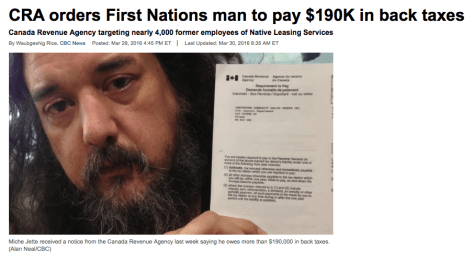
Some years ago, Miche and I belonged to a company called Native Leasing Services, based on my reserve—the Six Nations of the Grand River, near Brantford in Ontario.
The idea of Native Leasing Services is simple: you work for the company, and the company leases you to aboriginal organizations across Canada. NLS provides all the services typical of its industry: payroll, group benefits, HR, and so on. Miche and I worked at the Aboriginal Healing Foundation, in Ottawa. That’s how we got to be good friends.
Because NLS is located on a reserve, our income was income-tax-free. We paid Employment Insurance and other common payroll deductions, including a leasing fee. It was legal and, in the opinion of NLS (which Miche and I share), consistent with long-standing Aboriginal rights in Canada.
Somewhere along the way, the federal government changed the rules concerning native income and taxation. They didn’t like the idea of NLS, so they came up with new rules that made it near-impossible for an Aboriginal person to claim income-tax-free status.
Today, you have to live and work on a reserve, and any product or service that you produce has to be delivered and consumed on a reserve as well. As soon as you or your product steps foot off a reserve, the federal government demands the taxes.
Tomorrow, who knows? The government is always changing its rules.
NLS went to court to fight the changes. The test cases dragged on for years (court cases usually do) and the Canadian courts ruled against us.
Typically in these test cases, the government will issue a Remission Order. The idea is that once you’ve lost in court, the ruling applies and you have to start paying taxes, as per the court’s decision. The Remission Order “forgives” the taxes up to that point, and you start from zero.
So far that hasn’t been the case. Revenue Canada, or CRA, is claiming all the back taxes from the roughly 4,000 former NLS employees. Some of us were with NLS as early the ‘80s and ’90s and face decades of back taxes. The government is pursuing hundreds of thousands of dollars from people who make, maybe, 30 or 40 thousand dollars a year. In some instances, tax bills that started out as $10,000 are now ten times that, due to compounding interest.
Miche takes home about $24,000 a year, after taxes, or just over $1,000 every two weeks. This month, CRA began to garnish his income. Even before this happened, he was borrowing money to pay the rent. He has a young daughter, and all the usual bills. He’s been struggling to make ends meet.
As a result of CRA’s actions, Miche’s wife has taken a new job a few hours away, on her home reserve in Akwesasne. Their daughter goes back and forth. The family gets to spend a day or two together each week, except when a shift comes up and Miche’s wife gets a last-minute call to come into work, as she did last weekend.
Miche is so stressed he’s been on medical leave. CRA is demanding over $195,000 in back taxes, a number that goes up every single hour of every single day due to compounding interest. Absent a Remission Order, he’ll be under financial stress for the rest of his life—even if he lives 50 more years and dies at 100. (He figures this is unlikely, and that stress is taking years off of his life.)
As crazy as this is, it’s not unusual. Former NLS employees are routinely hounded and threatened. Many, like Miche, work at health and social service agencies, for modest wages. CRA has clawed back the pensions of former NLS employees who are now sick and elderly. They’ve seized bank accounts. They’ve threatened further, unspecified legal actions. All for something that was legal not so long ago.
They have also made it impossible for people to plan and secure their financial future. What’s the point of getting a better job, saving for your child’s education, or putting retirement funds aside (asumming you’re even able to do this—which most NLS employees aren’t) if it’s just going to be suddenly taken away without your even knowing? Imagine looking 30 years down the road and still seeing an uncertain, even desperate, financial picture. Maybe you don’t have to imagine. Maybe that’s you. In any case, it’s the very definition of hopelessness.
Although we applied for the Remission Order 3 years ago, no progress has been made. The Minister of Revenue has to sign the order, and when we ask about progress we get a bureaucratic answer: “we’re looking at it.” And looking, and looking.
Meanwhile over at CRA they’re wreaking havoc with marriages, families, and lives. Here’s the best-worst part: the pocket change they are getting from Miche (about $300 a month) is not even going to pay for the psychological and physical help he needs already. He’s a wreck. He can’t sleep. He can’t focus. He breaks into tears. He worries, understandably, about his wife and daughter. Things were already tough. Now he’s being pushed to the end of his rope.
There are many, many of these stories that I could tell. As we’ve all seen in the recent KPMG affair, if you are a millionaire or billionaire, CRA has bottomless understanding and compassion. Your Remission Order is on the way, even before you ask. But if you live paycheck-to-paycheck, and you owe even $100 dollars, expect to be hunted to the ends of the earth and squeezed for every last dime. CRA has even sent people to banks to get a few bucks from NLS employees.
Let’s be clear: the government is never going to get this money. They will get cents on the dollar, because that’s all that there is to be had. No one has $200,000 sitting in a pile, in the corner of the room. CRA will spend a hundred dollars to get one dollar back, and the cost of getting this dollar won’t just be financial: it will be emotional and psychological.
A lot of good, generous people have written letters to the new federal government asking that the Remission Order be issued for the NLS employees. I’d like to think the Prime Minister and his cabinet will look at this issue and see it for what it is: an impossible situation. For the federal treasury, Miche’s debt is an irrelevance. It’s less money than the rounding error on a new military fighter jet or the federal cabinet’s annual meal budgets. Pocket change.
But for Miche, this debt is a burden that’s slowly grinding him down, and the same is true for many others.
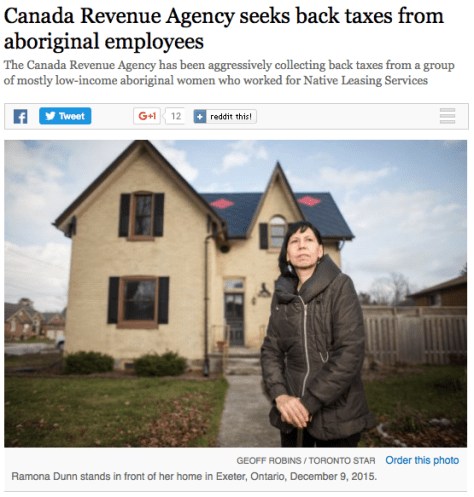
This is a story about folks who just want a chance to get on with their lives. That’s why Miche and Ramona Dunn (above) have gone public: to resolve an impossible situation. They are not scam artists or criminals. They have jobs and families and hopes for an ordinary decent life, a hope that is slipping away.
Go here to read Ramona Dunn’s petition to have the Remission Order Application moved quickly through the assessment process to bring closure and to allow the individuals affected to get on with their lives.
The Indian Residential Schools Are Still With Us
In 2010, I interviewed the former National Chief of the Assembly of First Nations, Phil Fontaine, about his many years as a politician. The conclusion of the Indian Residential Schools Settlement Agreement negotiations was a few years behind, and I asked Phil for his assessment. What did he think of the agreement?
Never mind that this settlement was, as people like to say, “historic”—at $5-billion and more, the largest court-supervised class action in Canada’s history. Never mind that it had involved dozens of lawyers in simultaneous, multi-city sessions, or that it was front-page news for months and even years running. Indeed, today’s Globe and Mail headline reads “Residential Schools: Bennett puts settlement onus on Catholics.” Who would have thought the Indian Residential Schools Settlement Agreement would be news nearly a full decade after its 2007 roll-out. Maybe Phil. But on that day he shrugged and pulled a face. He was proud of the agreement and said something to the effect that it was the best they were going to get. But there was something wrankling him, and he told me what it was.
Phil had many accomplishments over his career. He listed a few. I couldn’t dissent: he’d been more than a few places, made more than a few waves. Yet inevitably when he’s introduced, he pointed out, it’s the residential schools that everyone mentions, and only the residential schools. Everything else disappeared.
I don’t usually commiserate with politicians, but in this instance I knew exactly how he felt. I’ve written on hundreds of topics over the past three decades, but to the degree I’m known for anything at all, it’s the Indian Residential School System. My articles on residential schools, routinely the most-visited pieces on this blog, are about the only thing I’ve composed that could be called “evergreen.” My book on residential schools is by far my most successful book, by which I mean it’s the book that people actually read, more than any other of mine.
I’m not complaining. I am, however, registering genuine surprise. I never expected the article I wrote in May 2002, for the Globe and Mail, to be at the top of the most-read list in May 2016. In the meanwhile I’ve written nearly a thousand essays that have dropped (as they do, for most writers of current event) into the black hole of yesterday. Perhaps I should have expected this. Twenty years ago I’d learned to assert that, just as the Indian residential schools had done decades worth of damage, it would take decades to heal and restitute. Canada may wish to be done with its residential school history, but history is not done with Canada. Not even close.
Today’s Globe and Mail headline refers to the amounts negotiated in Schedule 0-3 of the Indian Residential Schools Settlement Agreement, by the Corporation for the Catholic Entities, Parties to the IRSSA (or CCEPIRSSA). Why then an “onus”? The short answer is that the (in my estimation) badly-written agreement committed the Catholic Entities to the “best effort” fund-raising of a $25-million “Canada-Wide Campaign.” It didn’t pan out, according to lawyers for the CCEPIRSSA. So the federal government released the Catholic Entities, who ran ~65% of the residential schools, from this settlement obligation.
I mention the badly-written bit because the current mess was created by the agreement, insofar as it is a vaguely-composed document with no clear timelines or enforcements. And what exactly constitutes a “best effort”? Who decides? These and many other questions are not answered by Schedule 0-3, which bears all the evidence of having been drafted by junior lawyers while, elsewhere, the bulk of the effort went into the Common Experience Payment.
All of this makes me wonder where we’ll be five years from now. Or ten, or twenty. With some confidence, I can say that the Indian residential schools will probably be with us. The question is, will we be inching closer to restitution, or slinking yet further away?
 Journalism, Essays, Broadcasting, Books