All posts by Wayne K. Spear

waynekspear.com

This is why you hate politics

I’m the King of the Castle; you’re a dirty rascal. ✎ By Wayne K. Spear

politics

A zero-sum-game is a game of winners and losers. For every winner, a loser; for every loser, a winner.

A zero-sum-game is a game of gains against losses, of distribution, of competition, of conflict.

I gain X at your expense. My gain of X is balanced exactly by your loss of X.

By necessity, a zero-sum-game is an attempt to gain advantage over others, employing tactics and power.

In a zero-sum-game, we are not all in this together. We are divided. Our interests are not the same.

The reality is that most people live their day-to-day lives playing a non-zero-game. We seek win-wins. We are not in conflict with our friends, our families, our neighbors.

We prefer harmony over conflict, co-operation over competition. We negotiate and share and look for the greater good.

Life in a healthy human community is not a zero-sum-game, but politics is a zero-sum-game.

You belong to Party X. I belong to Party Y. One of us must defeat the other.

A vote is a unit of marginal utility. We compete for votes.

My 51% of the votes does not give me 51% of the power, or the authority, or the right to govern and to legislate. I get it all. Your 49% of the vote gives you 0% of the power.

In everything other than politics, we seek to make the pie bigger. We want to ensure everyone gets a slice, and that we deal with others as much as possible in a spirit of fairness, respect, and co-operation.

In politics, I must win and you must lose. We cannot share. We are in conflict. We can not cooperate. The values and morals of ordinary human life do not apply, and must not apply.

A zero-sum.
Money, politics, and marketing research

Money and politics. ✎ By Wayne K. Spear

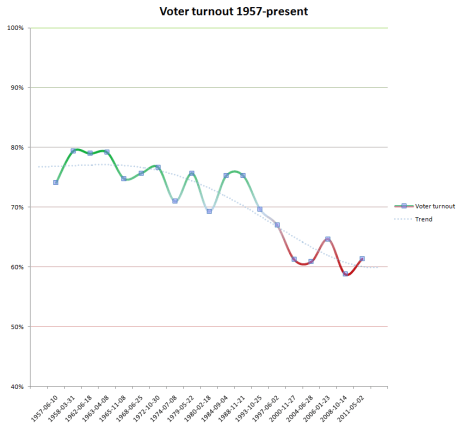
In the 2011 federal general election, 61.1 percent of the 23,971,740 eligible voters of Canada voted.

A majority government was formed by 39.62 percent of this 61.1 percent.

Here is a graph of the historical trajectory of voter engagement.

Voter Turnout

39.62 percent of 61.1 percent is 23.79 percent. Under ¼ of eligible voters in Canada elected a majority government in 2011.

As voter engagement declines, mobilizing voter engagement becomes an increasingly valuable commodity.

1,323,927 votes separated the majority party and the official opposition—or 9% of the actual vote and 5.5% of the eligible vote.

In markets where small margins determine big outcomes, targeted campaigns are required. Targeted marketing campaigns require enormous market research.

Market research is expensive.

When you realize that everything depends upon mobilizing the 5.5% to capture an elusive 9%, the value proposition becomes clear. The rules governing money and campaigning noticeably change.

For example:

Table

What is the value of a vote? This is the $125-million dollar question, and it has an answer.

The value of a vote depends upon the likelihood of someone voting for you.

Those who will never vote for you, no matter what, have low value—because they cannot be bought.

Those who will always vote for you, no matter what, have low value—because they don’t need to be bought. Money spent on either of these categories is wasted.

The most valuable voters are undecided. They are disengaged, low information voters. They are swing voters. They are waiting to be persuaded. They can be bought. In all likelihood, they must be.

They are the elusive 9% who determine everything. They are all that matter.

Money, marketing, and modern politics.

An interview with Justice Murray Sinclair

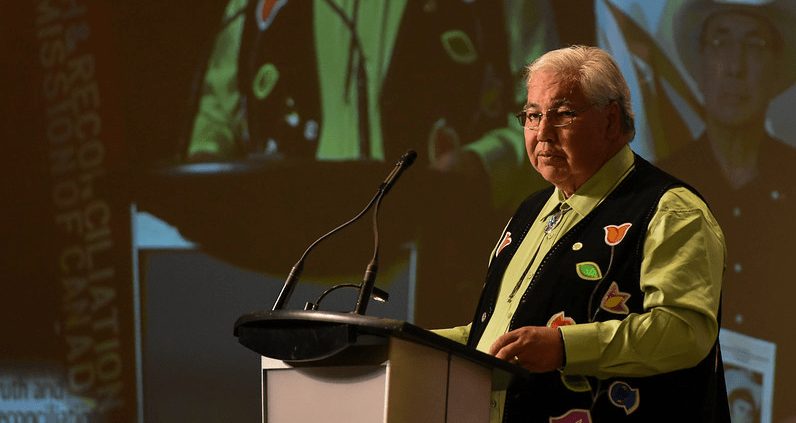
Wayne K. Spear in conversation with Justice Murray Sinclair | August 1, 2015
Murray Sinclair
Photo by Fred Cattroll

The reality is that until we have fundamental change about the way we see things and think about things, there’s not going to be effective change

WKS: The Truth and Reconciliation Commission of Canada released an Executive Summary this June, and in December you’ll be releasing the full TRC report. What can we expect from that?

JMS: Many people are still looking for the basis for why we said what we said. The full report will reveal all of that. We have to produce that report in French and English, so that takes time.

WKS: At the final TRC event in Ottawa, the media seized on the phrase “cultural genocide.” Do you think this was a good place to start the conversation about the meaning of residential schools and reconciliation? Or would you have preferred the focus to have been elsewhere?

JMS: I was quite fine with it. We knew when we were writing the report that it was going to be the big question. It’s not only important to Survivors, but I think Canada and the political leadership of the country needed to know what we were going to say about it. It’s an important part of the foundation for the conversation going forward. It puts all of this experience into a proper perspective. This was not simply nice people who made a mistake. This was a truly unacceptable intention to wipe out Aboriginal people through the elimination of their cultures.

WKS: During the TRC you had occasion to comment on murdered and missing indigenous women in Canada. Your comments made me think of the death of Helen Betty Osborne and your work with the Aboriginal Justice Inquiry of Manitoba. It seems that little has changed. Looking back over you long career, do you feel there’s been much positive progress?

JMS: I’ve always maintained that the kind of change we need—the change I’ve been talking about since the AJI [Aboriginal Justice Inquiry] days, which is really systemic change—is going to take a long time to achieve. It’s going to take several generations before we can realistically say that we are on our way to a decent end. Changing systems requires changing the way people believe about the law, they way they believe about their political systems, the way they believe about their institutions, and the way they believe about how they’ve been educated themselves. Those challenges are hard for people to come to terms with.

I think we expect that there will be some conscious, and unconscious push-back even, on the part of the people who are going to wonder if there’s not a different way of doing it. The reality is that until we have fundamental change about the way we see things and think about things, there’s not going to be effective change.

WKS: How do we even have a conversation about systemic change when we are on the margins—of the media, of the institutions which will necessarily provide a space for conversations to happen? Aboriginal people have to be invited into these spaces, at someone’s good grace. It sounds to me like we may need to envision and create new institutions, new spaces to host the discussion about the change we need.

JMS: If we start thinking about things that way, we will immediately reject any solutions, because the idea of building from scratch is too overwhelming for most people. But what we’ve said in our report is that you can take what we now have, and you can build on that. This came out of the past. This will soon be our past. We need to figure out how do we take what we now have and change it enough that we can be assured that, in the future, we will have a better relationship, starting with a vision of what the future is going to look like. We have to ask ourselves “Is what we are doing each step of the way going to get us to that vision?” It’s feasible. Highly possible.

WKS: Thank-you, Justice Sinclair.

JMS: Thank-you.

External links: TRC | Murray Sinclair Biography | Settlement Agreement

Mining for your data gold

To give is to receive. ✎ By Wayne K. Spear

Data
CC image “Data storage—old and new” courtesy of Ian on Flickr

Do, Dare.

To the English-speaking reader, it looks like an inspirational slogan.

In Latin, it is a verb. Do, Dare, Dedi, Datus: I give, to give, I have given, I am given.

Data are things given.

We live in a world of data. As you navigate the Internet, you give. You are given.

Do, Dare, Dedi, Datus.

You give yourself away. Your Google searches, your browsing history, your conversations with friends.

User-generated content, marketing, and advertising are converging. You are the copy writer and the content marketing department and the customer.

The ads that you see on Facebook are echoes of your posts. This is called re-marketing.

Too much is given, and yet not enough. Your age, gender, location, and income. Your web history. Your click-throughs and conversions and bounces. Your likes and favorites.

Adaptive marketing seeks to tailor the browsing experience to the individual user. The problem is not lack of data, it is abundance.

The future belongs to the experts—to those who can interpret data. You are the expert on you.

That’s why you must become the snitch and the mole and the collaborator. We are all collaborators in this work of giving ourselves, and others, away.

Collaborative filtering is used by Amazon to recommend books. If you and I both enjoyed reading Y, the fact that I enjoyed reading X suggests you, too, will enjoy reading X.

Once upon a time, your personal details were gold. They were secrets surreptitiously mined. You had to be taken, without your awareness.

Then you learned to give. You became data. There was no more guessing at your inner life, drawing upon hit-and-miss clues like your age and zip code. You knew where your gold was, and you gave it away.

The future is convergence and integration and collaboration. You are the creator of the advertising script woven into your friends feed, the conductor of a private focus group, the expert. You are the giver of all that is gold.

Brother can you spare a two-dollar bill?

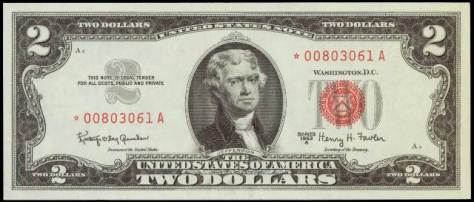
2-dollar-bill
Use value versus perceived value. ✎ By Wayne K. Spear

There are about 1.5 billion US $2 bills in the world. A $2 bill is worth $2.

Two-dollar bills are scarce, yet you can get one at any time from a bank.

When most of us get one in a transaction, we put it in a drawer, because we perceive it as valuable. Perception yields scarcity, and scarcity yields perception.

How did 2-dollar bills become scarce?

The answer is use value. When US notes were introduced, in the late 19th Century, you could buy most anything with a dollar. The two-dollar bill lost a use-value battle.

This is why there are no slots in an American cash register for a two-dollar bill.

Because people are creative, they manufacture use value for two-dollar bills. This is called a Spend Tom Campaign.

A two-dollar bill stands out. The person who uses it gets attention. Attention is value.

Tip: give a waitress a two-dollar bill, and she’ll remember you.

In the past, companies have chosen to give their employees $2 bills to draw attention to their economic contribution to the community. Two-dollar bills have been used as a marketing tool by the tourism industry, by sports teams, and by champions of the Second Amendment.

Scarcity and attention. The power of perception. Find something with perceived value that is scarce but readily available, and leverage it as a use value.

This is the meaning of your life

When you die, the people who loved you unearth your significance. ✎ By Wayne K. Spear

There we all stood, looking at the man’s tattoo. We knew what it was, but no one could think of the word caduceus.

Everyone knows what a barber pole signifies, few know what it means.

No matter how long your life, it can be reduced to a sentence.

Joe is funny—he’s a man who will always help a friend: he has a big heart.

Significance and meaning.

The word fossil means something dug up. Many bones were dug up before their significance was known.

For centuries, astronomy was the reigning science. The word paleontology was invented in 1822, at a time when the significance of the earth sciences was finally understood.

Until the nineteenth century, we looked to the heavens for meaning. Then, geology taught us to look down.

We forget the dictionary meaning of things because that is not their significance. A barber pole signifies that “I can get a hair cut here”—a caduceus (because it is often confused with the Rod of Asclepius) that “I can get medicine and be well.”

While we live, we struggle with meaning. When we die, the people who loved us unearth our significance. They are the paleontologists of our lives. They are the experts.

Imagine what you want them to say, and live accordingly.

The power of Why?

Your clients are giving you valuable answers. ✎ By Wayne K. Spear

There are a lot of wonders, mysteries, and unanswered questions.

Are there multiple universes, is there intelligent life on other planets, is it possible to travel backwards in time, how do birds know where to fly in winter?

I met someone who studies migratory birds. Birds, I learned, use ultraviolet light, the sun, and even the positions of stars to find their way.

An answered question can be as mysterious and awe-inspiring as an unanswered one. Questions are portals to wonder.

Just about everything in the human and natural world is an answer to a question and/or the solution to a problem.

Numbers on houses, birdsong, pneumatic tires, leaves.

Every day the world is evolving to solve problems and to answer questions. Pay attention to this.

People are mysterious, especially in business. What do they really want? What do they really need?

Take note of the solutions people are willing to pay you for. These customers are bringing you your answers as well as their questions.

There are times people don’t really need what they tell you they need, or want what they tell you they want. We all come up with poor answers. And the solution to poor answers is better questions.

Listen carefully. Your clients will give you valuable information if you ask the best question of all.

Why?

– We need this quick solution.
– Why?
– To communicate better with our customers.
– Why?
– Because the benefits of our services are not understood.
– Why?
– Because we don’t have a clear sense of our brand.
– Why?
– Because we need help.

Use questions to migrate from something your client’s don’t need to something that they do.

Why? is the ultraviolet light, the sun, and the stars that will help you find the way.

A story teller must be tenacious

Pitch, pitch, pitching at Heaven’s door. ✎ By Wayne K. Spear

What’s the story?

An account and a message and a performance and a bond. The most powerful stories communicate values, identity, and purpose.

Pitches, vision statements, business plans, novels, movies, and cultures are made of story.

Stories matter, and so we care for and communicate them.

There are many theories about communication that say a message has to be heard multiple times before it sinks in.

Some say three—others, more.

Thomas Smith’s 1885 book Successful Advertising says 20.

Rarely is it once.

Book browsers are much more likely to buy when they’ve heard of the author, even when they can’t recall what they’ve heard.

When I was in college I had two room mates. One of them (I didn’t know which) had bottles of near-empty shampoo cluttering up the shower.

I decided to send a message.

Each week I bought a bottle of shampoo and put it in the shower. In two months, I had eight bottles of shampoo cluttering the shower.

That’s when my room mates started to get the message.

Here is what the television and film producer Lisa Meeches said to me about her grandfather:

He told me that not everything I thought of would be successful, but to continue trying, and to persevere. He used to use the word tenacious. To be tenacious and to have tenacity as a story teller.

Lisa Meeches
Photo: Lisa Meeches, by Fred Cattroll

Tenacity means to hold on, to retain, to have firmness of purpose.

Know your story, and never compromise its integrity. Be respectful, and don’t beat your audience over the head.

But also be open to finding new ways to tell your story when your message doesn’t get through. Persevere and adapt, without losing site of your values, identity, and purpose.

A story teller must be tenacious.

Don’t go it alone

It takes a village to rock. ✎ By Wayne K. Spear

This is a story about Mick and Keith.

Steve Jobs wasn’t interested in computer circuitry, and Steve Wozniak didn’t believe there was a market for the machines he was making in his computer club.

Elton John can write a decent melody. Bernie Taupin has written some of pop music’s best-known lyrics. The two met in 1967 through an audition that both failed. When they joined forces, they succeeded.

In the 1980s, Mick Jagger tried (unsuccessfully) to become a solo superstar. Keith Richards once said that, together, he and Ron Wood were the best guitarists. He added that he and Ron were average individually.

A rock band is a division of labor, a team, a small corporation, and an alchemy.

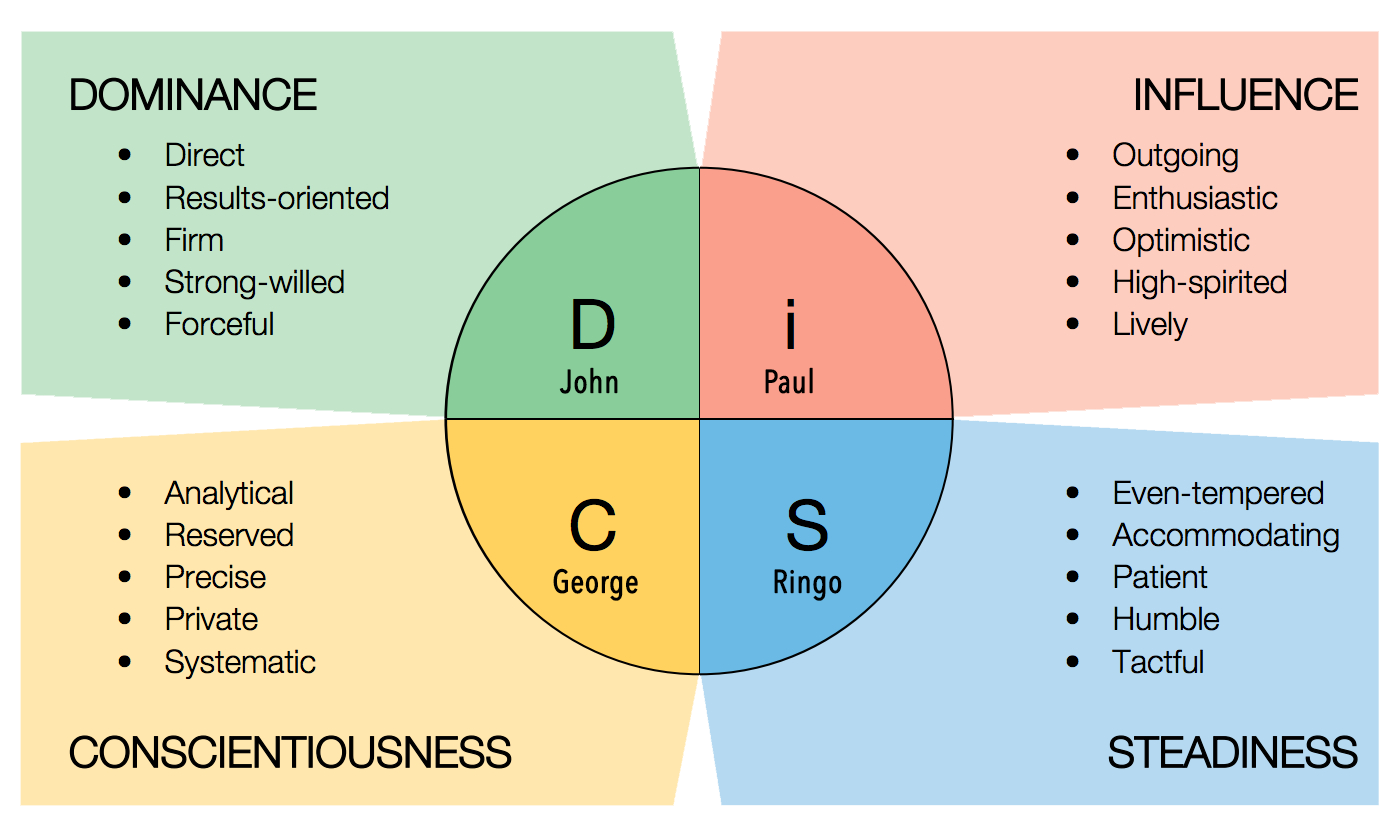
Many of the most successful rock bands have had four members. Many personality assessments are four-factor. You can plot many rock bands on a DiSC graph.

DiSC Graph

I’ve created several rock bands, and I’ve worked with many corporations. Whatever you’re doing, think of it as a team effort, because it is. The alchemy of personality and talent is not arbitrary or mysterious. It can be assessed and measured. I know this.

Even if you are a novelist, you need a good team behind you.

Who is supporting your success? Do you have mentors, collaborators, colleagues, partners, and role models?

The lesson of Mick, Steve, Elton, and Paul is that you can’t do it on your own.

Don’t go it alone.

Pie versus Sunshine

Be open, bold, & generous. ✎ By Wayne K. Spear

Imagine a company that sells sunshine.

You can’t, because there is no plausible reason to buy it.

If I have a pie, a certain number of people are going to get pie. I can cut it two or twenty ways. No matter how I slice it, every portion eaten is a share someone else is not going to get, ever.

Absorbing the rays doesn’t mean someone else will now be unable to enjoy sunlight. It is impossible to take in the sun the way we eat a pie. No matter how many people step into the sun, there is surplus sunlight.

The difference between pie and sunshine is not only a matter of supply. Both can be scarce. In the northern hemisphere, there is less sunshine during winter, so people pay for tanning salons.

You can slice a pie but not sunlight. One is divisible, the other indivisible.

If I love one person today and ten tomorrow, I do not diminish the supply of love. If I am kind to ten people, it doesn’t follow that I must be less kind to the eleventh person I meet because kindness has been consumed.

Love and kindness, like sunlight, are indivisible.

I went to a store in my city and ordered something I’ve been looking forward to having for some time, but they didn’t have any of it in stock.

The moment I walked into the store, the staff smiled and welcomed me. It felt good to be there. It was obvious to me when I left that the store managers had paid careful attention to every moment and detail of my experience.

Even though I didn’t get the slice of a pie that I wanted, I am going to go back because I got sunlight.

In your life and in your business, some things are divisible and some are indivisible.

Take stock of the abundance and indivisibility within your personal inventory: creativity, imagination, and will. Be open, be bold, and be generous. Give, without regard to getting in return. Count your pies and cast your sunlight to the waters, because you can and because it is a good idea.

Cultivate abundance, and you will have abundance.

You can afford to do this, and you can’t afford not to.

Simple, not simplistic

We need more simple people. ✎ By Wayne K. Spear

The best ideas are simple, never simplistic.

E=mc2 is simple. Einstein had other, earlier formulations, but none had the elegance of energy equals mass times the speed of light, squared.

Even a child can recite his simple formula. Few can comprehend its profundity. Einstein provided insight into the nature and relationships of matter, energy, light, and gravity.

If you eat more calories than you burn, you gain weight. It’s simple. And yet there have been countless fad diets, promoting simplistic ideas like “don’t eat x.”

Simplistic ideas often resemble simple ones. Simple ideas summarize complex insights, while simplistic ideas remove them.

The only way to tell a simple idea from a simplistic one is to conduct a forensic audit, listening to the account an idea gives of itself.

The simple idea can not be superseded. It can explain even the simplistic competitor. The reverse is not the case.

Example: any fad diet that works involves eating less calories than you burn.

No one comes up with a simple idea until they have perceived, studied, and comprehended complexity.

Take something complex that you understand, and find a simple way to represent it: a mathematical formula, a picture, a phrase, a neologism.

Use your representation as a means to provide a fuller account.

Be simple, not simplistic, and serve the world.

How do you make people feel?

Beauty is good business. ✎ By Wayne K. Spear

Yesterday I had a business meeting with Apple. On my way to the meeting, I rode the subway next to a woman who was reading the Bible on her iPad.

There are bibles on iPads, but no iPads in the Bible.

If Jesus had known about iPads, he would have used them as metaphors, because they are integral to our lives. There would be at least one good apple story that didn’t involve a serpent.

An iPad is the size of a sheet of paper, a magazine, and a human face. It’s light and sleek and beautiful. It’s aesthetically pleasing, to the eye and to the touch.

Apple didn’t invent the tablet. Years earlier, when it was first introduced, people mocked and ridiculed the idea of a keyboard-less computer.

The tablet was not a laptop, or a Palm Pilot, or a Pocket PC, or a BlackBerry. So the experts scoffed.

When Apple introduced its tablet, they scoffed again.

And then they tried it, and the scoffing stopped.

Whatever your product, your service, your labor, or your mission, aesthetics matter. Bernadette Jiwa says that “marketing is, and always has been, a transfer of emotion. It’s about changing how people feel and, in turn, helping them to fall in love with something.”

How do you make someone fall in love with something?

By seducing them with beauty, poetry, thoughtful design, attention to detail, excellence.

What does your customer feel in the presence of your product? How thoroughly have you thought through the experience of your client, from the moment before they have even opened the door?

Remember: we judge books by covers. That’s why I hire pros to design them.

Apple has created an aesthetic and applied it to every detail of every interaction. The simple and sleek brushed-chrome-and-white surfaces of their boardroom look like an iPad.

Seduce your audience with beauty. Make them fall in love with something. Until you have, your work is unfinished.

Follow Your Passion, revisited

Create, test, refine, repeat. ✎ By Wayne K. Spear

We have all heard the phrase, many times now:

Follow your passion.

It usually means Quit Your Job. Stop doing what you hate. Do only what you love.

Love vs hate. Happiness vs misery.

I hate my job, what do I do? Follow your passion.

Accounting, engineering, finance, and dentistry are passions. Maybe they’re not your passion, but they’re someone’s. In these cases, follow your passion means Get Your Job.

Some passions have clear pathways. If your passion is helping sick people, you can study medicine and be a doctor.

Business consultant Jim Collins invented the Hedgehog Concept, which says: Find a passion that is economically viable and that you can do better than your competition.

Questions:

– How do I find my passion?
– Do I have, or even need, a passion?
– Could I have many different passions, at different stages of my life?
– If I can love my job, does it follow I am passionate?

Doing what you are passionate about = being passionate about what you do.

A lot of us do something all day we are not passionate about. But the problem is that the passion<—>doing connection can be murky.

If you are passionate about medieval poetry, then what?

The reading and writing of poetry requires skills like intelligence and creativity and the ability to perceive and to make sense of complex patterns. A poet is an entrepreneur of language. She builds something out of nothing, using will and mind.

This is creativity. Creatives ought to be the richest people on earth, given their ability to make something from nothing.

Making something from nothing is a passion.

– Make a list of ten skills that you have
– Create a list of businesses or products that use the skills on your list
– Identify the products or services that you can do best and that are the most economically viable
– Set targets of one, three, six, and twelve months to develop and sell your services
– Are you less, or more, happy?
– Test, Refine, Repeat

What if everything you know is wrong?

Be loyal, and oppose. ✎ By Wayne K. Spear

What if it turned out that the world was flat? Can you even show beyond doubt that it isn’t?

We don’t know what we don’t know, and we think we know what we think we know.

A person who goes around questioning everything is called crazy.

And yet, the opposite of crazy is conventional wisdom, or common sense.

Common sense says that it’s good to go to college, vote, drink milk, buy a house, and work your way up the corporate ladder.

I’ve done all of these things, and I don’t recommend any of them. I think some of the things recommended by conventional wisdom are crazy things.

In the Parliamentary system, there is an official, loyal opposition. The duty of the loyal opposition is to show that the people in power are wrong.

The opposition is called loyal because challenging power is valuable, even necessary.

I think it should be someone’s job in society to challenge powerful ideas.

Each week this person should write an article on topics like:

– your school grades don’t matter
– the experts are wrong
– democracy is a bad idea
– economic growth is dangerous
– dinosaurs and humans walked the earth together

I don’t think dinosaurs and people ever walked the earth together, but apparently some people do, and it may be worth understanding why. Or maybe not.

I don’t know what I don’t know, but by definition the person who does know will think differently than I do.

They might also be crazy.

Sometimes however the loyal opposition is going to be right.

After all, college may in fact be a waste of time, and voting may not make a difference.

– Find something that, your whole life, everybody has accepted uncritically as good
– Come up with all the reasons it isn’t
– Turn those reasons into opportunities
– Invent a product or service or new conventional wisdom that everyone fixated on the old conventional wisdom can’t see, because they think they know what they think they know and don’t know what they don’t know.

This is how all human progress works.

Is there a better way?

Seek not, and ye shalln’t find. ✎ By Wayne K. Spear

I have a Post-It Note fixed to my desk, next to my keyboard. On it are written the words “IS THERE A BETTER WAY?”

I realize how this must look—like I’m at my rope’s end.

But I’m not saying “there’s got to be a better way.” There doesn’t. Everything in my world might be as good as it could ever be, and if that’s so I’m fine with it.

My life is good, after all.

Asking “is there a better way?” is not about hating how things are, or wishing they were better. It’s about cultivating an inquisitive, active mind.

A mind that is alert to the better way to open doors, to take notes, to eat food, to keep up with friends, to learn, to do laundry, to write a book, to build relationships, to find joy, to make a home, to be idle.

I’ve become an enthusiast of simplicity. Often, the better way is a more simple way. If I can do something in three steps and five minutes that yesterday took me five steps and fifteen, I’d say that’s a better way.

What I’m describing is the cultivation of an active mental discipline. Everything in our world works against it: gravity, habit, human laziness, fear, vested political interests, tradition, experts.

We probably will never find something we haven’t decided to look for. Seek, and ye shall find; don’t seek, and ye shalln’t.

Is donating the bulk of your material possessions to charity a better way? Or dropping out of school? Maybe it’s making less money and having more joy, or stopping everything you’re doing right now, to instead relax and take stock of your blessings.

I don’t know, and maybe neither do you. And the reason is probably because we’ve never decided we want to know.

What we do know are the things we never even asked to know—the conventional ways of thinking and doing:

– Follow the rules
– Go to school
– Get a job
– Work
– Retire
– Die

Is there a better way? The question doesn’t seem quite so weird when you consider the alternatives.