
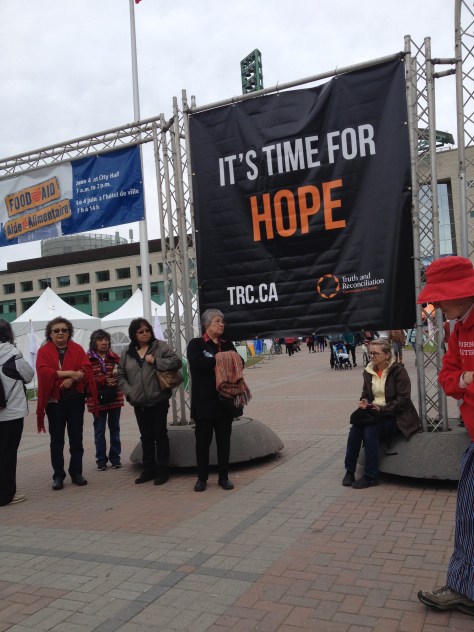
Will Canadians learn anything of useful value from the Truth and Reconciliation Commission of Canada? Will they even be interested in doing so?
These and other questions are on my mind as I prepare for the final closing events of the TRC, from May 31 to June 3. I don’t expect to find the answers to my questions in Ottawa. It will take years to assess the efficacy of this commission. And ordinary Canadians, not the Establishment, will be the ones who decide. Or perhaps not.
I’ve been asking questions about the Indian residential schools, and looking for answers, for a quarter century now.
In the early years of the last century, my grandfather Gowandehsonh was in the Anglican-run Mohawk Institute (the longest-running Indian residential School, better known today as the Mush Hole). He rarely spoke of it, mentioning as we drove by the building that he used to dig in the moonlight for raw potatoes to eat. This information—delivered casually and in passing—came without context or further explanation, and young as I was I could do nothing but sit in confused silence.
In the 1990s I began studying the residential schools for my doctoral thesis. Around the time former AFN National Chief Phil Fontaine went public with his story of residential school abuses, and others soon came forward. In 1992 I had my first candid conversation with a former student, or “inmate” as Indian Affairs had once termed them, about what really happened.
Since then I’ve interviewed hundreds of people and written several books, including Full Circle: the Aboriginal Healing Foundation & the unfinished work of hope, healing & reconciliation (get your free ebook version here) and Residential Schools: with the words and images of survivors.
Bob Watts, who played an instrumental role in setting up the Truth and Reconciliation Commission, said something to me I’ll never forget. It’s quoted in my book Full Circle:
I don’t think of reconciliation as the Prime Minister of Canada and the National Chief of the Assembly of First Nations having some sort of hug-fest on Parliament Hill, and then everything will be okay. I think about my friend Ken, who was in his sixties when he told his daughter for the first time that he loved her. He didn’t know that was part of the deal being a parent, because he never got that himself as a kid. To me that’s reconciliation. I think there’s going to be hundreds and thousands and maybe tens of thousands of little wee tiny reconciliations. But all those have a force.
I’ve interviewed former students, church leaders, therapists, lawyers, journalists and government officials from the front-lines right up to the Prime Minister. I’ve found that everyone has their own ideas about what reconciliation is and how we get there. My book ended up being a collection of personal truths, jostling against and conflicting with one another. I expect the TRC’s final report to be the same, offering to Canadians myriad reflections on the truth of experience rather than the objective Truth of a judicial inquiry. I also think my friend Bob is closest to being right about the nature of reconciliation.
I was in the House of Commons when the Prime Minister of Canada apologized for the government’s role in residential schools. It was a powerful speech, and I was frightened at how unprepared I’d been for my nearly-overwhelming emotional reaction. But even then I knew that, on their own speeches and slogans and photo-ops are not going to get us very far. This isn’t about the National Chief nor the Prime Minister, although they doubtless have a role to play. The thousands of unseen, unreported, uncelebrated gestures of ordinary folks are what will make the difference—if there’s going to be a difference at all.
I’m going to Ottawa in search of this.
You can join me this weekend, wherever you are, by participating in the Legacy of Hope Foundation’s #hopeis social media campaign.
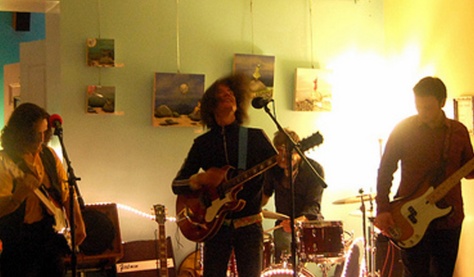
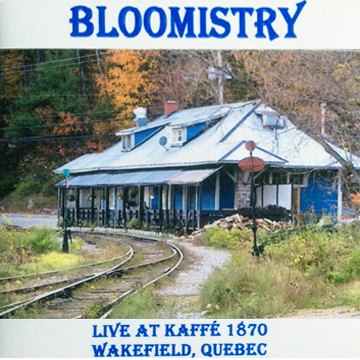
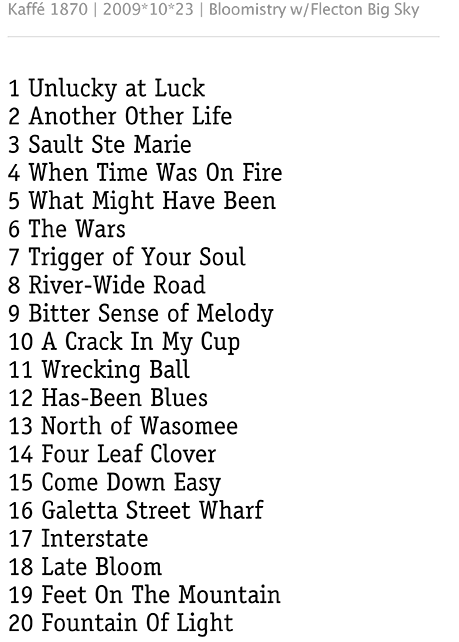
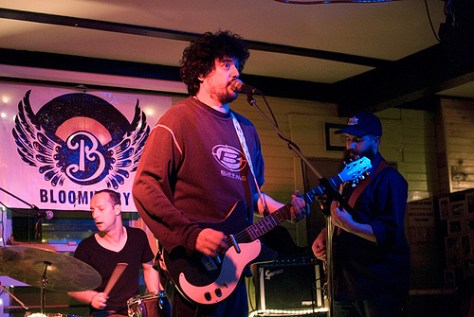
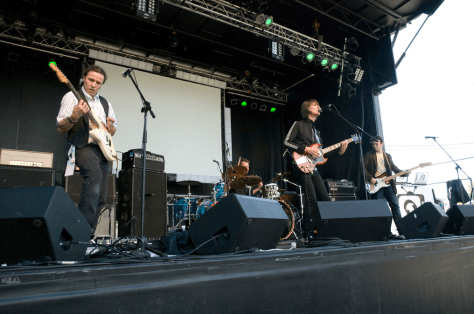

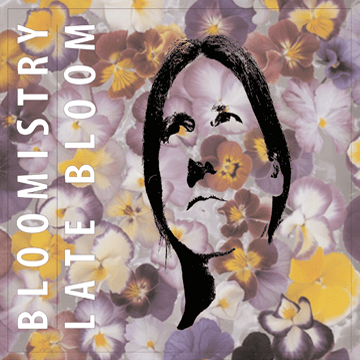
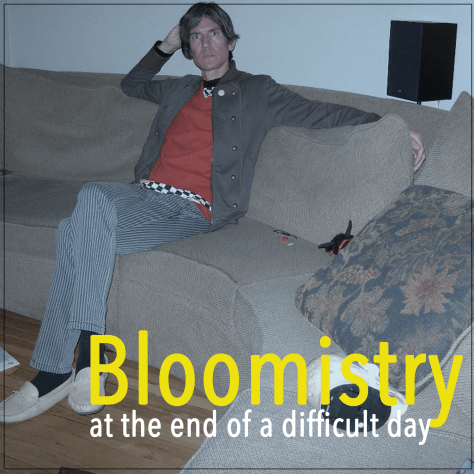
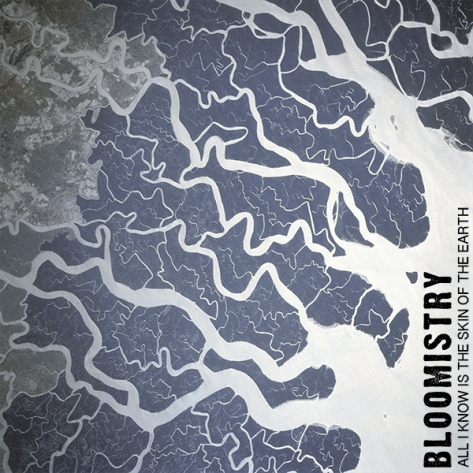 2007–2008 was an incredibly productive musical year for me. Recorded over three days (August 17–19, 2007), All I Know Is the Skin of the Earth was the 4th full-length Bloomistry album, following Late Bloom by only a few months. By the fall of 2008, a fifth album—At the End of a Difficult Day—would be finished.
Late Bloom was an album about returning to recording and live performance at age 40, after a long hiatus. All I Know Is the Skin of the Earth is a line from a Pablo Neruda poem. The working title, A City Like Me, reflected a growing desire to find a new place to call home. I was getting sick of Ottawa. Also, most of the songs for this album were written in hotel rooms, as was the case with Ca Marche and Late Bloom, adding to the album’s overall feel of restlessness.
All I Know Is the Skin of the Earth was made in a weekend marathon session and recorded to eight-track tape. That’s the best way to do it, in my opinion. The most focused and ambitious of my first four Bloomistry albums, it was self-consciously retro, featuring 60s instruments including most notably the combo organ. I imagined myself playing the soundtrack to a hip movie in 1962, kind of like Breakfast at Tiffany’s. Phil Bova mixed and mastered the record at Bova Sound, in Ottawa, on March 24–25, 2008. This remaster builds on this earlier version.
The album began as a series of stories told by characters (the pirate of “Sand and Sea,” the Casanova of “Bitter Sense of Melody” and the eponymous Undertaker) and in some cases real people that I knew. “On the Western Trail” tells the true story of an acquaintance of mine who was taken to Spain—kidnapped I would say—by the country’s poet laureate. “Higher Cloud” rehearses the sad story of Harold Funk, an attorney who suffered from mental illness and became a local legend by putting conspiratorial leaflets on the car windshields of Ottawa. There is an actual recording of Funk shouting at the US Embassy that I made on my walk to work one day and mixed into the song’s bridge.
All I Know Is the Skin of the Earth came closest to perfecting the post-punk, 60s-pop blend that was my aspiration. The next album would explore Americana, turning to lap steel guitars, banjo, Les Pauls and 50s amps and instruments. I regard this album as my best work. It was massive fun to make, and when it was done I had the best sushi dinner ever, at Wasabi in Ottawa.
Tracks.
1. The Found Cause
2. Via Maria
3. Another Other Life
4. The All About A Girl
5. Winter’s Summer Song
6. On The Western Trail
7. Sand And Sea
8. Mosquito
9. Bitter Sense of Melody
10. A City Like Me
11. Higher Cloud
12. Beatrice
13. With The Violins
14. The Undertaker
2007–2008 was an incredibly productive musical year for me. Recorded over three days (August 17–19, 2007), All I Know Is the Skin of the Earth was the 4th full-length Bloomistry album, following Late Bloom by only a few months. By the fall of 2008, a fifth album—At the End of a Difficult Day—would be finished.
Late Bloom was an album about returning to recording and live performance at age 40, after a long hiatus. All I Know Is the Skin of the Earth is a line from a Pablo Neruda poem. The working title, A City Like Me, reflected a growing desire to find a new place to call home. I was getting sick of Ottawa. Also, most of the songs for this album were written in hotel rooms, as was the case with Ca Marche and Late Bloom, adding to the album’s overall feel of restlessness.
All I Know Is the Skin of the Earth was made in a weekend marathon session and recorded to eight-track tape. That’s the best way to do it, in my opinion. The most focused and ambitious of my first four Bloomistry albums, it was self-consciously retro, featuring 60s instruments including most notably the combo organ. I imagined myself playing the soundtrack to a hip movie in 1962, kind of like Breakfast at Tiffany’s. Phil Bova mixed and mastered the record at Bova Sound, in Ottawa, on March 24–25, 2008. This remaster builds on this earlier version.
The album began as a series of stories told by characters (the pirate of “Sand and Sea,” the Casanova of “Bitter Sense of Melody” and the eponymous Undertaker) and in some cases real people that I knew. “On the Western Trail” tells the true story of an acquaintance of mine who was taken to Spain—kidnapped I would say—by the country’s poet laureate. “Higher Cloud” rehearses the sad story of Harold Funk, an attorney who suffered from mental illness and became a local legend by putting conspiratorial leaflets on the car windshields of Ottawa. There is an actual recording of Funk shouting at the US Embassy that I made on my walk to work one day and mixed into the song’s bridge.
All I Know Is the Skin of the Earth came closest to perfecting the post-punk, 60s-pop blend that was my aspiration. The next album would explore Americana, turning to lap steel guitars, banjo, Les Pauls and 50s amps and instruments. I regard this album as my best work. It was massive fun to make, and when it was done I had the best sushi dinner ever, at Wasabi in Ottawa.
Tracks.
1. The Found Cause
2. Via Maria
3. Another Other Life
4. The All About A Girl
5. Winter’s Summer Song
6. On The Western Trail
7. Sand And Sea
8. Mosquito
9. Bitter Sense of Melody
10. A City Like Me
11. Higher Cloud
12. Beatrice
13. With The Violins
14. The Undertaker

 Journalism, Essays, Broadcasting, Books