Category Archives: Wayne’s Picks

These are in my opinion the best of the crop here at waynekspear.com

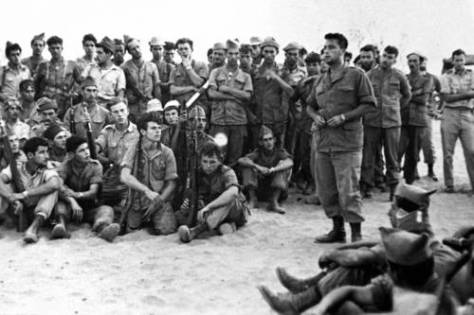
Ariel Sharon’s Life of Vigorous Inertia

Ariel Sharon Retrospective

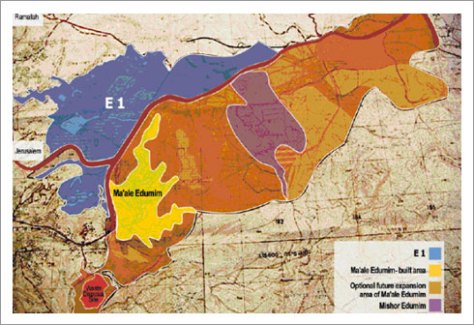
A SETTLEMENT, John Kerry said this week, is better than settlements. Yet for years now, a practical sublation of this withdrawal versus occupation dialectic has been in place, involving the concurrence of ongoing peace talks and settler expansion into the West Bank. As I write this, news arrives both of the progress of the negotiations and the announcement of another 1,400 Jewish settler houses in Palestinian territory. Whatever the terms on paper, on the ground it is not one or the other: the peace settlement “process” now serves rather than contradicts the settlements.

Read More

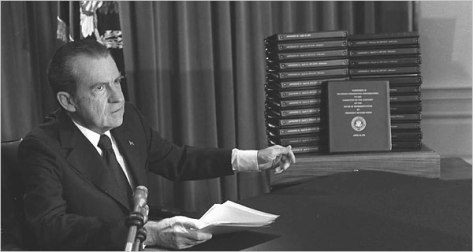
Richard Nixon’s failed attempt to bankrupt the American political system

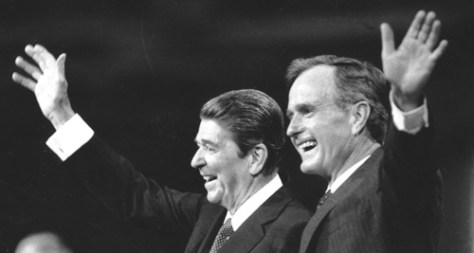
NixonReagan and Bush


I‘LL FOREVER BE SURPRISED by current day apologists of Richard Nixon, who are able (much like admirers of John Kennedy and Bill Clinton) to side-step quite a bit of nastiness to put forward the triumphs — in this case concerning China and the Soviet Union and the often cited “détente.” And indeed this was the chief tactic of Nixon himself, who discounted the Watergate disclosures and who preferred to talk instead about his efforts “to build peace in the world.”

Read More

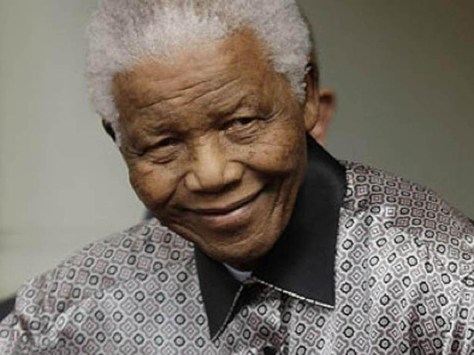
Nelson Mandela: A Revolution of Human Decency

Nelson Mandela

EVEN AFTER the tide of events had vindicated Nelson Mandela, beginning with his 1990 release from a twenty-seven-year imprisonment and culminating in his attainment of the South African presidency, some of his Cold War detractors maintained the charge against him of Communism. In fact, the influence of the Comintern, either upon himself or on the black struggle in general, was the only charge that Mandela repudiated outright in the April 1964 Rivonia trial speech which to this day provides our most detailed first-person account of his political convictions. To the charges against him, concerning acts of sabotage and of violence, Nelson Mandela provided a thoroughgoing and qualified admission: Yes, he conceded, his actions appeared revolutionary from the perspective of the majority white population — but since the white man both feared and repressed democracy in South Africa, how could the assertion of a black person’s democratic rights be conceived by him otherwise?

Read More

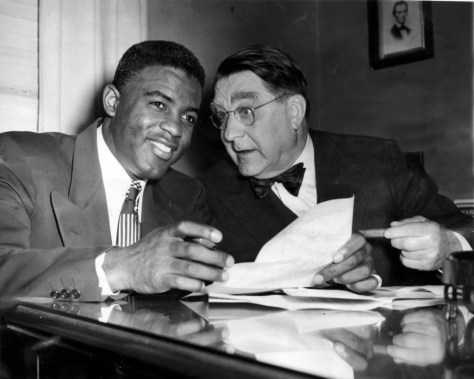
Jackie Robinson and the Business of Black Baseball

Jackie Robinson and Branch Rickey

IMAGINE IT, if you can. The date is November 1945, and you are about to be discharged from an institution whose blood-soaked campaign against global Aryan dominance and industrialized race murder has absorbed the last three years of your young life. However, you did not (as it is said in war’s loathsome and euphemistic lexicon) see action in the theatre of Europe. The battle you have fought has been against racial segregation and mastery, upheld by the very people who demand that you give your life in the service of “your” country.

Read More

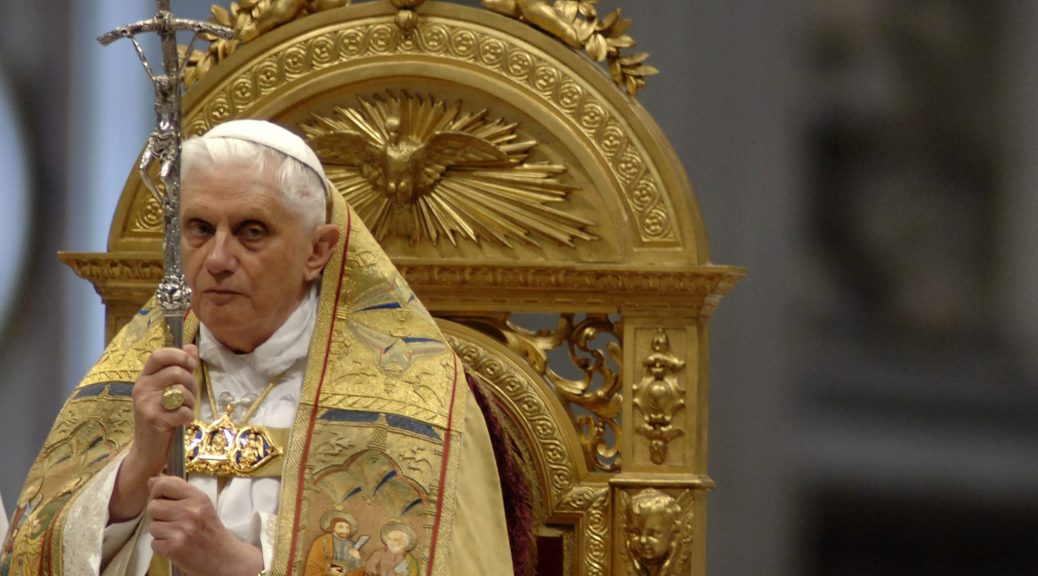
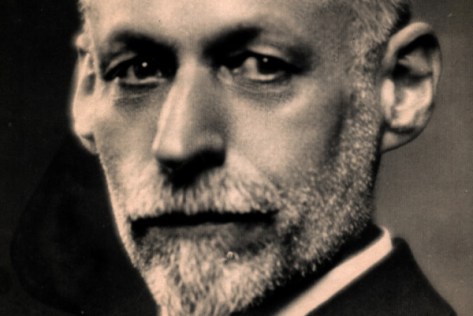
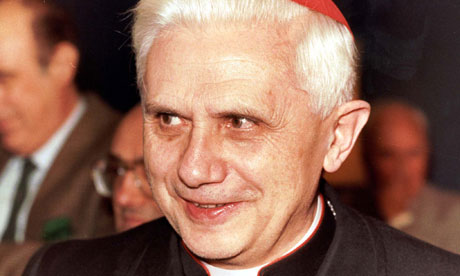
Joseph Ratzinger Should Be Remembered for His Crimes

Joseph-Ratzinger

JAMIE DOWARD’S April 24, 2005 Guardian column, “The Pope, the letter and the child sex claim,” closes with the assertion that the reign of Benedict XVI may well be judged in relation to the sexual crimes and criminals long cloistered by the Vatican, and indeed Mr. Ratzinger himself. As the current Pope departs, the time is full for a summation of these crimes as well as these criminals.

As consequence of the courage and tenacity of the victims — of which there are as many as ten thousand, according to the John Jay College report — an indictment of the church’s topmost offices may now be assembled. For years, rarely a month has passed without some new and lurid disclosure thickening the already rotten stench of a closed-rank institution obsessed with its self preservation. In January we were informed of the Cardinal Roger Mahony’s removal from duties and the release of priest files which contain the “terribly sad and evil” acts (as Archbishop Gomez termed them) committed throughout the Archdiocese of Los Angeles.

This latest revisiting of a decade-long, international outrage recalls what is perhaps the most notorious case of Boston’s then Archbishop, Bernard Law, whose cover-ups of child rape led to disgrace and resignation late in 2002. Since that time many thousands of allegations have issued, and a disgusting pattern of institutional obfuscation and evasion, guided from the very top, has emerged. The rot did not begin with the Holy See’s current Pontiff, as Gratian’s De Poenitentia shows. An internal discussion over management of sexual crimes — or sins, if you prefer — has run across the centuries. What has changed is the capacity of the Catholic church and its agents to appoint themselves the exclusive judge and jury. Of this depraved and failed effort, let the public record show that Joseph Ratzinger was a leading proponent.

Modern-day policy derives from Vatican documents of the 1960s. Having anticipated a public scandal, the church under John Paul II initiated an internal investigation, under the auspices of the Sacred Congregation for the Doctrine of the Faith — an office earlier known as the Roman Inquisition and placed in 1981 under the Prefect Ratzinger. Doward’s two Guardian columns of April 24 — the second is titled “Pope ‘obstructed’ sex abuse inquiry” — capture the tone and substance of the present Pope’s effort to contain the uncontainable, by deferring to the long-standing policy of secrecy and silence, “under the penalty of excommunication” for renegade priests.

For as long as possible, the Vatican enforced the secrets. For as long as possible, senior officials arrogated to themselves the roles of judge and jury. When these efforts collapsed soon after 2000 under the weight of public disclosure, scrutiny and outrage, Mr. Ratzinger charged the crimes to the accounts of secularism, asserting that “pedophilia was theorized as something fully in conformity with man and even with children.” Suddenly the church, that sacred chalice from which alone flowed the absolute knowledge of beauty and moral rectitude and God’s Truth, was simply an unwitting victim of moral relativism.

The truth however is more nuanced than that, and less amenable to the Vatican’s propaganda. Whatever one may say of moral relativism, it happens that every step forward, under Benedict XVI, was compelled by secular pressure. Once the multiple defensive tactics had failed, apologies were issued and commitments to doing better were made. In Ireland, the church was compelled by law to report crimes to secular authorities, while in Canada a flood of lawsuits brought lawyers for the Catholic Entities into negotiations of the Indian Residential School Settlement Agreement.

In the meanwhile, the disgraces of both Bernard Law and Roger Mahony were rewarded by Ratzinger with rich appointments — in particular to the Roman Curia, the central governing body of the Catholic church. Both Law and Mahony participated in the Papal Conclave which selected the now-retiring Vicar of Christ, as Mahony will do once again in the choosing of a successor. Also participating in the 2005 conclave was Ratzinger-ally and Cardinal Angelo Sodano, who in 2010 characterized abuse allegations as “petty gossip of the moment” and who seven years earlier had intervened on behalf of the convicted sexual abuser Marcial Maciel in an effort to shut down the investigation.

With filth such as this at the very core of the Vatican, we should not be surprised that above all imperatives obtains a cardinal injunction to somehow renew and revive an institution caught in the act. Mr. Ratzinger’s Pastoral Letter to the Catholics of Ireland, for example, dwells pitifully upon the tribulations of the Roman Church in the late 1600s, inadvertently reminding us of a more recent Ireland and more recent sacrifices of children to the same sordid religious tribalisms. Joseph Ratzinger not only failed to renew the Catholic church — he created the very conditions which will make a meaningful renewal improbable.

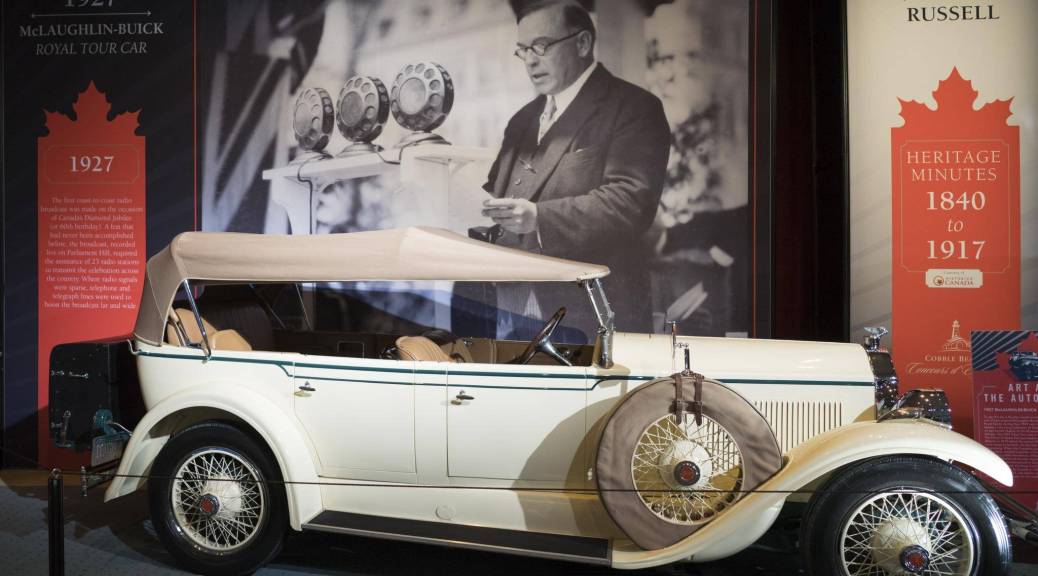
The McLaughlin Buick, a King, and the Great American Novel

1927 McLaughlin Buick

IN OUR AGE of traffic congestion and global terrorism, we’ve forgotten the time in which the prospect of travel by automobile or airplane summoned notions of luxury and elegance. The author Peter Pigott, who has produced a number of books on these and other modes of transport, rehearses in his “Royal Transport: An Inside Look at The History of British Royal Travel” the long and intimate relationship of British royalty to the Canadian made McLaughlin-Buick — one of which is soon to be auctioned in the United Kingdom.

Read More

A Two-State Solution Without Statesmen

Palestine and Israel

FORMER US PRESIDENT Jimmy Carter, in a New York Times editorial “Two-State Solution on the Line,” invokes his view a month previous at the Mount of Olives in East Jerusalem and reflects that

The rate of settlement growth in East Jerusalem and the West Bank is staggering. There are now more than 500,000 Israeli settlers living beyond the Green Line, in violation of international law. Their numbers have doubled since the Oslo peace accords of 1993. Thousands more settlement homes are planned or under construction.

Read More

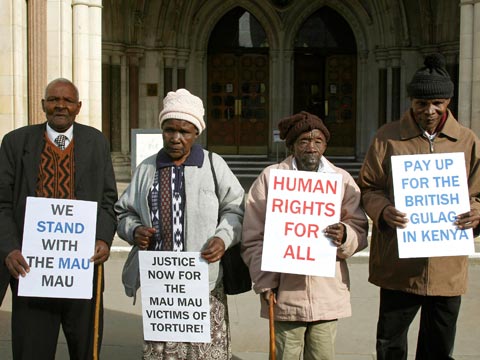
Looking Back at the Mau Mau Uprising

Mau Mau Uprising

THE KENYA MAU MAU uprising, whose 60th anniversary arrives on October 7, has a legacy which reaches into some surprising places. Recall for instance Mike Huckabee’s comment of late February 2011, on The Steve Malzberg Show:

“If you think about it, [President Obama’s] perspective as growing up in Kenya, with a Kenyan father and grandfather — their view of the Mau Mau Revolution in Kenya is very different than ours because he probably grew up hearing that the British were a bunch of imperialists who persecuted his grandfather.”

Read More

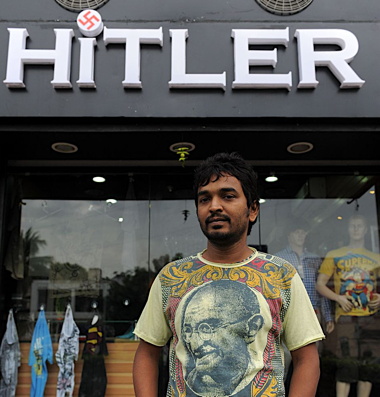
A Clothing Store, Hitler, Gandhi and Indian Independence

Hitler and India

ALMOST PRECISELY seventy years ago, in March of 1942, Winston Churchill dispatched his Marxist-leaning cabinet minister and political rival Stafford Cripps to secure India’s co-operation in the war against Hitler. Partly a result of the well-founded suspicions of Indian nationalists — chief among whom were Jawaharlal Nehru, Rajaji, Subhas Chandra Bose and Mohandas Gandhi — but mostly the result of Churchill’s covert efforts, the negotiations of the Cripps mission failed (as Churchill all along intended). In the subsequent months Gandhi, anticipating a German-Japanese victory, led his colleagues in the Quit India movement, demanding the withdrawal of Britain and immediate Indian independence.

Read More

Ottawa’s policy vacuum undermines its oil sands rhetoric

OIL: it’s an imposing and multi-faceted topic, into whose orbit come geopolitical intrigue, war and empire building. Oil fuels our modern industrial comforts and conveniences, as well as our controversies. In many parts of the petroleum-rich world — Iraq, Saudi Arabia, Sudan, Nigeria —  it has engendered violence and state corruption. A blessing of mixed character, oil production and its inevitable politics have arrived on a massive scale to Canada, most of it in the form of bitumen. Civil war and autocracy are unlikely in this democratic, rule-of-law nation, but don’t expect a smooth journey. There are battles ahead, and the evidence suggests Canada is ill-prepared both for its scope and scale.

Read More

How J.S. Woodsworth opposed the war and saved capitalism

J. S. Woodsworth

ONE MIGHT HAVE anticipated, with all the recent talk of conscience rights, that J.S. Woodsworth would soon enough become a hash tag. But not as the object of a slander. The man who once led the Co-operative Commonwealth Federation was nothing if not conscience driven. His lifelong, principled commitments to the Social Gospel, socialism and pacifism were amply rewarded — both by the Methodist church and the nation which he dutifully served — with accusations of sedition, criminal charges, harassment and imprisonment. Whatever one’s politics, one could do worse than to emulate the spine of this man.

Read More

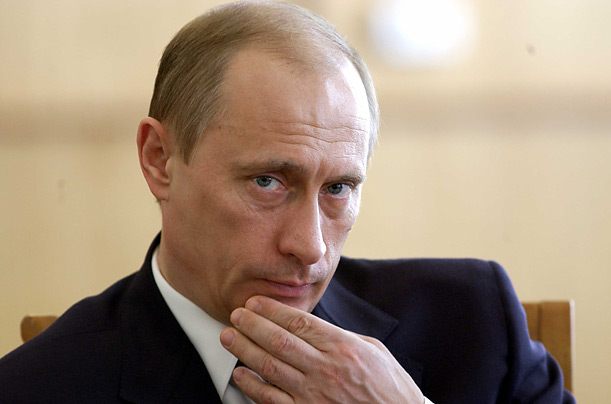
Russia’s War with the West is Not Over

Vladimir Putin

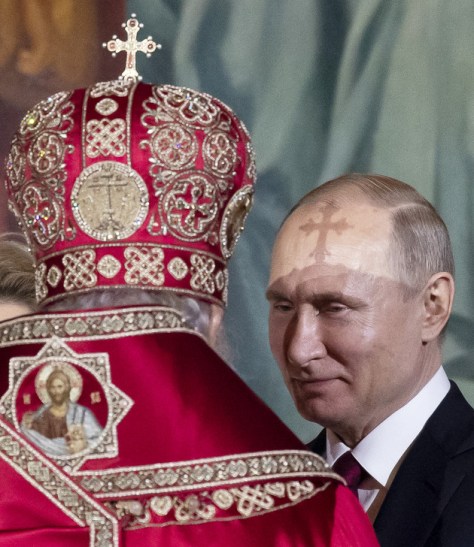
WHEN IN THE final days of his anti-climactic election campaign Vladimir Putin sought the blessing of the Theotokos of Tikhvin, he confirmed symbolically an attachment both to the Russian Orthodox Church and the czarist tradition. Add to the pious optics of this gesture the state dominated, and eastern Europe dominating, megacorporation Gazprom as well as the country’s informal ‘silovik’ network of former security operatives—embedded into the country’s banking, commercial, media, and energy sectors—and one would have in a single photo-op a complete representation of the current Russian state.

Continued …

Remembering Christopher Hitchens

I FIRST CAME across the writer Christopher Hitchens when he was a young Socialist contributing his “Minority Report” to the Nation. Very much yet in his soixante-huitard, Trotskyist phase, if not in possession any longer of his Socialist International card, he reminded me of my favourite writer, George Orwell.

Read More

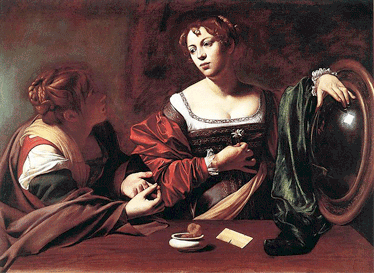
“Caravaggio and His Followers in Rome”

“Martha and Mary Magdalene”

IF MICHELANGELO Merisi da Caravaggio, known today simply as Caravaggio, were our contemporary, he would be often in the news. Violent, captious, cruel, and reckless, he was notorious even by the standards of late 16th-Century Rome. A good source on the Italian capital circa 1600 is John L. Varriano’s “Caravaggio: the art of realism,” which catalogues “a level of sadism that would be shocking in any age.” But to give you an idea of the sort of man Caravaggio was, I can think of nothing better than to cite his flirtation with the Knights of Malta, who soon having deemed the painter “foul and rotten” expelled him from their ranks.

Continue reading “Caravaggio and His Followers in Rome”

19th Century British Photographs

A year ago I took in the National Gallery of Canada exhibit “19th-Century French Photographs,” and today I took in the British equivalent, which of course is designated “19th-Century British Photographs.”