Bloomistry, “Laketown” (2015 Remaster)

_cover

In theory, Laketown was the 7th Bloomistry album. It quickly followed To Be, with recording taking place on August 21–23, 2009. But with To Be absorbing most of my attention, and getting all the promotional focus, Laketown remained in the background. It was lost in the flurry. In fact, I raided it for three songs to put on To Be: Wine and Women, On Top of the World, and To The Bottom.

The sessions for To Be—from February 16 to August 9—were long, drawn-out, and frustrating. Enough material was recorded for three or four albums, but much of it was unreleasable. Many of the songs simply didn’t work, for one reason or another. The irony is that I was being really ambitious on To Be, writing songs with key changes and odd time signatures  and movements. It was my prog-rock album! But the songs that were making me crazy were the three-minute, conventional pop tunes. Some I abandoned, others I re-recorded from the ground up, two or three or more times. One of those songs was Fallen Leaves, picked up once again for the Laketown session. The version on this album is one of many, and while this song never quite came together, the idea never lost its interest. I am still wondering how to get that one right. It’ll be amazing when I do.

This album was a return to the approach of All I Know Is The Skin Of The Earth—making a record in a marathon weekend session. After the exhausting mess of To Be, the appeal of the recording studio had somewhat diminished. I didn’t want ten months of pain—a weekend was enough. The record was also in a sense a return to the first Bloomistry album, Galetta Street Wharf, which has always had a soft spot in my heart. Both were based on a fictional town, and both were made without any concern for conforming to an overall album style or genre. As a result, Laketown ranges in style from rock to country. At 18 seconds in length, the final song “In Summary….” is a musical jest as well as a Reader’s Digest take on pop music: “I love her, but she don’t love me.”

Laketown is uneven and rough, and some of it makes me cringe, but it features three gems in Port Aurora, Fear, and Another Day. It was mixed by Dave Draves on September 8, 2009, two weeks before the mastering of To Be on September 22, at Bova Sound studio.

Tracks.

1. Beautiful Posers
2. Over and Under
3. Fallen Leaves
4. Fear
5. Another Day
6. Port Aurora
7. Deep As a River
8. Wake Up
9. In Summary….

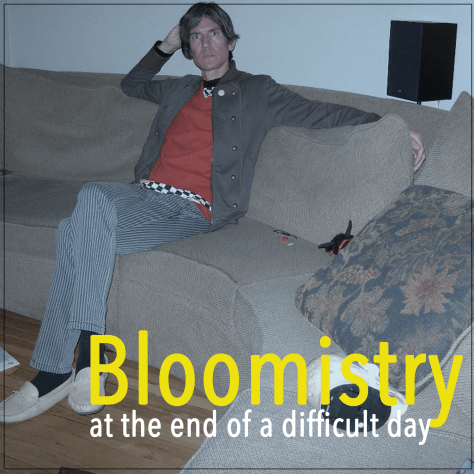
Bloomistry, “At The End Of A Difficult Day” (2015 Remaster)

ateoadd

Recording of the 5th Bloomistry album began on Wednesday, November 21, 2007, at The Underground in Hull, Quebec—three months after the previous album, All I Know Is the Skin of the Earth, was completed.

The working title of this record, The All American Five, provides a clue to the approach of these sessions. “The All American Five” refers to the tubes commonly found in US-made tube radios, and that’s what this album was intended to be: an American record, grounded in American sensibilities and sounds. Also, I was a gear junkie at this point, buying vintage amps on eBay. So I knew a lot about vacuum tubes.

Everything Bloomistry was tongue-in-cheek. So of course I opened my Americana album with a quintessentially British snippet from the Beatles 1965 Rubber Soul sessions. At the time The All American Five was being recorded, I was reading Mark Lewisohn’s The Complete Beatles Recording Sessions and listening to the four-track sessions of the Beatles early recordings. I really got into studio work in a big way. The intro to “Has Been Blues,” which I recorded on May 26, 2008, features a Scouse exchange between John Lennon and a recording engineer I lifted from the 4-track beds for the song “Run For your Life” (“Okay boys?” “Okay Johnny!”). The reference pays tribute to the album that came out the week I was born—also, coincidentally the album that made me want to record music.

The previous album, All I Know Is the Skin of the Earth, was recorded over a weekend. At The End Of A Difficult Day, as it finally came to be known, was finished in 10 months, on September 21, 2008. On that day, tuba and piano overdubs were added to the track “Diane,” and the album was mixed by Dave Draves two months later, at Little Bullhorn, on November 21 and December 2, 2008.

Beginning with the album At The End Of A Difficult Day, Bloomistry recording sessions tended to be chaotic, multi-tasking affairs. Several parallel records were conceived and in the works during this period, including two recorded but unreleased EPs—one called Yes! and a second with Ottawa musician and friend Flecton Big Sky, recorded on December 14, 2007. This would be even more the case with the next album, To Be.

Despite the chaos, At The End Of A Difficult Day is, I think, one of the most cohesive and focused Bloomistry albums. It would also feature, as its closing track, the song I consider my best. I remember listening to the mix of River Wide Road for the first time and being blown away by what Dave did with it. I also really like the lyrics. They’re playful, ironic, and clever—but also a fundamentally sad reflection on the reality of disappointment:

You know, the poets had it right:
They left it to their verses,
And either filled their beds at night
Or filled their lead with curses.
I guess there’s many ways to cope with bitter sorrow,
And when you’ve had enough of hope
There’s always hoping for tomorrow.

Tracks.

1. Has-Been Blues
2. I Guess I’ll Need A Miracle
3. You’re So Lyrical
4. Over The Moon
5. Near You
6. Symphony For The Street
7. Ragged Doll
8. My Meija
9. Diane
10. The Majesty
11. Sunday Afternoon
12. River Wide Road

Bloomistry, “All I Know Is the Skin of the Earth” (2015 Remaster)

Bloomistry Cover 2007–2008 was an incredibly productive musical year for me. Recorded over three days (August 17–19, 2007), All I Know Is the Skin of the Earth was the 4th full-length Bloomistry album, following Late Bloom by only a few months. By the fall of 2008, a fifth album—At the End of a Difficult Day—would be finished. Late Bloom was an album about returning to recording and live performance at age 40, after a long hiatus. All I Know Is the Skin of the Earth is a line from a Pablo Neruda poem. The working title, A City Like Me, reflected a growing desire to find a new place to call home. I was getting sick of Ottawa. Also, most of the songs for this album were written in hotel rooms, as was the case with Ca Marche and Late Bloom, adding to the album’s overall feel of restlessness. All I Know Is the Skin of the Earth was made in a weekend marathon session and recorded to eight-track tape. That’s the best way to do it, in my opinion. The most focused and ambitious of my first four Bloomistry albums, it was self-consciously retro, featuring 60s instruments including most notably the combo organ. I imagined myself playing the soundtrack to a hip movie in 1962, kind of like Breakfast at Tiffany’s. Phil Bova mixed and mastered the record at Bova Sound, in Ottawa, on March 24–25, 2008. This remaster builds on this earlier version. The album began as a series of stories told by characters (the pirate of “Sand and Sea,” the Casanova of “Bitter Sense of Melody” and the eponymous Undertaker) and in some cases real people that I knew. “On the Western Trail” tells the true story of an acquaintance of mine who was taken to Spain—kidnapped I would say—by the country’s poet laureate. “Higher Cloud” rehearses the sad story of Harold Funk, an attorney who suffered from mental illness and became a local legend by putting conspiratorial leaflets on the car windshields of Ottawa. There is an actual recording of Funk shouting at the US Embassy that I made on my walk to work one day and mixed into the song’s bridge. All I Know Is the Skin of the Earth came closest to perfecting the post-punk, 60s-pop blend that was my aspiration. The next album would explore Americana, turning to lap steel guitars, banjo, Les Pauls and 50s amps and instruments. I regard this album as my best work. It was massive fun to make, and when it was done I had the best sushi dinner ever, at Wasabi in Ottawa. Tracks. 1. The Found Cause 2. Via Maria 3. Another Other Life 4. The All About A Girl 5. Winter’s Summer Song 6. On The Western Trail 7. Sand And Sea 8. Mosquito 9. Bitter Sense of Melody 10. A City Like Me 11. Higher Cloud 12. Beatrice 13. With The Violins 14. The Undertaker

Bloomistry Live at Zaphod | 03.15.2010

MackenziePark

Bloomistry live at Zaphod, Ottawa, Canada. March 15, 2010

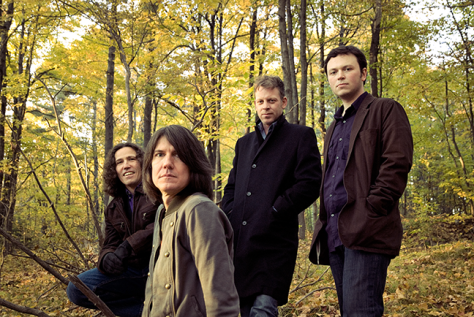
Soundboard recording, MP3 (320 kbps). Dmitri Koev, bass; Simon Meilleur, drums; Terry Calder, guitar, b. vocal; Wayne K. Spear, guitar, vocal.

Playlist

1. Trigger of Your Soul
2. As Far As Wheels Go
3. Wrecking Ball
4. Wine and Women
5. The All About A Girl
6. Feet On The Mountain
7. Interstate
8. Late Bloom
9. Come Down Easy
10. Unlucky at Luck

043Zaphods

Show notes. Bloomistry played Zaphod numerous times over the years, often on the “Showcase Monday” evenings. There was a band legend that Zaphod carried a curse: it was several Zaphod shows before the whole band was able to be on-stage together for a show. On previous occasions, illness and accidents struck a band member. For one of the Zaphod shows, Dmitri was ill. Simon cut the end off a finger and was unable to play the drums for another (Terry played the drums for that show). So by the time the four band members took the stage for the first time, on March 15, 2010, there had already been several Zaphod Bloomistry shows, including a solo show I played to open for a promising young band called James and Blackburn (I think). Wonder where they are now? The show was captured by Tom Stewart, a great guy and a great sound engineer. This show features two tracks from the new (at that time) record To Be, “Feet On The Mountain” and “Wine and Women” (a song whose lyrics are taken from John Donne’s 17th-century poem “Song: Go and catch a falling star).” This evening was the first and possibly only public performance of the latter. I was in a great mood that night and remember having a blast. Live music is the best drug.

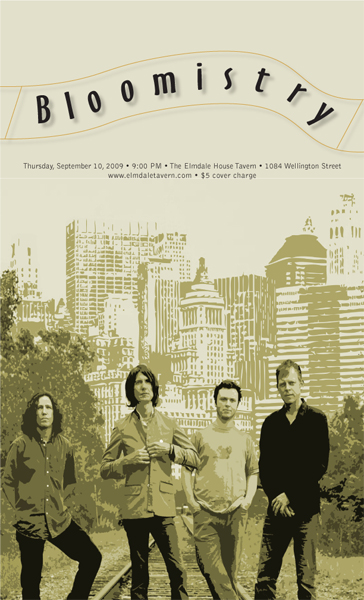
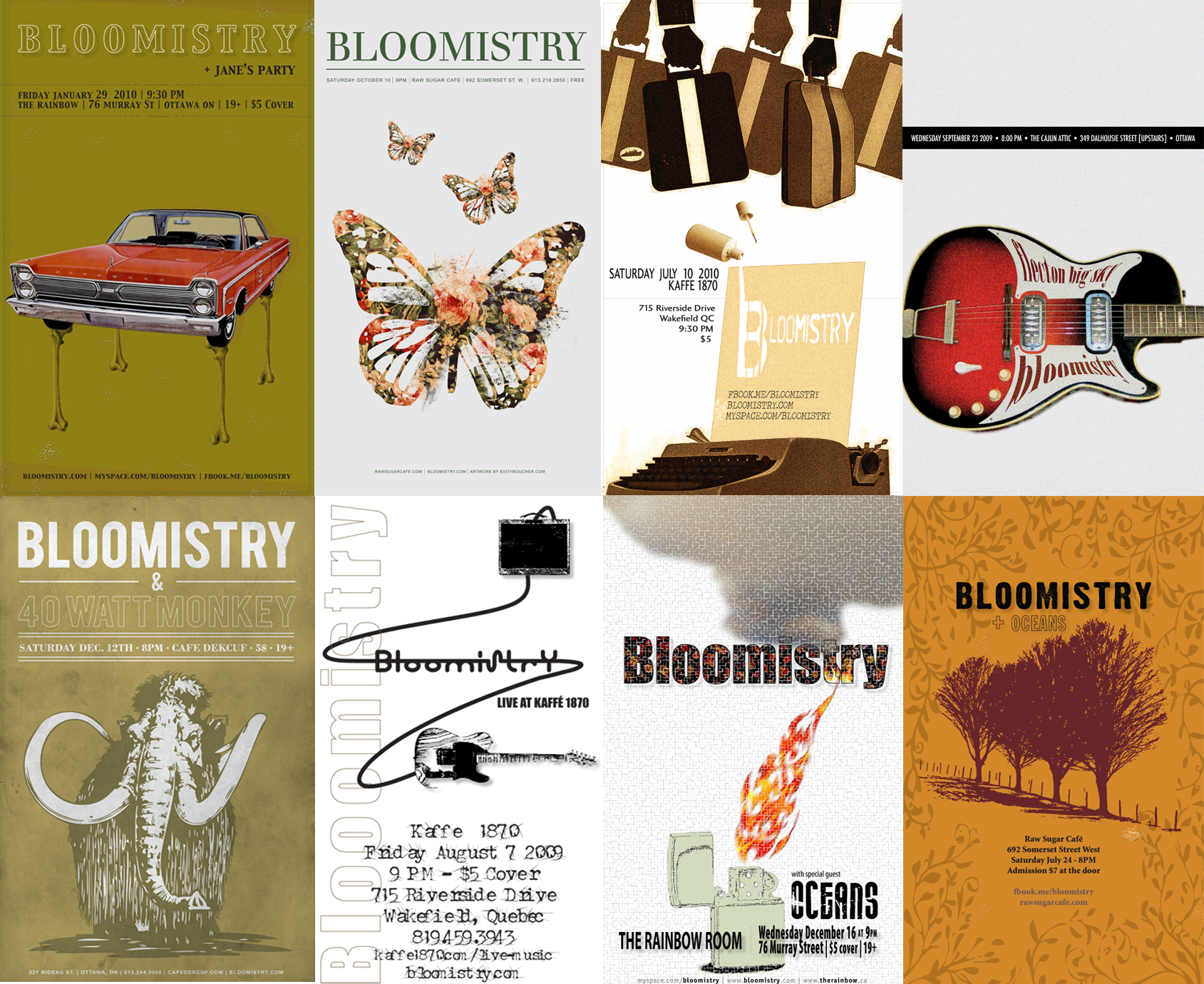
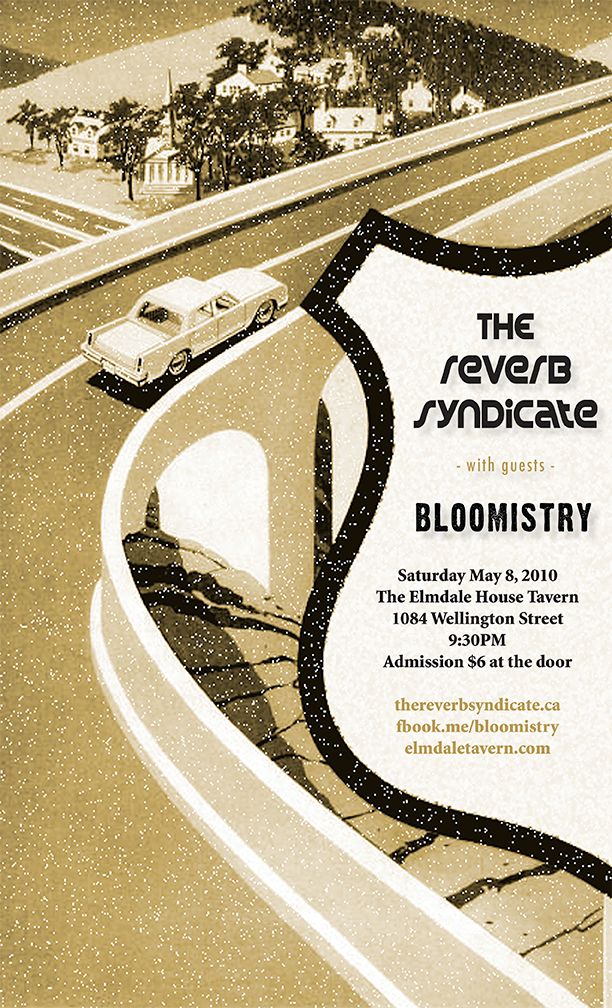
Bloom_Poster005

posters

2010-05-08_Elmdale

Bill Clinton hates this portrait. So obviously I love it

Screen Shot 2015-03-01 at 10.12.14 AM

AS EARLY AS 1993, I’ve thought Bill Clinton is a despicable human being.

Self-absorbed, manipulative, dishonest, vain, and driven by animal appetites and ego.

I remember him going out for a run, during his re-election campaign, and veering mid-way into a McDonald’s.

That’s Bill Clinton—a narcissistic boy-man who’s never met an intern or Big Mac he could resist.

Imagine having the power of an American President, and squandering it on Oval Office hand-jobs. Then, bombing Sudan to distract the country from your indiscretions.

The Clintons ate people who thought they were friends. Ate them and threw the bones to the wolves.

And for those who want to talk about Bill’s charity work—notice how he splashes his name in big bright letters over everything with which he’s associated.

THE WILLIAM JEFFERSON CLINTON SUCH-AND-SUCH

So…I thoroughly enjoyed this Daily News article, headlined

Bill Clinton portrait in National Portrait Gallery has shadowy reference to Monica Lewinsky, reveals artist

Here are some of my favorite quotations:

“He’s probably the most famous liar of all time.”

“The country’s 42nd president was “terrified” to be painted by [Nelson] Shanks.”

“…he hid all fears with a relaxed smirk and bold stance…” [Bill Clinton almost always has a self-satisfied smirk on his face]

Bill-Clinton

“When Clinton was not in the room, [the painter] says he set up a mannequin sporting a blue dress he likened to Lewinsky.”

“The Clintons hate the portrait.”

I wouldn’t be mentioning any of this, if Hillary were not likely to be running for President in the next election.

There should be a law preventing the Clintons, especially but not only Bill, from getting within 500 yards of the White House.

I wonder if they’d rent out the Lincoln bedroom, again, to their slick benefactors.

Also watch for the Clinton money to pour in, just like last time, from foreign dictatorships and oligarchs.

The Clintons. Yeck.

The Cree should have a flip-chart easel ceremony. No, just kidding.

Woods

THERE’S AN EASY WAY to tell you’ve been spending too much time with the Cree, and it’s this:

When you find yourself saying, “No, just kidding” every time you are just kidding.

As in, “Three guys walk into a bar. No, just kidding.”

If you know any Cree people, you know what I’m talking about.

And speaking of the Cree…

…a long, long, long time ago, the indigenous people of this land had an important right of passage.

When a young man, or a young woman, reached the ceremonial age, all of the people in the community would gather at a sacred spot.

Maybe in the woods, or at the centre of the village, or in the longhouse near the fires. Every nation had their own, sacred spot.

They would call the young man, or young woman, before the gathered community.

It would get very quiet. Electricity would pass through the crowd. Everyone would watch transfixed.

Because the special day had arrived to present the young man, or the young woman, with his, or her …

very own flip-chart easel.

Okay, I made this up. But the point of the story is that today I bought a flip-chart easel.

And owning my own flip-chart easel makes me feel all grown up, or something.

It’s not my company’s flip-chart easel, or my team’s, or my business partner’s. It’s MINE.

And there are so many uses for a flip-chart easel that I can’t believe everyone doesn’t have one of his, or her, own.

I think that’s because there are no decent flip-chart easel ceremonies.

Anyway, from now on I’m going to do everything by flip chart.

Christmas cards, love letters, and tax returns can all totally be done on a flip chart, and why they aren’t already is truly a mystery to me.

You can even set it up on the bus, during the ride from Staples to the subway home, and do a team-building workshop. Trust me, I thought about it.

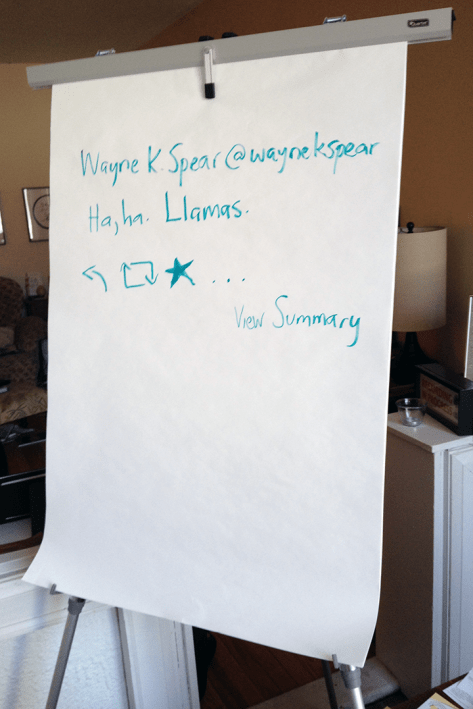
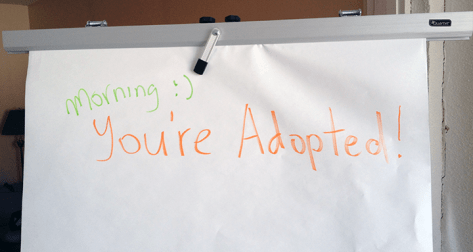
Here’s just the first of many uses I have found for my flip-chart easel.

flip-chart-1

So, yeah, I think I’ll do only flip-chart-Twitter from now on.

And here’s another use, which will finally resolve something I’ve been meaning to tell my son.

flip-chart-2

No, just kidding.

Business writing on LinkedIn, The Pulse, by me!

linkedin

WHEN I AM not mesmerizing the masses with my work here at waynekspear.com, I’m being all S-M-R-T and business-like over at The Pulse, LinkedIn’s blog for professionals. Writing about your topic of expertise for high-powered business people is the most grown-up thing you can do, except for wiping another human being’s bum. And yes, I have done that, and without question I like writing for The Pulse more.

Residential Schools: reviewers recommend my latest book

Goodminds, IEP

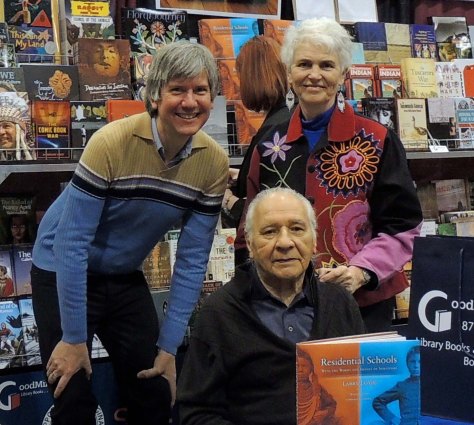
Above, l. to r., authors Wayne K. Spear, Constance Brissenden, and Larry Loyie, and Jeff Burnham, President, GoodMinds & Indigenous Education Press

Lovely reviews are arriving daily of my latest book, Residential Schools, co-authored with Larry Loyie and editor Constance Brissenden.

Here’s an excerpt from the Canadian Children’s Book Centre Winter 2015 edition of Book News (page 38). The author of this review is Karri Yano, a Toronto writer and editor.

The material presented is a balance of historical facts and personal experiences. While thorough in its overview—timeline, politics behind the events (racist attitudes in society and politics)—it is not explicit in the details of the neglect and abuse, but specific facts and personal testimonies reveal the deplorable conditions the children who were taken away and living far from any family support had to endure while also demonstrating the incredible resilience of the survivors and what they did to cope.

The book is suitable / appropriate for student 12 and up as a resource for one period of Canadian history that reveals the struggles of Aboriginal people to self-identify and their fight for equal rights and survival as a culture in Canada.

Residential Schools: with the Words and Images of Survivors—a National History | Released in 2014
“Residential Schools: with the Words and Images of Survivors—a National History”

The book has been featured recently in the Edmonton Journal and Brantford Expositor. Paula Kirman, writing for iheartedmonton.org, says “Residential Schools is an excellent introduction to this tragic subject, and will certainly have a place in classrooms around the province.”

You can order the book by phone from my Brantford, Ontario publisher, Goodminds, 1 (877) 862-8483 or email helpme@goodminds.com.

three-authors

Maslow’s hierarchy of needs, updated for the 21st century

2218320_9e329c0e68_b
Photo by Jezz, “Winter Traffic” on Flickr.


I WAS IN WINNIPEG, Manitoba last week, where the temperature reached a breath-taking -729.5°C when the FLTW is factored in.

And FLTW is, of course, the Feels Like To Wayne scale. Which is how all temperatures should be measured but for some absurd reason aren’t.

Anyways, the weather was so breath-taking that my breath got back on the airplane and went home to the warm Toronto temperatures, which hovered somewhere around -702.6°C. That left me, my legs, and a thin wool suit to deal unaided with the arctic winds of Portage Avenue.

The reason I was walking down Portage Avenue, in nothing but a suit, was that my brother-in-law’s cat was sick. You see, he went off to Africa (temp. 22C/72F) and left his cat with some lovely folks who weren’t quite prepared for a sick cat.

So there I was, leaving a business meeting to look for a bank so I could transfer money to pay for the vet.

And that got me philosophating.

First of all, how did the pioneers survive without electricity and medicine, back in the day, walking around in their moose-and-beaver-fur business suits? I truly can not comprehend it.

This makes me think that before about 1920, people in Canada just stayed indoors nine months of the year. They ate whatever walked past their house, or hut, or whatever it was, and drank melted snow. And then they dressed in the animal they had just eaten.

Life was simple.

Well I found the bank and needed a coffee to warm up, so I went to another thing they didn’t have in the olden days, Starbucks.

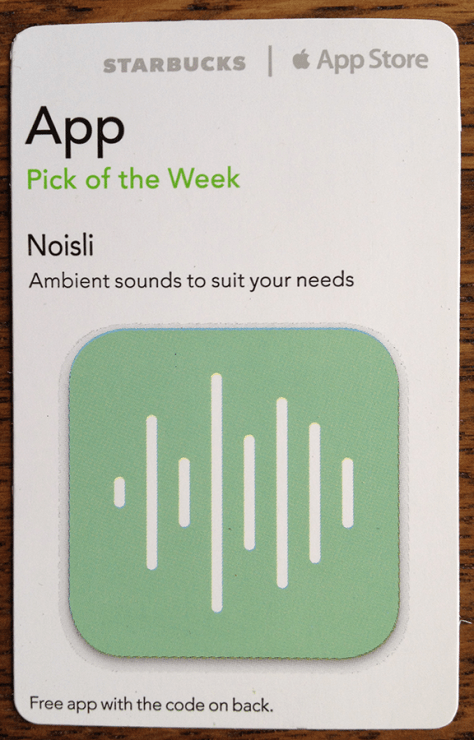
I don’t know if you ever go to Starbucks, but they have these free iTunes “App of the Week” that they give away. Here it is.

Noisli

I haven’t downloaded the app, and I’m not sure exactly what it is and does—but I can see from the card that it suits all my ambient needs.

And I didn’t even know I had ambient needs.

This is why living in the 21st Century is so freaky amazing: here is a company working around the clock on my needs, and I didn’t even know that I have these needs.

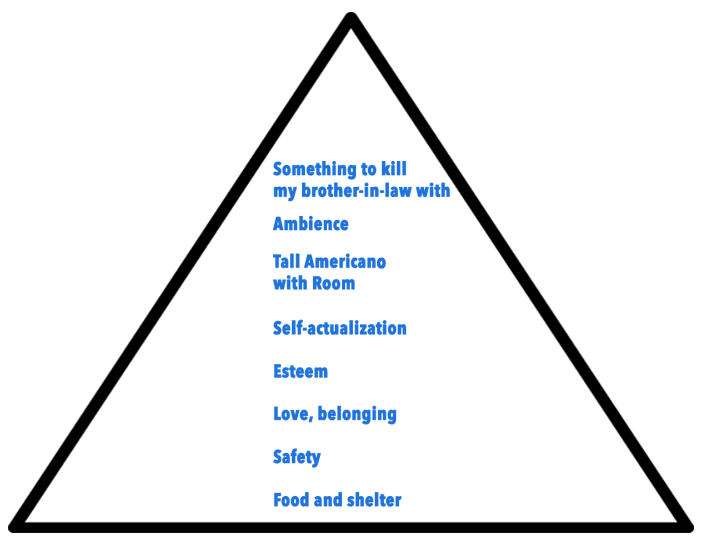
So I realized right away quick that it was time to update Maslow’s hierarchy of needs. You know, that triangle thingy that talks about food and clothing and shelter.

When you are in Winnipeg in February, looking for a bank on Portage Avenue, you don’t have to be told by Mr. Maslow that you need clothing and shelter. Your legs tell you this.

But you do need Starbucks to remind you that you need belonging, love, “a Tall Americano with room,” and ambience.

So I went straight to work, updating Maslow’s hierarchy of needs for the 21st Century.

maslow

I realize there’s still some work to do on this.

For example: there is obviously more than one type of ambient need, with one Brian Eno record for each.

And I’m not sure yet whether to Chinese water-torture my brother-in-law, or just make him walk around Saskatoon during a blizzard, in his underwear, looking for my dry cleaning.

So many options, all so attractive.

But if we’ve learned one thing today, it’s that every cloud has a silver lining. That would be the next blizzard taking shape.

Or, the silver lining could also be the inspiration for an update of Maslow’s hierarchy of needs.

You’re welcome.


Yes, it’s true. I have a new website.

I wasn’t going to announce this until it was official, but what the heck.

I have a new business-oriented website.

twitter-banner

There. Now it’s out.

Actually, this has been some time in the making.

You see, I’ve been thinking a lot about streamlining my life, so that it feels like everything I’m doing is pushing in the same direction, and not in the 20 directions I was going.

I’m guessing you can relate to this.

And, if you’ve been following this blog, you know I’ve been spending my time going back to the books. You know, the proverbial drawing table.

It’s been a time of learning, of reflection, and of intense planning. The fact is that I have some big ideas, and I want to give them a chance. But to do that I have to make some changes.

I won’t bore you with all the details. Let it be enough to say that while I’ve been away, I have developed a plan, and I’m very excited about it.

The business website is not going to replace this site, not yet anyway. I’ll still be writing here, but the truth is I don’t have the time or the energy to blog here to the degree I have in past years.

I’ll be focusing on developing my business. The new website is part of that focus. Because it’s a business site, the primary interest will be my communications work. However, there will be lots of other stuff too—about writing and personal growth and pursuing your passions.

Gradually, over the next couple of months, I’ll be making the transition. The business pieces of this site will be stripped away, leaving only the personal writing I’ve done on this blog.

I don’t know what will happen to this blog long-term. That will depend on how things go with my business!

My business site will officially launch in the Spring. Most of my time will be spent at the new website, which is:

spearcommunications.com

I do hope you’ll visit, find it of interest, and bookmark it.

Thanks for visiting. I hope to see you soon!

-Wayne.


Is one of these your perfect journal?

stack-1

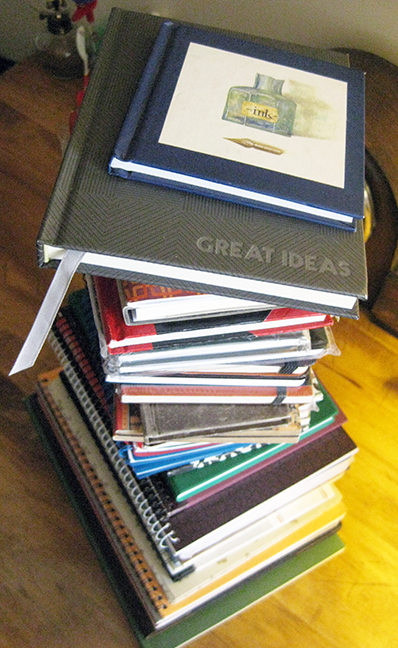
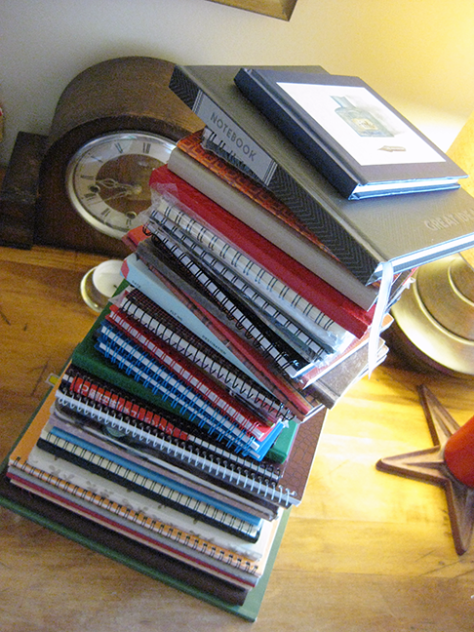
Yes, it’s true: I have a lot of blank books

DOZENS OF THEM, tucked away in a drawer, waiting to be filled with the URLs of websites I’ve discovered, lists of books to read, ideas, things overheard on the subway, recipes, interviews, and other ephemera.

If there was a TV show about people with a lot of blank books, I’d probably be on it. Not that I’m a hoarder. I try to keep my stationery fetish in check: for every blank book that I buy, there are at least ten I would like to buy but don’t. And I fill these books up pretty quick.

stack-2

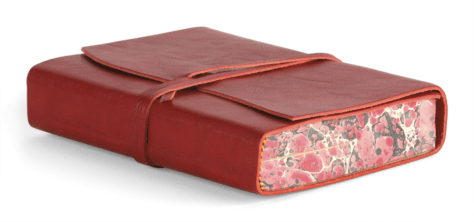
They come from all over the world, in many sizes and shapes and textures and colors. Some blank books are almost too beautiful to write in. I’ve coveted, but have never bought, a Cavallini Roma Lussa journal. This week I saw one at The Paper Place, here in Toronto. These journals are works of art, more suitable for use as a Downton Abbey prop than for defacing with my prosaic grocery lists.

Roma Lussa, a journal good enough to eat

What makes a blank book great?

I look for specific qualities in a blank book. To be great, the following criteria must be met.

Good binding. I want my books to lay flat. If I have to use a hand to keep it open while I write, I’m probably going to pass. Although ring bindings are best for books that open and lay flat, my preference is for stitched bindings. Rings add bulk and also can get caught on clothing or the lining of a satchel. Glue bindings can come loose, so I look for paper that has been gathered into signatures and threaded with a quality material.

Proper lines. By this I mean the lines should give me enough room for my writing but not be so generous that I can’t get a decent amount of text on the page. As I get older, the balance changes. I now look for more line height, since my eyes aren’t what they used to be. Also, I pass on a blank book if the lines don’t go to the edge of the page. I don’t have a good reason for this: I just think that lines which go to the edge of the page look nicer. It’s probably just me having an OCD moment.

Good paper. Again, this is objective. Because I write with a fountain pen, bleeding can be an issue. Also, the paper should take up the ink without feathering. Nowadays most journals pass these tests, so really what I’m looking for is a paper that feels and looks decent. Like most of these criteria, this is subjective. Over the years, I’ve learned which journals provide for the best writing. More on that in a moment.

Good covers. Have you ever bought a shrink-wrapped journal? Then, after a couple weeks of use, you discover that the covers curl? I’ve had this experience enough times that I now usually avoid anything shrink-wrapped. A cover should feel good in the hand, protect the pages, and keep its shape. I also prefer that it not have writing. So I mostly avoid journals that say JOURNAL on them, or that have inspirational quotations. An embossed logo is fine, since it’s subtle and blends in. Other than that, the plain old cover is for me.

Pockets. This one is optional. I won’t pass over a journal that doesn’t have pockets, but if it meets all the other criteria and also has a place to tuck receipts and lists, then bonus points. The Moleskine notebooks have a cover flap which serves this function, and I love it.

Here are some of my all-time favorite journals

clare-fontaine
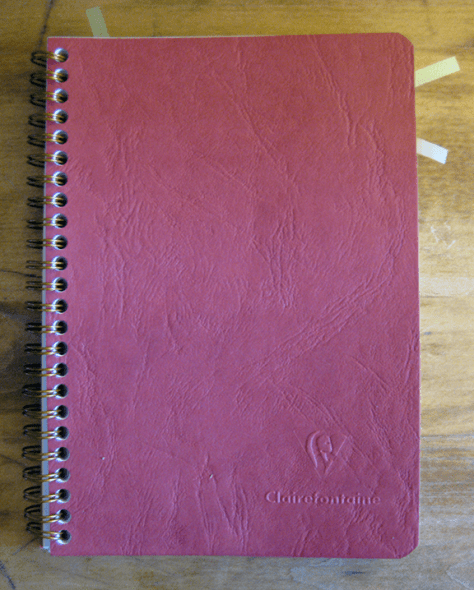
You can’t not mention Clarefontaine. They make great papers. You can throw anything at a Clarefontaine journal, no problems. The most saturated ink will not bleed or feather. They come in a huge variety of formats. There are pockets. The covers have a great hand-feel. They stand up well to abuse. And Clarefontaine is a well-priced product, aiming at the practical rather than the precious. This was purchased at the most excellent Paper Papier in Ottawa, my 3rd fav stationery store in Canada. Buy something there and say Hi to Gary.

coach-house
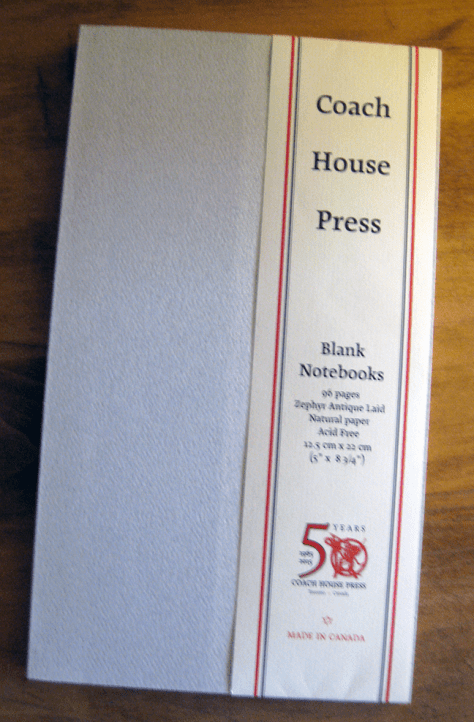
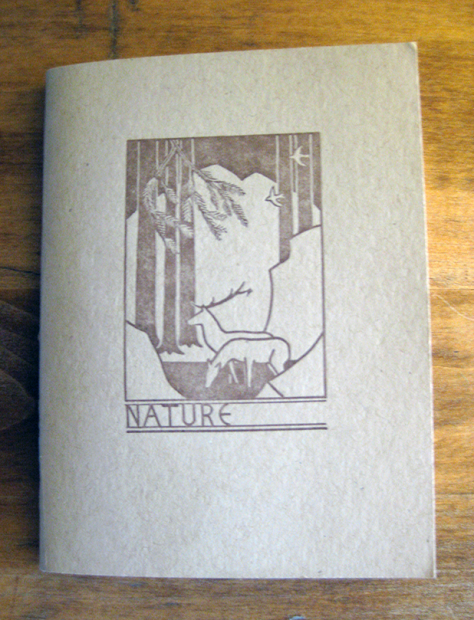
I had no idea until this week that Coach House Press made blank books. I don’t know why every publisher doesn’t make a journal that conforms to its book specs. I would definitely buy a Penguin or Random House or Oxford University Press or Anansi blank book that looked and felt like their paper backs. Especially Anansi. (P.S. I found this at Wonder Pens on Dundas West.)

moleskine-large
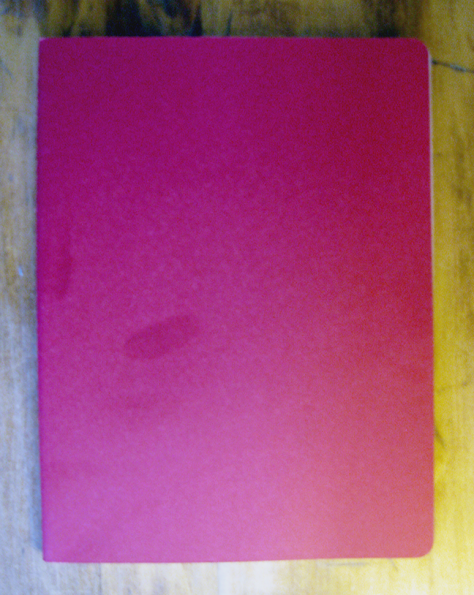
This is the Moleskine large notebook in the new Cranberry color, purchased at Valhalla Cards. I have already put a big thumbprint on it, and I guess that’s my only complaint about these. For some reason they seem to attract stains. I have these in three colors: Black is business, grey is personal research, and kraft is scribbles. I don’t know what cranberry is yet, but this is an unlined journal so I may dedicate it to sketches, mind maps and planning.

moleskine-sketch

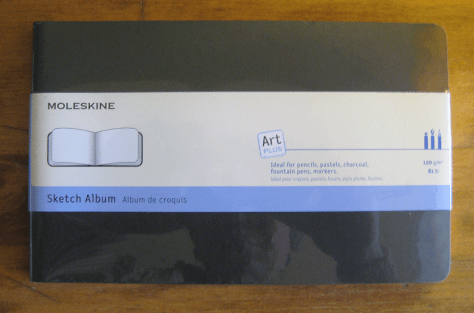
Another Moleskine, in landscape. Like the journal below, this can be used as a reporter’s notebook, and that’s what I’m going to do. (Found in Vancouver at Paper-Ya.)

monsieur
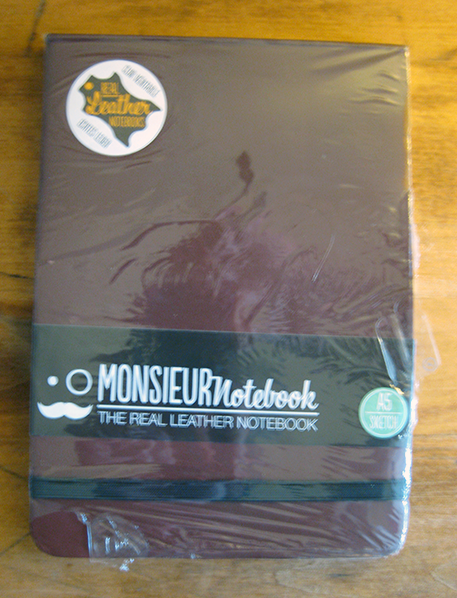
Most journals are standard book format, so I’m always on the look-out for something unusual. I like the A5. In fact, I really like European paper sizes. For some reason that tiny difference of a few millimetres, between Letter and A4, really works for me. So I’m looking forward to opening this A5 journal and using it with my interviews. (Also from Paper-Ya.)

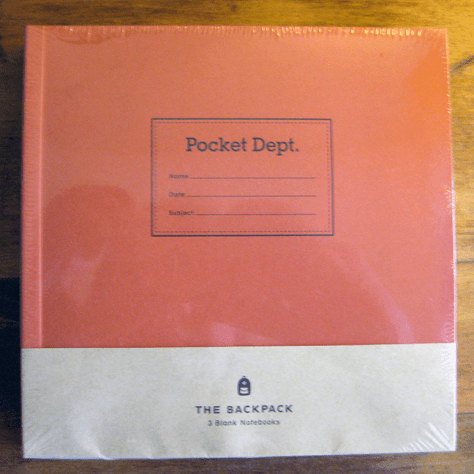
pocket-dept
SQUARE NOTEBOOKS! They are so, so hard to find, and I really like them. Rarely do I pass up a square notebook. The Pocket Dept. notebooks are pretty decent. Nice laid paper, solid bindings. This one is the perfect size: 6X6. It’s called the Backpack, and that’s probably where it will go. Love it! (Bought at Valhalla Cards, Queen Street West, Toronto.)

press-bound
Ah, Pressbound. It’s the brain-child of Melissa Gruntkosky. I’m an Art Deco junkie, and so her vintage designs paired with quality hand-made paper is irresistible. I love everything about Melissa. On her About page she gives her grandma a shout-out and says she loves beer. Grandma-shout-outs+beer+top-quality-journals=big win. What are you waiting for? Go buy something.

rialto
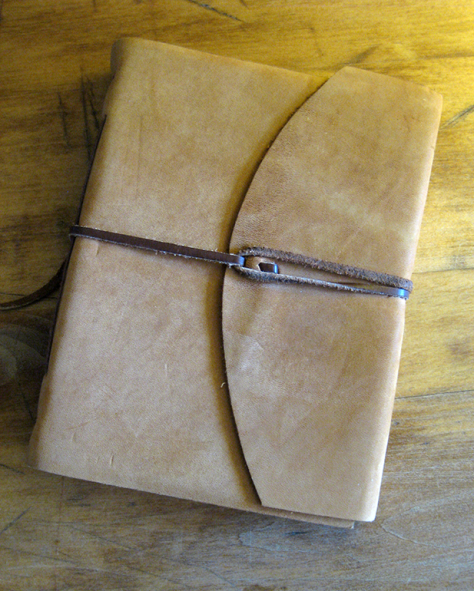
This Rialto Books “Venetian hand-bound” leather journal, by Darren Cole of Toronto, was a gift. Again, almost too nice to write in. But one day soon….

rustico
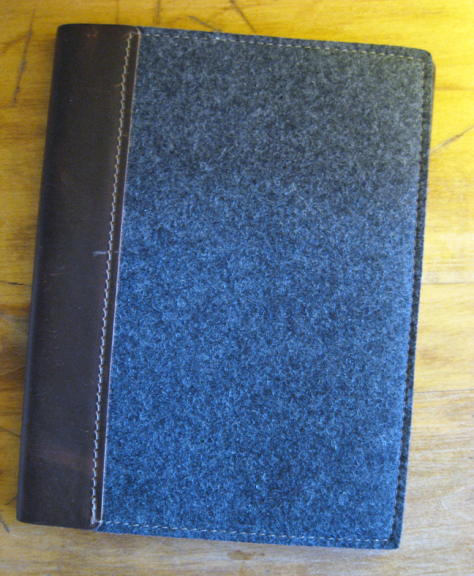
I found this Rustico felt journal cover at Paper-Ya in Vancouver, my second-fav stationery store in Canada. (My #1 fav is the mind-blowing Papeterie Nota Bene, in Montreal. It’s so good I’m scared to go there.) The refills are hard to find here in Toronto, but fortunately a Moleskine (just barely) will fit.

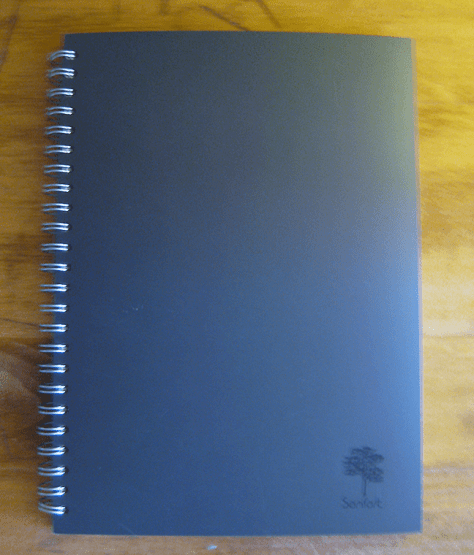
senfort
Here’s a Senfort ring-bound journal from Wallack’s. I like the heavy plasticized cover. This is one rugged journal. The paper is also very nice.

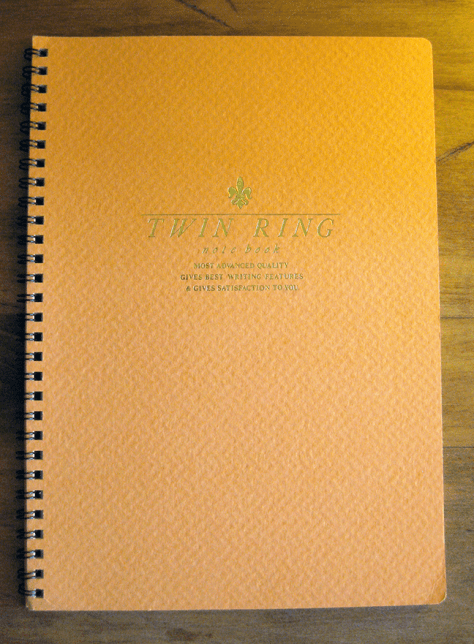
twin-ring
Last, but not least, Twin Ring. These are great, and they seem to be everywhere. I bought this one at a now-defunct Ottawa stationery store. They come in a variety of formats and colors. They really do provide satisfaction, as the cover states. By the way, does anyone know if the text is Engrish? Or maybe even faux Engrish? It’s just “off” enough that it kind of makes you chuckle. Anyway, Engrish is brilliant.

How about you?

Now it’s your turn to tell me about your great blank books!

Find me on Twitter. Check out my latest book.

like-share

Today I did something deeply meaningful: I bought staples

stapler

DO YOU EVER get discouraged? Or depressed?

Has there ever been a time in your life you’ve wondered why you bother? You know what I mean: you’re doing a million things, and you feel like the things you are doing are a waste of time. You may as well not bother, you conclude, because you’re not making a difference.

I’ll speak for myself here. For me, there are definitely days I feel like nothing I am doing matters. There are days I am frustrated and discouraged and hollowed out, because I can’t see the point or value of my busy-ness. I feel like I’m spinning my wheels, getting nowhere, making no difference.

The truth is that these days happen. But it’s not the whole truth.

I have a story, and it’s about buying staples. Yes, staples.

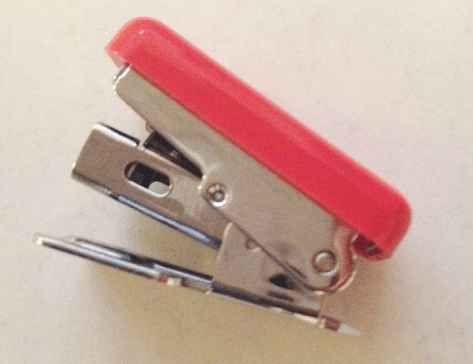
The picture above shows a stapler that’s on my desk. It takes a mini-staple I am having a bit of trouble finding. This story isn’t about mini-staples, however. It’s about the many small things you’ll do in a day, having no idea which one of your many decisions and actions will have a lasting effect.

Small decisions, small actions, small staples.

I have had this stapler for thirty-six years. In that time I have taken and left jobs. I’ve changed cities. I’ve re-invented myself. A lot of water has flowed under my bridge. Thirty-six years of learning and growing and changing—evolving into a different person—and this stapler has been with me the whole time.

You’ve deduced by now that this is no ordinary stapler—that it has a large significance. And you’re right.

You see, my grandmother gave me this stapler for Christmas when I was a teenager. My grandparents gave me a lot of other things for Christmas, too: toys and clothes and money and gadgets. I’m sure that there were years that I begged and pleaded for a particular present that was popular at the time. The fact is that I don’t even remember. And I certainly don’t have these once-coveted possessions, all these years later.

All that, despite the fact that Christmas at my grandparents’ house was as close to a sacred occasion as I’ve ever known. I will never forget the sights and sounds and smells of their house. The anticipation and the joy, the comfort, the familiarity. I have so many memories.

Uppermost in my recollections, as in my possessions, is the mini-stapler my grandmother bought over three decades ago, with me in mind.

This is a story about a stapler.

My grandmother was embarrassed and felt an apparent need to apologize when I pulled the small red stapler from the stocking. “It’s not a serious gift,” she said. “I don’t even know why I gave it to you. I just thought it was cute.”

My grandmother is no longer alive. I am in a stationery store in Bloor West Village, telling an employee stories about my grandmother.

“Every time I look at this stapler,” I say, “I think about my amazing grandma, and I smile.”

And it’s true. This silly little mini-stapler has travelled with me through so many turns. In good times, and in bad times, it has yielded its practical and dependable service. Writer and business-person that I am, I have never run out of uses for a humble, serviceable mini-stapler. And I never will. I like to think that she somehow intuited this, all those years ago. But even if that’s not that case, it’s quite enough for me that she saw the stapler and thought of me.

The point of the story is simple: all those years ago, my grandmother made a small, in-the-moment decision with lasting effect. She bought a stapler. I’m sure she didn’t think much about it. She was probably having an ordinary day. Maybe even a frustrating or difficult day. Definitely she was not thinking, “here’s a mini-stapler that my grandson will carry with him for through is life, for decades to come, thinking of me every time he uses it.”

But that’s exactly what has happened.

So now I find myself thinking about the big meaning of small gestures. And while I am no closer to being able to say which small gestures will have big paybacks, I at least know that the smallest thoughtful gesture can yield returns beyond expectation.

I guess the moral of this story is Be bold and think small. You just never know.

Find me on Twitter. Check out my latest book.

like-share

I wish I hadn’t been born an Indian

As I write this, it’s late. I’ve spent 11 hours travelling across a country. I’m exhausted. It’s quite possible I shouldn’t be writing, and maybe I shouldn’t be writing this. But I feel like I have to do it. These words are raw, honest and unedited. These words have been on my mind a lot.

So here it is, the raw truth:

I want to know where I go to quit being an Indian. I’ve had enough. I want to resign.

I don’t want to be an Indian anymore.

Maybe you’re wondering why I say this. The reason is uncomplicated.

Right now, in this moment, I think the racists and the haters and whatever names you want to call them are pretty much right about us.

So often we are a stupid, selfish, backward bunch. The trollers look at us, and they say, “there’s a bunch of losers who are so busy being self-destructive they are never going to get anywhere.”

And you know what? I am literally a card-carrying status Indian, and I think the haters are probably right.

We talk a big talk, but we still want the white man to pay the bills. And he does, so that makes the white man better than us. Right?

Because what are we doing, exactly?

For years I have been shaking my Indian head at all the stupid, self-destructive things we do. Sure, we got a raw deal. Like I didn’t know. There aren’t five minutes in a day we aren’t complaining about it. We’re experts at all the grievances we have. And they are legit grievances.

So what do we do about it?

We fight with one another. We tear down the leaders because we believe they are “selling us out.” We put road blocks in front of everything. If we manage to stop something, like a pipeline or a federal law, we have a little party, as if we’ve actually made progress or created something valuable that will make our lives better.

Look in the mirror. Do you see the ugly truth? I do. All that most of us Indians know how to do is complain and protest and fight. We are so amazingly together and unified and high on being Indian when we are doing these things. I mean, trash-talk the Canadian government and, wow, you are a rock star in every Indian’s eyes. Way to go!

But talk about the bad things going down in your community, or even just real-life shit, and everything changes.

So, effective immediately, I want to stop being an Indian. I want to be so white that the white people will come to me for white tips on being a more white white person.

You see, white people are still rocking the world. And we Indians? We can’t even agree on what we want.

Well here’s what I want: I want to walk through a magical doorway that takes away all the Indian. You know, all the poverty and misery and shame which is right there in the backdrop of my family history.

I want to be a 100% Proud Anglo-Saxon, Canadian, White Guy.

Why?

I just found out that a young Aboriginal girl died because, instead of getting a cancer treatment with a 95% probability of saving her life, her parents fought to give her traditional indigenous medicine.

Did you hear me? They fought for this.

Now this beautiful young girl is gone. And I see some Indians are “proud” of the decision to fight the white man’s medicine and to go with indigenous medicine instead.

In other words, another Indian victory. A point was made, right? We won! We stopped the big bad white man from telling us what to do. We put up a road block. We asserted ourselves. We protected our right to be Indians.

A child died to make a political point, and some of you people who are watching from the sidelines are proud. Seriously, what did you proud Indians win today?

I mean it. Tell me. WHAT DID YOU WIN TODAY?

I am ashamed of being Kanienkehake. I really really really am. Not that I’ve ever been a super-Indian or a role model or a poster-boy for the Haudenosaunee. I never wanted that.

And now? I want it even less than not at all.

Today I am just a guy who wishes I could take it all back. Start again. Forget all the stories, all the people I’ve known, all the places I’ve been. All the Indian in my past.

I want to wake up in the morning and discover that I’m not Indian anymore, that I never WAS Indian—that it was all a dream, that I belong to the great race of superior white people moving forward into the future.

I think of a camping trip I took decades ago, with a bunch of kids from the Indian Friendship Centre. Even then, as a young teen-ager, I knew being an Indian was like losing the lottery. Why didn’t I quit the program then, when I had a chance? Why did I keep being Indian all these years?

Maybe because I am just a stupid Indian, too. Is it possible I’m incapable of change? Of learning and adapting?

This is one of the hardest things I’ve ever written. I’ve dreamed of the day when the trauma and injustice of history was washed away by a generation of visionary leaders. But I’m getting old. Now I can see clearly that these leaders don’t exist. They are not coming, either. We are not going to get better.

All we seem to be able to do is resist change. We have lost the ability to create change.

The point is, we can’t make ourselves better. We have proven it.

The white man owns everything, creates everything, changes everything, controls everything.

The Indian?

We bet everything we have on casinos and cheap cigarettes.

Right now, in this moment, I think we suck. I think we need to see how much we suck if we are going to get better.

I think we should look less at Stephen Harper and more  at ourselves.

I’m sorry if I’ve hurt your feelings. I’m not feeling very good myself.

And that’s why I really wish I had never been born Indian.

Find me on Twitter. Check out my latest book.

like-share

I’m tired of being a crappy blogger, and here’s what I’m doing about it

old-typewriter

If you are a blogger, the odds are you have been going through the same experience as me. If that’s the case, keep reading. There is good news and hope at the end

IF YOU’RE A REGULAR VISITOR, you’ll have noticed my site has changed a lot these past months.

Here’s why.

But first: Thank-you for giving me your time—for reading my posts, for contributing your thoughts, for your company. A few of you even share my posts on social media. I want you to know I try to return the compliment, by reading your work and posting it on my Twitter feed. This website is meant to foster a community.

Now, back to this change business. There’s a lot to cover, but I’ll be as brief as I can.

My five-year blogging anniversary arrives in ten days. In other words, I started waynekspear.com on January 21, 2010. At that time I was averaging 16 visitors a day. It was a fun time.

I paid no attention to traffic in the early days. That changed. I posted regularly, as much as four essays a week. After two years, I got curious. How much traffic was I getting? What did my audience look like?

The short answer is that I did a bunch of research, and I started collecting and analyzing data, and I concluded that I had no more than a few readers. I figured no more than ten people actually read a post, and that included my friends and family. After five years of blogging, the numbers are telling the same story.

So why is that a problem?

Here’s why.

Having ten readers is great. If you’ve got this far, you are one of ten. You are great.

According to the data, 92% of the people who arrive at this site leave in under ten seconds. And another few percent leave in under a minute. Nothing I write can be read in under a minute. So I think of my readers as part of an elite group.

The writing i did between 2010 and 2014—those hundreds of essays—represents a lot of my time. I could have been doing a lot of other things. Each article took about an hour, so over four years that’s 600 hours.

My intention has been to build an audience and to earn income selling books and articles and whatnot. So to reach more folks, I started writing for the National Post. Some months later, in 2012, I was writing for the Huffington Post. I didn’t get paid for this work: it was done for exposure. And it didn’t work. Sure, more people saw my name, but my traffic flatlined.

Fast-forward three years, to 2015, and my daily average traffic is now 106 hits a day. Each of my posts gets, on average, about 18 hits. Keep in mind only five percent of these hits represent a reader.

In 95 out of 100 instances, a person enters words into a search engine, arrives at my site, decides in under five seconds it’s not what they are looking for, and bounces. (That’s the technical term for the non-engaged portion of your traffic.)

Okay, I could go down the rabbit hole now, and talk all about WordPress stats and what I’ve learned about the blogosphere, but again I’m going to give you the crisp summary. It’s worth repeating why I’ve written this post: you’ve given me your precious time, and I want to show my respect for this by explaining the changes on my site—and by telling you that more changes are on the way.

Also, if you are a fellow blogger, the odds are you have been going through the same experience. If that’s the case, keep reading. There is good news and hope at the end.

You see, I spent 2014 doing a lot of thinking and research and soul-searching. Not making money from writing wasn’t really my problem. It was the realization that my work was not connecting, that people couldn’t care less about it, that it just wasn’t good enough. I looked around the Internet and I found bloggers who, after a few months of writing, had thousands of readers. People took time to leave comments and to tell their friends about this amazing writer they’d found. Well, there was no denying that I was not this kind of writer. Why not? What magical thing did they have that I didn’t?

I also discovered that most bloggers were exactly where I was, pouring their heart and soul into writing that maybe a few people would read.

Trust me, that is the crisp version. The long version was a lot of studying, and a lot of messy and unpleasant introspection. In November I wrote a draft blog post that thanked my readers and announced I would be writing no more.

But then I got thinking. What if instead of quitting, I changed how I write? Make it more fun and accessible. I noticed that popular bloggers often have lots of pictures in their posts, and that they break paragraphs into bite-sized chunks with sub-heads and call-outs and CTAs. They write in a relaxed and even jargony style. So I started to do that.

Around this time I came across a fellow named Jon Morrow. I read a bunch of his blog posts, but here’s the one that blew everything I was thinking and doing out of the water: 20 Ways to Be Just Another Mediocre Blogger Nobody Gives a Crap About.

Yep, that was me: the crappy blogger no one gives a shit about. I’d managed to do every one of the twenty stupid things in this post. This pretty much sealed it: I was a failure.

Except I wasn’t. I was just a guy who didn’t know what he was doing. And once upon a time so was Jon. He knew what all the mistakes were because he’d made them. And now? He makes boat loads of money blogging.

So the good news is I can do better. I signed up for Jon’s course Serious Bloggers Only. Jon says you shouldn’t even bother writing anything on your blog until you have 10,000 subscribers. Instead put your effort into connecting with the influencers in your blogging niche, build a network, and write guest posts. He says you should put a note on your website, directing your readers to the guest posts you’ll be doing on those popular blogs.

I’m going to follow his advice, because maybe I’m delusional but I really do believe in my work. I just need to be smarter and more effective. So I’m studying marketing and business and other things most writers avoid like spoiled milk.

My partner doesn’t agree at all with the posts I’ve been doing since about last November. She says I’m dumbing it down, and that I’m smarter than that. I see her point. What I realized is that it’s not actually about my writing, it’s about cutting through the noise and clutter of the Internet.

When I’m finished this course I hope to have a few things sorted out:

• what is my niche in the blogging marketplace?
• who do I want to write for?
• what is my strategy for writing compelling prose that connects with readers?
• how do I turn this blog from a hobby (let’s be honest) into an income generator?
• in short: how do I stop being Just Another Mediocre Blogger Nobody Gives a Crap About.

I’m not going to stop blogging at waynekspear, but I am going to do less of it until I have completed the course-work and the strategies given to me by Jon.

I’d also love to hear your thoughts. I mean, if you’ve stayed with me this far, wow. Your thoughts are extremely important to me. I’m kind of dying to know them, to be honest.
Tweet Quote

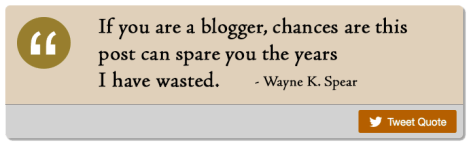
Now, here’s why this matters to you. If you are also a blogger—I know some of my readers are—and anything I’ve written above is speaking to you, I recommend you visit Jon’s site. You deserve to have a community. I believe we should all be blogging to make a meaningful difference. You don’t have to settle for anything less. It took me five years to realize I was doing everything wrong. If I can help even one person to not waste five years making mistakes, this post will have been worth writing.

Cheers.

Find me on Twitter. Check out my latest book.

like-share