
The bar in this small central Pennsylvania town is like many others. A few tables, a mounted television, branded tap handles, metal tube stools. I order a draught and scan the snack menu, turning my attention to the TV because it’s impossible not to.
Category Archives: Personal Essay
Non-fictional writing of a personal nature.
What’s in it for me?
Look, I know what you’re thinking. “Should I read this? What’s in it for me?”
The studies of Internet reading habits (and there are many) suggest that you have already left and that I’m now talking to myself.
Winning (or, The time I met Malcolm Gladwell)

I was a half-century old, and I’d never won a thing.
Not a book award, not a lousy toaster or a trip to Cancun or nice stationery or a dinner for two at the downtown Keg Manor. I’d fantasized about prestigious ceremonies, big cash prizes. I read John Steinbeck’s 1962 Nobel speech and thought, “What would I say?” Or maybe I thought “What will I say,” because I had quite the imagination, and I was delusional.
What if I am not real?
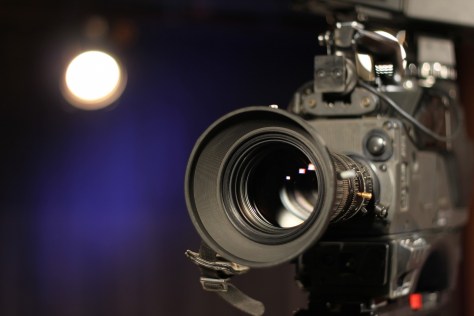
My face was an inch from the wall and I was shouting my lines as fast and loud as seemed possible. “Faster,” came the command. “LOUDER!” I sent a hand down my red, television power tie, took a deep breath, and shot my lines as if I’d just landed on the French coast and either had to repel the Germans with my words or die on this horrible beach. I would have gladly had death.
Kill or Be Killed

I grab the mic. No longer an Everyman, another face in the crowd, a safely indistinct unit among the species, I’m on stage. In a microsecond their eyes focus and it’s Them and Me. My job is simple: to entertain. But really it’s, as show business terminology puts it, to kill and not be killed. So I deliver the lines I’ve practiced a hundred times to get it just right. With as much confidence and command as I can summon, I deliver the lines. And nothing happens. The room is silent, the faces without expression. I have died.
Positive versus negative tribalism

Photo courtesy of yung, on Flickr
It doesn’t matter what you do, or where you do it, or how, or even why.
Chances are, you’ll encounter opposition. There will be critics and naysayers. Trollers and cranks. In a word, negativity.
I know what I’m talking about. I’ve written hundreds of articles, blog posts, and op-eds for newspapers, websites, and magazines.
Some of this work has been on controversial topics, but even in cases where I was being deliberately positive, out came the name callers and pot-stirrers.
Sure, I could argue with every one them. But it’s a waste of energy and time. The reality is that you are not going to change a person;s mind in 99.9% of the cases.
Nothing you say, or even can say, will make even a slight difference.
Sure, a heated debate can be thrilling—especially when your opponent is intelligent and lively. Public debates provide an opportunity for an audience to consider the issues from divergent perspectives. Debates have their use.
Social media were supposed to make it easier for people to exchange ideas across vast distances. When the Internet arrived, it was promoted as a public space, akin to a town square.
Unfortunately, in virtual space all the critical ingredients of a good debate are missing.
Instead of face-to-face dialogue, we get avatars and anonymous profiles. Instead of the formal rules of engagement that inform and make possible a civil debate, we get insults and diatribes.
The sad, unfortunate, but also unavoidable truth is that the Internet isn’t very helpful when it comes to having important conversations. In fact, it’s a toxic hazard. All the early promises of vibrant virtual spaces have turned out to be hollow and meaningless.
Have you noticed that in recent months many websites have shut down their comment section? What we are seeing is end result of a realization that comment boards offer nothing of value. The Internet is great for one-way broadcasting. It’s great for finding information.
It’s lousy however when it comes to having an intelligent, useful conversation.
Social media, it turns out, are not very social, at least not in the real-world sense of that term. We don’t even know any of the people who we follow, and who “follow” us. We wouldn’t recognize them if we saw them on the street, which of course we never will.
That doesn’t mean the Internet has no value. On the contrary: as the above suggests, the value of the Internet is in broadcasting your message to (hopefully) reach your tribe. Meaning, the people who already share your views, worldview, affiliation, or passion. Or whatever.
The Internet, and especially social media, is tribal. And it’s primary effect is to further tribalism.
That can be either a good or bad thing, depending on how it’s used.
Some forms of tribalism are dangerous, because they’re founded on the principles of chauvinism, exclusion, and fear or hatred of those who are different.
Tribalism can also be a positive force, if it is open and welcoming. Positive tribalism’s mission is to forge connections with others, in order to make the world better for all.
Positive tribalism doesn’t waste time trying to convert the haters. It accepts that there will be naysayers and focuses its time and energy on finding like-minded people.
Modern digital technology is a wondrous innovation, but the truth is that everything still happens in the real world.
The Internet is not really real.
Broadcast your message. Reach your tribe. Understand the use and value of what you do in the flesh-and-blood world. Create a pathway from the virtual to the material.
Don’t waste your time on the distractions.
Is there a better way?
Seek not, and ye shalln’t find. ✎ By Wayne K. Spear
I have a Post-It Note fixed to my desk, next to my keyboard. On it are written the words “IS THERE A BETTER WAY?”
I realize how this must look—like I’m at my rope’s end.
But I’m not saying “there’s got to be a better way.” There doesn’t. Everything in my world might be as good as it could ever be, and if that’s so I’m fine with it.
My life is good, after all.
Asking “is there a better way?” is not about hating how things are, or wishing they were better. It’s about cultivating an inquisitive, active mind.
A mind that is alert to the better way to open doors, to take notes, to eat food, to keep up with friends, to learn, to do laundry, to write a book, to build relationships, to find joy, to make a home, to be idle.
I’ve become an enthusiast of simplicity. Often, the better way is a more simple way. If I can do something in three steps and five minutes that yesterday took me five steps and fifteen, I’d say that’s a better way.
What I’m describing is the cultivation of an active mental discipline. Everything in our world works against it: gravity, habit, human laziness, fear, vested political interests, tradition, experts.
We probably will never find something we haven’t decided to look for. Seek, and ye shall find; don’t seek, and ye shalln’t.
Is donating the bulk of your material possessions to charity a better way? Or dropping out of school? Maybe it’s making less money and having more joy, or stopping everything you’re doing right now, to instead relax and take stock of your blessings.
I don’t know, and maybe neither do you. And the reason is probably because we’ve never decided we want to know.
What we do know are the things we never even asked to know—the conventional ways of thinking and doing:
– Follow the rules
– Go to school
– Get a job
– Work
– Retire
– Die
Is there a better way? The question doesn’t seem quite so weird when you consider the alternatives.
Hollywood is for introverts
I used to think my introversion was a cosmic practical joke ✎ By Wayne K. Spear
“Stand against the wall. Now shout your pitch—as loud and fast as you can. Louder. Faster. LOUDER. FASTER.”
I’ll never forget it. I was in North Hollywood, learning how to “do” television from Clint Arthur.
There were about ten of us in the class. A dentist to the stars, bloggers, fitness and beauty experts, a woman who describes herself as America’s favorite lesbian grandmother.
The first day we worked on our pitch, and the second and third we pitched—over and over and over—to daytime television producers across the US, ten hours a day, on Skype.
It was exhausting. But no way was I going to show weakness. I did what I was told, how I was told to do it.
It was a valuable experience, but still it felt ridiculous. And I knew exactly why.
“I’m an introvert,” I said.
“So am I,” Clint replied.
Show business is filled with introverts. Comedians, musicians, motivational speakers—it’s amazing how many of them prefer silence and solitude. Introverts have conquered the world, time and again.
And afterward, they’ve gone home for some welcome peace and quiet.
I used to think my introversion was a cosmic practical joke. I’ve known for a long time that I want to leave my mark on the world—that I want to do something useful and meaningful that makes a difference. I’m driven. It’s what the Greeks called a “daimon”—an inner spirit that compels you to live your life a certain way.
But really I just want to stay at home and read a book. When I say I am an introvert, I mean I am extremely introverted.
I’ve also been on radio and television and on many stages, giving speeches or leading workshops or performing music and plays.
The truth is I couldn’t have done any of these things without reading and introspection and thinking and silence and solitude.
Introversion is another word for “we’re busy getting ready to take over the world.”
What I’ve learned by looking at trees

HAVE YOU EVER WONDERED, as I did recently, what determines the seemingly random pattern of tree branches?
A case of “every which way,” it appears. One branch projects confidently toward the sky—another launches tentatively in one direction, suddenly adopting a new trajectory.
A life is the same.
I know this, because I can see my own life in these branches. That little ragged outgrowth that goes nowhere? That’s a girl I dated in high school. The long, straight branch which stops suddenly? An office job I once had. The fat branch with many small off-shoots? My writing career. The trunk? That represents my upbringing: the formative experiences which established my values, outlook, and dreams.
To this day, my trunk is nourishing the new branches which sprout in my life.
I noticed that there are a lot of dead-ends on a tree: but look at those branches, and you’ll see many outgrowths. Again, I think of the times I’ve come to the end of a path. Maybe it was a goal I didn’t reach, or a job I didn’t get.
When you’re standing at the end of a path you thought and hoped would go farther, you only see losses and failures—the job you didn’t get, the money you won’t make, and the things you won’t be able to do and have because you won’t get that paycheque.
Looking back, you can see that those endings are in fact launching points, like new shoots from a branch. My first business, which I created in high school, was the result of having the doors to gainful employment shut in my face. Within a month, I had more business than I could manage. I made more money and was far happier than I would have been in a job, but I felt depressed and defeated all the same when my plan to be hired by someone else didn’t work out.
What I learned by looking at trees is that you can reverse engineer the process, applying it to your future. You can look forward as well as back. Today I see “dead-ends” and “failures” as intrinsic to the organic process of creating a path of your own.
A tree is the sum total of its experiments in reaching the light, and rarely (if ever) is this effort a straight line from vision to reality. We humans, however, seem to be addicted to the idea that life works (or at least should work) as follows:
Aspirations ———> A Well-Laid Plan ———> Goal Achieved!
I know this kind of thinking has often been applied by me. Many times, I’ve been disappointed and discouraged because I haven’t been able to draw, and then pursue, a straight line from Point A to Point B. Even when I’ve “known” life is more complicated than that, I’ve acted as if it weren’t.
The prime directive of a tree is to reach the life-giving light. All that apparently crazy, here-there-and-everywhere is in service of the tree’s need for sun. And that’s why I’ve changed my thinking, as well as my way of creating a path.
You see, the tree is on to something—and I think I know what it is.
I’m not talking about creating 10 new businesses or launching 50 new projects. I’m not suggesting you should run, willy-nilly, in every direction. That’s certainly not what I do. Instead, I focus on activating as many potential trajectories in my life as I can, by nourishing relationships in my life and business. Just as the prime directive of a tree is to reach the life-giving light, my prime directive is to nurture my community, every day.
The second thing I do is to introduce as much variety into my life as I can. I take long showers. I go for walks in the woods. I meet with, and talk to, as many interesting people as I can. When I really need to be productive, I get away from my desk.
Because here is the worst way I’ve found to be productive:
Sit at Computer ———> Work Eight Hours ———> Get Results
And yet that’s still how we see work, as a linear process.
The fact is that we are addicted to straight lines and old ways of doing things. I know how hard it is to let go. I’ve made painful adjustments. I used to believe in things like:
Go to School ———> Get An Education ———> Work Hard ———> Succeed
or
Get an Agent ———> Find a Publisher ———> Write Books ———> Make Money
or
Get Hired by a Newspaper ———> File Stories ———> Get Paid ———> Retire
None of these things have worked out as advertised. I’ve only been miserable and unfulfilled pursuing them. It took a painful adjustment, and months of study and effort, to let go of the old ways of thinking. And that was after years of emotional work, gradually getting to the place where I could admit that what I was doing wasn’t working—and would never work.
Going in a new direction is hard. You may have a decade invested in that branch of yours. It may be the favourite branch on your tree. Maybe it’s the only branch. You probably imagined it soaring one day above the canopy, into the full and glorious life-affirming sun of a new day. But what if it doesn’t?
If you build your life on the principle of abundance, each day nurturing a wide network of relationships, being open to many possibilities—sending out many branches—you’ll never have this problem. You’ll soon realize that your life is, like a tree, the sum total of its trajectories, explorations, and so-called “dead-ends.”
A tree, like a life, is nothing less than the sum of its experiments.
When a business changes your life

I RECEIVED SAD news this week that a neighbourhood business, SupperSolved, will be closing after eight years of operation.
I only found out about this service months ago, and have only been using it since March. And, yet, it’s become an integral part of my daily life.
SupperSolved is one of the most well-thought-out businesses I’ve come across. You can tell attention has been paid to every detail, and to the overall experience of the customer.
The idea is simple, but brilliant. For a reasonable cost (a month’s worth of entrées costs me $360) you get access to a beautiful, clean work space and all the ingredients you need to make meals. Everything is pre-cut and arranged when you arrive. It’s like having your own sous chef. All you do is follow the recipes and assemble the meals, placing them into the provided foil trays. Then you take the trays home and freeze them. It takes an hour-and-a-half for my son and I to assemble a full month’s worth of meals.
He enjoys preparing the dishes, as do I. I think that learning to cook is such an important life skill that I take him out of school to do this. And I enjoy having with me. The staff also tell me they love seeing father and son working side-by-side, cooking their family meals. Everyone is sad that, at the end of this month, this will all come to an end.
It’s such a great business model that I would buy it if I had the time and energy to run another business. I’m told the owners are looking for another space. The issue is condos. All around the area of Toronto where I live, land owners are selling their properties to developers. Businesses are being driven out. And I get it: we need places to live at least as much as we need shops. I’m not among Toronto’s many high-rise haters. I think population density is the only way we can go. We have to build up, and there;s limited real estate on which to do it.
Still, I’m sad to see this business go. I’m also inspired by it. As someone who helps clients build powerhouse businesses, I’m forever on the lookout for good models and success stories. SupperSolved was one. The staff were friendly and helpful. The cost was reasonable. The space was big, bright, clean, organized and pleasant. The level of organization and attention to detail was extraordinary. SupperSolved took all the stress out of meal planning. Having found them, I was liberated from the awful daily chore of taking time from my busy working day to think about dinner—and then to shop, clean, prep, and serve. And clean again.
I dread going back to the stressful, inefficient, costly and irksome daily routine I had before. The fact is I’ve experienced liberation. And because of that, I don’t think I can go back. When you come into contact with a brilliant idea—and, more important, a brilliant system—”going back” isn’t an option.
The experience has given me insight into what I want in my own work. I want to have just this effect on my clients. I want my business to be a comprehensive, well-thought-out system that changes the lives of people who use it for the better. I want to make a practical difference, the way that SupperSolved has made a practical, pleasant, liberating difference in my life. And I want them not to go away, but that’s another matter.
Thinking outside the laundry bin

CC photo “Down at Every Laundromat in Town” courtesy of hjhipster on Flickr
THERE’S A coin-operated laundry room in the building where I live. Each load, washer and dryer, is $1.75. That’s $3.50 for a full, wash-and-dry cycle. The machine-mounted coin collector has one slot for loonies (that’s a one-dollar-coin, for you non-Canadians) and one slot for quarters.
Yes, it sounds like the beginning of a math quiz. But in reality this a tale about human psychology.
For three years, I’ve been buying rolls of quarters and loonies from the bank to feed the laundry machines. Because there is a slot for both loonies and quarters, I enter my $1.75 in the form of one looney and three quarters. I’ve done it this way every time, for three years.
The coin tray is regularly raided for soft drinks, bus fare, coffee, and other items. Every day pockets are emptied, and coins are deposited in the tray. Eventually either the looney or quarter supply is depleted. The dollar coins are typically the first to go, leaving behind a bunch of quarters.
That’s what happened recently. So I go to the nearby convenience store to rebalance the quarter-looney ratio, because it’s one looney and three quarters to do a load of laundry. And all I have is a tray of measly quarters.
Have you spotted the fallacy I’ve been under for three years? It’s obvious once someone points it out to you, as it was pointed out to me this week.
It’s not one looney and three quarters to do laundry, it’s $1.75.
One of my family members came up with the idea. What if we just took the quarters and put 7 of them into the machine? The answer, of course, is that you get to do a load of laundry. No loonies required.
It’s remarkable to me that a household of highly-educated people could have missed this for so long. Talk about the obvious. And yet a machine with one slot for quarters and one for loonies has a subliminal ambiguity built into it. Is this a system which provides options, or is it delineating the requirements? Sub-consciouly we had decided upon the latter: there’s a slot for loonies and quarters because 1+3 is the inviolable rule.
It got me wondering about how many versions of this I’m living in my life, right now. Where else am I unnecessarily putting loonies and quarters into slots, metaphorically speaking? What else am I doing uncritically, mechanically, unconsciously? How many insights, breakthroughs, leaps, mind expansions, and personal liberations could I be effecting?
The lesson I’ve drawn is that opportunity is all around. What is required is a mindset that is ever-vigilant, always on the lookout for a new and better way: a mental attitude that says “don’t limit yourself by tacitly accepting things as they are.” There is always another way, if you go looking for it.
Is there a dream for your perfect life you stopped having? Here’s mine.
Thirty years ago, I had an idea.
Actually, let’s call it dream. Sure, that sounds lofty, but I’m talking about something more than a moment of creative spark. More than a concept for a novel, a solution to a problem, or a way to make a better widget.
I’m talking about a vision of the life I wanted to lead.
It was a simple dream. In it, I’m part of a community of interesting, dynamic, creative people. Painters, inventors, philosophers, novelists, leaders. We are having dinner. The conversation is rowdy, ribald, and urbane. There’s a lot of wordplay and laughter. We’re having a hell of a lot of fun.
I must have been in my early 20s when I first imagined this rich and abundant life. The apartment I saw myself in was humble. There wasn’t much to it, materially. Only things conducive to fraternity, curiosity, and joy: books, a large table where meals would be had, a well-stocked bar.
I suppose the clichéd term for this kind of life is Bohemian. If it fits, I don’t much mind. I’ve been called worse.
Over the years, I went to a lot of places and did a lot of things. I joined many types of communities, of genres ranging from political activism to educational radicalism. I met a lot of people, and a few of them became friends.
The community I had once imagined never materialized. What friends I did have were soon dispersed across the planet. Several times, I too changed cities. You may have heard of the book Bowling Alone, which, when it was published, made me realize that you’re by no means alone if you’re alone.
I’m not alone. I have a family, and I have a good life. Together we have made a little island in the city. Still, there’s a part of me that wants to connect to this amazing community that I had long-ago imagined.
Maybe it doesn’t exist. Maybe it never did.
I once interviewed an activist and writer who laughed off the utopian vision of community—you know, a bunch of progressive-minded people living in perfect harmony and respect. Democracy, she said, was about learning to live with someone’s bad breath. I’d add that at least 90% of the grief you’ll have in life will be caused by people. There’s a case to be made for bowling alone.
About a year ago I began to re-evaluate things in my life. For example: why was I spending so much time writing for the newspapers? And what was I getting in return? What did I want in my business? What was the point of all my work?
I could have answered “money,” except for the fact that the newspapers didn’t pay me. And even in my business I was doing a lot of jobs pro bono.
There followed a great deal of deliberation and introspection. I remembered that dream, and got to wondering what happened.
I believed, at a barely conscious level, that my writing—by which I mean my blogging—would fulfill my dream, but it didn’t happen. That took away much of my motivation. Writing is a solitary act, not very much fun while you’re doing it. I realized that I had needs and requirements that weren’t being met.
So I made a deal with myself: from now on, I was going to be more intentional in my work. I know who am and want I want, and I’m only going to invest in the things that honor these. Call it a contract. Helping others is important, so just as I want my work to be meaningful and to have value, I want to help others achieve the same.
When I started to focus on my motivations and needs, it changed everything. I could distinguish what was important from what was a mere distraction. I could see the way forward. And it all began by recalling a dream I’d had almost thirty years ago, and which I had lost sight of in my chasing down of jobs and an income and something called security.
How I wish I had taken more risks!
Or, maybe it’s good that I hadn’t. My family has had a healthy, mostly stress-free life. We’ve been very fortunate, and I’m grateful.
But when you have a dream, you sometimes need to take chances to fulfill it. It’s never too late, at least until it’s too late.
Uncle Al
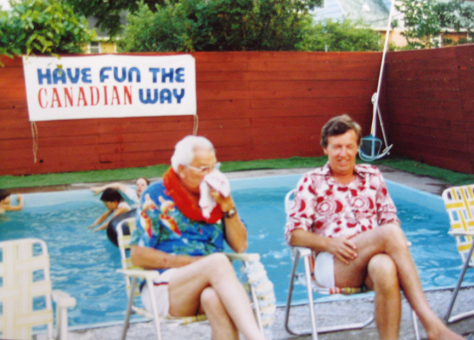
Yes, it’s true. I have a new website.
I wasn’t going to announce this until it was official, but what the heck.
I have a new business-oriented website.

There. Now it’s out.
Actually, this has been some time in the making.
You see, I’ve been thinking a lot about streamlining my life, so that it feels like everything I’m doing is pushing in the same direction, and not in the 20 directions I was going.
I’m guessing you can relate to this.
And, if you’ve been following this blog, you know I’ve been spending my time going back to the books. You know, the proverbial drawing table.
It’s been a time of learning, of reflection, and of intense planning. The fact is that I have some big ideas, and I want to give them a chance. But to do that I have to make some changes.
I won’t bore you with all the details. Let it be enough to say that while I’ve been away, I have developed a plan, and I’m very excited about it.
The business website is not going to replace this site, not yet anyway. I’ll still be writing here, but the truth is I don’t have the time or the energy to blog here to the degree I have in past years.
I’ll be focusing on developing my business. The new website is part of that focus. Because it’s a business site, the primary interest will be my communications work. However, there will be lots of other stuff too—about writing and personal growth and pursuing your passions.
Gradually, over the next couple of months, I’ll be making the transition. The business pieces of this site will be stripped away, leaving only the personal writing I’ve done on this blog.
I don’t know what will happen to this blog long-term. That will depend on how things go with my business!
My business site will officially launch in the Spring. Most of my time will be spent at the new website, which is:
spearcommunications.com
I do hope you’ll visit, find it of interest, and bookmark it.
Thanks for visiting. I hope to see you soon!
-Wayne.
Is one of these your perfect journal?
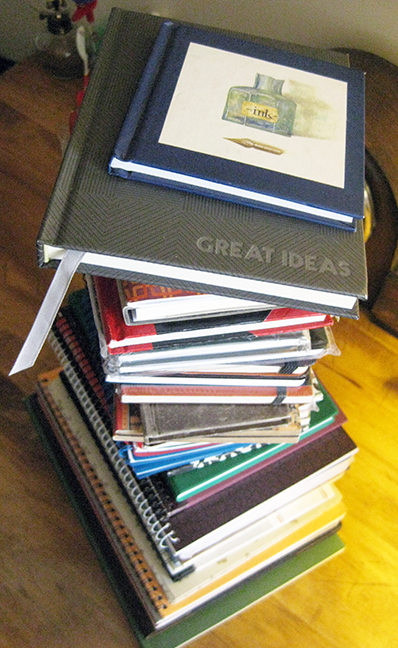
Yes, it’s true: I have a lot of blank books
DOZENS OF THEM, tucked away in a drawer, waiting to be filled with the URLs of websites I’ve discovered, lists of books to read, ideas, things overheard on the subway, recipes, interviews, and other ephemera.
If there was a TV show about people with a lot of blank books, I’d probably be on it. Not that I’m a hoarder. I try to keep my stationery fetish in check: for every blank book that I buy, there are at least ten I would like to buy but don’t. And I fill these books up pretty quick.
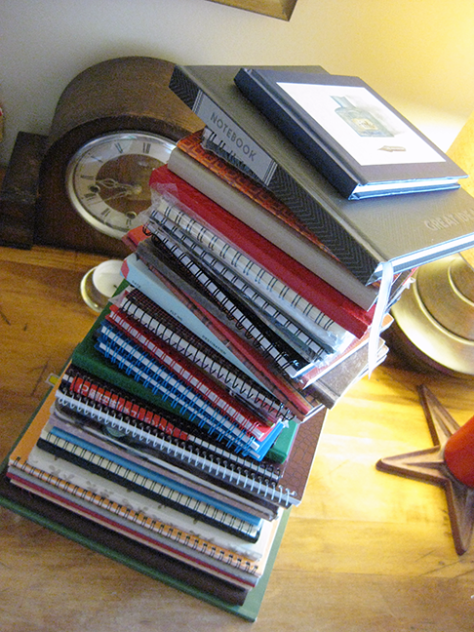
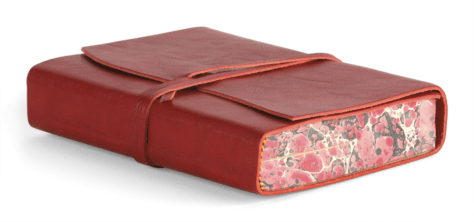
They come from all over the world, in many sizes and shapes and textures and colors. Some blank books are almost too beautiful to write in. I’ve coveted, but have never bought, a Cavallini Roma Lussa journal. This week I saw one at The Paper Place, here in Toronto. These journals are works of art, more suitable for use as a Downton Abbey prop than for defacing with my prosaic grocery lists.
What makes a blank book great?
I look for specific qualities in a blank book. To be great, the following criteria must be met.
– Good binding. I want my books to lay flat. If I have to use a hand to keep it open while I write, I’m probably going to pass. Although ring bindings are best for books that open and lay flat, my preference is for stitched bindings. Rings add bulk and also can get caught on clothing or the lining of a satchel. Glue bindings can come loose, so I look for paper that has been gathered into signatures and threaded with a quality material.
– Proper lines. By this I mean the lines should give me enough room for my writing but not be so generous that I can’t get a decent amount of text on the page. As I get older, the balance changes. I now look for more line height, since my eyes aren’t what they used to be. Also, I pass on a blank book if the lines don’t go to the edge of the page. I don’t have a good reason for this: I just think that lines which go to the edge of the page look nicer. It’s probably just me having an OCD moment.
– Good paper. Again, this is objective. Because I write with a fountain pen, bleeding can be an issue. Also, the paper should take up the ink without feathering. Nowadays most journals pass these tests, so really what I’m looking for is a paper that feels and looks decent. Like most of these criteria, this is subjective. Over the years, I’ve learned which journals provide for the best writing. More on that in a moment.
– Good covers. Have you ever bought a shrink-wrapped journal? Then, after a couple weeks of use, you discover that the covers curl? I’ve had this experience enough times that I now usually avoid anything shrink-wrapped. A cover should feel good in the hand, protect the pages, and keep its shape. I also prefer that it not have writing. So I mostly avoid journals that say JOURNAL on them, or that have inspirational quotations. An embossed logo is fine, since it’s subtle and blends in. Other than that, the plain old cover is for me.
– Pockets. This one is optional. I won’t pass over a journal that doesn’t have pockets, but if it meets all the other criteria and also has a place to tuck receipts and lists, then bonus points. The Moleskine notebooks have a cover flap which serves this function, and I love it.
Here are some of my all-time favorite journals
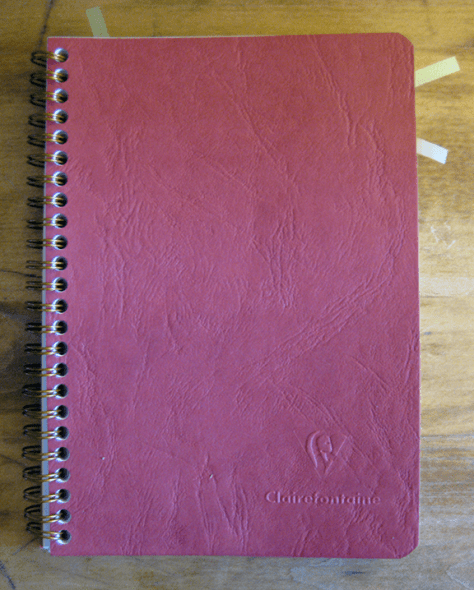
You can’t not mention Clarefontaine. They make great papers. You can throw anything at a Clarefontaine journal, no problems. The most saturated ink will not bleed or feather. They come in a huge variety of formats. There are pockets. The covers have a great hand-feel. They stand up well to abuse. And Clarefontaine is a well-priced product, aiming at the practical rather than the precious. This was purchased at the most excellent Paper Papier in Ottawa, my 3rd fav stationery store in Canada. Buy something there and say Hi to Gary.
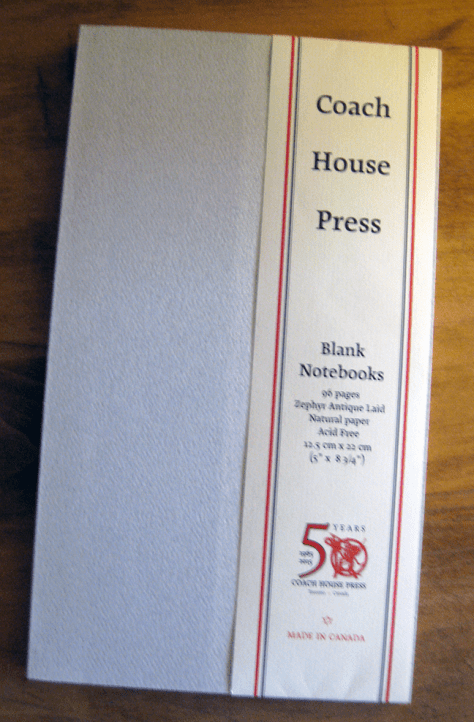
I had no idea until this week that Coach House Press made blank books. I don’t know why every publisher doesn’t make a journal that conforms to its book specs. I would definitely buy a Penguin or Random House or Oxford University Press or Anansi blank book that looked and felt like their paper backs. Especially Anansi. (P.S. I found this at Wonder Pens on Dundas West.)
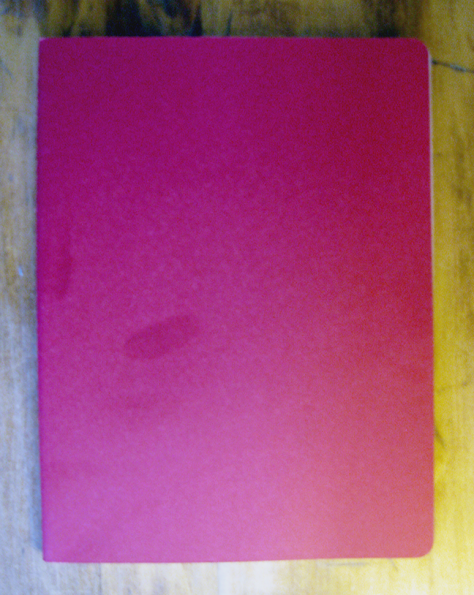
This is the Moleskine large notebook in the new Cranberry color, purchased at Valhalla Cards. I have already put a big thumbprint on it, and I guess that’s my only complaint about these. For some reason they seem to attract stains. I have these in three colors: Black is business, grey is personal research, and kraft is scribbles. I don’t know what cranberry is yet, but this is an unlined journal so I may dedicate it to sketches, mind maps and planning.
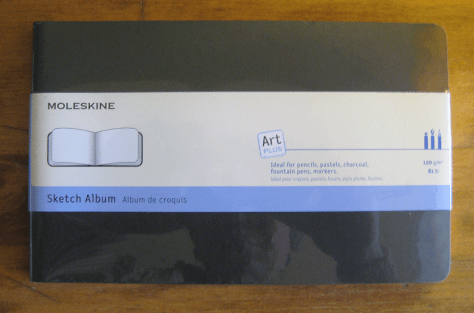
Another Moleskine, in landscape. Like the journal below, this can be used as a reporter’s notebook, and that’s what I’m going to do. (Found in Vancouver at Paper-Ya.)
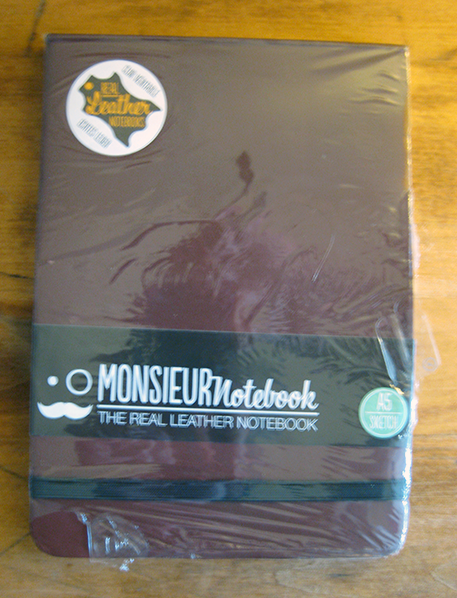
Most journals are standard book format, so I’m always on the look-out for something unusual. I like the A5. In fact, I really like European paper sizes. For some reason that tiny difference of a few millimetres, between Letter and A4, really works for me. So I’m looking forward to opening this A5 journal and using it with my interviews. (Also from Paper-Ya.)
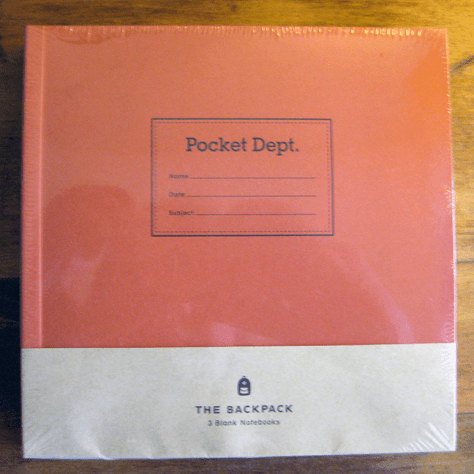
SQUARE NOTEBOOKS! They are so, so hard to find, and I really like them. Rarely do I pass up a square notebook. The Pocket Dept. notebooks are pretty decent. Nice laid paper, solid bindings. This one is the perfect size: 6X6. It’s called the Backpack, and that’s probably where it will go. Love it! (Bought at Valhalla Cards, Queen Street West, Toronto.)
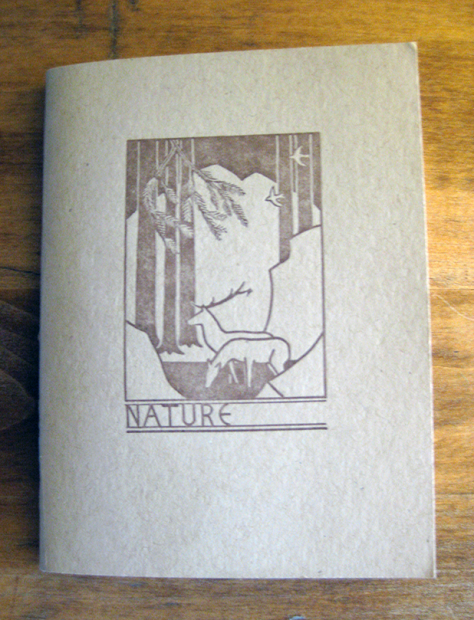
Ah, Pressbound. It’s the brain-child of Melissa Gruntkosky. I’m an Art Deco junkie, and so her vintage designs paired with quality hand-made paper is irresistible. I love everything about Melissa. On her About page she gives her grandma a shout-out and says she loves beer. Grandma-shout-outs+beer+top-quality-journals=big win. What are you waiting for? Go buy something.
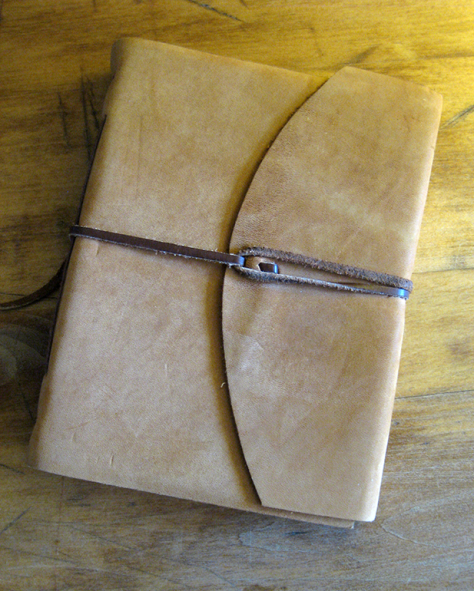
This Rialto Books “Venetian hand-bound” leather journal, by Darren Cole of Toronto, was a gift. Again, almost too nice to write in. But one day soon….
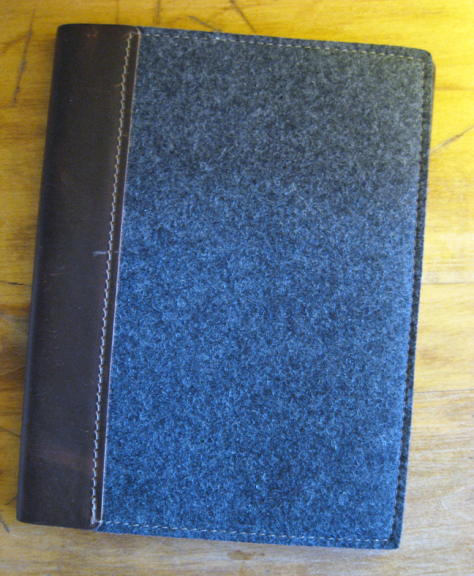
I found this Rustico felt journal cover at Paper-Ya in Vancouver, my second-fav stationery store in Canada. (My #1 fav is the mind-blowing Papeterie Nota Bene, in Montreal. It’s so good I’m scared to go there.) The refills are hard to find here in Toronto, but fortunately a Moleskine (just barely) will fit.
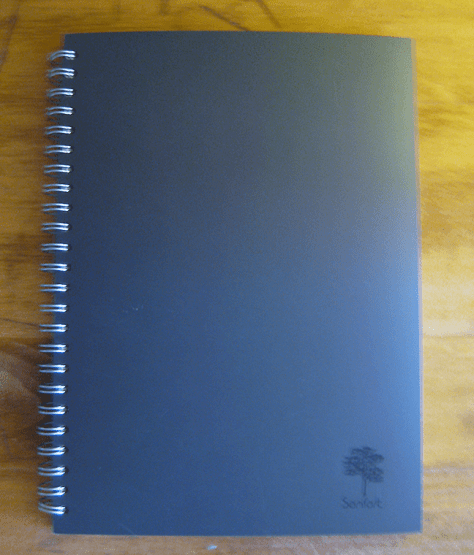
Here’s a Senfort ring-bound journal from Wallack’s. I like the heavy plasticized cover. This is one rugged journal. The paper is also very nice.
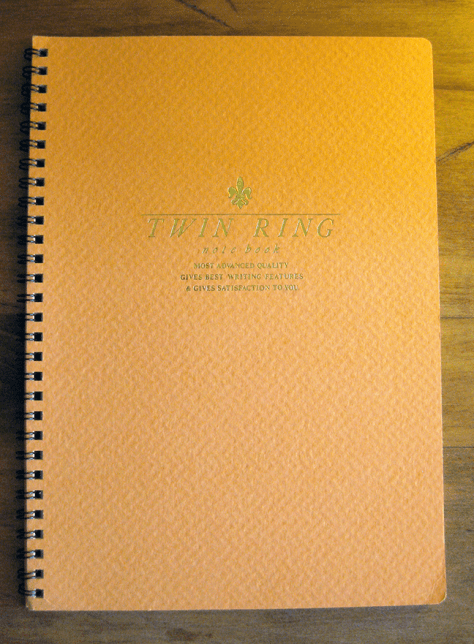
Last, but not least, Twin Ring. These are great, and they seem to be everywhere. I bought this one at a now-defunct Ottawa stationery store. They come in a variety of formats and colors. They really do provide satisfaction, as the cover states. By the way, does anyone know if the text is Engrish? Or maybe even faux Engrish? It’s just “off” enough that it kind of makes you chuckle. Anyway, Engrish is brilliant.
How about you?
Now it’s your turn to tell me about your great blank books!
Find me on Twitter. Check out my latest book.

 Journalism, Essays, Broadcasting, Books