
WHAT’S TRENDY and current and cool? What’s everyone watching and doing and talking and thinking and listening to right now. Do you know, and do you care?

Books, writers, and the art of writing by Wayne K. Spear
WHAT’S TRENDY and current and cool? What’s everyone watching and doing and talking and thinking and listening to right now. Do you know, and do you care?

A TOPIC CAN BE both vast and yet reducible to the most simple of terms. Here’s an example: a writer is a person who does things with words. Whether her goal is to inform, deceive, terrify, entertain, charm, persuade or seduce, a writer will have to do it with words. A reader, also, has nothing but words from which to cultivate the pictures, emotions and experiences which are ‘in’ the text. A writer’s voice is a big topic, but the topic does indeed rest upon these objects called words. And words alone.
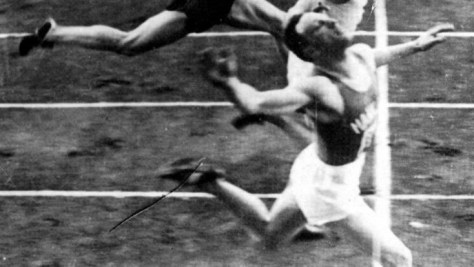
I ASK MYSELF: if writing were an Olympic sport, who would be its 2014 gold medalist? Alas, we may never know. Of course, we are free to speculate, and that can be good fun. Would it be Mark Helprin? J.K. Rowling? The (help me out here) Fifty Shades of Grey person? Malcolm Gladwell?

I WAS ASKED the other day who I imagined my ideal reader to be. “Well,” I answered – “I hadn’t really thought about that.” Not exactly a stellar reply, I know. Of course I had a half-formed, all-wispy-like inkling of my readers. Tween girls, not on the list. Marxist-Leninists? Not so much. The Nobel Literature Prize Review Board and the editors of Vanity Fair? Hell yes … one day. Well, now I’m curious – just who is my IDEAL reader?
I DON’T READ the comments placed on websites, and I’m here to tell you why. Long before there was an Internet, it was the habit of many newspapers (some of them well-respected) to publish unsigned editorials. This practice, which continues to this day, has always discouraged me. An opinion, when pushed into print, should always be signed by its author. Of course it is understood that a New York Times editorial, for instance, will have been composed by one or more of the staff publicly identified on the organization’s masthead. An argument appearing in the Op-Ed section of a major newspaper will never be quite beyond identification, yet it still seems to me unprofessional to advocate a public policy or initiative — a job which may include a call to war — and not to put one’s skin in the ring at least in this small measure.

SOME YEARS AGO I had the good fortune and pleasure to befriend the wonderful Larry Loyie and Constance Brissenden. Larry is a Cree author and playwright from Slave Lake in Alberta. Constance is a freelance writer, author and editor who I first encountered when she was writing for Macleans in its glory days, under the capable editorship of Peter C. Newman, in the 1980s. Larry and Constance met in a writing class in Vancouver’s Downtown East Side and within a few years had formed the Living Traditions Writers Group.

PRECEDENT was established this week when a self-published ebook became a New York Times bestseller. Wait for You is a “new adult” romance written under the pen name J. Lynn by Jennifer L. Armentrout.
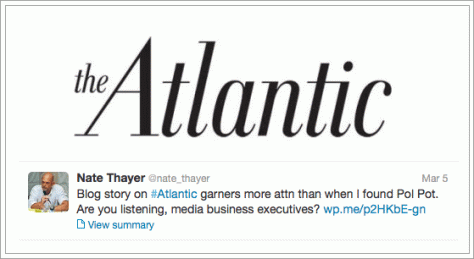
EARLIER IN THE WEEK, journalist Nate Thayer posted an entry to his website titled “A Day in the Life of a Freelance Journalist — 2013.” Now, this is not any old journalist we’re talking about. Nate Thayer has written for dozens of highly regarded publications. He’s won meaningful and serious awards for his investigative journalism. The man interviewed Pol Pot.

IN OUR AGE of traffic congestion and global terrorism, we’ve forgotten the time in which the prospect of travel by automobile or airplane summoned notions of luxury and elegance. The author Peter Pigott, who has produced a number of books on these and other modes of transport, rehearses in his “Royal Transport: An Inside Look at The History of British Royal Travel” the long and intimate relationship of British royalty to the Canadian made McLaughlin-Buick — one of which is soon to be auctioned in the United Kingdom.

BOSWELL REPORTS THAT Samuel Johnson once said “No man but a blockhead ever wrote, except for money.” There are many reasons to write, and those of us who have written for objects other than money will likely petition the blockhead designation. Having read about the 2013 imposition of pay walls, however, I begin to suspect Johnson was nearer the truth.

TRUTH, LIKE WEATHER, arrives in degrees. Just as the weather is all around, so too dishonesty in writing. Indeed, the taking of the media’s temperatures is a primary moral responsibility of the modern reader. The question which confronts us is how do we read well in an age where dishonesty on many of the important topics may be taken for granted.
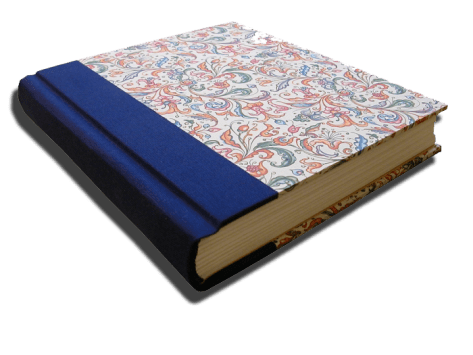
FOR THE PAST twenty years and more I’ve maintained a collection of quotations in black, made-in-Czechoslovakia, Pragotrade-branded volumes. This sort of collection is known as a “commonplace book,” and the keeping of one commonplacing. I take such care to mention the Pragotrade name because I purchased a number of these at Coles in the early 1980s and have been unable to find them for over two decades. Simple and unadorned, these dollar-something books could be had in your choice of blue, red, or black cover, the paper inside a serviceable unbleached pulp with the faint bluish lines you may recall from your grammar school “foolscap.” This was long before the market became flooded with overpriced and pretentious looking “journals,” designed to separate you from an inflated amount of your money with the implicit suggestion that nothing is too dear for your precious thoughts. I have always preferred, however, my cheap Pragotrade notebooks and the thoughts, only some cheap, of others.

THERE’S NO USE in a writer denying the pleasures derived of notoriety, but it happened this week that I was “Freshly Pressed” and that I had feelings about it which weren’t entirely comforting. In case you don’t know, to be Freshly Pressed (or FPd, as I have discovered the WordPress folks put it) is to have a post chosen by the editors of WordPress for the landing page at wordpress.com. This arbitrary distinction — as I feel it to be — brings with it a huge momentary increase in traffic, comments, email and polite approbation. In short, here comes and goes your fifteen minutes of fame.
THE AUTHOR known chiefly from his 1949 work Nineteen Eighty-Four was by turns a police officer, tramp, gardener and soldier, as well as a broadcaster — his depiction of the Ministry of Truth drawing upon the BBC building in which he broadcast a literary radio program. George Orwell subsisted at poverty’s doorstep, dying at age 46 just as literary acclaim and a general brightening of prospects approached.
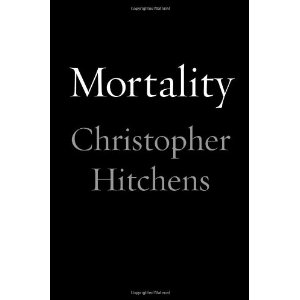
This week I had the imperfect pleasure of reading the final work of an author who admired Orwell and who died at age 62 under comparable circumstance. The imperfection of the pleasure with which I greeted the arrival to my mailbox of a new Christopher Hitchens book was a matter of subtraction, a momentary joy diminished by the awareness I’d never experience it again.
A few qualifications are in order. Hitchens did not live so meager a life, materially speaking, as Orwell did. Neither was Hitchens a soldier, except in an attributed manner which he loathed. The cliché of “battling cancer” bored and irritated him, serving only to underscore a lifelong awareness that — unlike both Orwell and Hitchens’ father (the latter of whom also died of esophageal cancer) — he had never confronted his enemies with the sword, but only with the pen:
“Myself, I love the imagery of struggle. I sometimes wish I were suffering in a good cause, or risking my life for the good of others, instead of just being a gravely endangered patient. Allow me to inform you, though, that when you sit in a room with a set of other finalists, and kindly people bring a huge transparent bag of poison and plug it into your arm […] the image of the soldier or revolutionary is the very last one that will occur to you. You feel swamped with passivity and impotence: dissolving in powerlessness like a sugar lump in water.”
“Only” with pen, but in this mode of battle Hitchens confronted few equals. For years, he was a now-and-again guest on Brian Lamb’s C-SPAN show, each time putting his wit and erudition on display. He might well have remained a fringe interest of the political junkie, had the attacks of September 11 not focused his attention on the topics — theocratic totalitarianism and atheism — which would soon bring him fame. Before 2001, he was an obscure Socialist Brit and former columnist at The Nation who’d written unkindly of Mother Teresa.
His promotion of war against Saddam Hussein and the Afghan Taliban, and his publication of God Is Not Great: How Religion Poisons Everything, made of him a notorious media celebrity, as well as the leading representative of religious skeptics and dissenters of all kinds. Life, for a time, was good — but as is invariably the case, only for a time:
“Of course my book [Hitch 22] hit the bestseller list on the day that I received the grimmest of news bulletins, and for that matter the last flight I took as a healthy-feeling person […] was the one that made me a million-miler on United Airlines, with a lifetime of free upgrades to look forward to. But irony is my business and I just can’t see any ironies here: Would it be less poignant to get cancer on the day that my memoirs were remaindered as a box-office turkey, or that I was bounced from a coach-class flight and left on the tarmac? To the dumb question “Why Me?” the cosmos barely bothers to return the reply: Why not?”
Diagnosed with esophageal cancer on June 8, 2010, the long-time heavy drinking and smoking Hitchens died 18 months later, on December 15, 2011. His was a life of burning the candle at both ends, better to yield a “lovely light” — thereby illuminating the feast of reason and the flow of soul transacted in his many friendships, as well as in the public life of polemic he so evidently enjoyed.
This little book, much of which was printed last year by Vanity Fair, in serial essay form, meditates upon illness, prayer, religion, the state of medical science, the etiquette of cancer and the literal and metaphorical loss of voice, all of which became the quotidian business of Hitchens’ “living dyingly.” As is the case in his many other works, this book is rich in wit and insight and what Orwell termed “the power of facing unpleasant facts.”
In his final years, Hitchens was an advocate of skepticism, rational inquiry, science, and the secular state. As he had many times before, he delivered a regular minority report — in this period of his life the minority constituted by atheists, agnostics, and all manner of infidel. On the other side of his ledger were those eager to impose truth upon the enemy, if necessary by means of lethal force. The convention by 2003, at which time Hitchens was known as a proponent of war against the enemies of civilization, was that he had abandoned his political affiliations and become a neoconservative. But the Trotsky Hitchens and the Anti-Jihad Hitchens were one and the same, promoting internationalism and anti-fascism as against what he in the end felt to be the source of all authoritarianism, the god proposition.
Among the few Washington pundits to have suffered the English Public School — in which one was formally trained in debate, rhetoric, and classical literature — Hitchens was a lover of literature and aesthetics. This and his grasp of history set him apart from the great mass of Washington commentators, extracted from the country’s departments of Poly-Sci and most at-home in the horse race approach to political analysis. It wasn’t only what Hitchens thought that made him worth a hearing: it was how he thought and wrote which set him apart. One of the finest passages of Mortality concerns “voice,” and while it is a general observation, it applies to Hitchens himself:
“The most satisfying compliment a reader can pay is to tell me that he or she feels personally addressed. Think of your own favorite authors and see if that isn’t precisely one of the things that engages you, often at first without your noticing it. A good conversation is the only human equivalent: the realizing that decent points are being made and understood, that irony is in play, and elaboration, and that a dull or obvious remark would be almost physically hurtful. […] Without our feeling for the idiolect, the stamp on the way an individual actually talks, and therefore writes, we should be deprived of a whole continent of human sympathy, and of its minor-key pleasures such as mimicry and parody.”
With the departure of Christopher Hitchens, we have been deprived precisely of this unique stamp of a singular human voice.
On September 15, 2012, Christopher Hitchens’ Mortality will be available in Canada from Signal Books.


 Journalism, Essays, Broadcasting, Books