Tag Archives: Music

My Grade 11 English Teacher, Mrs. Joyce, Marks Christmas Carols

f
Jingle Bells

Obviously the bells jingle: that’s what they are made to do. Try “bells, bells all the way.” (See Strunk and White, “Omit needless words.”) Also, does the protagonist have some sort of objection to a multi-horse and/or closed sleigh? If so, explain; if not, cut. C-

Let it Snow

Do you really mean to say that the weather outside is filled with fright? If so, this is a pathetic fallacy. And who exactly is going to “let it snow”? Who could stop it snowing? Use the indicative mood to invigorate your prose. C

Chestnuts Roasting on an Open Fire

What is the significance of the chestnuts? You open the scene with them but don’t do much else. Remember: if there is a gun on the mantle in act one, it must be fired by act four. Perhaps the roasted chestnuts could explode and disfigure Jack Frost, or the reindeer could eat them and lose their powers of flight. This would create an interesting narrative problem for Santa to resolve. “Yuletide carols being sung by a choir” should be “a choir sings Yuletide carols.” Avoid passive voice. D+

Little Drummer Boy

What on earth is a pa rum pum pum pum? Does the drummer boy suffer from some kind of compulsive tick? Is he trying to communicate an important message. Is the pa-rum-pum-pum-pum akin to the “ou-boum” of E. M. Forster’s A Passage to India? Explore. D-

Rudolph, the red-nosed reindeer

If the nose is said to glow, then it is implicitly very bright. Show, don’t tell. D

Silent night

Silent? With the quaking shepherds and the streaming glories and the singing hosts. Do you know how many people are in a host? And they’re singing. Try editing this one with a view to making it about a rowdy night. C

O Christmas Tree

Twenty-four lines to establish that it’s a nice tree, because it has green and sparkly branches? Remember: brevity is the soul of wit. D-

Winter Wonderland

Too much going on here. First there are bells, then glistening snow. Why has the bluebird gone? And what is the significance of this “new bird”? Why even bring birds into it? Clearly this story is about a couple who are so eager to marry that they’ll let a snowman “do the job,” as you so vulgarly put it. The rest is just confusing. Cut. C-

Away in a Manger

The baby is either away, or else in the manger. I don’t understand how the protagonist can be in the barn, and then looking down from the sky—all within a few lines. This is fine if you are writing in a genre, such as science fiction, that allows for teleportation. Perhaps you could re-write this as an extra-terrestrial carol about futuristic travel. C

humor-tag

Find me on Twitter and, also, here is my new book.

like-share

This was my brain on 70s songs

Midnight at the Oasis is a song about narrowly escaping death, cannibalism, and having to drink your own pee

TO ME, the 1970s was the decade of memorable music. When I look back, I see a more relaxed and care-free time than now. You could write a song about anything—like driving around in a truck, with a bunch of other people who are also just driving around in a truck. And you didn’t even have to sing; you could pretty much talk the whole song. The result in this instance is the huge hit “Convoy.”

I can has more! (Click to read full post)

Led Zeppelin vs Spirit: What Is a Million Dollar Idea?

led-zeppelin-photo_150881-1920x1080

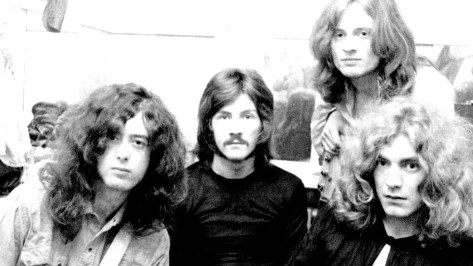
I READ WITH INTEREST Vernon Silver’s May 15 Business Week article concerning a lawsuit about to advance against Led Zeppelin, filed by living members of a 1970s band named Spirit. The closest this group came to a number one hit was the 1968 song “I Got A Line On You,” which reached position 25 on the Billboard Hot 100. If you accept some accounts, however, the late Randy Wolfe, better known by his stage name Randy California, is at least partly the composer of a #1 hit which also happens to be the number one rock song of all time.

Continue …

Looking Back At Nirvana

Kurt Cobain

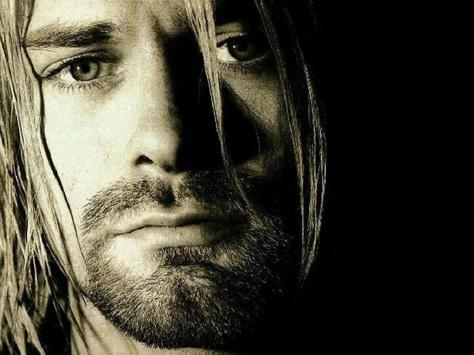
KURT COBAIN WAS NOT a generation’s representative, a spokesperson, or even a rock star. Many tried to press him into these and other molds, much to his frustration, but it happens that he was a songwriter always on the search for a new sound. When he died, by medical estimation on the fifth of April in 1994, some (among them R.E.M.’s Michael Stipe) believed he was about to abandon the grunge formula for which he had become known. There is evidence he was about to quit music altogether. In any case, the posthumous album, MTV Unplugged in New York, is the best indication we have of the band’s unrealized prospects. Perhaps Nirvana’s most accessible and widely known recording, Unplugged is an accomplished example of musical understatement, disclosing Cobain’s intuitive ability to compose songs (or in the case of The Vaselines, Meat Puppets, Lead Belly, and David Bowie covers, select them) which complement his particular vocal and playing styles.

Continue reading Looking Back At Nirvana

The Roundtable Podcast 64

Week of 23.03.2014

suffragists

Video shows Rob Ford inhaling from pipe, new documents reveal | Malaysia Airlines MH370 search: No actual sighting from satellite image | Sister Cristina Scuccia on the Voice | New Music: The Internet, “Dontcha” | Alison Redford resignation: Did sexism play a role in her demise? | Ban Bossy | My Little Pony | Feminism | A Guy’s “Ideal Day” Would Include 4 Hours and 19 Minutes of Sex | Sharia to be enshrined in British legal system as lawyers get guidelines on drawing up documents according to Islamic rules

Download entire podcast (320 kbps mp3) | Visit The Roundtable on Facebook.

Follow me on Twitter

Happy Birthday, Compact Disc! (I’m glad you’re dead)

CD

THERE ARE SEVERAL dates you could propose as the birthday of the compact disc. Among them is March 1, 1983, the day the CD was launched in Japan and North America as a successor music storage format to the cassette tape and the long-playing vinyl record, whatever those are.

Here are some remarkable CD facts.

Read More

Is Llewyn Davis a Loser?: The Coen Brothers’ Comedy of Error

inside-llewyn-davis-1024x540

THERE’S A STORY about Mike Dubue of the Hilotrons that goes something like the following:

Mike plays a gig in Ottawa. An ex-girlfriend is in the audience, and she loves the show. So she takes out a scrap of paper and writes WOW, hands it to Mike. When he reads it, it’s upside down: he thinks it says MOM. Well now Mike’s freaking out, because he’s got his ex-girlfriend pregnant and he has no idea what he’s going to do.

The story ends with laughter, the imagined scenario having been a case of simple miscommunication. But these things do happen, and if you’re Llewyn Davis – the principal character of the latest Coen brothers’ film Inside Llewyn Davis – they happen a lot.

Read More

The Roundtable Podcast 45

Week of 09.06.2013

U2 at Red Rocks

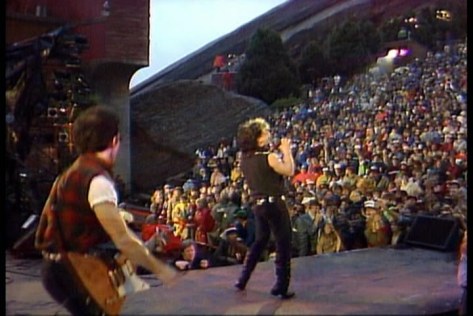
Conservative MPs Used Like ‘Trained Seals’ | Benjamin Franklin, Canada Post’s Founding Father | Calgary Man Fined for Fossil Trafficking | Thirty Years Ago This Week: U2 Live at Red Rocks | Recommended Video: VICE: High Country | Man, 66, Goes to Doctor and Finds He’s a Woman | Rob Ford | Pamela Wallin

Download entire podcast (320 kbps mp3) | Visit The Roundtable on Facebook.

Rock On, Rock Off: Reflections of an Ageing Musician

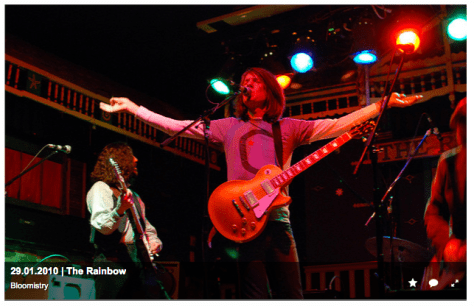
Bloomistry at the Rainbow Room, January 29, 2010, Ottawa, Ontario

TEN YEARS AGO, in 2003, an acquaintance of mine named Elaina Martin created Westfest. This free-of-charge Ottawa street music festival first took place on June 12, 2004, the year that Jane Sibbery was the headlining act. Elaina was then, as she would remain, what is generally termed a force. Every June since, with the help of local businesses and community volunteers, she has steered the festival to harbour. One of the highlights of my time in Ottawa was performing at Westfest 2010, on a bill with Sloan, a memory which came to the surface as the festival once again took to the stage on Thursday June 6, 2013.

Read More

Chinua Achebe, Jason Molina, Malala Yousafzai, History Channel, Sasquatch, Buttocks and Beer

Podcast 35 | Week of 24.03.2013

Chinua Achebe

Article of the Week: Why Canada Needs the Sasquatch, Vice Magazine.

Download entire podcast (320 kbps mp3).

Flecton Big Sky, “Homage”

Liner notes for the album Homage, by Flecton Big Sky


Like you and me, like everyone, making it up as we go along, Flecton Big Sky has turned out a few … let us say, debatable … decisions in life along the way. Life by necessity is material for improvisation: when the results are harmonious, it’s out of sight — and when it’s a fuckup, it’s a case for hindsight. Well, friends, that’s life. But then there’s music, and in music Flecton Big Sky has made excellent decisions. In his choices of songs and collaborators, he’s demonstrated over the years a knack for creating, to borrow from Pablo Neruda, “a generous, vast wholeness / a crepitant fragrance.” Harmonious, out of sight, sound — all without a plan, without a thought of road’s end. It happens that I’ve been around when some of the improvisation was going down, and I could never figure out how he does it, how he makes music without ever thinking about making music. Without ever preconceiving. Here is a man who goes into the studio tabula rasa, a blank slate. A few days later, out he comes, improbably, with these sounds of his. What’s the deal? I puzzled over that one for a good long time. The problem was that I was looking at it from the music point of view, not the life point of view. Sure, Flecton the man is also Flecton the musician. They’re both just making it up as they go along. It comes down to decisions, but not of the musical variety. Flecton is a man with a great, sensitive soul. He trusts his instincts, and his instincts serve him well. He trusts his friends, and his friends trust him — as well they should, because there’s no one more trustworthy than Flecton. This is the secret to his music, this trust. Flecton connects to certain music and musicians through gut instinct and sensitivity. And once he’s connected, he stays connected. He’s never forgotten his roots. They continue to nourish him. He’s loyal to a fault. Respect, loyalty, due acknowledgment of one’s indebtedness, and music as a soulful connection: these are the meanings of homage, a word derived simply from the word “man.” In this case, the man who is Flecton Big Sky.

– December 2010

Flecton on Bandcamp | Flecton on Kelp Records | Facebook

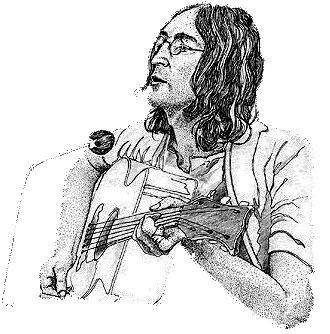
John Lennon

Among my personal store of mnemonic devices is the December 8, 1980 murder of John Lennon, on the day I turned fifteen. Henceforth I’ve had many an occasion to answer the question When is your birthday? with the response “On the day everyone is talking about the death of John Lennon.”

John Winston Lennon was born seventy years ago this week, but he is among those — John F. Kennedy is another — for whom the preponderance of their remembrance concerns the character and circumstances of their death rather than either their birth or life. This is not to say that the latter are overlooked or under-regarded. I know that the mourning and mythologizing were well underway on December the ninth, and that both were founded upon the conviction that the world had lost a man of peace as well as of artistic genius. The reputation of peace-maker was already by 1980 an anachronism, fed in infancy on the gruel of sentiment and then sustained only by easy nostalgia and the familiar convention of celebrity worship. The usefulness of the Lennon myth would increase for many who carried on and who thereby experienced with distress the fierce repudiation of the 1960s, first ascendant in the Reagan and Thatcher administrations, and through which we are still living. Continue reading John Lennon