
The orange menace returns to his city of Geld in triumph. He is the anointed one. From atop his fortress he scans the southern coast.
– “My city,” he says. “The everperning gyre, of depravity and appetite unbound, subjugated to my warrior will.”
Tag Archives: Politics
Hilari
The monstrous sun rises over the tableau, another da capo round of the daily quotidian’s diurnal recurrence. Hilari pauses her work of harvesting to savour a morsel of the dawn. Amor fati, she grumbles, of the eternal recurrence. She returns to the harvest.
The Office of Official Optimism
Bim Kerbler is a Junior Associate in the Office of Official Optimism, Division “C” (Quotations) Unit 42 (Inspiration) sub-sector twenty-nine (Cats). His particular area of assumed expertise is words.
Georges Erasmus Calls for Action on RCAP Recommendations
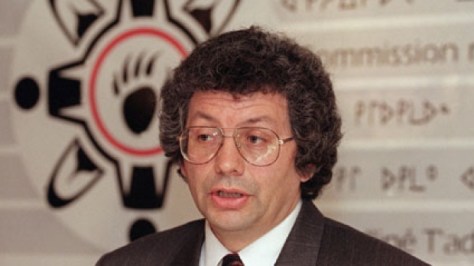
In November, it will have been 20 years since the Royal Commission on Aboriginal Peoples issued its multi-volume final report. In this audio clip, former RCAP Co-Chair, Georges Erasmus, renews the call to make those recommendations a reality.
Authenticity
“I am, sincerely.” ✎ By Wayne K. Spear

Here is something that has happened to every parent:
Child: “Look, mommy. That person is fat!”
Parent: “We don’t say fat, dear.”
The child is authentic. Over time, she is socialized. She learns to be something that is socially acceptable. She simulates, equivocates, euphemizes, gets along.
This is called Being Polite.
An adult does not say, “That person is fat.” Unless he is running in the GOP primary.
Straight-talk, candor, directness, honesty—we value them so much that the simulation of authenticity has become a political art.
We call this hypocrisy.
To paraphrase Captain Pierce, of M*A*S*H: “Authenticity? I could fake that.”
An authentic Babe Ruth signature is extremely valuable. A fake one is worthless.
Give us the authentic goods, not the knock-offs; the original, not the derivatives; the Real Deal, not the imitations.
We cast our contempt upon lies. We want an honest opinion. We applaud sincerity. We are wounded by deception, white lies, double-talk, lack of candor.
“I’m looking through you. Where did you go?” sang Paul McCartney. “I thought I knew you, what did I know?”
What is real? What is authentic?
Deception is undertaken for gain. When authenticity is a valuable currency, expect counterfeit.
Authenticity is never for gain: it always costs something. It is risky.
To be authentic is to follow your conscience, not the consensus. It is to be true to oneself, even if it hurts.
And it will hurt.
That is because authenticity requires that we be open and vulnerable.
It is not enough to say “I am great,” even if that is objectively true. To speak only of your triumphs, strengths, virtues, and accomplishments is to fall short of the standard of real authenticity.
Authenticity demands that we be honest about our fears, doubts, failures, weaknesses, hopes, and loves.
The authentic person is exposed. His humanity is there for all to see in its glorious imperfection.
An authentic dollar is what it is. We accept it as legal tender, even when the bill is wrinkled and soiled.
Likewise we reject the counterfeit, no matter how shiny it may be.
Right Brain. Left Brain.
Today the technocrat, tomorrow the artist. ✎ By Wayne K. Spear
The historian looks backward in time to understand the present.
The lawyer argues from precedent.
Technocrats study the world as it is and apply rational, systems thinking to their endeavors.
Interpretation, argumentation, and rational systems thinking.
Artists create something from nothing. They see the world that does not yet exist, the world that may never exist, the world that the powerful do not want to exist.
Creation.
Imagination is an act of will. To create something from nothing is to choose a radical form of human freedom.
Rational thought is also an act of will. To understand the world as it is, and to apply this knowledge to human society, is to choose the freedom of living according to natural law.
The world was created perfect. We shall create the perfect world.
Human nature is fixed and eternal. Human nature is a creation of human beings.
The laws of the natural order must prevail. Human freedom must prevail.
Progress is an illusion. Progress is the human story.
We must look to the past for our answers. The answers will be found in the future.
Conserve. Progress.
Right. Left.
The will to imagine the world in radical new ways versus the will to conserve and manage it as it is: this is human politics.

This is why you hate politics
I’m the King of the Castle; you’re a dirty rascal. ✎ By Wayne K. Spear
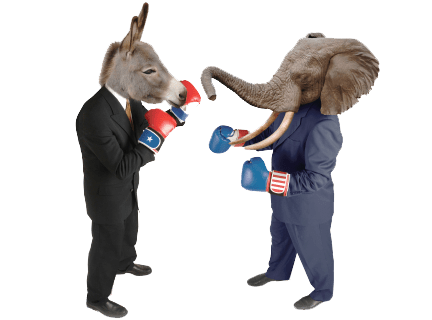
A zero-sum-game is a game of winners and losers. For every winner, a loser; for every loser, a winner.
A zero-sum-game is a game of gains against losses, of distribution, of competition, of conflict.
I gain X at your expense. My gain of X is balanced exactly by your loss of X.
By necessity, a zero-sum-game is an attempt to gain advantage over others, employing tactics and power.
In a zero-sum-game, we are not all in this together. We are divided. Our interests are not the same.
The reality is that most people live their day-to-day lives playing a non-zero-game. We seek win-wins. We are not in conflict with our friends, our families, our neighbors.
We prefer harmony over conflict, co-operation over competition. We negotiate and share and look for the greater good.
Life in a healthy human community is not a zero-sum-game, but politics is a zero-sum-game.
You belong to Party X. I belong to Party Y. One of us must defeat the other.
A vote is a unit of marginal utility. We compete for votes.
My 51% of the votes does not give me 51% of the power, or the authority, or the right to govern and to legislate. I get it all. Your 49% of the vote gives you 0% of the power.
In everything other than politics, we seek to make the pie bigger. We want to ensure everyone gets a slice, and that we deal with others as much as possible in a spirit of fairness, respect, and co-operation.
In politics, I must win and you must lose. We cannot share. We are in conflict. We can not cooperate. The values and morals of ordinary human life do not apply, and must not apply.
A zero-sum.
Money, politics, and marketing research
Money and politics. ✎ By Wayne K. Spear
In the 2011 federal general election, 61.1 percent of the 23,971,740 eligible voters of Canada voted.
A majority government was formed by 39.62 percent of this 61.1 percent.
Here is a graph of the historical trajectory of voter engagement.
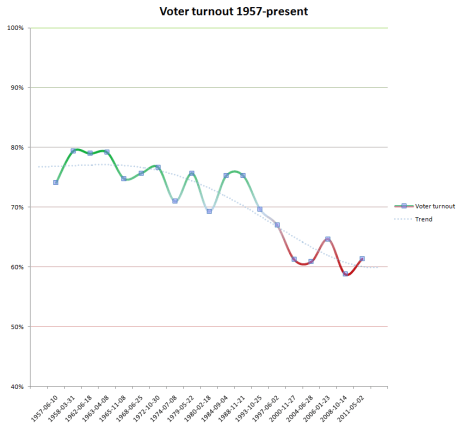
39.62 percent of 61.1 percent is 23.79 percent. Under ¼ of eligible voters in Canada elected a majority government in 2011.
As voter engagement declines, mobilizing voter engagement becomes an increasingly valuable commodity.
1,323,927 votes separated the majority party and the official opposition—or 9% of the actual vote and 5.5% of the eligible vote.
In markets where small margins determine big outcomes, targeted campaigns are required. Targeted marketing campaigns require enormous market research.
Market research is expensive.
When you realize that everything depends upon mobilizing the 5.5% to capture an elusive 9%, the value proposition becomes clear. The rules governing money and campaigning noticeably change.
For example:

What is the value of a vote? This is the $125-million dollar question, and it has an answer.
The value of a vote depends upon the likelihood of someone voting for you.
Those who will never vote for you, no matter what, have low value—because they cannot be bought.
Those who will always vote for you, no matter what, have low value—because they don’t need to be bought. Money spent on either of these categories is wasted.
The most valuable voters are undecided. They are disengaged, low information voters. They are swing voters. They are waiting to be persuaded. They can be bought. In all likelihood, they must be.
They are the elusive 9% who determine everything. They are all that matter.
Money, marketing, and modern politics.
What if everything you know is wrong?
Be loyal, and oppose. ✎ By Wayne K. Spear
What if it turned out that the world was flat? Can you even show beyond doubt that it isn’t?
We don’t know what we don’t know, and we think we know what we think we know.
A person who goes around questioning everything is called crazy.
And yet, the opposite of crazy is conventional wisdom, or common sense.
Common sense says that it’s good to go to college, vote, drink milk, buy a house, and work your way up the corporate ladder.
I’ve done all of these things, and I don’t recommend any of them. I think some of the things recommended by conventional wisdom are crazy things.
In the Parliamentary system, there is an official, loyal opposition. The duty of the loyal opposition is to show that the people in power are wrong.
The opposition is called loyal because challenging power is valuable, even necessary.
I think it should be someone’s job in society to challenge powerful ideas.
Each week this person should write an article on topics like:
– your school grades don’t matter
– the experts are wrong
– democracy is a bad idea
– economic growth is dangerous
– dinosaurs and humans walked the earth together
I don’t think dinosaurs and people ever walked the earth together, but apparently some people do, and it may be worth understanding why. Or maybe not.
I don’t know what I don’t know, but by definition the person who does know will think differently than I do.
They might also be crazy.
Sometimes however the loyal opposition is going to be right.
After all, college may in fact be a waste of time, and voting may not make a difference.
– Find something that, your whole life, everybody has accepted uncritically as good
– Come up with all the reasons it isn’t
– Turn those reasons into opportunities
– Invent a product or service or new conventional wisdom that everyone fixated on the old conventional wisdom can’t see, because they think they know what they think they know and don’t know what they don’t know.
This is how all human progress works.
Bill Clinton hates this portrait. So obviously I love it
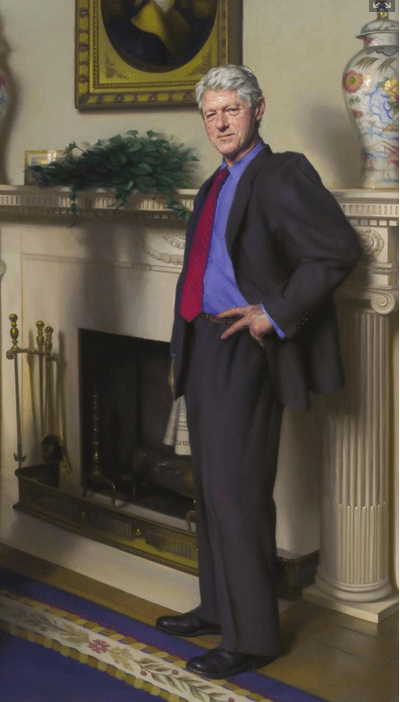
AS EARLY AS 1993, I’ve thought Bill Clinton is a despicable human being.
Self-absorbed, manipulative, dishonest, vain, and driven by animal appetites and ego.
I remember him going out for a run, during his re-election campaign, and veering mid-way into a McDonald’s.
That’s Bill Clinton—a narcissistic boy-man who’s never met an intern or Big Mac he could resist.
Imagine having the power of an American President, and squandering it on Oval Office hand-jobs. Then, bombing Sudan to distract the country from your indiscretions.
The Clintons ate people who thought they were friends. Ate them and threw the bones to the wolves.
And for those who want to talk about Bill’s charity work—notice how he splashes his name in big bright letters over everything with which he’s associated.
THE WILLIAM JEFFERSON CLINTON SUCH-AND-SUCH
So…I thoroughly enjoyed this Daily News article, headlined
Bill Clinton portrait in National Portrait Gallery has shadowy reference to Monica Lewinsky, reveals artist
Here are some of my favorite quotations:
“He’s probably the most famous liar of all time.”
“The country’s 42nd president was “terrified” to be painted by [Nelson] Shanks.”
“…he hid all fears with a relaxed smirk and bold stance…” [Bill Clinton almost always has a self-satisfied smirk on his face]
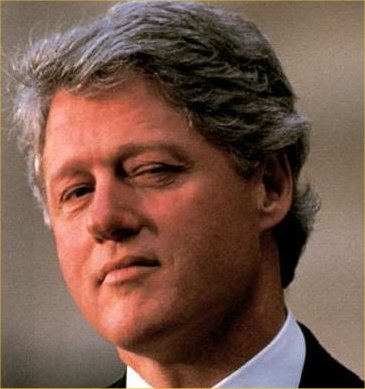
“When Clinton was not in the room, [the painter] says he set up a mannequin sporting a blue dress he likened to Lewinsky.”
“The Clintons hate the portrait.”
I wouldn’t be mentioning any of this, if Hillary were not likely to be running for President in the next election.
There should be a law preventing the Clintons, especially but not only Bill, from getting within 500 yards of the White House.
I wonder if they’d rent out the Lincoln bedroom, again, to their slick benefactors.
Also watch for the Clinton money to pour in, just like last time, from foreign dictatorships and oligarchs.
The Clintons. Yeck.
Life After the Fords
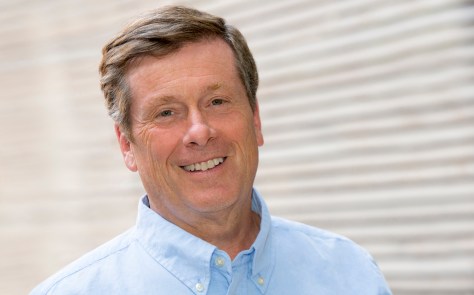
YES, IT’S TRUE that Rob Ford was elected to the Toronto municipal council in his Etobicoke ward—and, yes, it was a landslide: but the Ford era of this city is now in remission. When the counting of votes was complete, Doug had received 34% of the popular vote to John Tory’s 40%. When Olivia Chow’s take of 23% is added, it appears that two-thirds of the voters were finished with the circus, or the gutter, or whatever the personal metaphor happened to be.
The First Nations Financial Transparency Act and Business as Usual in Ottawa
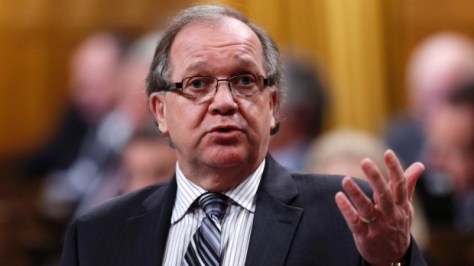
THE RON GIESBRECHT story is an everyone-saw-it-coming affair, and that’s among the reasons why the First Nations Financial Transparency Act has engendered both its champions and detractors. “This is the greatest piece of legislation passed by our parliament, I believe, in a long time,” Derek Fildebrandt (of the Canadian Taxpayers Federation) has been reported as saying. You can imagine him salivating these recent and delicious months, in anticipation of the handful of uncloseted Chiefs à la Giesbrecht, just as you can imagine the few rueful and disgraced Chiefs lamenting a lapsed age of innocence.
Why Would Anyone Want to Be the National Chief of the AFN?
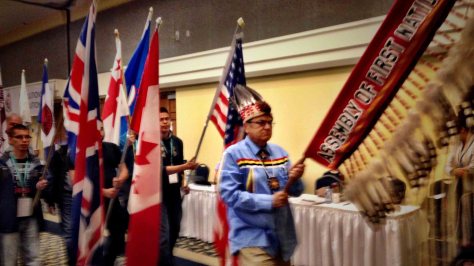
THE ASSEMBLY of First Nations 35th Annual General Assembly, held last week in Halifax, was remarkable more for what wasn’t said than what was. The name of the former national chief was seldom spoken, and the consensus appeared to be for a reconstitution of the leadership as quickly as possible, better to put behind the recent—and unprecedented—disruption.
Life Itself, a review
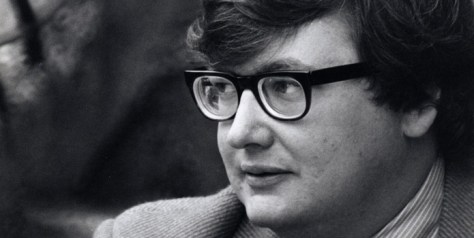
I WAS NOT A devotee of Roger Ebert, but Life Itself makes me wish I’d paid more attention to a career that transversed more than five decades.
Death and Language
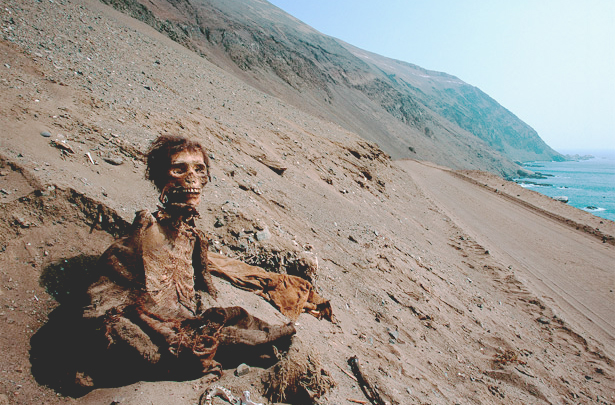
AN EDITOR ASKED ME not long ago if I might change the word “died” to “passed away” in something I’d written of a late and mutual friend. I respectfully said No, and here’s why.
 Journalism, Essays, Broadcasting, Books