
HAVING TAKEN ROOT, bad ideas are near impossible to eradicate. You can chop away at the spreading menace, and you may even effect some evident gains. But in short time, the bad ideas pop up again. The potluck, for example.

HAVING TAKEN ROOT, bad ideas are near impossible to eradicate. You can chop away at the spreading menace, and you may even effect some evident gains. But in short time, the bad ideas pop up again. The potluck, for example.
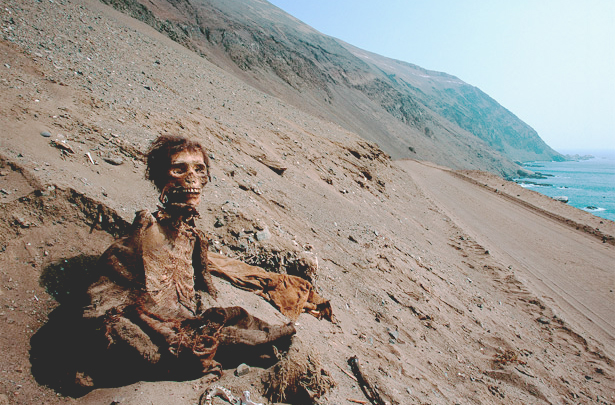
AN EDITOR ASKED ME not long ago if I might change the word “died” to “passed away” in something I’d written of a late and mutual friend. I respectfully said No, and here’s why.

HERE AT waynekspear.com, I lift the curtain from time to time to disclose my thoughts on the writing life as they apply to this website. As with any public undertaking, there’s much going on behind the scenes at this word factory of mine. Today I’m considering the marketing of a writer, and how poor I am at – and why I think I continue, as a matter of principle, to be poor at it.

“WRITING A BOOK,” according to George Orwell, “is a horrible, exhausting struggle, like a long bout with some painful illness.” The good news is that the illness ends after two or three years, or five at the most. When you start to feel better, it’s time to start a new book.

THE ONTARIO MINISTRY of Labour recently announced an enforcement “blitz” of provincial regulations governing unpaid internships, an action which led to the termination of internship programs at Toronto Life, Canadian Geographic, Rogers Publishing and The Walrus.

HAROLD HAD KEPT in his mind the image of the newspaper’s doubled face, the luxurious automobile below the fold, and the latest disaster from across the world above. From the livingroom he regarded the quiet dignity of his neighbourhood and congratulated himself for his accomplishments. He felt he lived in one of Amigary’s finest neighbourhoods, in a very respectable Tudor home. He thought of the things he would like to do over the summer, perhaps install a swimming pool or a deck. The neighbour’s dog barked. Harold reorganized his mental list, adding Fence at the top and moving Pool below Deck. His wife would want to know how he proposed to pay for these: but never mind that, he thought to himself. She was always worrying over nothing. They would do fine, he’d say. Harold could smell the dog shit in the air and wondered, Would the others smell it too? The thought that they would embarrassed him and made him only more determined to build the fence. Never mind that a fence would never stop a smell. It was something, a start. In the meantime, they would be polite and pretend not to notice.

A PILLOW BOOK is an open-ended and spontaneous collection of fragments, and as such may include lists, observations, poems, short personal essays and diary entries. A precursor of the genre zuihitsu (random jottings – the more literal meaning to proceed, or follow, with a brush), this literary form made its appearance under the title Makura no Sōshi, or Notes of the Pillow, one thousand years ago.

IN THE LATEST Roundtable Toronto Podcast, episode 65, Mandy, Greg, Andy and I discussed the social media. We talked about who was using what, how the respective media differ, and the contrasting uses and limitations of each. The consensus at the table, so far as I could infer one, was that some media are more social than others: if you’re looking for engagement and conversation, you’ve found that media are not created alike.
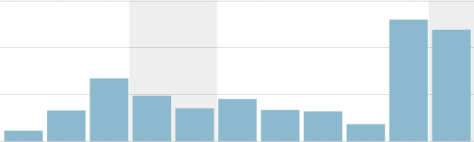
I‘VE BEEN AT WORDPRESS for fifty-one months now, and I’ve posted 550 entries. Just for the heck of it, I’ve spent several weeks studying the data I’ve collected from the WordPress “dashboard” as well as from other sources. I drilled down into the data, as you kids like to say, until I hit oil. Now I’m rich, so screw you. This will be my last entry.
Kidding!

My friends and co-authors, Larry Loyie and Constance Brissenden, discuss residential schools and the forthcoming book Residential School: A Children’s History on CBC Radio.

BECAUSE I KNOW that some of my readers are also writers, I post an occasional essay on writing. If the topic of writing bores you, here’s my essay on Anna Hazare and Gandhi for your consideration. Or perhaps you might enjoy this essay about Disney. For the rest of you, here are my thoughts on good writing.

MY WRITING FALLS into several categories. There’s the paid, professional writing I do for others, on a range of topics. There are historical pieces, obituaries and profiles of famous people and places. There are meditative or reflective articles, what are sometimes called “human interest stories,” concerning parenting or ageing or travel, and so on. Then there are my political and polemical works, digging into a position and attacking an idea or a public official. Today, we’re going to consider this final category, and the charge it invariably engenders, from a small minority of readers, that I’m impolite, judgemental, arrogant and mean.
This essay is an apology for rudeness in the old sense of the term apology – an account, explanation and defence.

WHAT’S TRENDY and current and cool? What’s everyone watching and doing and talking and thinking and listening to right now. Do you know, and do you care?

A TOPIC CAN BE both vast and yet reducible to the most simple of terms. Here’s an example: a writer is a person who does things with words. Whether her goal is to inform, deceive, terrify, entertain, charm, persuade or seduce, a writer will have to do it with words. A reader, also, has nothing but words from which to cultivate the pictures, emotions and experiences which are ‘in’ the text. A writer’s voice is a big topic, but the topic does indeed rest upon these objects called words. And words alone.


 Journalism, Essays, Broadcasting, Books